
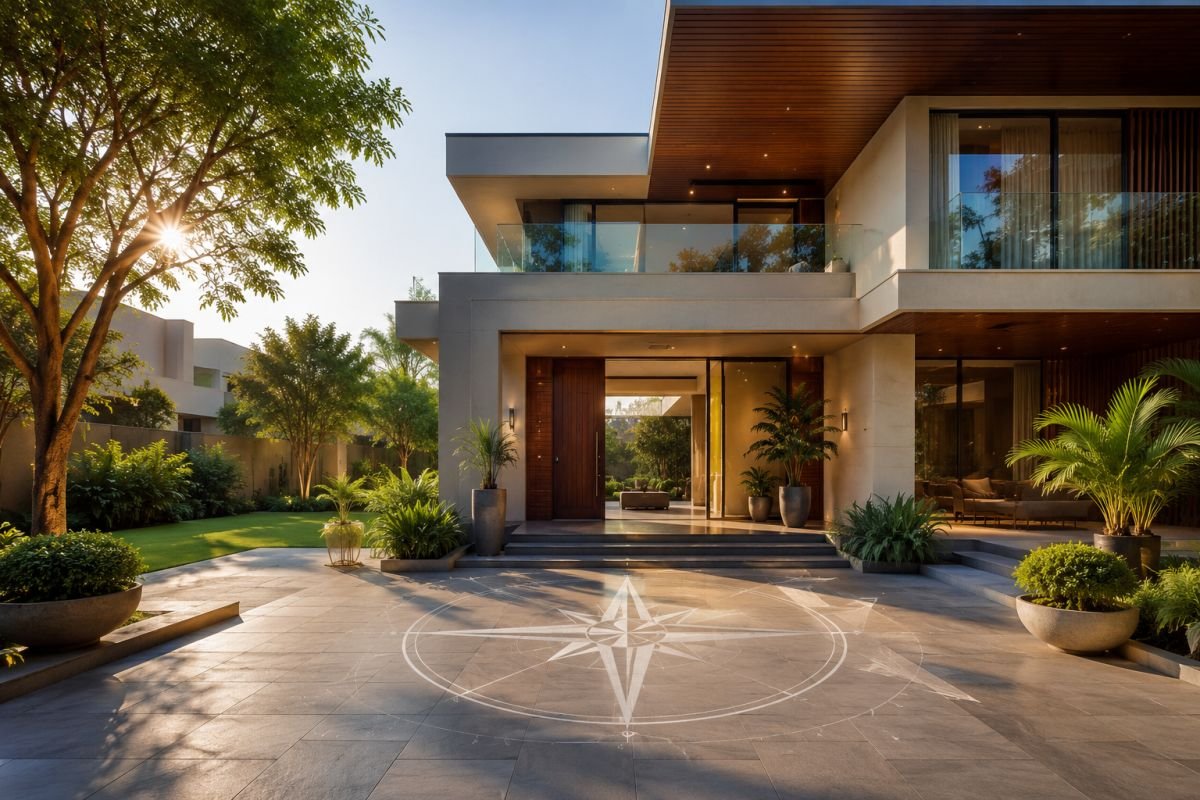
Buying a home is one of the biggest financial decisions most people will ever make. Yet if you’ve ever accompanied family or friends to a property site visit, you’ll know that the conversation rarely begins with price, loan eligibility, or even amenities. More often than not, someone quietly asks, “Is the home Vastu compliant?”
That single question reflects how deeply Vastu remains connected with home buying in India.
During interactions with buyers visiting residential projects along the Dwarka Expressway, particularly between Sectors 102 and 113, we’ve noticed that Vastu usually enters the discussion within the first 10 to 15 minutes of the site visit. Some families ask about the entrance direction before they ask about the clubhouse. Others want to know whether the kitchen is in the south-east or whether the master bedroom occupies the south-west corner. Even buyers who don’t strictly follow Vastu often say they would prefer a layout that broadly aligns with traditional principles if everything else remains equal.
At the same time, another pattern is equally common.
Many buyers become so focused on Vastu that they unintentionally overlook factors that will affect their daily lives far more than the direction of a room. Poor construction quality, inadequate ventilation, limited storage, weak legal documentation, inefficient floor plans, or an underdeveloped location can create long-term problems that no compass direction can solve.
Finding the right balance is what truly matters.
Vastu should never be treated as a substitute for practical home buying. Instead, it should complement important factors such as construction quality, natural light, builder reputation, connectivity, neighbourhood infrastructure, maintenance standards, and long-term investment potential.
This balanced approach is becoming increasingly relevant because residential architecture has evolved dramatically over the past decade. Today’s premium apartments are designed around larger balconies, open-plan living areas, better cross ventilation, smart storage solutions, and energy-efficient layouts. Interestingly, many of these features also align with traditional Vastu principles—not because architects are trying to recreate ancient homes, but because good design naturally prioritises comfort, light, airflow, and functionality.
One of the most surprising observations from recent project visits is that some of the best-planned apartments don’t advertise themselves as Vastu compliant at all. Buyers often discover their strengths only after comparing daylight, ventilation, room proportions, and overall usability with competing projects that promote Vastu heavily but compromise on practical design. That experience reminds us that Vastu should support intelligent planning, not replace it.
Whether you’re purchasing your first apartment, upgrading to a larger home, investing in a luxury residence, buying a builder floor, or planning an independent house, understanding Vastu can help you evaluate properties with greater confidence. More importantly, it can help you distinguish meaningful guidance from marketing claims and common myths.
In this comprehensive guide, you’ll learn what Vastu Shastra really means in today’s context, why it continues to influence buyer behaviour, how developers use Vastu in project marketing, what practical room-wise recommendations still make sense, and how to balance traditional preferences with modern architectural realities. We’ll also explore whether Vastu affects resale value, whether investors should care about it, how to verify builder claims, and the mistakes buyers most often regret after moving into a new home.
By the end of this guide, you’ll have a practical framework for evaluating any property—not simply by asking whether it’s Vastu compliant, but by understanding whether it’s genuinely a good home for your family.
What Exactly Is Vastu for Home?
Vastu Shastra is often described as an ancient Indian science of architecture, but that description only tells part of the story. At its core, Vastu is a planning philosophy that attempts to create harmony between a building, its occupants, and the surrounding natural environment.
The word “Vastu” refers to a dwelling or built structure, while “Shastra” means a body of knowledge or guiding principles. Together, they represent a traditional system of designing homes by considering factors such as orientation, sunlight, airflow, water, open spaces, and the relationship between different rooms.

Although these ideas were developed thousands of years ago, many of the underlying principles remain surprisingly relevant in contemporary architecture.
Modern architects may not always use the language of Vastu, but they regularly discuss concepts such as passive solar design, cross ventilation, thermal comfort, environmental psychology, and sustainable planning. Each of these aims to create healthier, more comfortable living spaces—objectives that closely resemble several traditional Vastu recommendations.
For example, a home with generous daylight generally feels more inviting and consumes less electricity during the day. Good cross ventilation improves indoor air quality and reduces dependence on mechanical cooling. Well-planned layouts minimise wasted movement, while open spaces create a stronger sense of comfort and flexibility. These are practical design principles supported by modern architecture regardless of whether someone actively follows Vastu.
This is why many architects today see Vastu not as a rigid rulebook, but as a complementary framework that can work alongside engineering standards, green building practices, and contemporary residential planning.
Why Does Vastu Still Matter to Modern Homebuyers?
India’s housing market has changed significantly over the past decade. Buyers now compare projects based on smart-home technology, green building certifications, EV charging infrastructure, co-working spaces, wellness amenities, and community planning. Yet despite these modern expectations, Vastu continues to influence purchase decisions across almost every price segment.
The reason is surprisingly simple.
Buying a home is not just a financial transaction. It’s an emotional decision that affects an entire family’s future.
People want confidence that they’re making the right choice.
For some families, that confidence comes from choosing a reputed developer. Others focus on schools, hospitals, metro connectivity, or future appreciation. Many also find reassurance in a home whose layout broadly aligns with Vastu principles.
Across several premium launches in Gurgaon, developers have recognised this shift in buyer psychology. It’s now common to see project presentations discussing entrance orientation, kitchen placement, or Vastu-friendly planning alongside specifications, sustainability features, and lifestyle amenities. Sales teams understand that many buyers expect these conversations, especially when purchasing a home for self-use.
However, experienced property advisors generally encourage buyers to look beyond marketing language.
A thoughtfully designed apartment with excellent daylight, efficient layouts, high construction quality, and strong future infrastructure will usually deliver far greater long-term value than a poorly planned property marketed only as “100% Vastu compliant.”
Understanding this distinction helps buyers make more balanced decisions.
Why Developers Are Talking More About Vastu Than Ever Before
Walk into almost any residential sales gallery today and you’ll notice how often Vastu appears in brochures, sample apartment presentations, and marketing campaigns.
Terms such as “Vastu-friendly homes,” “East-facing residences,” or “planned according to Vastu principles” have become increasingly common.
This isn’t simply a marketing trend.
It reflects genuine buyer demand.
Developers know that many families compare similar apartments based on subtle differences in layout and orientation. If one property aligns more closely with traditional preferences while offering similar pricing and amenities, it may receive stronger buyer interest.
Several leading developers active along the Dwarka Expressway now include Vastu discussions as part of their project presentations. Alongside information about landscaped podiums, clubhouse facilities, IGBC-inspired sustainability initiatives, and smart-home features, they explain how room planning and orientation have been designed to appeal to buyer preferences.
That doesn’t mean every claim should be accepted without question.
Marketing brochures highlight strengths.
Your responsibility as a buyer is to verify whether those strengths translate into practical living. A detailed floor plan, a site visit during daylight hours, and careful observation of ventilation, circulation, and usable space will always reveal more than promotional material.
The Five Elements of Vastu and Their Relevance Today
Traditional Vastu is built around the Pancha Mahabhutas, or the five natural elements believed to influence every built environment.
Rather than viewing these as purely philosophical ideas, it’s helpful to understand how each one connects with modern residential design.
Earth (Prithvi) represents stability and strength. In today’s context, this begins with structural integrity, quality construction materials, proper soil conditions, and reliable engineering. A well-built home provides far greater long-term security than one that simply follows directional preferences.
Water (Jal) symbolises cleanliness, movement, and continuity. Modern interpretation focuses on efficient plumbing, waterproofing, rainwater harvesting, moisture control, and effective drainage systems. Buyers often spend considerable time discussing room orientation while overlooking signs of leakage or poor waterproofing that can create expensive maintenance issues later.
Fire (Agni) is traditionally associated with the kitchen. Beyond direction, modern kitchens emphasise workflow, safety, ventilation, and efficient appliance placement. These practical improvements make everyday cooking easier regardless of orientation.
Air (Vayu) relates to ventilation and indoor comfort. Homes with effective cross ventilation generally remain cooler, healthier, and more pleasant throughout the year. This explains why many premium residential projects now highlight airflow and natural ventilation as key design features.
Space (Akash) represents openness and balance. Wider living rooms, larger balconies, flexible layouts, and uncluttered interiors all contribute to a stronger sense of comfort. Modern concepts such as biophilic design and environmental psychology support many of these same ideas by recognising the positive impact of spacious, naturally lit environments on everyday wellbeing.
These five elements remind us that good homes are created through thoughtful planning rather than isolated design choices.
Understanding House Directions: Why Buyers Often Give Them Too Much Importance
Few topics generate as much debate among Indian homebuyers as house-facing directions.
- North-facing.
- East-facing.
- South-facing.
- West-facing.

For many families, these labels become the deciding factor even before they visit the project. In some cases, buyers eliminate excellent properties simply because someone advised them to avoid a particular direction.
That approach often leads to missed opportunities.
During property consultations across Gurgaon, one interesting pattern has become increasingly clear. Buyers who initially insist on a specific direction frequently change their opinion after walking through a well-designed apartment. Once they experience generous natural light, spacious rooms, comfortable ventilation, and a practical floor plan, they begin evaluating the home differently.
That’s because direction influences a home, but it doesn’t define it.
A north-facing apartment with poor planning can feel darker and less functional than a thoughtfully designed west-facing home with excellent ventilation and shading. Similarly, a south-facing residence designed with insulated walls, deep balconies, and efficient glazing may remain cooler than an east-facing apartment that lacks proper thermal planning.
Traditional Vastu associates each direction with different qualities, but modern architecture teaches us that orientation is only one part of a much larger design equation.
| Direction | Traditional Association | Practical Perspective |
|---|---|---|
| North | Growth and opportunities | Comfortable daylight and balanced interiors |
| North-East | Positivity and openness | Ideal for open spaces and morning light |
| East | Fresh beginnings | Pleasant morning sunlight and brighter interiors |
| South-East | Fire element | Often suitable for kitchen planning |
| South | Stability | Comfortable when combined with proper thermal design |
| South-West | Long-term stability | Frequently preferred for master bedrooms |
| West | Productivity and balance | Performs well with shading and ventilation |
| North-West | Movement | Commonly suitable for guest rooms and flexible spaces |
Instead of asking only “Which direction is best?”, ask a more practical question:
“Will this home remain comfortable for my family throughout the year?”
That answer usually reveals far more than the direction alone.
Room-by-Room Vastu Guide: Blending Tradition with Practical Living
Every room in a home serves a different purpose, and Vastu associates each one with a particular direction and natural element. While these traditional recommendations continue to influence buyers, they should be viewed as guidance rather than rigid rules.
Today’s apartments, villas, and builder floors must also satisfy practical requirements such as efficient layouts, privacy, storage, ventilation, and ease of use.
Let’s explore how Vastu principles can complement modern residential planning.
The Main Entrance: Your Home’s First Impression
If there’s one part of a home that buyers consistently ask about, it’s the main entrance.
During site visits across Dwarka Expressway, many families check the entrance direction before stepping inside the sample apartment. Developers are well aware of this behaviour, which is why entrance orientation often features prominently in brochures and presentations.
Traditionally, North, East, and North-East entrances are considered favourable because they are associated with positive energy and natural daylight.
However, direction alone doesn’t determine whether an entrance feels welcoming.
A well-designed entrance should also be spacious, clutter-free, properly illuminated, and easy to access. The transition from the main door into the living area should feel natural rather than cramped.
One mistake homeowners commonly make after moving in is allowing the entrance to become a storage area for shoes, cartons, or unused furniture. Over time, this reduces both functionality and visual appeal.
Simple improvements such as good lighting, organised storage, tasteful plants, and a well-maintained doorway often enhance the entrance far more than expensive decorative elements.
Living Room: The Space That Shapes Everyday Life
The living room is where families spend the most time together.
It’s where children play, guests are welcomed, conversations happen, and celebrations take place. Not surprisingly, buyers often spend longer evaluating this room than any other during a site visit.
Traditional Vastu generally recommends placing the living room towards the North, East, or North-East, allowing it to benefit from softer daylight during the day.
Modern architects arrive at a similar conclusion through practical design.
Bright living rooms feel larger.
Natural daylight improves comfort.
Cross ventilation creates healthier indoor environments.
Good circulation makes the space more enjoyable.
These benefits have little to do with superstition and everything to do with thoughtful planning.
One observation that frequently emerges after possession is how quickly an open living room can become crowded. Large sofas, display cabinets, decorative shelves, and oversized furniture often reduce the spaciousness buyers originally admired.
Interior designers often emphasise that empty space is just as valuable as furnished space.
Traditional Vastu quietly supports the same idea.
Allow the room to breathe.
Avoid blocking windows.
Keep circulation pathways open.
A balanced living room encourages both comfort and conversation.
Kitchen Vastu: Where Tradition Meets Modern Design
Few rooms receive as much attention from Vastu-conscious buyers as the kitchen.

It’s common to hear questions like:
“Is the kitchen in the South-East?”
“Does it follow the Fire element?”
According to traditional Vastu, the South-East is considered the ideal location because it represents Agni, or the Fire element. The North-West is generally viewed as the next suitable alternative.
Yet modern kitchen planning extends well beyond directional preferences.
A practical kitchen should allow smooth movement between the stove, sink, and refrigerator. Architects call this the work triangle, a concept that improves efficiency while reducing unnecessary movement.
Ventilation is equally important.
During several project walkthroughs, we’ve found buyers focusing entirely on orientation while overlooking the absence of proper exhaust systems or natural airflow. These issues become noticeable only after everyday cooking begins.
One family almost rejected a premium apartment because the kitchen wasn’t positioned exactly where they expected. After comparing competing projects, they realised the alternative layouts offered less storage, poorer ventilation, and significantly smaller workspaces.
They eventually chose the first apartment.
Months later, they told us the kitchen’s functionality mattered far more than its exact direction.
Experiences like these reinforce an important lesson.
A comfortable kitchen is created through thoughtful planning—not direction alone.
Dining Areas: Designed for Family Interaction
The dining area may not receive as much attention as the kitchen or living room, but it plays an equally important role in daily life.
Modern homes increasingly favour open-plan layouts where the dining space connects naturally with both the kitchen and living room.
This arrangement encourages interaction while improving circulation.
Traditional Vastu often recommends locating the dining area towards the East or West, but in contemporary apartments, practicality usually takes precedence.
Instead of worrying about exact positioning, consider how the space functions.
Is the dining table easily accessible from the kitchen?
Can chairs move comfortably?
Does natural light reach the area during the day?
These practical considerations contribute far more to everyday comfort than directional perfection.
Master Bedroom: Prioritising Rest and Comfort
The master bedroom should be the most relaxing room in the house.
Traditional Vastu associates the South-West with stability, making it the preferred location for the primary bedroom.
Many buyers specifically look for this arrangement.
However, once families move into their new home, the concerns they mention rarely relate to direction.
Instead, they talk about:
Traffic noise.
Morning sunlight entering too early.
Poor ventilation.
Limited wardrobe space.
Insufficient privacy.
These practical issues affect sleep every night.
A comfortable bedroom depends on much more than orientation.
Good ventilation, appropriate lighting, calming colours, organised storage, and enough circulation around the bed all contribute to better rest.
Rather than chasing perfection, focus on creating a room that genuinely supports relaxation.
Children’s Bedroom: Built for Growth
Children’s needs change rapidly.
Today’s playroom becomes tomorrow’s study room and eventually a workspace.
That’s why flexibility is more valuable than fixed design themes.
Traditional Vastu often suggests East, West, or North-West for children’s rooms because these directions are associated with growth and learning.
Regardless of orientation, several practical features consistently improve the space.
Healthy daylight.
Quiet surroundings.
Comfortable study areas.
Adequate storage.
Enough floor space for movement.
Parents often invest heavily in decorative interiors while overlooking natural lighting.
Yet good lighting has a much greater impact on concentration and everyday comfort.
Guest Bedroom: Simple and Functional
Guest bedrooms don’t require elaborate planning.
Visitors appreciate comfort, privacy, and convenience above everything else.
North-West is traditionally associated with guest accommodation because it symbolises temporary movement.
Whether or not the room occupies that direction, focus on essentials such as comfortable bedding, adequate ventilation, charging points, storage, and good lighting.
These details leave lasting impressions on guests.
Home Office and Study Room: A Modern Necessity
The rise of hybrid work has permanently changed how people evaluate homes.
Questions about workspace have become almost as common as questions about bedrooms.
Traditional Vastu recommends North, East, or North-East for study rooms because these directions generally receive pleasant daylight.
Modern workplace design reaches the same conclusion through different reasoning.
Natural light improves productivity.
Good ergonomics reduce fatigue.
Minimal distractions support concentration.
Choose a quiet corner with adequate ventilation, comfortable seating, organised storage, and reliable internet connectivity.
A well-designed workspace contributes more to productivity than decorative accessories ever will.
Pooja Room: Creating a Space for Peace and Reflection
For many Indian families, the pooja room is one of the most meaningful spaces in the home. It isn’t simply a place for rituals—it represents peace, gratitude, and a quiet break from the pace of everyday life.
Traditional Vastu recommends locating the pooja room in the North-East because this direction is associated with openness and spiritual energy. While this recommendation works well for independent houses, many modern apartments simply don’t have the flexibility to dedicate an entire room for worship.
That doesn’t mean you’re compromising your beliefs.
A thoughtfully designed prayer corner can serve the same purpose. What matters most is that the space feels clean, calm, and free from unnecessary distractions. Soft lighting, natural ventilation where possible, and simple décor often create a more peaceful environment than an elaborate setup.
We’ve also noticed that younger homebuyers increasingly prefer compact prayer spaces integrated into their living areas instead of separate rooms. This reflects changing lifestyles without abandoning traditional values.
Bathroom Vastu: Practical Design Matters More Than Direction
Bathrooms are rarely discussed with the same enthusiasm as kitchens or entrances, yet they become one of the biggest sources of complaints after possession if they’re poorly designed.
Leaking fittings.
Poor waterproofing.
Inadequate ventilation.
Unpleasant odours.
Waterlogging.
These issues affect daily life far more than the direction of the bathroom itself.
When inspecting a property, spend a few extra minutes evaluating the bathrooms.
Look at the quality of fittings.
Check whether there’s adequate ventilation.
Notice if the dry and wet areas are properly separated.
Inspect the ceiling and walls for signs of dampness.
One experienced civil engineer once remarked that bathrooms often reveal the true construction quality of a building because shortcuts become visible there much earlier than in other parts of the home.
That’s valuable advice for every buyer.
The Balcony Has Become One of the Most Valuable Spaces in Modern Homes
A decade ago, balconies were often treated as secondary spaces.
Today, they serve multiple purposes.
Morning tea.
Reading.
Working from home.
Indoor gardening.
Evening relaxation.
The way people use balconies has changed significantly, and developers have responded by designing larger, more functional outdoor spaces.
Traditional Vastu generally prefers balconies facing North or East because they receive softer daylight.
However, usability depends on much more than orientation.
A well-designed west-facing balcony with proper shading, landscape buffers, and comfortable seating may become far more enjoyable than a poorly planned east-facing one exposed to excessive heat or overlooking neighbouring buildings.
Before booking a home, step onto the balcony and ask yourself a simple question:
“Will I actually spend time here?”
If the answer is yes, the balcony has already succeeded in its purpose.
Vastu for Flats: What Apartment Buyers Should Really Focus On
One of the most common questions buyers ask is whether apartments can truly follow Vastu.

The answer is yes—but with practical expectations.
Unlike independent houses, apartment owners don’t control structural planning.
Bathrooms follow plumbing shafts.
Lift cores are fixed.
Structural walls cannot be moved.
Balconies are determined during construction.
These limitations mean perfect Vastu compliance is rarely achievable.
Yet many premium residential projects successfully incorporate Vastu-friendly planning through intelligent layouts, better orientation, natural ventilation, and efficient use of space.
Rather than searching for perfection, evaluate how well the apartment supports everyday living.
Does it receive enough daylight?
Is there cross ventilation?
Does the floor plan minimise wasted space?
Will furniture fit comfortably?
Can your family move around easily?
These questions matter far more after possession than whether one room is positioned a few degrees differently.
One interesting observation from buyer meetings is that families who initially insist on a specific entrance direction often become much more flexible after walking through a bright, spacious apartment with excellent ventilation.
Good design has a remarkable way of changing perceptions.
Villas and Builder Floors: More Freedom, More Planning
Independent homes and builder floors provide far greater design flexibility than apartments.
Owners have more control over room placement, gardens, terraces, staircases, parking, and open spaces.
This flexibility makes it easier to incorporate Vastu principles during the planning stage.
However, it also places greater responsibility on the designer.
We’ve visited impressive villas with grand entrances but awkward room layouts and poor ventilation.
We’ve also seen relatively compact homes that felt exceptionally comfortable because every square foot had been carefully planned.
Thoughtful planning consistently outperforms unnecessary size.
If you’re constructing a home from scratch, involve your architect and structural engineer early. Good residential design balances Vastu principles with engineering requirements, local building regulations, and the practical needs of your family.
Why House Directions Are Often Misunderstood
Perhaps no Vastu topic generates more myths than house-facing directions.
North-facing.
East-facing.
South-facing.
West-facing.
These labels influence countless buying decisions, but they rarely tell the complete story.
North-Facing Homes
North-facing homes continue to attract strong buyer interest because they’re traditionally associated with prosperity and balanced daylight.
In Gurgaon, we’ve observed that family buyers often enquire about north-facing units in sectors such as 79, 83, 89, 102, 106, and 113, especially when projects are developed by reputed builders.
Even so, orientation alone doesn’t guarantee a better home.
A poorly planned north-facing apartment can easily feel less comfortable than a thoughtfully designed property facing another direction.
East-Facing Homes
East-facing residences remain popular because they receive pleasant morning sunlight.
Many buyers associate them with healthier living environments and brighter interiors.
Developers recognise this demand and often highlight east-facing inventory during project launches.
Still, choosing an east-facing home shouldn’t come at the cost of poor layouts, limited storage, or weak construction quality.
A balanced evaluation always produces better long-term decisions.
South-Facing Homes Deserve a Second Look
Perhaps the biggest misconception in Indian real estate is that every south-facing home should be avoided.
Modern architecture tells a different story.
Deep balconies.
External shading.
High-performance glazing.
Passive solar design.
Insulated building envelopes.
These techniques significantly reduce heat gain while improving comfort.
Ironically, several south-facing premium apartments we’ve reviewed offered better indoor conditions than neighbouring north-facing units because their architectural planning was simply stronger.
Direction influences design.
Execution determines the experience.
West-Facing Homes Aren’t Automatically Hot
West-facing apartments often receive stronger afternoon sunlight.
Without proper planning, that can increase indoor temperatures.
However, today’s better developments address this challenge through double-glazed windows, landscaped buffers, external shading systems, and improved ventilation.
These design strategies reduce thermal gain while preserving natural light.
Rather than rejecting west-facing homes immediately, evaluate how the developer has responded to the site’s climatic conditions.
That’s a far more meaningful assessment.
Does Vastu Really Increase Property Value?
This is one of the questions buyers ask most frequently.
The short answer is:
Not directly.
Property appreciation is driven primarily by location, infrastructure, employment growth, metro connectivity, builder reputation, neighbourhood development, and market demand.
However, Vastu can influence buyer interest.
In Gurgaon, apartments with north- or east-facing entrances often receive slightly higher enquiry volumes among end-users purchasing homes for their families.
That doesn’t necessarily translate into significantly higher prices.
Instead, these homes may attract a broader audience, making resale somewhat easier under similar market conditions.
Think of Vastu as something that can improve marketability rather than guarantee appreciation.
Should You Pay More for a Vastu-Compliant Home?
Some projects market Vastu compliance as a premium feature.
Should buyers pay extra?
In most situations, no.
Pay for qualities that create measurable value.
Construction quality.
Location.
Builder credibility.
Efficient floor plans.
Reliable maintenance.
Future infrastructure.
If two comparable homes are similarly priced and one better aligns with your Vastu preferences, choosing it makes sense.
But paying a substantial premium purely because of marketing claims rarely delivers proportional long-term benefits.
Common Vastu Myths Every Homebuyer Should Stop Believing
If there’s one reason buyers become confused about Vastu, it’s the sheer volume of conflicting advice available online. A quick search on YouTube or social media will present hundreds of videos claiming that a single direction can determine wealth, health, relationships, or success.
The reality is far more balanced.
After speaking with buyers, architects, and property professionals over the years, one thing becomes clear: many of the strongest opinions about Vastu are actually based on myths rather than practical experience.
Let’s separate fact from fiction.
Myth 1: South-Facing Homes Are Always Inauspicious
This is probably the most common misconception in Indian real estate.
We’ve met buyers who refused to enter a sample apartment simply because someone told them south-facing homes should never be considered.
Modern architecture proves otherwise.
Today’s premium residential developments use insulated walls, double-glazed windows, passive solar design, deeper balconies, and landscaped buffers to reduce heat gain significantly.
Several luxury apartments along Gurgaon corridors perform exceptionally well despite facing south because the overall design is intelligently planned.
The lesson is simple.
Direction influences design, but good architecture determines comfort.
Myth 2: Every Vastu Defect Requires Major Renovation
Many homeowners believe a single Vastu concern means rebuilding walls, relocating kitchens, or making expensive structural changes.
Fortunately, that’s rarely necessary.
Most practical improvements are surprisingly simple.
Better furniture placement.
Improved ventilation.
Reducing clutter.
Maximising natural light.
Organising storage.
Thoughtful interior planning.
These changes often improve both functionality and the overall feeling of the home without any reconstruction.
Myth 3: Apartments Cannot Follow Vastu
This myth existed largely because traditional Vastu developed when most people lived in independent houses.
Modern apartments operate differently.
Bathrooms share plumbing shafts.
Structural walls remain fixed.
Lift cores cannot move.
Yet apartments can still incorporate many Vastu-friendly principles through intelligent layouts, balanced planning, daylight optimisation, and cross ventilation.
The goal isn’t perfection.
It’s creating a home that feels comfortable, functional, and harmonious.
Myth 4: Vastu Alone Brings Prosperity
Perhaps the biggest misconception is believing that buying a Vastu-compliant home automatically guarantees financial success.
Prosperity depends on many things.
Education.
Career growth.
Business decisions.
Financial discipline.
Smart investments.
Healthy relationships.
A thoughtfully designed home can certainly improve everyday comfort and provide emotional confidence, but it should never be viewed as a replacement for sound financial planning or hard work.
Myth 5: Every Builder Uses the Same Definition of “Vastu Compliant”
Today, almost every second project brochure mentions Vastu in some form.
That doesn’t necessarily mean every developer follows identical planning standards.
Some genuinely incorporate Vastu principles while designing the master plan.
Others simply highlight an east-facing entrance or a south-east kitchen as a marketing advantage.
Always verify what “Vastu compliant” actually means before making assumptions.
A detailed floor plan reveals much more than a brochure headline.
Does Vastu Affect Rental Demand?
Investors often ask whether Vastu influences rental performance.
The answer depends on who your future tenant is.
Young professionals usually prioritise location, metro connectivity, office accessibility, maintenance quality, and security.
Families sometimes place greater importance on entrance direction and overall layout.
In practice, rental demand depends much more on convenience than Vastu.
Good locations consistently outperform perfect orientations.
If you’re buying primarily as an investment, focus first on employment hubs, infrastructure, tenant demand, and future appreciation.
Consider Vastu as an additional advantage—not the primary investment criterion.
Does RERA Certify Vastu?
This question surprises many first-time buyers.
The answer is no.
The Real Estate (Regulation and Development) Act focuses on transparency, project registration, legal compliance, construction commitments, delivery timelines, and buyer protection.
It does not evaluate or certify Vastu compliance.
If a builder advertises Vastu-friendly planning, verify those claims independently by reviewing floor plans, visiting the project, and discussing the layout with experienced professionals.
A Practical Homebuyer’s Checklist Before Booking
Rather than making your final decision based on one feature, evaluate the property as a complete package.
A good home should offer strong construction quality, legal transparency, a practical floor plan, healthy daylight, efficient ventilation, comfortable room proportions, adequate storage, and a location with long-term growth potential.
During your final visit, ask yourself a few practical questions:
- Does the apartment feel bright without relying heavily on artificial lighting?
- Is fresh air able to circulate through multiple rooms?
- Will the layout support my family’s daily routine?
- Is there enough storage for long-term living?
- Does the balcony feel usable throughout the year?
- Has the builder delivered previous projects successfully?
- Does the neighbourhood offer schools, healthcare, shopping, and future infrastructure?
If most of these answers are positive, you’re already making a stronger buying decision than someone focusing only on the entrance direction.
Frequently Asked Questions
Is Vastu important when buying a home?
For many families, yes. However, it should always be considered alongside construction quality, location, legal approvals, builder reputation, floor-plan efficiency, and future appreciation potential.
Which direction is considered best?
North- and east-facing homes remain popular because of buyer preference and traditional beliefs, but a well-designed home in any direction can provide an excellent living experience.
Should I reject a flat because it isn’t perfectly Vastu compliant?
No.
Evaluate the complete property before making your decision. Good construction, practical layouts, ventilation, natural light, and location usually have a greater impact on long-term satisfaction.
Can Vastu be checked before possession?
Yes.
Study the floor plans, visit the site during daylight hours, evaluate ventilation, observe room planning, and ask questions about the layout before booking.
Does Vastu matter in Gurgaon?
Yes, particularly among end-user buyers. Many families consider Vastu while selecting homes across Gurgaon, especially in established residential corridors. However, experienced investors continue to prioritise infrastructure, developer reputation, and future appreciation over orientation alone.
Does Vastu improve resale value?
Not directly.
However, homes with layouts that align with common buyer preferences often attract a wider audience, making resale somewhat easier in competitive markets.
Can Vastu defects be corrected without reconstruction?
In many cases, yes.
Improving natural light, ventilation, organisation, furniture placement, and interior planning can address several concerns without major structural changes.
Final Thoughts: Choose a Home That Works Beyond the Compass
A home isn’t simply an investment.

It’s where birthdays are celebrated, children grow up, careers evolve, and families build memories over decades.
That’s why buying the right home requires more than following a checklist.
Vastu has guided residential planning in India for centuries, and many of its principles continue to make practical sense even today. Concepts such as natural light, cross ventilation, balanced layouts, open spaces, and thoughtful room planning are supported by both traditional wisdom and modern architecture.
At the same time, today’s homebuyers must also consider realities that didn’t exist centuries ago.
High-rise apartments.
Smart homes.
Green building certifications.
Hybrid workspaces.
Urban infrastructure.
Modern lifestyles require balanced decision-making.
If Vastu is important to your family, include it in your evaluation process.
But don’t allow it to overshadow the fundamentals that determine whether a property becomes a successful long-term investment.
Construction quality.
Builder credibility.
RERA registration.
Location.
Connectivity.
Future infrastructure.
Floor-plan efficiency.
Maintenance standards.
These factors will influence your everyday experience long after the excitement of possession has faded.
Perhaps the most valuable lesson from thousands of property visits is this:
The happiest homeowners rarely choose a property because of one feature alone. They choose homes where thoughtful architecture, practical planning, and personal values come together naturally.
That’s exactly how Vastu should be viewed today—not as a rigid rulebook, but as one meaningful part of making a well-informed home-buying decision.
Need Help Choosing the Right Property?
Whether you’re buying your first apartment, upgrading to a larger home, or investing in Gurgaon real estate, evaluating a property requires much more than checking Vastu compliance.
An experienced property advisor can help you compare floor plans, assess construction quality, verify legal documentation, understand future infrastructure, and determine whether a project truly matches your family’s needs and investment goals.
The best property isn’t the one with the loudest marketing.
It’s the one that continues to feel like the right decision years after you’ve moved in.


Join The Discussion