
Every parent wants to provide their child with the best possible future. While choosing a good school, encouraging healthy habits, and planning finances are all important, one factor often has a lasting influence that many families overlook—the community where a child grows up.
A home is much more than four walls. It is the environment where children learn their first lessons about friendship, independence, responsibility, and confidence. The neighborhood they experience every day can shape their physical health, emotional well-being, social skills, and overall personality. This is why modern homebuyers are increasingly looking beyond apartment layouts and focusing on communities that offer a safe, engaging, and family-friendly lifestyle.
Many parents also spend time researching the complete home-buying process in Gurgaon before making their final decision, ensuring they choose not just the right apartment but also the right community for their children’s future.
A child-friendly community creates opportunities for children to play, learn, explore, and interact with others in a secure environment. These everyday experiences become the foundation for lifelong growth, helping children develop into confident and responsible adults.
Why Your Child’s Environment Matters More Than You Think
Childhood is a stage of continuous learning. Every interaction, experience, and observation contributes to a child’s development. While schools provide academic education, the surrounding community teaches equally valuable life skills that cannot always be learned inside a classroom.
Children who grow up in active neighborhoods are more likely to build friendships, solve problems independently, communicate confidently, and develop empathy through regular interaction with others. Playing together, celebrating festivals, participating in sports, and exploring parks encourage teamwork and cooperation while improving emotional intelligence.

In contrast, neighborhoods with limited outdoor spaces often lead to increased screen time and fewer opportunities for social interaction. As digital devices become a larger part of children’s lives, access to safe outdoor environments has become more valuable than ever.
What Makes a Community Truly Child-Friendly?
A child-friendly community goes beyond installing a few swings or slides. It is thoughtfully designed to support children’s physical, emotional, and social development throughout their growing years.
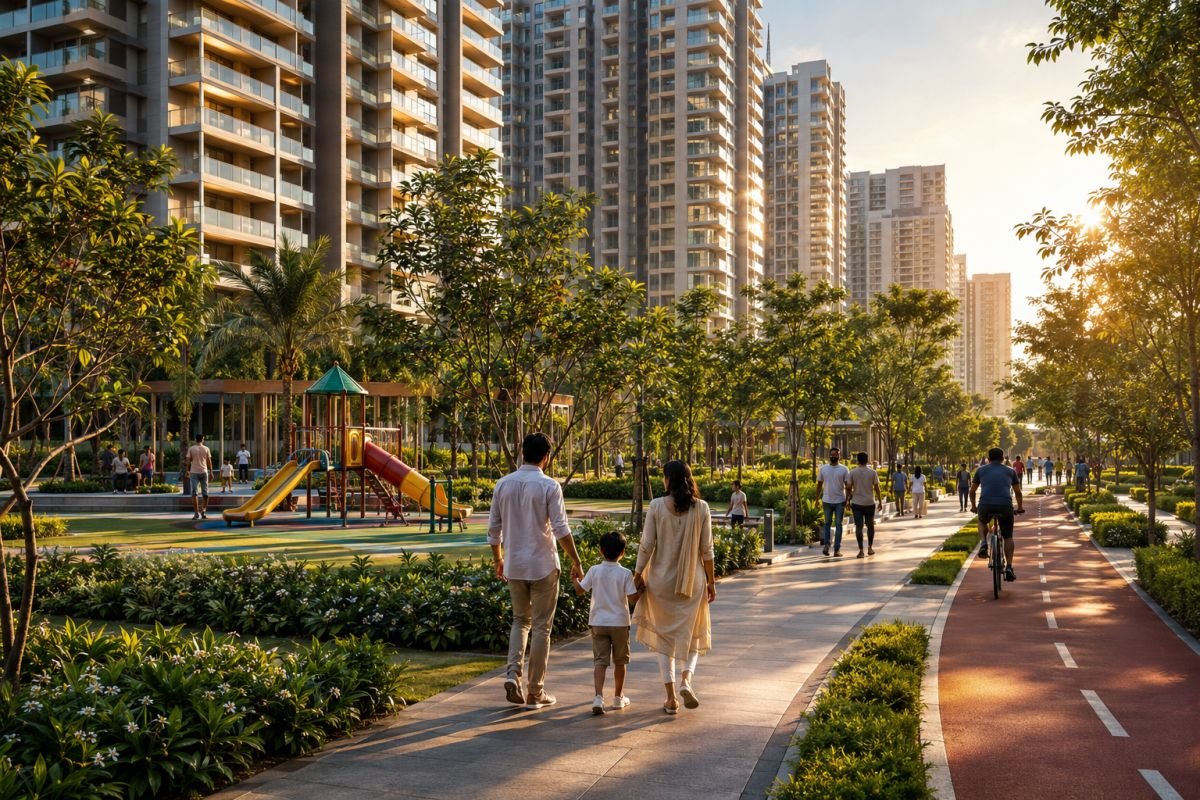
Wide pedestrian pathways, landscaped gardens, dedicated cycling tracks, open parks, and traffic-controlled internal roads allow children to move around safely while encouraging outdoor activity. Well-maintained play zones create opportunities for exercise, imagination, and teamwork.
Modern residential communities also provide clubhouses, indoor activity centers, reading rooms, art and music spaces, sports courts, swimming pools, and hobby clubs. These facilities help children discover new interests and develop skills beyond academics.

Equally important is security. Gated access, CCTV surveillance, visitor management systems, and trained security personnel provide parents with confidence while allowing children to enjoy greater independence within the community.
How Community Living Builds Lifelong Skills
Some of life’s most valuable lessons are learned through everyday experiences rather than textbooks. A child riding a bicycle with friends develops confidence. Participating in a football match teaches teamwork and discipline. Organizing a cultural event improves leadership and communication skills.
Community celebrations, sports tournaments, workshops, and neighborhood activities expose children to different cultures, personalities, and ideas. These experiences help them become adaptable, respectful, and socially confident.
Children also learn responsibility through simple routines such as taking care of shared spaces, respecting community rules, and participating in volunteer activities. These habits often remain with them well into adulthood.
The Physical and Mental Health Benefits
A child-friendly community naturally promotes an active lifestyle. Instead of spending hours indoors, children are encouraged to walk, run, cycle, swim, and play outdoor games. Regular physical activity improves fitness, strengthens bones and muscles, supports healthy growth, and reduces the risk of lifestyle-related health issues.
The mental health benefits are equally significant. Green spaces and outdoor environments have been associated with lower stress levels, improved concentration, and better emotional well-being. Children who spend more time outdoors often experience greater creativity and improved problem-solving abilities.

Strong neighborhood friendships also provide emotional support. Having friends nearby creates a sense of belonging, reduces loneliness, and encourages healthy social development during important growing years.
Safe Communities Give Parents Peace of Mind
Every parent wants to give their child freedom while ensuring their safety. A well-planned residential community creates this balance by combining secure infrastructure with child-friendly design.
Features such as controlled entry points, CCTV surveillance, well-lit pathways, emergency response systems, and dedicated security staff allow children to enjoy outdoor activities with greater independence.
Knowing that children can safely ride bicycles, visit friends, or play in nearby parks gives parents confidence while encouraging children to become more self-reliant.
Why Integrated Townships Are Becoming the Preferred Choice
Integrated townships are becoming increasingly popular among families because they bring together residential spaces, recreation, education, healthcare, and daily conveniences within a single ecosystem.
Instead of spending hours commuting to sports facilities or activity centers, children can access these opportunities close to home. Parents also benefit from shorter travel times, improved work-life balance, and stronger community engagement.

Community events, seasonal celebrations, sports competitions, and educational workshops encourage families to connect with neighbors and create meaningful relationships that strengthen the overall living experience.
Among Gurgaon’s rapidly developing residential destinations, the Dwarka Expressway corridor has emerged as one of the preferred choices for families because of its modern infrastructure, premium integrated townships, excellent connectivity, reputed schools, and growing social ecosystem.
As more developers focus on creating lifestyle-oriented communities rather than standalone apartment buildings, integrated townships continue to redefine how families experience urban living by combining convenience, safety, recreation, and holistic child development within one thoughtfully planned neighborhood.
What Parents Should Look for Before Buying a Home
Buying a home is one of the biggest financial decisions for any family. While location and future appreciation remain important, parents should also evaluate whether the community supports healthy childhood development.
Look for neighborhoods that offer safe walking paths, dedicated play areas, landscaped parks, sports facilities, activity centers, libraries, reliable security systems, nearby schools, healthcare services, and well-maintained common spaces.
Location is equally important because it determines your family’s daily convenience and overall quality of life. Before making a final decision, it is worth exploring the best sectors in Gurgaon for families to understand which areas offer excellent social infrastructure, reputed schools, healthcare facilities, and long-term livability.
Families planning to stay in Gurgaon for the long term should also compare different growth corridors rather than focusing only on property prices. A comprehensive Gurgaon investment location guide can help you evaluate connectivity, infrastructure, future development, and lifestyle advantages before choosing the right neighborhood.
A clean, organized, and professionally managed community ensures that these facilities remain functional and enjoyable for years to come.
Investing in Your Child’s Future
Property is often viewed as a financial investment, but for families, it is also an investment in lifestyle and personal growth. The environment where children spend their formative years influences the friendships they build, the confidence they develop, and the habits they carry into adulthood.
While property values may appreciate over time, the memories created through community living are equally valuable. Playing with friends every evening, participating in cultural celebrations, learning sports, and enjoying nature become experiences that shape a child’s outlook on life.

Parents looking specifically for communities that prioritize children’s development can consider Ashiana Amarah Sector 93 Gurgaon, a residential project known for its kid-centric planning, learning-focused amenities, dedicated play zones, and thoughtfully designed spaces that encourage holistic child development.
Another excellent option is Ashiana Aaroham Sector 80 , where green open spaces, secure playgrounds, sports facilities, and family-oriented community planning create an environment that supports healthy and active childhood experiences.
When evaluating a new home, parents should ask not only whether the apartment meets their needs but also whether the community provides opportunities for their child to thrive.
Conclusion
A child-friendly community offers much more than attractive amenities. It creates an environment where children can grow physically, emotionally, socially, and intellectually through everyday experiences. Safe outdoor spaces, meaningful friendships, recreational activities, green surroundings, and supportive neighbors all contribute to a healthier and happier childhood.
Choosing the right community is ultimately about choosing the right environment for your family’s future. While no single factor determines a child’s success, growing up in a safe, active, and nurturing neighborhood provides countless opportunities to develop confidence, resilience, curiosity, and lifelong skills.
For parents planning their next home purchase, investing in a child-friendly community is not simply about buying property—it is about creating the foundation for a brighter future.
Frequently Asked Questions (FAQs)
1. What is a child-friendly community?
A child-friendly community is a residential neighborhood designed to support children’s safety, learning, physical activity, and social development through parks, playgrounds, green spaces, secure infrastructure, and family-focused amenities.
2. How does a child-friendly community benefit children?
It encourages outdoor play, builds confidence, improves communication skills, promotes teamwork, supports emotional well-being, and helps children develop healthy social relationships.
3. Why is outdoor play important for child development?
Outdoor play improves physical fitness, creativity, coordination, emotional resilience, and problem-solving abilities while reducing screen time and encouraging healthy social interaction.
4. Are gated communities safer for children?
Gated communities generally offer enhanced safety through controlled access, CCTV surveillance, visitor management systems, and dedicated security personnel, creating a safer environment for children.
5. How do green spaces influence a child’s growth?
Green spaces encourage physical activity, reduce stress, improve concentration, and provide opportunities for exploration, creativity, and a stronger connection with nature.
6. What amenities should parents prioritize while buying a home?
Parents should look for safe play areas, parks, sports facilities, walking and cycling tracks, clubhouses, activity rooms, nearby schools, healthcare facilities, and reliable security systems.
7. Why are integrated townships becoming popular with families?
Integrated townships combine homes with recreational facilities, retail, healthcare, schools, and green spaces, offering greater convenience and a balanced lifestyle for families.
8. Can community living reduce children’s screen time?
Yes. Attractive outdoor spaces, organized activities, sports facilities, and neighborhood friendships naturally encourage children to spend more time outdoors and less time using digital devices.
9. Does the community influence a child’s future?
Yes. The environment where children grow up plays an important role in shaping their confidence, personality, social skills, emotional intelligence, and overall development.
10. Is investing in a child-friendly community worth it?
For most families, the benefits extend beyond property appreciation. A child-friendly community supports healthier lifestyles, stronger social connections, improved safety, and better opportunities for children’s long-term growth and well-being.

Join The Discussion