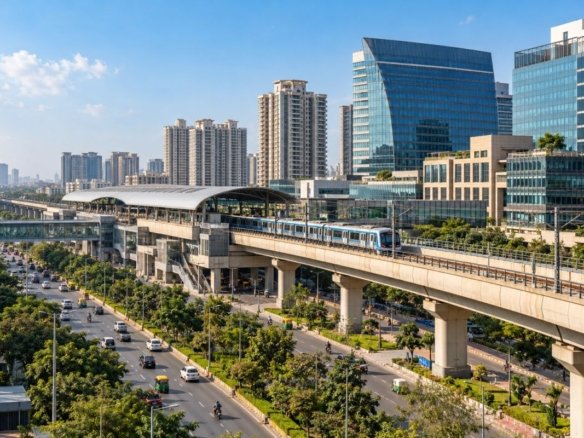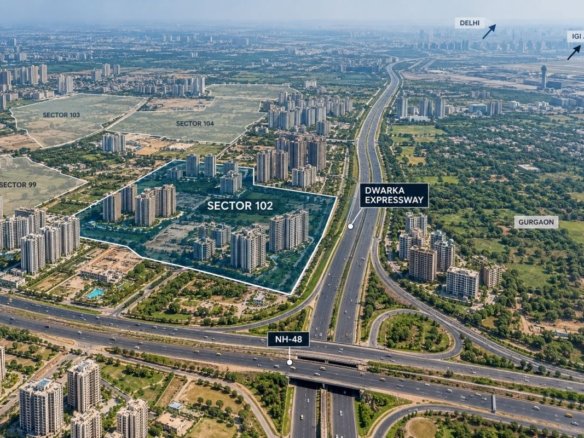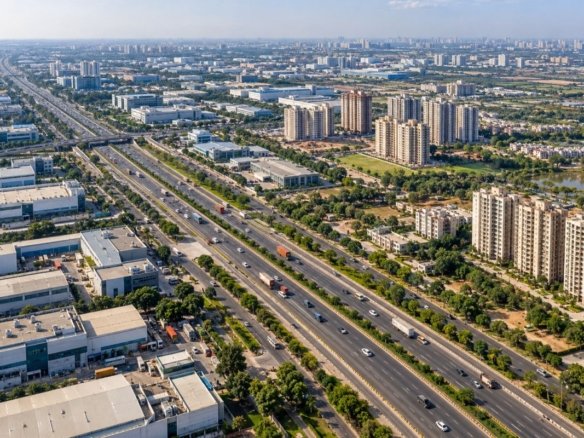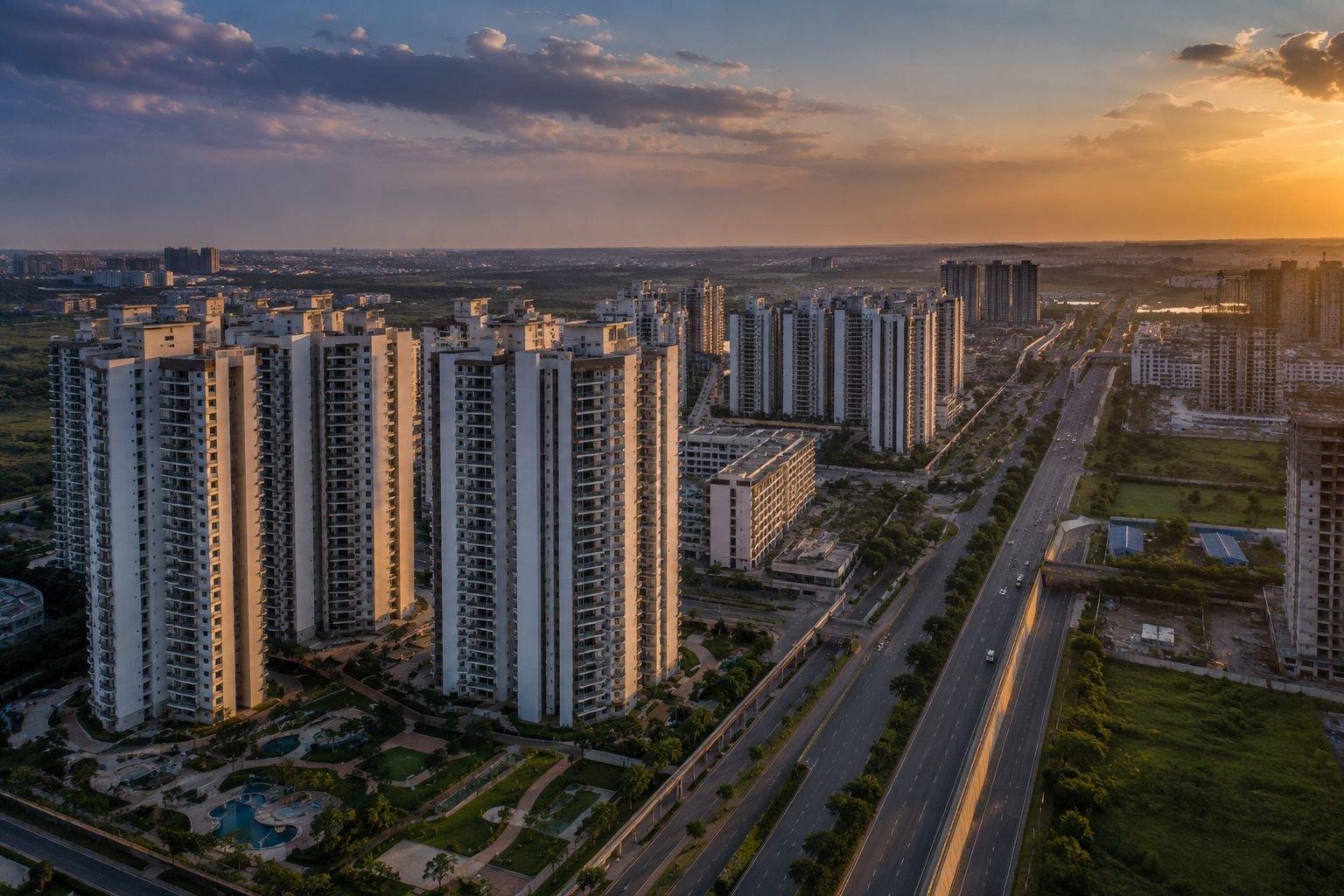
Over the last few years, the Delhi side of Dwarka Expressway has witnessed one of the most visible urban transformations in NCR. What was once viewed largely as an infrastructure-led expansion zone is now gradually evolving into a more complete urban ecosystem with residential communities, retail activity, hospitality infrastructure, and improving regional connectivity.
Among the sectors attracting the most attention in this transition, Sector 113 has emerged as a particularly strategic location due to its direct access toward Delhi, improving airport connectivity, large-scale branded developments, and proximity to several important infrastructure projects shaping the future of the Gurgaon-Dwarka belt.
Unlike many earlier Gurgaon growth cycles that were driven heavily by speculative investment, Buyers tracking future supply can also explore the latest project launches along Dwarka Expressway to understand how the corridor is evolving. Buyer movement in this corridor increasingly appears linked to actual lifestyle migration. Families looking for larger homes, modern gated communities, better road infrastructure, and stronger connectivity toward Delhi are now evaluating this side of the city far more seriously than they were even a few years ago.
For buyers exploring the broader residential ecosystem across the corridor, the complete Dwarka Expressway residential projects guide offers a wider overview of active developments across the region.
Why This Belt is Seeing Rising Buyer Interest
One of the biggest reasons behind the growing attention around this corridor is the way buyer priorities across NCR have changed after the pandemic years.
Today’s affluent homebuyers are placing greater importance on:
- Larger living spaces
- Better urban planning
- Lower-density communities
- Club-led lifestyles
- Green areas and open layouts
- Faster airport connectivity
- Reduced inner-city congestion
This shift has gradually pushed demand toward newer sectors that can offer modern infrastructure at scale.
Many homebuyers also compare this corridor with the most sought-after residential sectors in Gurgaon before finalizing their investment destination.
Many established Delhi neighborhoods still hold strong location value, but limited redevelopment possibilities, traffic congestion, parking challenges, and aging housing stock have encouraged a section of buyers to look outward toward newer planned communities.
That shift is increasingly benefiting the Delhi-edge side of Dwarka Expressway.
Connectivity Advantage and Strategic Location

The location enjoys direct connectivity toward several important NCR infrastructure nodes, including:
- Dwarka Sector 21 Metro Station
- IGI Airport
- Aerocity
- Diplomatic Enclave II
- Yashobhoomi Convention Centre
- Bharat Vandana Park
- NH-48
- Cyber City Gurgaon
Approximate travel times currently include:
| Destination | Estimated Travel Time |
|---|---|
| Dwarka Sector 21 Metro | 10–15 Minutes |
| IGI Airport | 20–30 Minutes |
| Yashobhoomi | 15–20 Minutes |
| Aerocity | 25–35 Minutes |
| Cyber Hub / Cyber City | 35–45 Minutes |
This accessibility is becoming increasingly important for professionals working across Delhi-Gurgaon business districts, airport-linked industries, and corporate hubs.
Another factor often underestimated in real estate discussions is psychological proximity. Many Delhi-based families still prefer locations that feel operationally connected to Delhi rather than sectors perceived as “deep Gurgaon.” That comfort factor plays a surprisingly important role in long-term buyer preference and resale liquidity.
Why Delhi Buyers Are Gradually Moving Toward This Side of the Expressway

A noticeable trend across the NCR market over the last few years has been the growing interest from Delhi-based buyers in newer communities near the Gurgaon border.
The reasons are practical rather than speculative.
In many older parts of Delhi, buyers often face:
- Smaller apartment layouts
- Limited gated community options
- Congested internal roads
- Parking limitations
- Aging residential infrastructure
- Limited modern inventory supply
Newer developments near the expressway, on the other hand, are offering:
- Larger residences
- Modern security ecosystems
- Club-focused living
- Better landscaping
- Wider roads
- Integrated community planning
For many families, this is less about “moving to Gurgaon” and more about upgrading lifestyle quality while retaining strong access toward Delhi and the airport corridor.
This trend is especially visible among business families, senior professionals, frequent flyers, and NRIs evaluating long-term self-use properties.
Property Prices and Current Market Movement (2026)

As of 2026, residential values across this micro-market have witnessed strong appreciation following the operational progress of Dwarka Expressway and improving buyer confidence in the surrounding infrastructure ecosystem.
Average pricing across branded developments currently ranges approximately between:
- ₹15,000–₹24,000 per sq. ft.
- Select ultra-premium inventory may command higher valuations depending on tower positioning, views, specifications, and developer branding
Current transaction patterns indicate that larger-format apartments and established developer-led communities are witnessing stronger demand compared to smaller speculative inventory.

Rental activity is also gradually improving due to:
- Airport-linked employment growth
- Better cross-city connectivity
- Corporate movement between Delhi and Gurgaon
- Increasing occupancy across nearby residential sectors
Compared to several interior New Gurgaon sectors, the Delhi-edge corridor is currently benefiting more from airport-linked buyer movement and cross-border commuter demand. That distinction is becoming increasingly important in the post-expressway operational phase.
Residential Projects Influencing the Area’s Growth
The quality of developer participation has played a major role in reshaping the perception of this corridor over recent years.
Several large-scale developments are now targeting upper-mid and luxury buyers seeking modern community environments near Delhi connectivity zones.
M3M Mansion Sector 113 Gurgaon
M3M Mansion is being positioned toward buyers looking for larger upscale residences with premium amenities and relatively faster connectivity toward Delhi and airport infrastructure zones.
Godrej Vrikshya Sector 113 Gurugram
Godrej Vrikshya has attracted attention due to its landscaped planning approach and lower-density residential positioning, reflecting the growing demand for greener living environments.
M3M Capital Sector 113 Gurugram
M3M Capital has emerged as one of the larger developments contributing to the evolving skyline and residential identity of the area.
La Vida by Tata Housing Sector 113 Gurgaon
La Vida by Tata Housing has appealed to buyers prioritizing brand credibility, integrated planning, and long-term residential comfort.
OneDXP Gurgaon
OneDXP reflects the increasing shift toward mixed-use urban planning and modern residential ecosystems developing across the expressway belt.
Commercial and Retail Activity is Gradually Expanding

One of the important signs of long-term urban maturity is whether an area begins evolving beyond purely residential demand.
That transition is gradually becoming visible here.
Retail corridors, SCO developments, cafes, neighborhood shopping environments, and mixed-use commercial formats are steadily expanding as residential occupancy rises across nearby sectors.
This matters because sustainable residential demand usually strengthens when supporting commercial ecosystems begin developing organically rather than remaining dependent on distant city centers.
One of the prominent commercial developments contributing to this transition is:
M3M SCO 113 Market Gurgaon
As more families move into surrounding residential communities, demand for organized retail and lifestyle infrastructure is expected to strengthen further over the coming years.
Investors exploring retail and office opportunities across the corridor can also review the broader commercial projects on Dwarka Expressway overview.
Social Infrastructure and Everyday Livability

The long-term success of any residential corridor depends heavily on how quickly everyday lifestyle infrastructure evolves around it.
This region is gradually strengthening across several important categories including:
- Schools
- Healthcare
- Retail
- Hospitality
- Entertainment
- Urban recreation
Nearby institutions and lifestyle anchors include:
- Delhi Public School
- Mount Carmel School
- Manipal Hospital connectivity
- Aerocity hospitality corridor
- Yashobhoomi Convention Centre
- Bharat Vandana Park
- Upcoming neighborhood retail hubs
The presence of large-scale public infrastructure and hospitality investment around the Delhi-Dwarka side is also improving the long-term urban profile of the surrounding sectors.
Comparison With Other Gurgaon Growth Corridors

| Factor | Delhi-Edge Expressway Belt | Interior New Gurgaon Corridors |
|---|---|---|
| Delhi Accessibility | Very Strong | Moderate |
| Airport Connectivity | Excellent | Moderate |
| Buyer Movement | Increasing End-User Driven | More Mixed |
| Residential Positioning | Upper-Mid to Luxury | Broad Range |
| Urban Planning | Strong in New Developments | Sector Dependent |
| Commercial Evolution | Gradually Improving | Varies Widely |
| Long-Term Perception | Premium Emerging Corridor | Mixed by Location |
Another important distinction is that this side of the expressway is increasingly benefiting from buyers who require regular movement between Delhi and Gurgaon. That commuter-driven demand creates a different market dynamic compared to purely investor-heavy expansion zones farther inside Gurgaon.
Factors Buyers Should Evaluate Carefully
While long-term prospects remain positive, buyers should also evaluate the market with realistic expectations rather than purely promotional narratives.
A few important considerations include:
- Some surrounding pockets are still witnessing active construction activity
- Infrastructure across certain stretches continues evolving
- Project execution timelines can vary between developers
- Social infrastructure is improving but still maturing in parts
- A medium-to-long-term holding horizon may be more suitable for investors seeking stronger appreciation potential
As with any developing urban corridor, project selection and developer credibility remain extremely important.
Buyers evaluating multiple micro-markets can benefit from a comprehensive Gurgaon property investment location guide to understand how different growth corridors compare in terms of appreciation potential and livability.
This balanced perspective is particularly relevant because not every project within an emerging market performs equally, even when the broader location outlook remains strong.
Infrastructure Growth and Long-Term Outlook
Several macro-level infrastructure trends continue supporting confidence in this corridor as of 2026.
These include:
- Operational expansion of Dwarka Expressway
- Airport-led urban growth
- Diplomatic Enclave II development
- Convention and hospitality infrastructure expansion
- Wider NCR connectivity upgrades
- Increasing metro connectivity expectations
- Growth of airport-facing commercial ecosystems
Authorities including Gurugram Metropolitan Development Authority continue focusing on infrastructure strengthening across major Gurgaon growth corridors.
Regulatory oversight from Haryana Real Estate Regulatory Authority has also improved buyer confidence toward organized residential development.
Unlike several speculative expansion pockets seen during earlier Gurgaon growth cycles, current demand patterns across this belt increasingly appear linked to actual end-user migration and long-term residential intent. That could become one of the most important differentiators for long-term market stability.
Who Should Consider Buying Here?
For end-users entering the market for the first time, understanding the key factors involved in purchasing an apartment in Gurgaon can help make a more informed decision before shortlisting projects in this corridor.
This location may particularly appeal to:
- Delhi-based business families
- Frequent airport travelers
- NRIs
- Buyers seeking larger modern homes
- Professionals working across Delhi-Gurgaon corporate zones
- Long-term investors focused on infrastructure-led appreciation
- Families prioritizing modern gated communities near Delhi connectivity
For buyers evaluating active inventory, launches, and current opportunities, the dedicated Sector 113 Gurgaon deals page provides additional project-level insights.

Frequently Asked Questions
Is this area considered suitable for long-term investment?
Yes. The combination of Delhi-border connectivity, airport accessibility, improving infrastructure, and branded residential development continues supporting long-term growth potential.
Why are Delhi buyers increasingly evaluating this corridor?
Many buyers are seeking larger homes, better urban planning, modern gated communities, and improved lifestyle infrastructure while maintaining strong connectivity toward Delhi.
What kind of projects are available here?
The area primarily features upper-mid and luxury residential developments including high-rise communities, branded housing projects, and mixed-use developments.
Is airport connectivity a major advantage?
Yes. Proximity toward IGI Airport, Aerocity, and major Delhi infrastructure zones remains one of the strongest advantages of this location.
Are reputed developers active in this market?
Yes. Developers including M3M, Godrej Properties, Tata Housing, and several other established brands have active developments in the region.
Is commercial growth also happening nearby?
Yes. Retail corridors, SCO developments, cafes, and neighborhood commercial activity are gradually expanding as residential occupancy increases.
Is this market more investor-driven or end-user-driven?
The corridor is increasingly witnessing stronger end-user participation compared to earlier speculative growth phases.
What differentiates this belt from several interior Gurgaon sectors?
Its biggest differentiators are Delhi accessibility, airport connectivity, improving urban infrastructure, and stronger cross-border commuter demand.