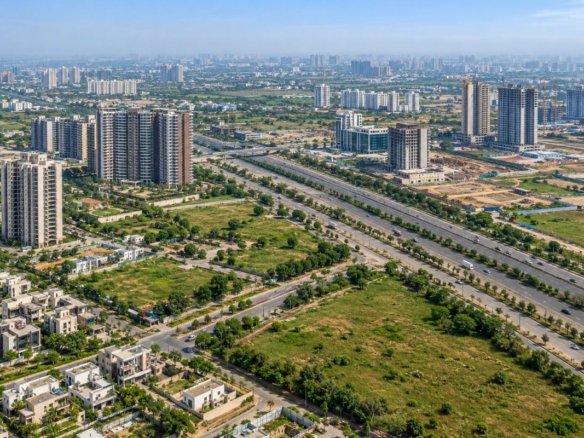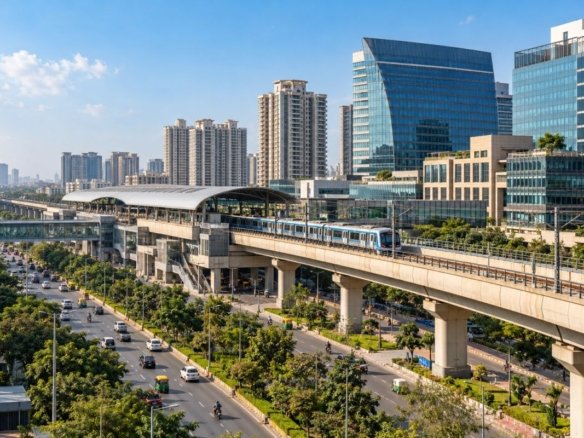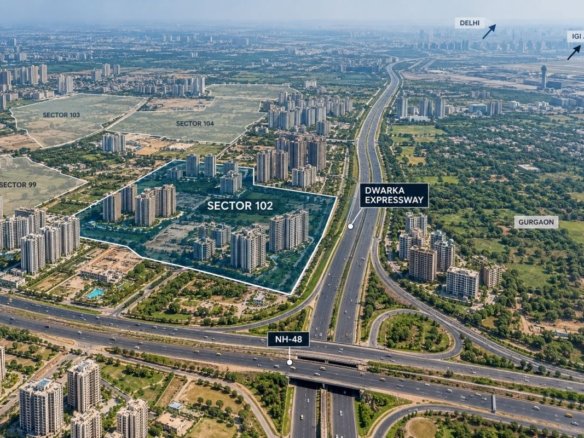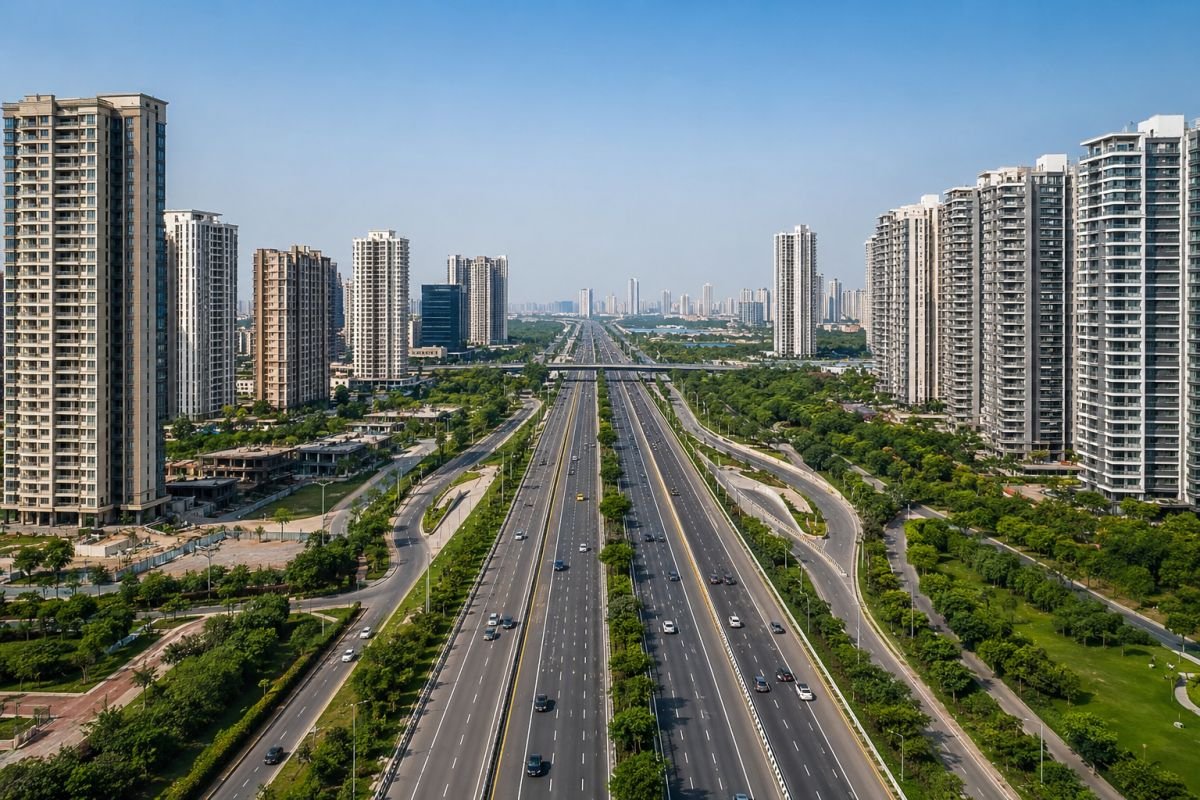
The dwarka expressway completion 2026 milestone represents one of the most significant infrastructure developments shaping the Delhi NCR real estate market. For nearly two decades, the corridor remained a story of construction updates, land acquisition challenges, and gradual progress. Today, the discussion has shifted from when the expressway will be completed to how its full operationalization could influence property values, daily commuting, and the long-term growth of Gurgaon.
For homebuyers, the completion of a major infrastructure project changes the way a location is evaluated. Instead of investing solely on future expectations, buyers can now assess real travel times, existing neighbourhood development, and the quality of social infrastructure. Investors, meanwhile, are increasingly focused on whether the corridor still offers meaningful appreciation potential after years of anticipation.
This guide examines the implications of dwarka expressway completion 2026, the latest dwarka expressway status, and what the phased dwarka expressway opening means for end-users, investors, and NRIs considering property in one of Gurgaon’s fastest-evolving residential corridors.
What Does Dwarka Expressway Completion 2026 Actually Mean?
The Dwarka Expressway, officially known as NH-248BB, is an approximately 29-kilometre access-controlled highway connecting Dwarka in Delhi with Gurgaon. The corridor has been planned to reduce congestion on NH-48 while providing an alternate route for commuters travelling between Delhi and the rapidly expanding residential sectors of Gurgaon.
While several stretches have already opened over the past few years, dwarka expressway completion 2026 should be viewed as the stage where the corridor functions as an integrated transportation network rather than a collection of completed segments. It is not simply about road construction reaching the finish line; it also reflects the gradual activation of interchanges, service roads, and supporting civic infrastructure that make the expressway practical for everyday use.
As traffic begins moving more efficiently across the corridor, residential and commercial activity is also expected to become more organised. Better accessibility often encourages businesses, schools, healthcare providers, and retailers to establish a stronger presence, making the surrounding sectors increasingly attractive for long-term residents.
That said, buyers should understand that infrastructure maturity does not happen overnight. Even after the main expressway becomes operational, surrounding ecosystems continue to develop over several years as population density increases and civic amenities catch up with residential growth.
Dwarka Expressway Status: Where the Corridor Stands Today
The current dwarka expressway status reflects a very different picture compared to what buyers experienced only a few years ago. The corridor has moved beyond being viewed purely as a future infrastructure promise and is increasingly becoming a functional urban route connecting Delhi and Gurgaon.

Driving conditions have improved significantly as larger stretches of the expressway have become operational. Travel between Dwarka and has become smoother for many commuters, and dependence on NH-48 has reduced on several routes. Residential sectors that once felt isolated are now witnessing stronger physical connectivity, which is gradually encouraging both homebuyers and businesses to move into the area.
However, it is equally important to recognise that every large infrastructure corridor develops in stages. While the primary road network may be operational, supporting infrastructure continues to evolve alongside residential occupancy and commercial demand.
Areas that buyers should continue monitoring include:
- Local access roads connecting individual sectors
- Service roads and internal circulation routes
- Public transport integration
- Commercial occupancy across retail destinations
- Schools, healthcare facilities, and everyday conveniences
These developments are typical for any large urban infrastructure project and should be viewed as part of the corridor’s natural evolution rather than as shortcomings.
Why Completion Matters More Than Construction
For years, investment along the Dwarka Expressway was driven largely by future expectations. Buyers entered the market believing that improved connectivity would eventually translate into higher demand and stronger property values. Once a major infrastructure project reaches operational status, however, those expectations begin to be tested against real-world outcomes.
This shift is particularly important because homebuyers tend to value completed infrastructure far more than promised infrastructure. People purchasing a primary residence usually prioritise practical considerations such as commuting convenience, neighbourhood quality, and everyday accessibility. Investors also begin analysing actual market performance instead of relying solely on projected growth.
Connectivity Becomes Real
Perhaps the biggest advantage of a fully operational corridor is that travel improvements become measurable rather than theoretical. Instead of estimating future commute times, residents can experience the difference in their daily routine.

For professionals working across Delhi and Gurgaon, improved access to major employment hubs can significantly reduce travel stress. Better connectivity also makes the surrounding residential sectors more attractive to families who previously preferred established locations due to commuting concerns.
The expressway improves access to several important destinations, including:
- Delhi and Dwarka
- IGI Airport
- NH-48
- Cyber City
- Southern Peripheral Road (SPR)
- New Gurgaon
As connectivity improves, perceptions of distance also begin to change. Locations that once appeared relatively far from central business districts often become more practical choices once travel becomes faster and more predictable.
End-User Demand Typically Increases
Infrastructure completion generally has its greatest impact on genuine homebuyers rather than speculative investors. As road connectivity improves, more families begin considering the corridor as a place to live rather than simply an investment destination.
This change is often gradual but meaningful. Improved accessibility encourages educational institutions, hospitals, supermarkets, restaurants, and daily convenience services to expand into the area. Over time, these developments help create self-sustaining neighbourhoods where residents no longer need to travel long distances for everyday requirements.
Many of Gurgaon’s established residential corridors have followed a similar pattern of development. Initially driven by infrastructure investment, they gradually evolved into mature residential ecosystems once occupancy increased and supporting amenities caught up with housing supply.
For families planning to stay in their homes for several years, this transition is often more important than short-term price appreciation because it directly influences quality of life.
How Dwarka Expressway Compares With Other Gurgaon Corridors
Every major growth corridor in Gurgaon has followed its own development cycle. Golf Course Road is already an established luxury destination with premium commercial districts and mature social infrastructure. Golf Course Extension Road has evolved into a preferred residential location for upper mid-segment and luxury buyers, while Southern Peripheral Road (SPR) is emerging as another high-growth corridor driven by infrastructure upgrades and large mixed-use developments.

Dwarka Expressway occupies a unique position because it combines improving Delhi connectivity with relatively newer residential communities. Unlike more mature markets where prices have already appreciated substantially, the corridor is still transitioning into a fully developed urban ecosystem. This makes it attractive for both end-users seeking modern housing and investors looking for infrastructure-backed long-term growth.
| Corridor | Development Stage | Connectivity | Buyer Profile | Investment Outlook |
|---|---|---|---|---|
| Dwarka Expressway | Rapidly maturing | Excellent Delhi connectivity | End-users & investors | Strong long-term potential |
| Golf Course Road | Fully established | Premium urban access | Luxury buyers | Mature market |
| Golf Course Extension Road | Mature residential growth | Good connectivity | Mid to premium buyers | Stable appreciation |
| Southern Peripheral Road (SPR) | Expanding rapidly | Excellent east-west connectivity | Families & investors | Strong growth potential |
| New Gurgaon | Developing | Good regional connectivity | Value-conscious buyers | Medium to long-term growth |
Who Benefits Most from Dwarka Expressway Completion 2026?
The impact of dwarka expressway completion 2026 will vary depending on a buyer’s objectives. While improved infrastructure generally benefits the overall market, different buyer profiles are likely to experience different advantages.
End-User Homebuyers
Families looking for a long-term residence are among the biggest beneficiaries of infrastructure completion. A well-connected neighbourhood often translates into shorter daily commutes, improved convenience, and access to better civic amenities over time.
Many residential communities along the corridor already offer spacious apartments, landscaped open spaces, modern clubhouses, and gated security. As occupancy continues to rise, the surrounding ecosystem is also expected to strengthen with more schools, healthcare facilities, shopping destinations, and entertainment options.
For buyers planning to live in the property for the next decade or longer, these lifestyle improvements may prove more valuable than short-term fluctuations in property prices.
Long-Term Investors
Infrastructure-led investment typically works best with patience. Investors who have a five to ten-year horizon often evaluate whether a corridor can continue attracting end-users after major infrastructure becomes operational.
The Dwarka Expressway has several factors working in its favour. Better connectivity, increasing residential occupancy, improving commercial activity, and the presence of reputed developers all contribute to its long-term appeal. However, buyers should remember that future appreciation depends on several variables, including economic growth, interest rates, housing supply, and employment generation across Delhi NCR.
Instead of expecting rapid appreciation immediately after completion, investors should focus on projects with strong fundamentals, credible developers, and locations that are likely to witness sustained residential demand.
NRI Buyers
The corridor has also emerged as a preferred destination for many NRI buyers looking to invest in Gurugram. Proximity to IGI Airport, modern residential developments, and improving connectivity make the area attractive for professionals who frequently travel internationally or intend to relocate in the future.
NRIs should nevertheless approach purchases with the same level of due diligence as domestic buyers. Every project’s legal approvals, construction status, payment schedule, and developer credentials should be independently verified before making an investment decision.
Connectivity Advantages After Full Operationalization
One of the strongest arguments supporting dwarka expressway completion 2026 is the transformation in regional connectivity. Rather than functioning as an isolated road, the expressway integrates multiple parts of Delhi and Gurugram into a more connected transportation network.
Residents living along the corridor enjoy easier access to several major destinations, including Delhi, Dwarka, NH-48, Cyber City, Golf Course Road, Golf Course Extension Road, Southern Peripheral Road (SPR), and New Gurgaon. Improved airport connectivity is another significant advantage for business travellers and frequent flyers, particularly because IGI Airport remains one of India’s busiest aviation hubs.
The corridor’s strategic location also positions it well within the broader NCR infrastructure network. Future projects such as the Noida International Airport (Jewar Airport), regional road upgrades, and expanded public transport connectivity could further improve accessibility over the coming years, although the extent of these benefits will depend on the timely completion of related infrastructure.
Property Prices: Will Completion Push Values Higher?
One of the most common questions among buyers is whether infrastructure completion automatically leads to higher property prices. The answer is more nuanced than a simple yes or no.

Historically, major infrastructure projects tend to support long-term capital appreciation because they improve accessibility, attract businesses, and encourage residential demand. However, appreciation is rarely immediate, nor does it occur uniformly across every project or sector.
Several factors continue to influence property values beyond infrastructure alone. Housing supply, interest rates, overall economic conditions, employment growth, developer reputation, and buyer sentiment all play important roles in determining future price movements.
Instead of assuming that prices will rise sharply after completion, buyers should evaluate whether current valuations still offer reasonable long-term value relative to competing corridors. Projects with superior construction quality, better layouts, established neighbourhoods, and stronger developer credentials are generally more resilient across different market cycles.
What Buyers Should Verify Before Purchasing
Even the strongest infrastructure story cannot replace proper due diligence. Before finalising any property purchase, buyers should carefully verify the project’s legal status, construction progress, and financial commitments.
Always check:
- HARERA registration
- Approved building plans
- Construction progress
- Occupancy Certificate (where applicable)
- Possession timeline
- Maintenance charges
- Developer track record
- Payment schedule
Note: Verify every RERA-related claim directly through the official Haryana RERA (HARERA) portal before making an investment decision.
Sectors Worth Researching Along the Corridor
Not every sector along the Dwarka Expressway offers the same investment proposition. Some have already reached a stage where residents enjoy established schools, healthcare facilities, retail centres, and community services, while others are still in the early phases of development. As a result, buyers should evaluate locations individually instead of assuming that the entire corridor will perform uniformly.
For end-users, the focus should be on liveability. Consider whether the neighbourhood has adequate educational institutions, hospitals, grocery stores, and recreational spaces within a comfortable distance. Daily convenience often plays a much larger role in long-term satisfaction than future appreciation alone.
Investors, on the other hand, should analyse future infrastructure plans, commercial development, occupancy levels, and the supply pipeline. Sectors with a healthy balance between residential demand and upcoming commercial activity are generally better positioned for sustainable growth than those relying solely on speculative interest.
Before shortlisting any location, compare factors such as social infrastructure, metro connectivity proposals, retail accessibility, and proximity to employment hubs. Readers looking for a detailed sector-wise analysis can explore the __Dwarka Expressway property guide__ alongside the __best sectors in Gurgaon__ to understand which micro-markets align best with their objectives.
Projects Buyers May Consider Exploring
The Dwarka Expressway corridor is home to projects from several reputed national developers, ranging from premium apartments to ultra-luxury gated communities. While developer reputation is undoubtedly important, it should never be the only criterion for selecting a property.
A well-informed purchase decision should consider multiple aspects, including construction quality, apartment layouts, project density, green spaces, maintenance planning, and long-term community management. Buyers should also examine the developer’s delivery history and financial credibility, particularly for projects that are still under construction.
Rather than focusing only on marketing brochures or launch offers, it is advisable to compare projects on practical parameters that directly affect future liveability and resale value.
Some of the key aspects worth comparing include:
- Apartment layouts and usable space
- Construction quality and specifications
- Open green areas and community amenities
- Density of towers and residents
- Long-term maintenance model
- Developer’s execution and delivery record
Risks Buyers Should Keep in Mind
Every infrastructure-led investment opportunity comes with its own set of risks, and the Dwarka Expressway is no exception. Although the corridor has made significant progress, buyers should avoid assuming that every project will appreciate at the same pace simply because the expressway is operational.
Property performance depends on several project-specific and market-wide factors. Some sectors may experience stronger demand than others, while certain developments could face increased competition due to future housing supply. Broader economic conditions, lending rates, and employment trends also influence residential demand across Gurgaon.
Supporting infrastructure such as schools, hospitals, retail centres, and public transport may continue to evolve over the coming years. Buyers expecting an instantly mature neighbourhood may therefore need to align their expectations with the natural pace of urban development.
Before investing, it is sensible to assess:
- The project’s legal and regulatory compliance
- The developer’s financial and execution track record
- Existing and upcoming residential supply nearby
- Availability of social infrastructure
- Your own investment horizon and financial goals
Approaching the corridor with realistic expectations and thorough due diligence is likely to produce better long-term outcomes than relying solely on infrastructure-related optimism.
Is This the Right Time to Buy?
Whether this is the right time to purchase property along the Dwarka Expressway depends less on the completion milestone itself and more on your individual objectives. Infrastructure completion certainly improves the attractiveness of the corridor, but every buyer’s financial situation, lifestyle requirements, and investment horizon are different.
For end-users, today’s market may present an opportunity to secure a home in a rapidly improving location before the surrounding ecosystem reaches full maturity. Buyers planning to stay in the property for many years are generally better positioned to benefit from gradual neighbourhood development and improving civic infrastructure.
Long-term investors should evaluate whether the current pricing still offers reasonable value relative to competing corridors in Gurgaon. Instead of attempting to perfectly time the market, it is often more beneficial to focus on buying a quality asset in a fundamentally strong location.
Buying may make sense if you:
- Plan to own the property for the long term.
- Prefer modern residential communities with improving connectivity.
- Want easier access to both Delhi and Gurgaon.
- Are investing with realistic expectations rather than short-term speculation.
You may wish to reconsider or take more time if:
- You expect immediate appreciation after completion.
- Your preferred sector still lacks essential social infrastructure.
- Financing arrangements are not yet in place.
- You have not completed legal and project-specific due diligence.
Ultimately, the best investment decisions are based on careful research rather than market sentiment.
Final Thoughts
The dwarka expressway completion 2026 milestone marks a significant turning point in Gurgaon’s urban development story. The corridor is gradually evolving from an infrastructure project into a fully functioning residential and commercial destination, supported by improving connectivity, growing social infrastructure, and increasing buyer confidence.

However, successful property investment requires looking beyond infrastructure headlines. Buyers should evaluate every project on its own merits by considering location quality, developer reputation, legal compliance, construction progress, neighbourhood maturity, and long-term liveability. Infrastructure creates opportunities, but disciplined due diligence remains the foundation of a sound investment decision.
compare it with other emerging micro-markets through the __Gurgaon investment location guide__. For personalised, data-driven guidance tailored to your budget and investment goals, you can also speak with the AssuredGains advisory team to make an informed decision without unnecessary sales pressure.
Frequently Asked Questions
1. What is the latest Dwarka Expressway status?
The latest dwarka expressway status indicates that most major stretches of the corridor are operational, with supporting infrastructure continuing to develop across different sectors. Buyers should verify the latest government updates for individual interchanges, service roads, and local connectivity before making a purchase decision.
2. Has the Dwarka Expressway opening been completed?
The dwarka expressway opening has taken place in phases. While substantial portions of the corridor are already operational, complete corridor maturity also depends on supporting infrastructure, commercial development, and civic amenities that continue to evolve over time.
3. Will Dwarka Expressway completion 2026 increase property prices?
Infrastructure completion can positively influence long-term capital appreciation by improving accessibility and attracting end-user demand. However, future price growth also depends on factors such as housing supply, economic conditions, developer quality, and overall market sentiment, so appreciation cannot be guaranteed.
4. Is the Dwarka Expressway better for end-users or investors?
The corridor offers opportunities for both. End-users benefit from better connectivity and improving neighbourhood infrastructure, while long-term investors may find value in the area’s ongoing development and future growth potential, provided they carry out thorough due diligence.
5. What should buyers verify before purchasing property on Dwarka Expressway?
Buyers should verify HARERA registration, legal approvals, construction status, developer credibility, payment plans, possession timelines, maintenance costs, and all relevant documentation. Every RERA-related claim should be independently confirmed on the official Haryana RERA (HARERA) portal before making any investment decision.