
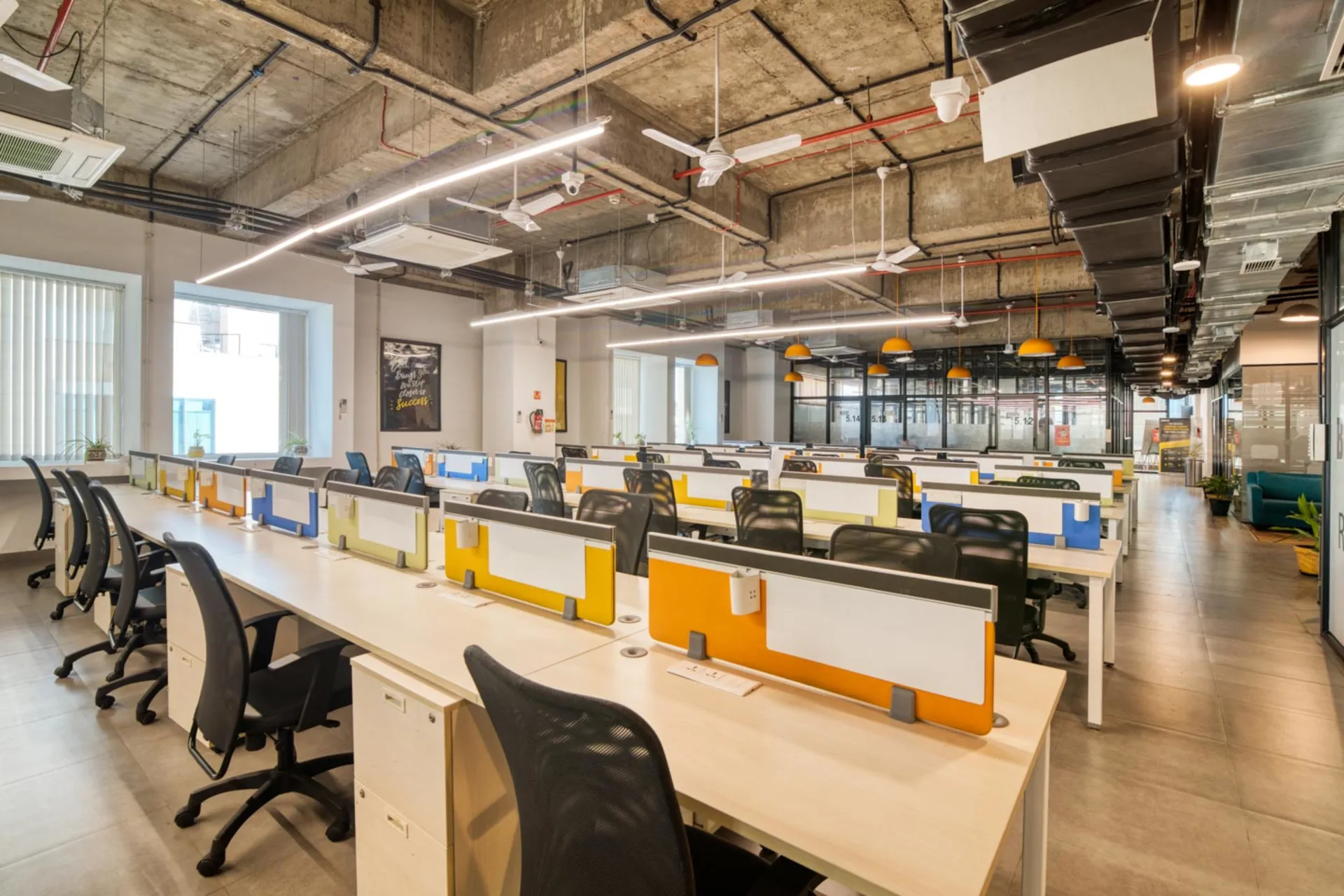
The office market looks very different today than it did a decade ago.
For years the formula was simple. A company signed a long lease, designed its office, invested heavily in interiors, and expected to stay there for years. Stability was the foundation of traditional office leasing.
That model has gradually started to change.
In cities like Gurgaon, this shift is even more visible when you look at evolving office space demand trends Gurgaon, where flexibility and hybrid work are reshaping leasing decisions.
One of the biggest forces behind this shift is the growth of coworking spaces. What started as shared desks for freelancers and startups has evolved into a significant segment of the global commercial real estate market.
Flexible workspace operators now occupy millions of square feet of office space across major business cities worldwide. Their presence has influenced how landlords design office buildings, how companies plan workplace strategies, and how leasing agreements are structured.
The shift didn’t happen overnight, but it has been steady.
Today coworking is no longer considered an alternative workspace solution. It has become an important part of modern office leasing strategy.
Understanding how coworking spaces affect traditional office leasing is now essential for landlords, investors, developers, and companies that rely on office space.
For businesses planning long-term expansion in Gurgaon, understanding the city’s most promising growth corridors can be equally important. Exploring the best locations for real estate growth in Gurgaon can help investors align commercial and residential opportunities with future infrastructure developments.
The Rise of Coworking: From Niche Concept to Mainstream Workplace

Ten to fifteen years ago coworking spaces were a small niche in the office market.
Freelancers used them. Early-stage startups used them. Small creative agencies liked them because they could work in a professional environment without committing to long leases.
Operators such as WeWork, Regus, and Awfis helped popularize the model by offering flexible memberships, furnished workspaces, and shared community environments.
Then the workplace itself began to change.
Startup ecosystems expanded rapidly in cities such as London, New York, Bangalore, and Singapore. Technology companies began scaling faster than traditional businesses. Remote work also started gaining acceptance inside large organizations.
Flexible workspace suddenly became useful for far more than freelancers.
Large companies began using coworking spaces for project teams, temporary expansion space, and satellite offices located closer to employees.
Today coworking operators lease and manage millions of square feet of workspace globally, and in several business districts they represent a visible share of new office leasing activity.
What started as a niche workspace idea has gradually become part of mainstream office strategy.
How Coworking Changed the Traditional Leasing Model
Traditional office leasing was designed for stability and long-term planning.
Companies typically signed leases lasting five to nine years. Before employees could move in, the tenant needed to invest in interior construction, office furniture, IT infrastructure, meeting rooms, and workspace design.
The entire process could take months.

Coworking spaces simplified that system.
Instead of building an office from scratch, companies could move into an already prepared workspace. Workstations, meeting rooms, internet connectivity, and shared facilities were ready on day one.
That alone removed a significant barrier for many businesses.
Flexibility also became a major attraction.
A company might need twenty desks today but require fifty next year. With a traditional lease that often meant relocating to a new office. Flexible workspace made expansion easier by allowing companies to scale up or down without committing to large amounts of permanent office space.
This change introduced a new level of agility into corporate real estate planning.
A Shift in Demand for Smaller Office Spaces

One of the earliest effects of coworking growth appeared in the small-office segment.
In the past, small and mid-sized businesses commonly leased office units between 1,000 and 5,000 square feet. These spaces required long leases and upfront investment in office interiors.
Today many of those companies choose managed offices or coworking environments instead.
This trend aligns closely with the rising demand for small office spaces for new age businesses Gurgaon, where flexibility and cost efficiency are key decision factors.
The reason is straightforward.
Flexible workspace allows businesses to access professional infrastructure without the financial burden of building an office themselves. Companies avoid interior design costs, furniture procurement, networking setup, and long lease commitments.
In startup-heavy markets this shift has become especially visible. Coworking operators now absorb a significant portion of the demand that once belonged to small traditional office suites.
Why Large Corporations Are Using Coworking Spaces
Coworking is not limited to startups anymore.
Large corporations have also begun integrating flexible workspace into their office strategies.
Many organizations now operate under a hub-and-spoke model. The headquarters remains the central hub while smaller satellite offices are distributed across different parts of a city.
Flexible workspace operators often host these satellite locations.

This arrangement allows companies to place employees closer to where they live, reduce commuting time, and test new markets without committing to long leases.
Coworking spaces are also used for temporary project teams, innovation labs, and short-term expansion needs.
The goal is not to replace the headquarters.
It is to add flexibility.
What Happened to Traditional Office Rents?
One of the most common questions in commercial real estate is whether coworking has lowered traditional office rents.
The answer depends largely on location.
In prime business districts where demand from large corporations remains strong, rental levels have stayed relatively stable. Major office hubs such as Midtown Manhattan, the City of London, and major financial districts across global cities continue to attract long-term tenants.
However, in secondary office markets the impact has been more noticeable.
When companies have access to flexible workspace options, they sometimes compare coworking membership costs with traditional office leases. This comparison often becomes part of lease negotiations.
Landlords have responded by offering more flexible terms, including shorter lock-in periods and tenant improvement incentives.
In Gurgaon, premium developments still command strong returns, especially when evaluating grade A office spaces rental yield Gurgaon in high-demand business corridors.
The office market has not collapsed.
It has simply become more adaptable.
This adaptability is also influencing residential real estate decisions, as professionals relocating for work increasingly evaluate factors such as connectivity, amenities, and future appreciation before making a purchase. A detailed guide to purchasing property in Gurgaon can help buyers make more informed decisions in a rapidly evolving market.
How Landlords Are Responding to the Coworking Trend
Property owners have adjusted their strategies in several ways.
Some landlords lease entire floors to coworking operators. This approach guarantees occupancy while allowing the operator to manage the workspace environment and tenant turnover.
Other developers have chosen to launch their own managed office brands inside their buildings.
These managed offices function similarly to coworking spaces but remain under the landlord’s operational control.
Office design has also evolved.
Modern office buildings increasingly include collaborative zones, shared meeting areas, wellness facilities, and hospitality-style lounges. The goal is to create office environments that feel more dynamic and employee-friendly.

In many cases, landlords are competing not only with other office buildings but also with the workplace experience offered by coworking providers.
Investor Perspective: Opportunity and Risk
From an investment perspective coworking presents both opportunities and challenges.
On the positive side, flexible workspace operators can quickly fill large floor areas in office buildings. In markets with strong startup ecosystems this can significantly improve occupancy levels.
Coworking operators have become important tenants in several office markets.
However, the business model also carries certain risks.
Most coworking companies sign long-term leases with landlords while offering short-term memberships to their customers. If membership demand declines during an economic downturn, operators may reduce their space requirements.
For investors this means evaluating the financial stability and long-term strategy of workspace operators before entering major leasing agreements.
Remote Work Accelerated the Flexible Workspace Trend
The pandemic accelerated workplace changes that were already underway.
Companies experimented with remote work. Hybrid schedules followed.
Office demand did not disappear.
It simply changed shape.
Many businesses realized they no longer needed the same permanent office footprint they once maintained. Flexible workspace offered a practical solution by providing professional office environments without long-term commitments.
Employees could meet clients, collaborate with colleagues, or work outside their homes while still maintaining flexibility.
Even as offices reopened, hybrid work policies continued supporting demand for flexible workspace.

Coworking and Traditional Offices Can Coexist
Despite the growth of flexible workspace, traditional office leasing remains essential.
Large corporations still require stable headquarters where teams collaborate and company culture develops. Permanent offices also provide brand visibility and operational stability.
Coworking serves a different purpose.
It supports agility. Startups use it during early growth stages. Corporations use it for project teams and temporary expansion. Companies entering new cities often rely on flexible workspace before committing to permanent offices.
Both models now operate side by side within the same office ecosystem.
Long-Term Changes in Office Leasing
Coworking has already influenced how office leases are structured.
Lease negotiations are becoming more flexible. Shorter lock-in periods and adaptable agreements appear more frequently in commercial contracts.
Office design expectations have also shifted. Companies now look for collaborative environments, wellness amenities, and employee-centered workspace experiences.
Another trend is decentralization.
Instead of placing thousands of employees in one location, many organizations distribute teams across multiple offices and flexible workspace hubs.
As businesses expand beyond traditional commercial districts, emerging corridors are attracting both corporate occupiers and investors. Areas surrounding the new developments along Dwarka Expressway are gaining attention due to improving connectivity, planned infrastructure, and growing mixed-use developments that support modern work environments.
The office market is evolving.
Not disappearing.
The Future of Office Leasing
Flexible workspace will likely remain a permanent part of the commercial real estate landscape.
More landlords are expected to introduce managed office platforms inside their buildings. Hybrid leasing models that combine long-term headquarters with flexible workspace access are also becoming more common.
Office space is no longer defined only by square footage.
Companies increasingly look for flexibility, adaptability, and workplace environments that support changing work patterns.
Coworking helped accelerate that transformation.
Looking ahead, the future of commercial real estate Gurgaon will likely be driven by hybrid models, flexible leasing, and integrated workspaces.
As new business hubs emerge and infrastructure projects continue reshaping the city, investors are increasingly focusing on location-specific opportunities. Reviewing a comprehensive Gurgaon property investment roadmap can provide valuable insights into areas expected to benefit from future growth and development.
Frequently Asked Questions About Coworking and Traditional Office Leasing
Are coworking spaces replacing traditional offices?
No. Most large companies still maintain traditional offices, especially for headquarters and long-term operations. Coworking spaces usually complement these offices rather than replace them. Businesses often use flexible workspaces for smaller teams, temporary projects, or satellite locations.
Why do companies choose coworking instead of leasing an office?
Many companies prefer coworking because they can start working immediately without investing in office build-outs, furniture, or infrastructure. It also allows them to increase or reduce office space quickly depending on team size and business growth.
Is coworking cheaper than leasing an office?
Coworking can be more affordable in the short term because it removes the upfront costs of setting up an office. Over several years, however, traditional leasing may sometimes be cheaper on a per-seat basis depending on the building and lease structure.
Has the rise of coworking lowered office rents?
In some smaller office markets coworking has increased competition and encouraged landlords to offer more flexible leasing terms. In prime business districts where demand from large corporations remains strong, rental levels have generally remained stable.
Why are large companies using coworking spaces now?
Large organizations often use coworking spaces for satellite offices, temporary expansion, or project teams. This approach allows them to remain flexible without committing to long leases for every office location.
Will traditional office leasing disappear in the future?
Traditional office leasing is unlikely to disappear because companies still need stable headquarters and long-term office environments. What is changing is the leasing structure, which is gradually becoming more flexible as hybrid work and coworking continue to grow.



Join The Discussion