
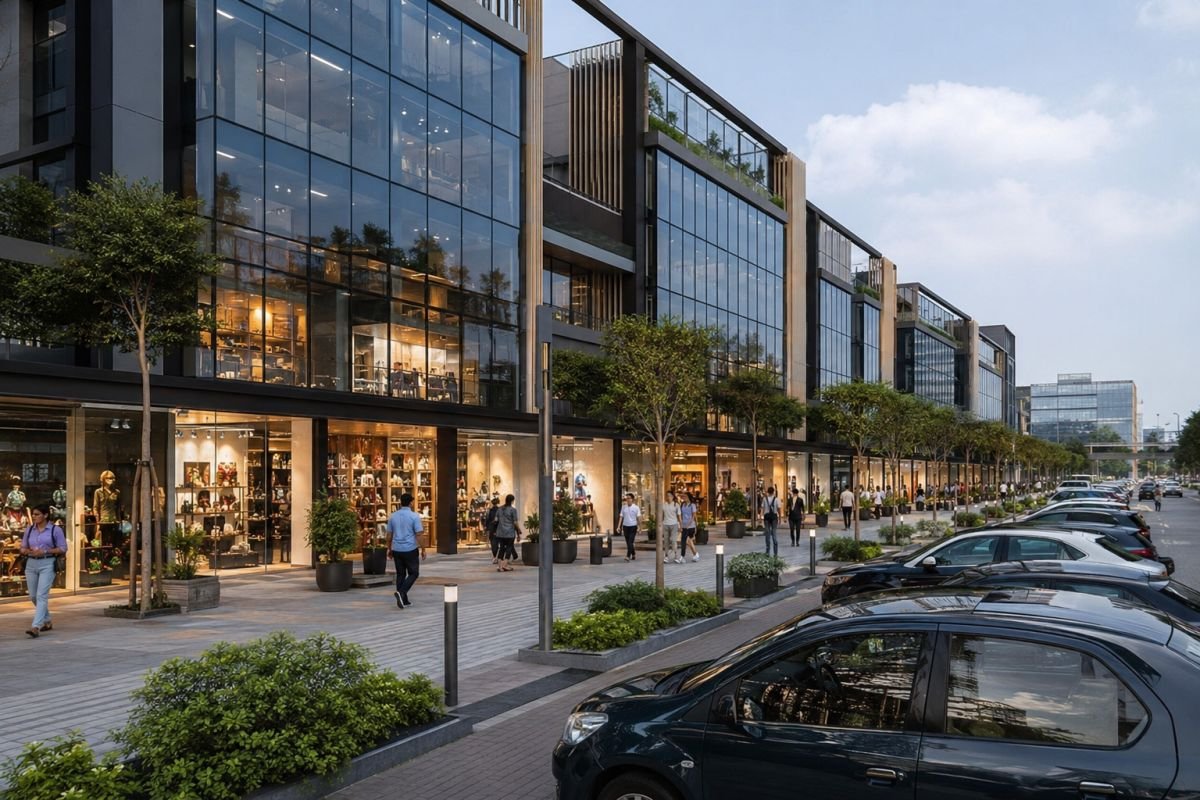
The demand for sco plots in gurgaon has grown steadily over the past few years as investors increasingly diversify beyond traditional office spaces and residential apartments. Shop-Cum-Office (SCO) developments offer a unique commercial property format that combines retail, office, and in many cases food & beverage spaces within a single building. This flexibility makes them attractive to business owners looking for owner-occupied premises as well as investors seeking long-term rental income and capital appreciation.
However, not every SCO project delivers the same investment outcome. Factors such as legal approvals, plot configuration, surrounding residential density, infrastructure development, and future commercial demand can significantly influence returns. A project that appears attractive on paper may underperform if these fundamentals are overlooked.
This guide provides a practical legal, financial, and commercial due diligence checklist for anyone planning to invest in sco plots in gurgaon. Whether you are purchasing your first commercial property or expanding an existing portfolio, following these checkpoints can help you make a more informed investment decision while reducing avoidable risks.
Why SCO Plots Are Becoming a Preferred Commercial Investment
Unlike commercial units within shopping malls, SCO plots typically provide ownership of both the land and the building, subject to applicable development regulations. This ownership structure gives investors greater flexibility in terms of construction, leasing, business operations, and long-term asset appreciation. As Gurgaon continues to evolve into one of India’s leading commercial hubs, this format has gained increasing attention from investors looking for assets with multiple revenue possibilities.

Several growth corridors have emerged as preferred destinations for SCO developments because they combine expanding residential populations with improving infrastructure and connectivity.
- __Dwarka Expressway__
- __Southern Peripheral Road (SPR)__
- __New Gurgaon growth corridor__
- Golf Course Extension Road
- Emerging mixed-use sectors connected to NH-48
These locations continue to benefit from improved road infrastructure, expanding residential catchments, Rapid Metro connectivity, convenient access to IGI Airport, and the long-term impact of the upcoming Noida International Airport (Jewar). As more residents and businesses move into these corridors, commercial demand is expected to strengthen, supporting both rental potential and capital appreciation over time.
SCO Plot Buying Checklist: Start With Legal Due Diligence
Legal due diligence should always be the first step before evaluating pricing or projected returns. Even an attractive commercial opportunity can become a costly mistake if ownership or approvals are incomplete.
Verify Land Title
Before committing to any transaction, verify that the land has a clear and marketable title. Buyers should carefully examine the ownership history to ensure there are no breaks in the chain of title and confirm that the property is free from legal disputes, financial encumbrances, or pending litigation. If you are purchasing through the resale market, review previous sale deeds and supporting ownership documents to ensure that transfer rights are valid and properly recorded.
Taking the time to verify these documents early can prevent legal complications that may otherwise arise during financing, registration, or future resale.
Check HARERA Registration
If the SCO project falls under RERA regulations, its registration details should be independently verified rather than relying solely on marketing brochures or sales presentations. Ask the developer for the HARERA registration number and cross-check the project details directly on the official Haryana RERA portal.
Verifying the registration allows buyers to review approved project information, timelines, and regulatory disclosures before making any financial commitment.
Review Development Approvals
Apart from title verification, buyers should confirm that all statutory approvals required for commercial development have been obtained. These approvals generally include commercial land-use permissions, sanctioned building plans, fire safety approvals, infrastructure approvals, and environmental clearances where applicable. For completed developments, occupancy-related approvals should also be reviewed before purchase.
Many investors assume approvals are complete simply because nearby projects are operational. Each development should be verified independently, as regulatory compliance can vary from one project to another.
Understand Building Norms
Every SCO project is governed by specific development guidelines that influence both construction flexibility and future commercial viability. Buyers should understand the permitted ground coverage, Floor Area Ratio (FAR), basement usage rights, maximum number of floors, parking provisions, signage regulations, and any restrictions on terrace use.

These regulations directly affect the property’s leasable area, tenant suitability, future expansion possibilities, and ultimately its rental income and resale value. Reviewing these norms before purchase helps ensure that the investment aligns with your intended commercial use.
Evaluate the Location Beyond the Project Brochure
Location remains one of the most important factors influencing the success of any commercial property investment. Attractive brochures and artist impressions should never replace on-ground research. A strong location combines residential demand, accessibility, future infrastructure, and sustainable commercial activity.
Residential Catchment
A successful commercial project depends on a strong and growing customer base. Before investing, assess the number of occupied residential developments surrounding the project rather than focusing only on future launches. Understanding how many families currently live nearby—and how many are expected over the next five years—provides valuable insight into the area’s long-term commercial potential.
Retail businesses thrive where there is consistent daily demand. A large residential catchment generally creates higher footfall, improves tenant interest, and supports more stable rental income over time.
Road Connectivity
Excellent connectivity significantly enhances the commercial appeal of an SCO project. Properties with convenient access to major road networks generally attract a wider range of businesses because they are easier for customers, employees, and suppliers to reach.
Future Infrastructure
Infrastructure development often plays a major role in long-term commercial appreciation. Planned metro extensions, road widening projects, flyovers, improved airport connectivity, and the development of large residential townships can all contribute to increasing demand for commercial spaces over time.

While infrastructure announcements can influence investor sentiment, buyers should verify project timelines through official government sources instead of relying solely on marketing claims. Delays in public infrastructure can affect the pace of commercial growth and should therefore be considered as part of the overall investment assessment.
Financial Due Diligence Before Buying
Many investors compare projects based only on the advertised sco plot price gurgaon, but the actual acquisition cost is usually much higher once statutory charges and additional fees are included. A transparent cost analysis helps buyers understand the true investment value and prevents unexpected financial commitments later in the transaction.
Understand the Total Cost
Before making a booking, request a detailed cost sheet from the developer that clearly outlines every payable component. Comparing complete cost sheets across multiple projects provides a far more accurate investment comparison than evaluating the base price alone.
The total acquisition cost may include:
- Basic Sale Price (BSP)
- Preferential Location Charges (PLC), where applicable
- External Development Charges (EDC) and Internal Development Charges (IDC)
- GST (where applicable)
- Stamp duty
- Registration charges
- Maintenance deposits
- Club or infrastructure charges, if applicable
A comprehensive understanding of these costs allows investors to calculate their actual investment outlay and estimate future returns more realistically.
Financing Availability
Commercial property financing differs considerably from residential home loans, making it important to understand lending terms before finalising a purchase. Financial institutions may require higher down payments, shorter repayment tenures, or different eligibility criteria depending on the project and the borrower’s financial profile.
Before proceeding, compare loan eligibility, applicable interest rates, repayment tenure, margin requirements, and any prepayment charges across multiple lenders. Understanding these financing terms in advance can help you assess affordability and avoid cash flow challenges during the investment period.
Compare Payment Plans
Developers usually offer multiple payment plans, each suited to different investment objectives and cash flow preferences. Rather than choosing the plan with the biggest advertised discount, evaluate how the payment schedule aligns with the project’s construction progress and your own financial capacity. Construction-linked plans generally reduce risk because payments are tied to development milestones, whereas down payment plans may offer attractive pricing but require substantial upfront capital.
| Payment Plan | Best For | Key Risk |
|---|---|---|
| Construction Linked | Balanced investors | Longer holding period |
| Time Linked | Predictable payments | Construction delays still possible |
| Down Payment | Discount seekers | Higher upfront capital |
| Flexi Plans | Cash flow management | May include hidden conditions |

Before signing any agreement, read the payment schedule carefully and clarify clauses related to delayed possession, interest penalties, cancellation charges, and refund provisions. Understanding these terms can prevent disputes and unexpected financial liabilities later in the investment journey.
Assess the Commercial Potential
An SCO plot is ultimately a commercial asset, so its long-term success depends on the demand generated by surrounding businesses, residents, and visitors. Beyond the physical plot, investors should evaluate whether the location can consistently attract tenants and customers over the coming years.
What Businesses Can Operate Here?
Different sectors support different business categories depending on population density, purchasing power, and surrounding infrastructure. Established residential neighborhoods often attract supermarkets, cafés, restaurants, medical clinics, pharmacies, banks, and organised retail, while emerging business districts may also see demand from co-working operators, educational institutes, fitness centres, and professional service providers.
Instead of assuming every commercial activity will succeed, assess whether the local catchment genuinely supports the businesses likely to occupy the space. A diversified tenant mix generally contributes to stronger rental stability and lower vacancy risk.
Is There Enough Footfall?
Footfall is one of the strongest indicators of commercial success. While road visibility is important, sustainable retail demand comes from people who live, work, or regularly travel through the area. Evaluate the surrounding residential occupancy, nearby office population, schools, hospitals, educational institutions, and daily commuter movement to understand how consistently customers are likely to visit the location.
Projects located in sectors with high occupancy and established social infrastructure generally offer stronger leasing opportunities than developments surrounded primarily by vacant land or under-construction projects.
Existing Competition
Before purchasing an SCO plot, spend time visiting nearby commercial markets during both weekdays and weekends. Observing real business activity provides valuable insights that brochures cannot.
Pay close attention to:
- Vacancy levels
- Tenant quality
- Rental benchmarks
- Customer movement
- Parking availability
If multiple nearby commercial developments are struggling to attract tenants, investigate the underlying reasons before making an investment decision. On-ground research often reveals opportunities as well as risks that are not reflected in marketing material.
Understanding SCO Plot Investment Returns
A successful sco plot investment is typically driven by a combination of capital appreciation and recurring rental income. The balance between these return drivers depends largely on the project’s location, surrounding development, infrastructure growth, and commercial demand.
Capital Appreciation
Long-term appreciation is influenced by several interconnected factors rather than any single development announcement. Improvements in connectivity, expanding residential communities, increasing commercial activity, and limited future supply can all contribute to rising land values over time.
Investors should evaluate upcoming infrastructure, employment hubs, and planned urban development rather than relying solely on historical price appreciation. While previous market performance provides useful context, it should never be considered a guarantee of future returns.
Rental Yield
Rental income depends on much more than the quality of the building itself. Accessibility, parking availability, visibility, surrounding footfall, tenant profile, and the maturity of the local market all influence leasing demand and achievable rental values.
Before estimating returns, review recent leasing transactions within the same micro-market instead of relying entirely on projected rental figures provided during sales presentations. Independent rental benchmarks provide a more realistic understanding of expected cash flow.
Compare Different SCO Investment Corridors
Different commercial corridors in Gurgaon are at varying stages of development, making them suitable for different types of investors. Some locations prioritise long-term appreciation, while others offer relatively mature commercial ecosystems.
| Corridor | Growth Stage | Suitable For | Watch Points |
|---|---|---|---|
| Dwarka Expressway | Rapid growth | Long-term appreciation | Occupancy timeline |
| Golf Course Extension Road | Mature | Premium businesses | Higher entry cost |
| Southern Peripheral Road (SPR) | Emerging commercial | Medium to long-term investors | Supply pipeline |
| New Gurgaon Growth Corridor | Expanding residential base | Value-focused investors | Infrastructure execution |

Actual market pricing, commercial demand, and availability should always be verified before making an investment decision.
Red Flags Every Buyer Should Avoid
Not every commercial opportunity is worth pursuing. Some warning signs should encourage buyers to investigate further—or, in certain cases, walk away altogether.
Common red flags include:
- Missing statutory approvals
- Unclear land ownership
- Unrealistic rental guarantees
- Extremely high appreciation claims
- Pressure to book immediately
- Hidden charges
- Poor surrounding occupancy
- Insufficient parking
- Weak developer execution history
Commercial real estate rewards careful analysis rather than quick decisions. Taking additional time to investigate concerns is often far less expensive than resolving problems after purchase.
Questions to Ask the Developer
A professional developer should be able to answer technical, legal, and commercial questions transparently. Before signing any booking form or agreement, seek written clarification on the following:
- Is the project HARERA registered?
- What is the approved FAR?
- Are there restrictions on business usage?
- What are the maintenance obligations?
- What common area charges apply?
- What is the expected completion timeline?
- Is basement ownership included?
- What parking allocation is provided?
- What happens in case of construction delays?
Documenting these responses provides greater clarity and reduces the likelihood of future misunderstandings.
Should You Buy in the Primary or Resale Market?
Both primary and resale purchases have distinct advantages depending on your investment objectives, available capital, and preferred holding period.
| Primary Purchase | Resale Purchase |
|---|---|
| New inventory | Immediate ownership |
| Flexible payment plans | Better visibility of surrounding development |
| Early appreciation potential | Existing market rental benchmarks |
| Construction risk | Higher upfront capital |
| Future possession | Immediate commercial usage possible |
A primary purchase may suit investors seeking early-stage appreciation and structured payment plans, while resale properties often appeal to buyers who prefer immediate possession and greater visibility into the surrounding commercial ecosystem.
Who Should Invest in SCO Plots?
SCO plots are best suited to investors with a medium- to long-term investment horizon who are looking to build wealth through commercial real estate rather than seeking immediate returns.
Typical investor profiles include:
- Business owners seeking owner-occupied premises
- Investors diversifying into commercial assets
- Buyers targeting long-term capital appreciation
- Investors planning future rental income
- High-net-worth individuals building commercial portfolios
Those seeking short-term gains or immediate passive income should carefully assess whether an under-construction SCO investment aligns with their financial objectives.
Final Verdict
Well-selected sco plots in gurgaon have the potential to become valuable long-term commercial assets, particularly in rapidly developing corridors supported by expanding residential communities and improving infrastructure. However, successful investing depends less on promotional claims and more on disciplined due diligence.
Before making a purchase, verify legal approvals, review ownership documents, understand the complete acquisition cost, evaluate surrounding commercial demand, compare rental benchmarks, and assess the long-term infrastructure pipeline. Taking a structured approach helps reduce investment risk while improving the likelihood of sustainable capital appreciation and rental performance.
If you’re evaluating SCO opportunities across Gurgaon, consider exploring __Gurgaon Investment Location Guide__ or speaking with the AssuredGains advisory team for independent, research-driven insights tailored to your investment goals.
FAQ SECTION
What is the average sco plot price Gurgaon investors should expect?
The sco plot price gurgaon varies based on sector, plot size, frontage, surrounding development, and overall market demand. Always request the latest official price list from the developer or seller and compare it with recent market transactions before making an investment decision.
Is sco plot investment better than investing in commercial shops?
A sco plot investment generally offers greater ownership flexibility because buyers typically own both the land and the building. While this can create stronger long-term appreciation potential, it also requires higher capital investment and more detailed due diligence than purchasing a ready commercial shop.
Are sco plots in Gurgaon a good long-term investment?
Well-located sco plots in gurgaon can offer attractive long-term appreciation when supported by strong residential growth, improving infrastructure, and sustainable commercial demand. However, returns depend on location quality, regulatory compliance, and the overall pace of development within the micro-market.
Can I lease my SCO property to multiple businesses?
This depends on the approved building design, development regulations, and project-specific guidelines. Buyers should verify subdivision rights, leasing provisions, and permitted commercial usage before making a purchase.
How do I verify the legality of an SCO project?
Begin by reviewing the land title, ownership documents, approved layout plans, commercial land-use permissions, and statutory approvals. If the project falls under RERA regulations, verify its registration directly on the official Haryana RERA portal before making any financial commitment.



Join The Discussion