
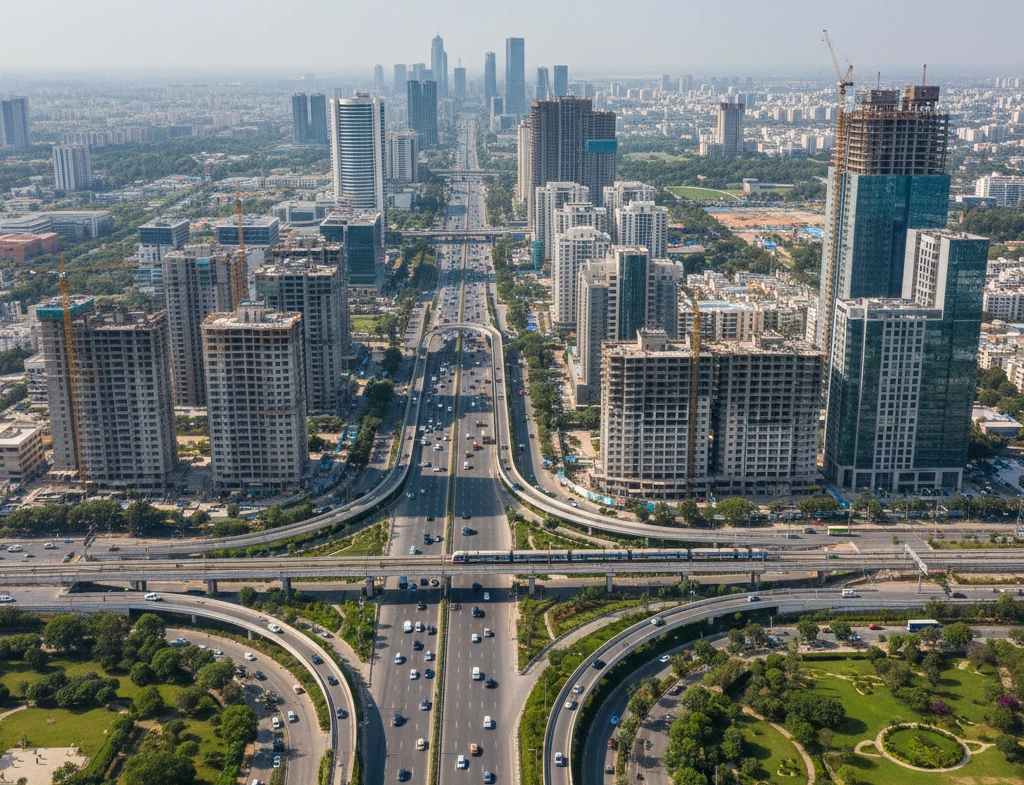
Manesar has evolved from an industrial extension of Gurgaon into one of Haryana’s most strategically positioned land corridors. In 2026, investors tracking residential plot opportunities here are no longer speculating — they are evaluating structured long-term ROI backed by employment density and infrastructure expansion.
What makes Manesar different from most micro-markets is that its growth is not driven by marketing narratives, but by industrial expansion and real economic activity.
To understand how industrial growth is shaping real estate here, this detailed guide on industrial growth impact on real estate Manesar explains the transformation in depth.
This article breaks down price trends, infrastructure impact, DDJAY opportunities, and how Manesar fits into a long-term land investment strategy.
Why Industrial Growth in Manesar Is Driving Land Demand

At the core of Manesar’s investment story is one of North India’s densest industrial ecosystems. Automobile manufacturers, logistics hubs, and electronics companies have created a strong employment base that continuously feeds residential demand.
This is important because employment-backed demand behaves very differently from speculative demand. As professionals working in these industries look to settle closer to their workplace, the shift from rental housing to ownership begins to accelerate.
This transition is what strengthens long-term land demand and supports steady price appreciation. Unlike speculative markets, where prices fluctuate sharply, Manesar benefits from consistent absorption driven by real users, which also provides downside protection during market slowdowns.
Infrastructure Expansion: The Acceleration Layer

While industrial growth builds the foundation, infrastructure acts as the catalyst for price appreciation.
Manesar benefits from direct connectivity to NH-48 (Delhi–Jaipur Highway), access to the KMP Expressway, and expanding logistics corridors. Internal sector road upgrades and planning improvements are further strengthening accessibility.
As connectivity improves, land parcels near major highways and sector roads gain visibility and liquidity. At the same time, rising prices in central Gurgaon are pushing capital outward, making Manesar a logical destination for investors seeking better entry points.
This shift is not random spillover — it reflects strategic capital allocation toward employment-backed corridors.
Price Trends & Entry Levels in 2026

One of the key strengths of Manesar is pricing clarity.
Approved residential plots in core sectors are currently trading in the range of approximately ₹55,000–₹75,000 per sq yd, depending on location and approval status. Peripheral sectors may offer lower entry points, but they typically require longer holding periods.
Over the past few years, price appreciation has remained gradual rather than volatile. This steady growth pattern reflects infrastructure execution and industrial expansion rather than speculative spikes.
For long-term investors, this kind of stability is often more valuable than short-term price surges.
Plot Investment Strategy: Why Land Works Better Here

In industrial corridors like Manesar, land tends to outperform apartments over a full investment cycle.
Apartments in such areas often face limitations related to oversupply, slower resale cycles, and limited lifestyle differentiation. In contrast, plots offer direct exposure to land appreciation, greater flexibility, and minimal long-term maintenance costs.
For investors building a structured portfolio, this aligns well with a long-term allocation approach. If you want to understand how to structure this strategy effectively, this plot investment strategy Gurgaon long term guide provides a detailed framework.
Legal & Zoning Clarity: The Most Critical Filter
Industrial proximity makes legal due diligence even more important in Manesar.
Investors must verify residential land use, DTCP approvals, road access, registry eligibility, and zoning compliance before making any purchase. Factors such as road width norms and sector planning alignment directly impact liquidity and resale value.
There is also growing interest in DDJAY plots near Manesar due to their lower entry thresholds. However, while DDJAY can offer structured affordability, investors must still evaluate infrastructure alignment and sector growth potential carefully.
In land investment, compliance is not a formality — it is the foundation of capital protection.
Manesar vs Gurgaon, Sohna & Other Corridors

To understand Manesar’s true position, it is important to compare it with other major corridors.
Gurgaon offers a mature ecosystem, strong rental yields, and premium infrastructure, but entry prices are significantly higher, limiting appreciation potential for new investors.
Sohna, on the other hand, is largely infrastructure-driven, with future potential but lower current employment density. Manesar stands apart because its demand is already supported by industrial activity.
New Gurgaon is developer-driven and lifestyle-oriented, while Dharuhera remains a spillover market with slower absorption.
This comparison highlights Manesar as an employment-backed land corridor, rather than a speculative or purely infrastructure-driven market.
Land Appreciation Trend: Stable, Not Speculative
Over the past several years, Manesar’s price movement has been steady and controlled.
Growth has followed a clear pattern — industrial expansion, infrastructure upgrades, and gradual sector activation. This indicates genuine demand rather than artificial inflation.
For long-term investors, such stability often leads to better outcomes compared to volatile markets driven by hype.
Where Smart Investors Are Looking
Investor interest is increasingly shifting toward approved plotted developments with clear sector planning and infrastructure visibility.
If you want to explore curated opportunities aligned with real growth, you can review best plotted developments near Gurgaon to identify projects that meet these criteria.
At the same time, identifying emerging corridors early is critical for maximizing returns. This future growth locations Gurgaon guide helps you understand how to spot undervalued areas before prices rise.
Final Takeaway: Is Manesar a Smart Plot Investment in 2026?
Manesar stands out as one of the few corridors where land appreciation is backed by real economic activity rather than speculative sentiment.
With strong industrial employment, improving infrastructure, relatively accessible entry prices, and increasing residential demand, it offers a compelling case for long-term investors.
However, success in Manesar depends on disciplined execution — choosing approved plots, understanding sector dynamics, and aligning investment timelines with infrastructure growth.
For investors looking beyond hype and focusing on fundamentals, Manesar is not just an opportunity — it is a strategically supported land investment corridor in 2026.
Frequently Asked Questions (FAQs)
What is the current price of residential plots in Manesar in 2026?
In 2026, approved residential plots in core Manesar sectors are generally trading in the ₹55,000 to ₹75,000 per square yard range, depending on exact location, road width, and approval status. Peripheral sectors may offer lower entry levels, but they usually require longer holding cycles. Investors should always distinguish between fully approved plotted developments and informal land parcels, as compliance directly impacts pricing and resale liquidity.
Is investing in Manesar plots safer than Sohna in 2026?
The key difference lies in demand drivers. Manesar’s absorption is employment-backed due to its established industrial ecosystem, which creates steady end-user housing demand. Sohna is more infrastructure-driven and future-growth oriented. For investors seeking relatively stable appreciation linked to existing employment density, Manesar currently offers stronger downside protection.
Are DTCP approved plots in Manesar better for long-term investment?
Yes. Purchasing DTCP approved plots in Manesar significantly reduces regulatory and zoning risks. Approval ensures clearer land use status, registry eligibility, better bank loan accessibility, and stronger resale prospects. In industrial-adjacent belts where zoning confusion can occur, compliance becomes the primary capital protection tool.
How has the Manesar land appreciation trend performed over the last few years?
The Manesar land appreciation trend over the past five to seven years has been gradual and non-volatile. Price movement has closely followed industrial expansion, infrastructure upgrades, and sector activation rather than speculative hype. This pattern indicates employment-backed absorption, which supports more sustainable long-term growth.
Is buying a plot in Manesar for long-term investment better than buying an apartment?
For long-term capital appreciation, land in an employment-driven corridor like Manesar often provides structural advantages over apartments. Plots offer flexibility of construction, no possession delays, and direct land-linked appreciation. Apartments may generate rental income but can face slower resale cycles in industrial micro-markets. Investors focused on 5–10 year growth horizons often prefer plotted development exposure.


Join The Discussion