
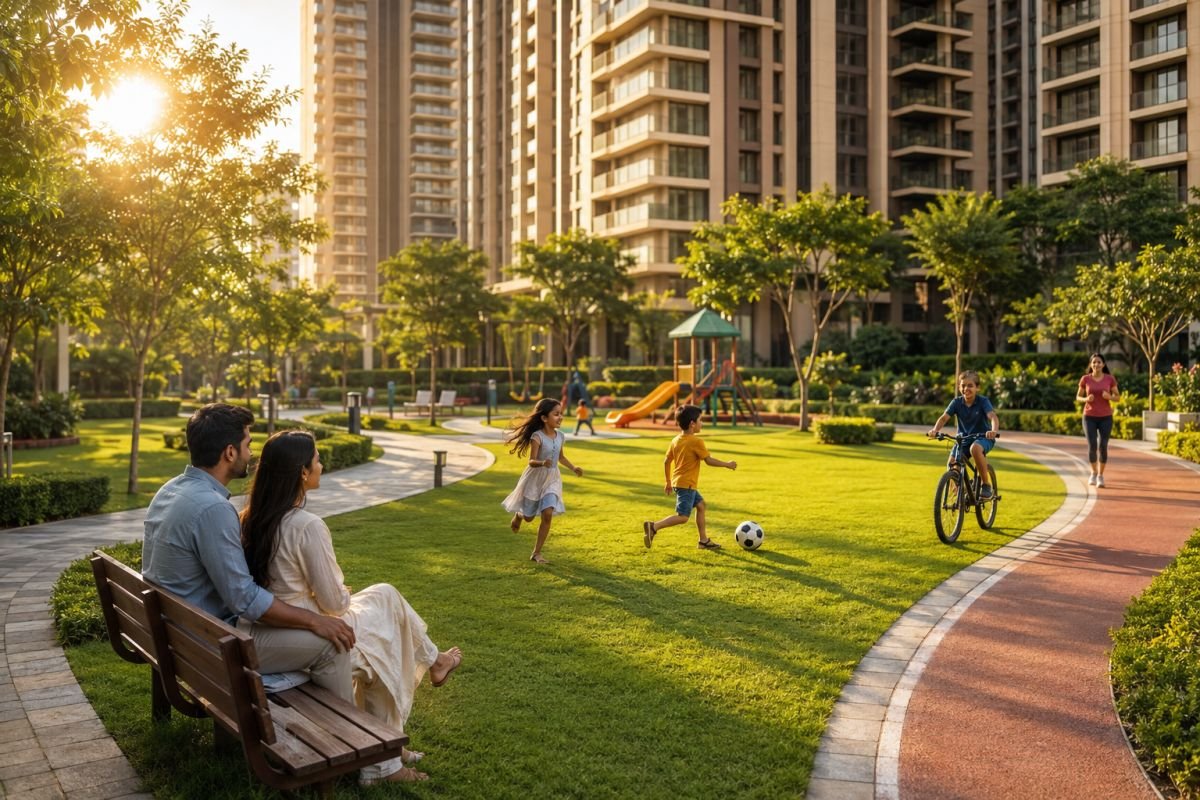
Buying a home is one of the biggest financial and emotional decisions a family will ever make. However, once children become part of the picture, priorities change dramatically. A stylish interior or premium clubhouse may still be appealing, but parents begin asking different questions. Is the community safe? Are there enough open spaces? Can children play outdoors without worry? Are schools and hospitals nearby? Will this environment support my child’s growth over the next 10 to 15 years?
These questions have given rise to a new trend in residential real estate—kid-centric homes. Unlike traditional housing projects that focus primarily on adult lifestyles, kid-centric communities are designed to create a safe, healthy, and engaging environment where children can learn, play, and grow while parents enjoy greater peace of mind.
If you’re planning to buy a home for your family, understanding what makes a residential project truly kid-friendly can help you make a smarter long-term decision. Before making your purchase, it’s also worth exploring a complete home buying guide for Gurgaon to understand the factors that influence a successful home-buying journey.
What Is a Kid-Centric Home?
A kid-centric home is a residential property designed with children’s physical safety, emotional well-being, learning, and recreation in mind. These communities combine thoughtful planning with family-friendly amenities to create an environment where children can enjoy an active and balanced lifestyle.

Rather than simply including a small playground, kid-centric developments integrate features such as secure entrances, landscaped parks, cycling tracks, indoor activity rooms, sports facilities, libraries, traffic-free play zones, and community spaces that encourage healthy social interaction.
The goal is simple: create a home where children thrive while parents feel confident about their family’s everyday environment.
Why Are Kid-Centric Homes Becoming More Popular?
Modern parenting has changed significantly over the past decade. Many families now live in urban environments where open spaces are limited, traffic is heavier, and children spend more time indoors using digital devices.
Parents increasingly want communities that encourage outdoor play, healthy lifestyles, and social interaction without requiring long daily commutes to parks or recreational centres.
Developers have responded by designing residential projects that place children’s needs at the centre of community planning. In fast-growing cities like Gurgaon, integrated townships and family-friendly developments have become increasingly popular because they offer convenience, safety, and lifestyle benefits in one location.
Key Features of a Kid-Centric Homes

Safe and Secure Living Environment
Safety is the foundation of every kid-centric homes community. Gated entrances, CCTV surveillance, trained security personnel, visitor management systems, fire safety measures, and well-lit pathways help create a secure environment. Many projects also separate pedestrian areas from vehicle movement and introduce speed-controlled internal roads to minimize accident risks.
Green Open Spaces
Children need more than indoor entertainment. Landscaped gardens, parks, open lawns, walking trails, and cycling tracks encourage outdoor activity while improving physical and mental well-being. Green surroundings also create a healthier living environment by reducing noise and improving air quality.
Dedicated Play Zones
Modern residential projects often include age-specific play areas equipped with safe flooring, swings, slides, climbing structures, and interactive equipment. Indoor playrooms ensure children remain active even during extreme weather conditions.
Sports and Recreation
Facilities such as swimming pools, basketball courts, football grounds, badminton courts, skating rinks, and indoor sports areas encourage children to stay physically active while developing teamwork, discipline, and confidence.
Learning and Creative Spaces
Some premium communities go beyond recreation by providing libraries, art rooms, music studios, hobby centres, and activity spaces where children can develop new interests outside the classroom.
Benefits of Living in a Kid-Centric Community
A thoughtfully planned residential community can positively influence every stage of a child’s development.
Children living in communities with open spaces tend to spend more time outdoors, helping them stay physically active while reducing dependence on mobile phones and other digital devices. Regular interaction with neighbours and friends also strengthens communication skills, teamwork, and emotional confidence.
Parents benefit as well. Instead of travelling across the city for sports coaching or recreational activities, many facilities are available within the community itself. This saves time, reduces daily stress, and creates more opportunities for quality family time.

Well-planned communities also encourage stronger social connections between families, creating a supportive neighbourhood where children grow up in a familiar and secure environment.
What Parents Should Check Before Buying
Before booking a property, parents should evaluate practical aspects rather than focusing only on luxury amenities.
Visit the project during different times of the day to understand traffic movement, noise levels, and overall maintenance. Observe whether play areas are well-maintained and whether they are located away from busy roads.
Check the availability of reputed schools, daycare centres, hospitals, grocery stores, and public transport nearby. Also ask about visitor management, emergency response systems, maintenance standards, and security arrangements.
Remember that the best home is not always the one with the biggest clubhouse—it is the one that makes everyday family life easier and safer.
Why Gurgaon Is Emerging as a Hub for Family-Friendly Living
Gurgaon has become one of India’s most preferred residential destinations for young professionals and growing families. Excellent road connectivity, expanding metro networks, reputed schools, world-class hospitals, shopping centres, and integrated townships have transformed the city into a family-friendly destination. Buyers searching for the best family-friendly sectors in Gurgaon often prioritize locations that combine quality social infrastructure with safe residential communities.
Residential corridors such as Dwarka Expressway, Golf Course Extension Road, Southern Peripheral Road (SPR), and New Gurgaon offer several projects designed around modern family lifestyles. Many communities feature extensive green spaces, sports facilities, children’s play areas, and secure gated environments that appeal to parents looking for long-term homes.

Families comparing different micro-markets should also evaluate Gurgaon’s fastest-growing residential locations before making a long-term buying decision. Understanding the strengths of each location helps parents choose a home that offers excellent connectivity, lifestyle amenities, and future growth potential.
Common Mistakes Parents Make While Buying a Home
Many buyers unknowingly make decisions based only on price, floor plans, or attractive marketing offers.
Ignoring factors such as safety, maintenance quality, traffic movement, open spaces, and nearby educational institutions can affect a family’s quality of life for years.
Another common mistake is buying a home based only on present needs. Children grow quickly, and their requirements change over time. A community that supports toddlers, school-going children, and teenagers alike offers much greater long-term value than one with limited recreational infrastructure.
Are Kid-Centric Homes a Good Long-Term Investment?
While every real estate investment depends on location, pricing, and market conditions, family-friendly communities generally enjoy steady demand because they appeal to a broad group of end-users.
Projects that offer quality infrastructure, security, green spaces, and lifestyle amenities often remain attractive to future buyers and tenants. This can contribute to stronger resale potential and more stable occupancy compared to projects that focus only on luxury aesthetics.
For homebuyers planning to live in the property for several years, the value extends beyond financial returns. A supportive community can significantly improve a family’s daily experience and children’s overall development.
Final Thoughts
A home is where children learn their first lessons, build friendships, celebrate milestones, and create lifelong memories. Choosing a kid-centric homes means investing in an environment that supports their physical, emotional, and social development while giving parents confidence that their family is living in a safe and nurturing community.
As modern residential projects continue to evolve, kid-centric homes planning is becoming an important factor for families looking beyond luxury and focusing on long-term quality of life. Whether you are buying your first apartment or upgrading to a larger home, evaluating safety, green spaces, recreational facilities, and community planning can help you choose a property that benefits every member of the family for years to come.

If you’re looking for residential communities that have been thoughtfully planned for families with children, Ashiana Amarah in Sector 93 is widely recognized for its child-centric lifestyle amenities and activity-focused environment. Similarly, Ashiana Aaroham in Sector 80 offers a family-oriented community designed with open spaces, recreational facilities, and everyday conveniences that support modern parenting.
Frequently Asked Questions (FAQs)
1. What is a kid-centric home?
A kid-centric home is a residential property designed to support children’s safety, health, learning, and overall development. These communities typically include secure play areas, green spaces, sports facilities, child-friendly infrastructure, and family-oriented amenities.
2. Are kid-centric homes safer than regular residential projects?
Generally, yes. Kid-centric communities often feature gated security, CCTV surveillance, visitor management systems, well-lit pathways, traffic-controlled internal roads, and dedicated play zones that create a safer environment for children.
3. What amenities should parents look for in a kid-friendly residential community?
Parents should look for secure play areas, landscaped parks, cycling tracks, sports courts, indoor activity rooms, swimming pools, libraries, walking paths, 24/7 security, and easy access to schools and healthcare facilities.
4. Are kid-centric homes more expensive?
Not always. While premium projects may offer more extensive child-focused amenities, many mid-range residential developments also provide family-friendly features. Buyers should evaluate long-term value rather than focusing only on the purchase price.
5. Do kid-centric homes have better resale value?
Family-friendly communities often attract consistent demand because they appeal to a wide range of homebuyers. Well-maintained projects with quality amenities, security, and green spaces may offer stronger resale and rental potential over time.
6. Why are kid-centric homes becoming popular in Gurgaon?
Gurgaon’s growing infrastructure, reputed schools, healthcare facilities, and integrated residential developments have increased demand for homes that provide a safe, convenient, and family-oriented lifestyle.
7. How important are nearby schools and hospitals when buying a family home?
They are extremely important. Easy access to schools reduces travel time for children, while nearby hospitals ensure quick medical assistance during emergencies, making daily life more convenient for families.
8. Are kid-centric homes suitable for children of all age groups?
Yes. Well-designed communities usually offer amenities for toddlers, school-going children, and teenagers, including play areas, sports facilities, indoor recreation spaces, study zones, and hobby centres.
9. How can parents identify a truly kid-centric residential project?
Parents should visit the project, inspect security measures, evaluate open spaces, assess maintenance quality, review sports and recreational facilities, and check whether schools and healthcare services are conveniently located nearby.
10. Is buying a kid-centric home a good long-term investment?
For many families, yes. Along with providing a better lifestyle and safer environment for children, family-friendly communities often maintain strong demand due to their practical features and broad buyer appeal, making them a worthwhile long-term choice.

Join The Discussion