
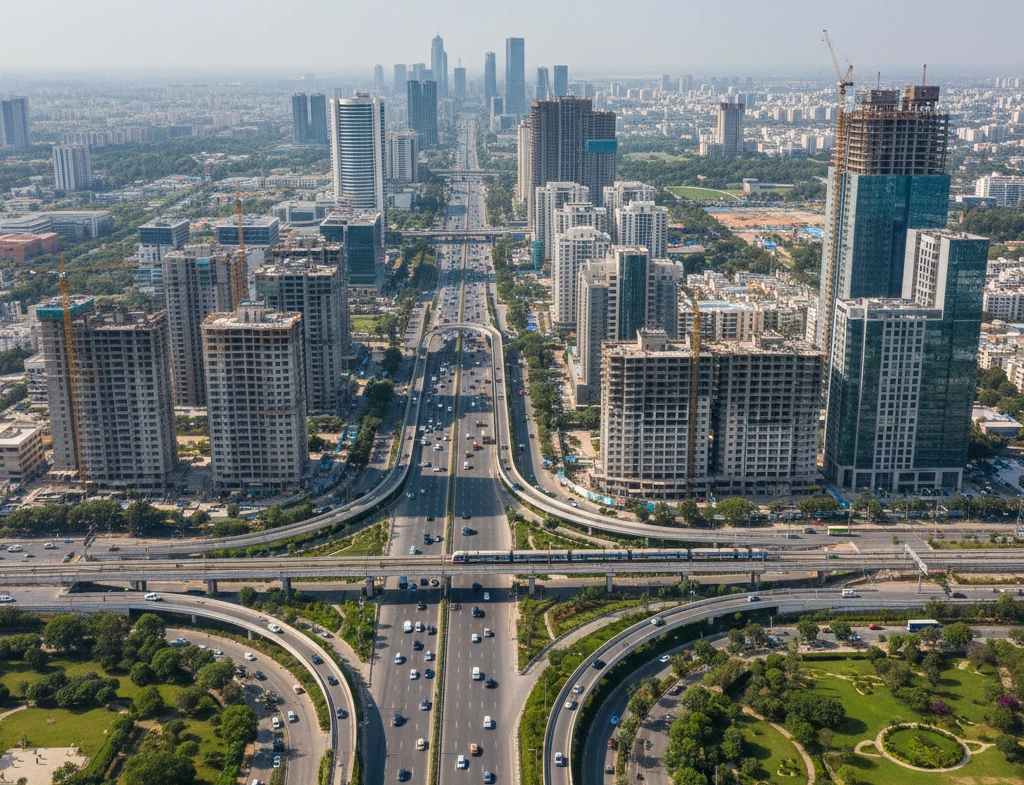
Manesar has evolved from an industrial extension of Gurgaon into one of Haryana’s most strategically positioned land corridors. In 2026, investors tracking Manesar residential plots price 2026 data are no longer speculating — they are evaluating structured long-term ROI backed by employment density and infrastructure expansion.
Unlike marketing-driven micro-markets, Manesar’s growth cycle is industry-led. That distinction is what makes it structurally different.
This guide examines price trends, industrial drivers, infrastructure impact, legal safeguards, and how Manesar compares with Gurgaon, Sohna, and Dharuhera in the current capital cycle.
Why Industrial Growth in Manesar Is Driving Plot Price Appreciation
At the core of industrial area Manesar investment lies one of North India’s densest manufacturing ecosystems. Automobile giants, Tier-1 suppliers, logistics hubs, and electronics units have created long-term employment stability.
This matters because employment-backed absorption is fundamentally stronger than speculative demand.
As plant heads, mid-management professionals, and logistics executives establish permanent bases, residential land demand strengthens. This transition from workforce rental clusters to ownership-driven absorption is what is gradually pushing plot values upward.
Unlike brochure-driven corridors, industrial density provides downside protection during broader market corrections
How Infrastructure Expansion Is Boosting Manesar Plot Values in 2026
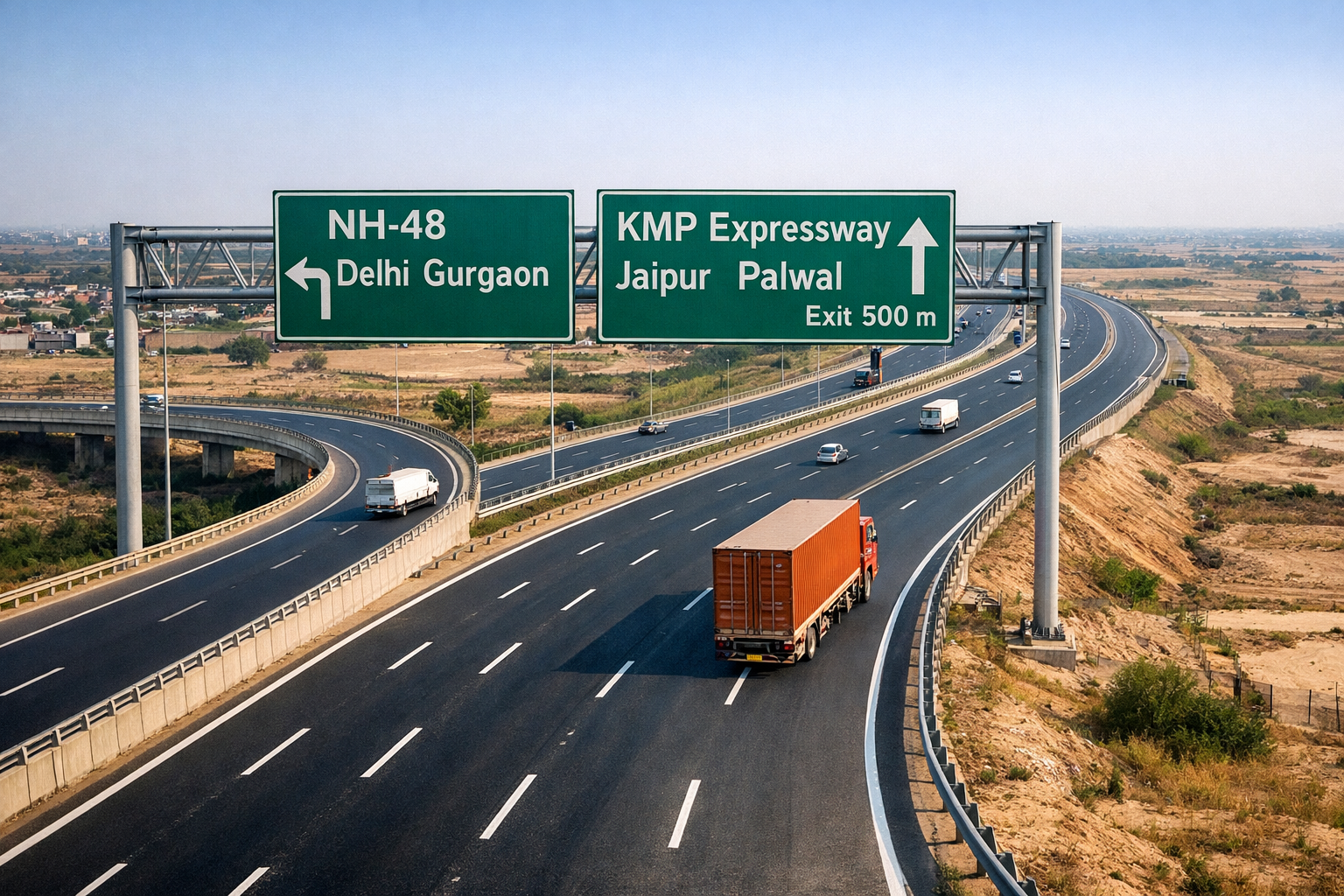
Industrial demand creates the base. Infrastructure accelerates appreciation.
Manesar benefits from:
- Direct connectivity to NH-48 (Delhi–Jaipur Highway)
- Access to the KMP Expressway
- Expanding freight and logistics corridors
- Internal sector road widening and planning upgrades
Demand for plots near NH 48 Manesar has strengthened due to direct highway access and smoother logistics movement.
As central Gurgaon sectors cross multi-crore entry thresholds for independent floors and premium plots, capital migration toward industrial-backed land belts like Manesar is becoming structurally visible among long-horizon investors.
This is not spillover — it is strategic allocation.
Manesar Residential Plots Price 2026: Current Bands & Entry Levels
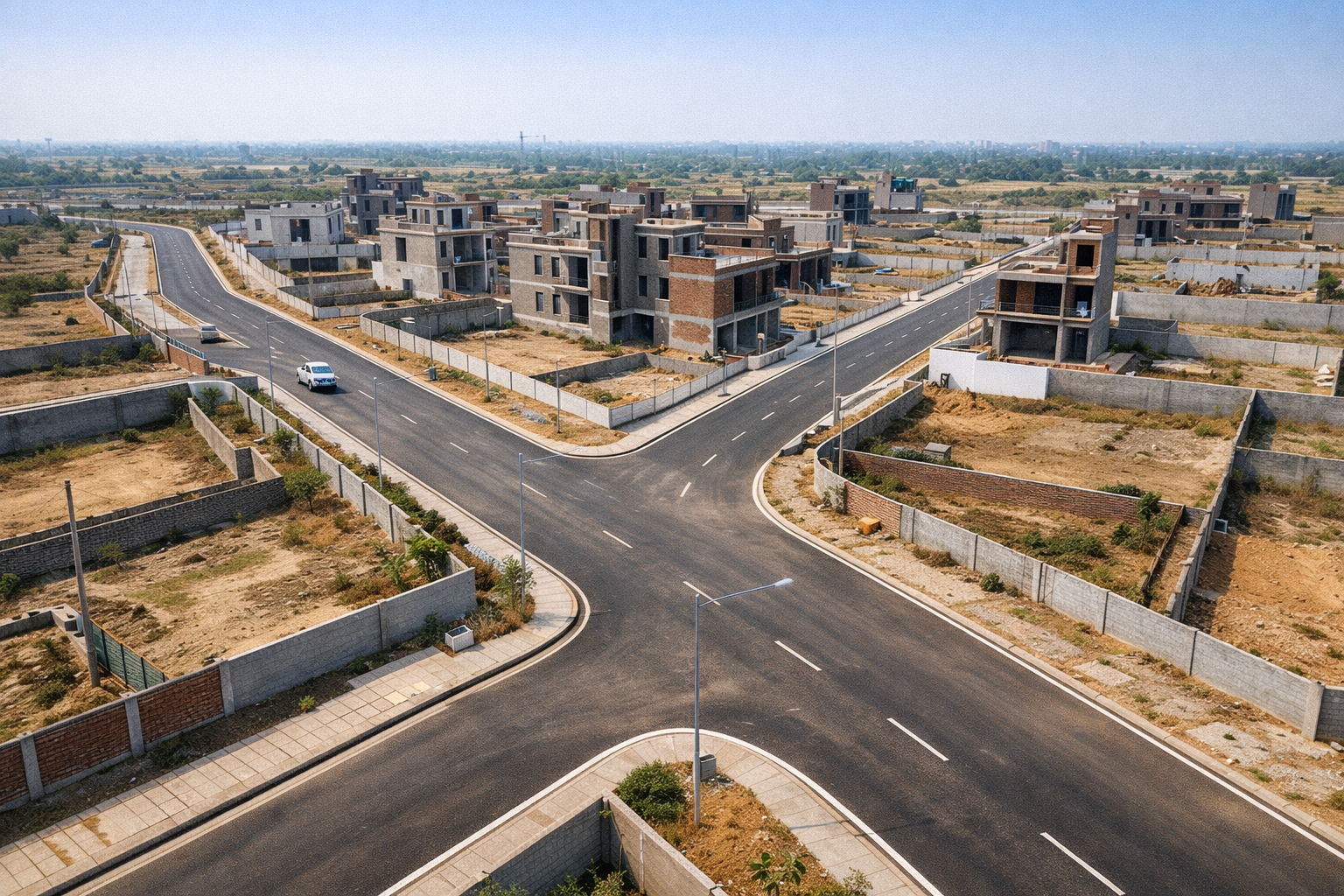
A key differentiator of authority-grade investment analysis is price clarity.
Approved residential plots in core Manesar sectors are currently trading in approximately the ₹55,000–₹75,000 per sq yd range (location and approval dependent). Peripheral or emerging sectors may offer lower entry bands but typically require longer holding cycles.
Over the past 5–7 years, appreciation has remained steady rather than volatile — reinforcing the Manesar land appreciation trend as gradual and employment-aligned.
Unlike speculative corridors that spike and correct, Manesar’s pricing movement reflects infrastructure upgrades and industrial density expansion.
For investors planning to buy plot in Manesar for long term capital growth, this stability is a major advantage.
Why Plots Are Structurally Stronger Than Apartments in Manesar
In industrial belts, vertical housing often faces:
- Limited lifestyle differentiation
- Slower resale cycles
- Phase-based oversupply
Land behaves differently.
Residential plots offer:
- No possession delays
- Direct land-linked appreciation
- Construction flexibility
- Lower long-term maintenance burden
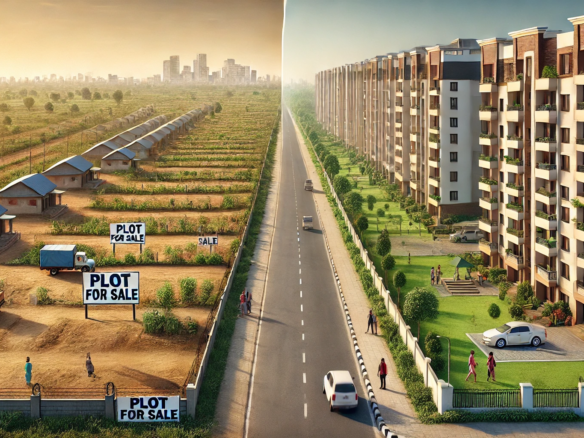
This aligns with the broader Plots vs Apartments capital debate, where employment-backed micro-markets tend to reward land ownership over vertical inventory.
Scarcity near workplaces enhances long-term value visibility.
Legal & Zoning Safeguards: Where Most Investors Go Wrong
Industrial adjacency increases zoning complexity.
Before allocation, investors must verify:
- Residential land use classification
- Sector planning approval
- Registry eligibility
- Bank loan eligibility
- Minimum road width compliance (9m / 12m sector norms)
- Access road clarity and right of way
- CLU validation where applicable
Most importantly, confirm you are purchasing DTCP approved plots in Manesar, especially in sectors bordering mixed-use or industrial pockets.
Some investors are also exploring DDJAY plots near Manesar for lower entry thresholds. While this route can reduce capital exposure, due diligence on sector planning, infrastructure alignment, and absorption pace remains critical.
Capital protection begins with compliance.
Gurgaon vs Manesar vs Sohna vs Dharuhera: 2026 Capital Allocation Comparison

Gurgaon
When comparing Gurgaon vs Manesar investment 2026, the difference lies in entry cost versus upside expansion potential. Gurgaon offers premium ecosystem strength and rental yields — but at significantly higher acquisition prices.
Manesar provides structured land affordability with industrial employment backing.
Sohna
In the Manesar vs Sohna plots debate, employment density becomes the decisive variable. Sohna remains largely infrastructure-timed, while Manesar’s demand is already employment-anchored.
New Gurgaon
New Gurgaon is lifestyle-driven and developer-led, offering planned ecosystems but higher ticket sizes and vertical concentration.
Dharuhera
Dharuhera remains spillover-driven, price-sensitive, and slower in structured absorption compared to Manesar’s denser industrial ecosystem.
This comparative lens strengthens Manesar’s positioning as an employment-backed plotted corridor rather than a speculative extension.
Manesar Land Appreciation Trend (2019–2026)
The Manesar land appreciation trend over the past several years reflects controlled, non-volatile growth.
Price movement has tracked:
- Industrial expansion
- Connectivity upgrades
- Gradual sector activation
This pattern signals absorption-backed appreciation rather than artificial inflation.
For long-term investors, gradual growth often outperforms hype-driven spikes.
Expert Capital Perspective: Is Manesar a Smart Plot Investment in 2026?
Yes — provided due diligence is executed with discipline.
Manesar offers:
- Industrial employment stability
- Highway-backed accessibility
- Measured price growth
- Approved plotted inventory
Investors considering structured land allocation in 2026 should prioritize approved plotted pockets with defined sector planning rather than fringe agricultural parcels marketed at discounted rates.
In a capital cycle where speculative excess is increasingly filtered out, Manesar stands out as a fundamentally supported land corridor — not a marketing narrative.
Frequently Asked Questions (FAQs)
What is the current price of residential plots in Manesar in 2026?
In 2026, approved residential plots in core Manesar sectors are generally trading in the ₹55,000 to ₹75,000 per square yard range, depending on exact location, road width, and approval status. Peripheral sectors may offer lower entry levels, but they usually require longer holding cycles. Investors should always distinguish between fully approved plotted developments and informal land parcels, as compliance directly impacts pricing and resale liquidity.
Is investing in Manesar plots safer than Sohna in 2026?
The key difference lies in demand drivers. Manesar’s absorption is employment-backed due to its established industrial ecosystem, which creates steady end-user housing demand. Sohna is more infrastructure-driven and future-growth oriented. For investors seeking relatively stable appreciation linked to existing employment density, Manesar currently offers stronger downside protection.
Are DTCP approved plots in Manesar better for long-term investment?
Yes. Purchasing DTCP approved plots in Manesar significantly reduces regulatory and zoning risks. Approval ensures clearer land use status, registry eligibility, better bank loan accessibility, and stronger resale prospects. In industrial-adjacent belts where zoning confusion can occur, compliance becomes the primary capital protection tool.
How has the Manesar land appreciation trend performed over the last few years?
The Manesar land appreciation trend over the past five to seven years has been gradual and non-volatile. Price movement has closely followed industrial expansion, infrastructure upgrades, and sector activation rather than speculative hype. This pattern indicates employment-backed absorption, which supports more sustainable long-term growth.
Is buying a plot in Manesar for long-term investment better than buying an apartment?
For long-term capital appreciation, land in an employment-driven corridor like Manesar often provides structural advantages over apartments. Plots offer flexibility of construction, no possession delays, and direct land-linked appreciation. Apartments may generate rental income but can face slower resale cycles in industrial micro-markets. Investors focused on 5–10 year growth horizons often prefer plotted development exposure.


Join The Discussion