
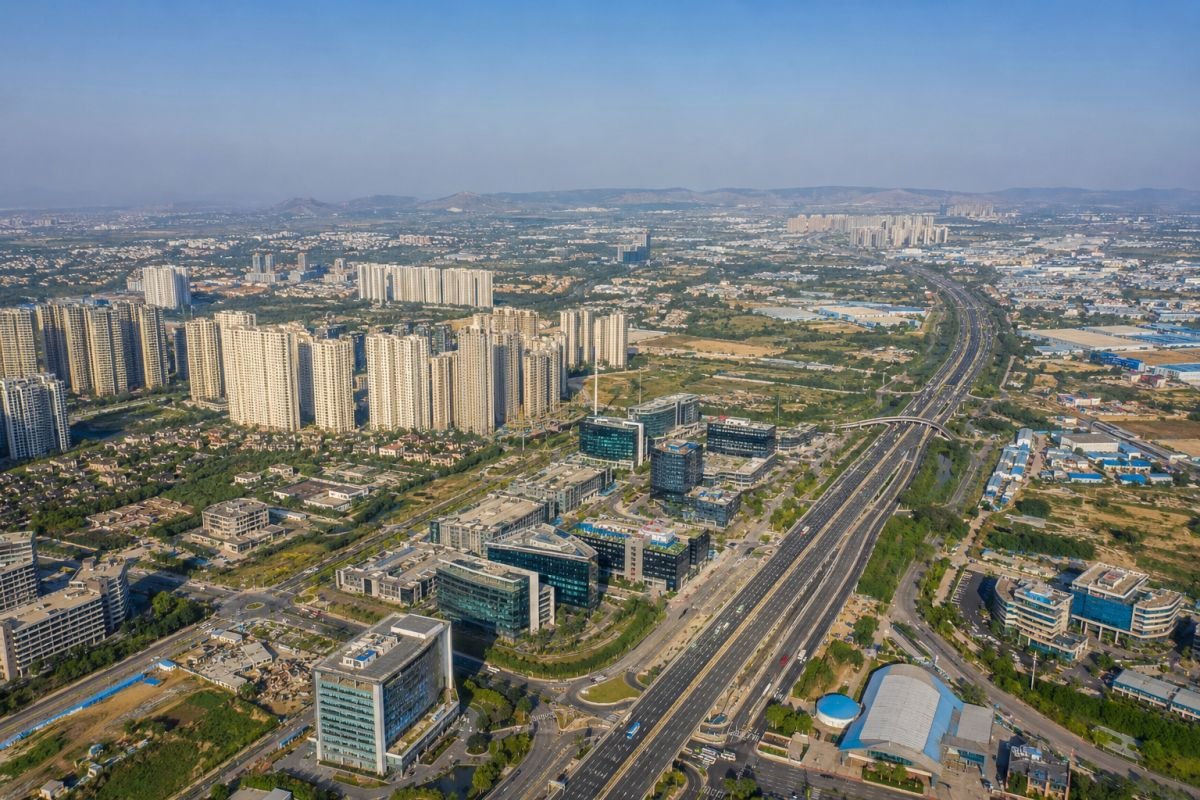
For over two decades, Gurgaon has transformed from a single commercial destination into a network of well-defined growth corridors. Among the emerging investment zones, the gurgaon manesar sohna corridor has become one of the most closely watched by homebuyers, investors, developers, and urban planners.
Unlike growth stories centred on a single expressway, the GMS corridor represents an integrated urban belt connecting Gurgaon, Manesar, and Sohna. Together, these locations are evolving into an important residential, industrial, logistics, and commercial ecosystem within the National Capital Region (NCR). This guide explains what the corridor is, the infrastructure driving its growth, the opportunities it offers, and the factors buyers should evaluate before investing.
What is the Gurgaon Manesar Sohna Corridor?
The gurgaon manesar sohna corridor refers to the expanding urban region extending from central Gurgaon through Manesar and further south towards Sohna. Rather than functioning as a single road, it is supported by several major infrastructure networks that collectively improve connectivity and stimulate development.

The corridor is anchored by:
- NH-48 (Delhi–Jaipur Highway)
- Sohna Elevated Road
- Delhi-Mumbai Industrial Corridor (DMIC)
- Kundli-Manesar-Palwal (KMP) Expressway
- Southern Peripheral Road (SPR)
- Golf Course Extension Road
Together, these transport corridors connect residential communities, industrial zones, educational institutions, logistics hubs, and commercial districts. As Gurgaon continues to expand beyond its traditional city centre, this integrated region is expected to accommodate a significant share of future housing and employment demand.
Why the GMS Corridor Matters
The gms corridor gurgaon is far more than another residential expansion area. Its long-term appeal comes from the combination of employment generation, infrastructure investment, and planned urban development.
Residential demand has steadily increased as central Gurgaon becomes more expensive. Buyers are increasingly looking towards emerging locations that offer larger homes, integrated townships, modern amenities, and comparatively better value. This trend is encouraging developers to launch large-scale residential communities across the corridor.
At the same time, Manesar continues to serve as one of North India’s leading manufacturing hubs. The presence of automobile, engineering, electronics, warehousing, and logistics industries creates consistent housing demand from professionals working in the region.
Commercial activity is also expanding beyond Cyber City and Golf Course Road. Businesses increasingly value locations that provide better highway access, larger land parcels, and lower operating costs, creating additional demand for nearby residential developments.
Geography of the GMS Corridor
The corridor can be broadly divided into three interconnected zones.
| Zone | Primary Character | Buyer Profile | Growth Outlook |
|---|---|---|---|
| Central Gurgaon | Mature commercial and residential market | Premium buyers | Stable appreciation |
| Manesar | Industrial and logistics hub | Investors and working professionals | Employment-driven growth |
| Sohna | Emerging residential destination | End-users and long-term investors | High future potential |
Although each zone serves a different purpose, all three benefit from improving infrastructure and stronger regional connectivity.
Infrastructure Driving the Gurgaon Manesar Sohna Corridor
Infrastructure remains the primary reason analysts continue to monitor this corridor closely.

NH-48 continues to be the backbone of regional connectivity, linking Delhi, Gurgaon, Manesar, Jaipur, and western India. Beyond daily commuting, it supports industrial transportation, commercial movement, and logistics operations that strengthen the regional economy.
The Sohna Elevated Road has significantly reduced travel time between Gurgaon and Sohna, making the latter a practical residential destination rather than a distant suburban market. Improved accessibility has encouraged both developers and end-users to consider Sohna for long-term housing.
Similarly, the KMP Expressway has enhanced freight movement while easing traffic congestion within the city. Better logistics connectivity has positively influenced industrial expansion, warehousing activity, and commercial development.
The Delhi-Mumbai Industrial Corridor (DMIC) is another important long-term catalyst. While implementation timelines should always be independently verified, industrial corridors typically encourage manufacturing investment, employment generation, and supporting residential demand.
The continued development of Southern Peripheral Road (SPR) has strengthened east-west connectivity across Gurgaon. Likewise, Golf Course Extension Road continues to function as a premium residential and commercial corridor while providing an important connection to southern Gurgaon and the wider GMS region.
Residential Growth Across the Corridor
Residential development varies considerably across different parts of the corridor.
Areas closer to central Gurgaon continue to attract premium buyers due to their established social infrastructure, luxury residential projects, schools, hospitals, and commercial districts. These locations generally command higher prices but offer mature neighbourhoods and better lifestyle infrastructure.

Further south, developers are building integrated townships featuring high-rise apartments, villas, plotted developments, retail spaces, schools, and landscaped open areas. These communities appeal to families seeking long-term lifestyle improvements rather than short-term investment gains.
Sohna also continues to attract first-time buyers because of relatively affordable entry prices. However, investment decisions should always consider:
- Developer credibility
- Infrastructure readiness
- Occupancy levels
- Future supply pipeline
Employment Centres Supporting Demand
One of the strongest fundamentals supporting the corridor is its diversified employment base. Unlike markets driven purely by speculative investment, housing demand here benefits from established workplaces spread across multiple sectors.
Key employment generators include:
- Manesar Industrial Model Township
- Corporate offices across Gurgaon
- Manufacturing and engineering clusters
- Logistics parks and industrial estates
- IT and technology businesses
This diversified employment ecosystem supports long-term residential demand and contributes to a healthier real estate market.
Comparing Major Growth Corridors
| Factor | Dwarka Expressway | SPR | GMS Corridor |
|---|---|---|---|
| Stage of development | Rapidly maturing | Advanced | Emerging to developing |
| Residential supply | High | High | Expanding |
| Industrial influence | Limited | Moderate | Strong |
| Commercial growth | Strong | Strong | Growing |
| Long-term land availability | Moderate | Limited | Relatively higher |
| Investor profile | Mixed | Premium | Long-term investors |

Strengths of the GMS Corridor
The corridor’s long-term outlook is supported by several structural advantages. It benefits from multiple economic drivers rather than relying on a single industry, creating a balanced mix of residential, commercial, industrial, and logistics activity.
Ongoing infrastructure projects continue improving connectivity across previously underdeveloped areas, while larger land parcels allow developers to create integrated townships and mixed-use communities that are increasingly difficult to build in mature city locations.
Another important advantage is affordability. Although prices vary by micro-market, many buyers can still access larger homes and newer communities compared to central Gurgaon.
Challenges Buyers Should Understand
Despite its potential, the corridor is still evolving.
Infrastructure development does not progress uniformly across every sector, meaning roads, public transport, retail, and civic amenities may mature at different speeds. Project quality also varies significantly between developers, making careful due diligence essential.
In addition, many micro-markets require a longer investment horizon. Buyers expecting immediate appreciation should carefully assess whether a project’s infrastructure and occupancy support their expectations.
Who Should Consider the GMS Corridor?
The corridor is suitable for different categories of buyers depending on their objectives.
End-users looking for larger homes, integrated communities, and future-ready neighbourhoods may find excellent long-term value here. Investors with a seven to ten-year investment horizon can potentially benefit from infrastructure-led growth, provided they focus on quality projects.
NRIs seeking professionally managed developments with strong connectivity to Delhi and IGI Airport should compare multiple locations before investing. Reviewing Gurgaon investment location guide can provide a broader perspective on different growth corridors.
Due Diligence Before Buying
Regardless of location, buyers should verify:
- HARERA registration (verify on the official Haryana RERA portal)
- Developer delivery history
- Land title and approvals
- Construction progress
- Bank financing approvals
- Maintenance framework
Independent legal verification remains advisable before making any property purchase.
Future Outlook for the Sohna Manesar Growth Region
The long-term outlook for sohna manesar growth depends largely on continued infrastructure execution rather than speculation. Future appreciation is likely to be influenced by improved road connectivity, commercial expansion, industrial investment, stronger public transport, and better social infrastructure.
If planned developments progress as expected, the corridor has the potential to become one of Gurgaon’s most balanced mixed-use urban regions. However, buyers should avoid assuming uniform appreciation across every sector, as micro-location and project quality will remain the most important determinants of performance.
Investment Strategy: Focus on Fundamentals
Rather than chasing every new project launch, investors should focus on core fundamentals including infrastructure completion, existing occupancy, employment accessibility, developer reputation, rental demand, and future supply.
Markets supported by genuine end-user demand generally deliver more sustainable long-term performance than those driven primarily by speculation. Buyers comparing different emerging locations may also benefit from reviewing Best sectors in Gurgaon before making a decision.
Final Thoughts
The gurgaon manesar sohna corridor represents more than Gurgaon’s physical expansion—it reflects the city’s evolution into a multi-centre metropolitan region supported by industrial, commercial, and residential growth.

Its long-term strengths include diversified employment, improving connectivity, larger development opportunities, and ongoing infrastructure investment. At the same time, buyers should recognise that different micro-markets will mature at different speeds, making careful project selection and due diligence essential.
Whether you are purchasing your first home or evaluating a long-term investment, decisions should be based on infrastructure readiness, developer quality, and genuine end-user demand rather than short-term market sentiment.
If you’re exploring opportunities across the GMS corridor, browse the relevant location guides and project pages on AssuredGains or speak with our advisory team for data-driven guidance tailored to your investment goals.
Frequently Asked Questions
What is the GMS corridor Gurgaon?
The gms corridor gurgaon refers to the interconnected urban region spanning Gurgaon, Manesar, and Sohna. It combines residential, industrial, logistics, and commercial development supported by infrastructure such as NH-48, SPR, the KMP Expressway, and the Sohna Elevated Road.
Why is the Gurgaon Manesar Sohna corridor attracting investors?
The gurgaon manesar sohna corridor is attracting attention because of improving connectivity, diversified employment, industrial growth, expanding residential communities, and long-term development potential. However, investment decisions should always be based on project-specific fundamentals rather than corridor-level expectations.
Is Sohna Manesar growth mainly driven by infrastructure?
Yes. Much of the sohna manesar growth story is supported by road connectivity, industrial expansion, township development, and improving regional accessibility. Continued infrastructure execution will remain a major driver of future growth.
Is the GMS corridor suitable for end-users?
Yes. The corridor offers integrated townships, larger homes, and improving connectivity, making it attractive for families with a medium- to long-term outlook. Buyers should verify project approvals and HARERA registration before purchasing.
How should investors evaluate projects in the GMS corridor?
Investors should focus on developer credibility, infrastructure readiness, occupancy levels, employment accessibility, rental demand, and HARERA registration (verify on the official Haryana RERA portal) rather than relying on marketing claims or expectations of quick appreciation.

Join The Discussion