

Buying an under-construction home often raises one of the most common questions among buyers: how much GST do I actually pay? While many assume GST applies to the property’s total value, the reality is more nuanced. Understanding gst on under construction property can help you estimate your real acquisition cost, compare projects more accurately, and avoid surprises during payment.
Whether you’re buying your first apartment or investing in Dwarka Expressway, Golf Course Extension Road, or Southern Peripheral Road (SPR) in Gurgaon, knowing how GST works is an important part of financial planning.
This guide explains GST on residential property in simple terms, who pays it, when it applies, how it is calculated, and what buyers in Gurgaon should keep in mind before signing a builder agreement.
What is GST on Under-Construction Property?
Goods and Services Tax (GST) applies to residential properties that are sold before receiving the Completion Certificate (CC) or Occupancy Certificate (OC), depending on the applicable regulations. Since these homes are still under construction, the transaction is treated as the supply of a construction service, making GST applicable.
In practical terms, buyers purchasing an under-construction apartment are required to pay GST as part of the builder’s payment schedule. However, once a project has received its Completion Certificate, it is generally treated as a completed property, meaning GST no longer applies to its sale.
This distinction is one of the biggest reasons why buyers compare ready-to-move homes and under-construction projects differently—not just on pricing but also on their overall tax implications.
When Does GST Apply on Property?
The following table provides a quick overview.
| Property Type | GST Applicable? |
|---|---|
| Under-construction apartment | Yes |
| Ready-to-move property with Completion Certificate | No |
| Resale property | No |
| Plot purchase (without construction) | Generally No |
| Commercial under-construction property | Yes (rates may differ) |
The deciding factor is whether the builder has obtained the Completion Certificate before the property is sold. If the certificate has already been issued, GST is generally not payable by the buyer.
Current GST Rate on Under-Construction Residential Property
Under the current GST framework, residential projects are broadly divided into two categories.

| Property Category | GST Rate |
|---|---|
| Affordable Housing | 1% (without Input Tax Credit) |
| Other Residential Projects | 5% (without Input Tax Credit) |
These rates apply under the present GST regime and are subject to future policy changes. Buyers should always confirm the applicable tax rate with the developer and verify the latest government notifications before booking a property.
How is GST Calculated?
Many buyers believe GST is charged on the entire property price without any consideration of the transaction structure. In reality, builders calculate GST on the taxable consideration payable for the under-construction unit in accordance with prevailing GST regulations.
Example
Suppose:
- Apartment Price: ₹1,20,00,000
- Applicable GST: 5%
GST payable:
₹1,20,00,000 × 5% = ₹6,00,000
Total amount payable:
₹1,26,00,000
While this example is straightforward, the final GST amount can vary depending on the project’s pricing structure, applicable government notifications, land value treatment, affordable housing eligibility, and any relevant exemptions. For this reason, buyers should always request a detailed cost sheet before making a booking.
Why Ready-to-Move Properties Don’t Attract GST
Once a project receives its Completion Certificate before the sale, it is no longer treated as a construction service. Instead, it becomes a completed immovable property, which is generally outside the scope of GST.
Although buyers do not pay GST on such properties, they are still liable for applicable stamp duty and registration charges. Depending on the project, additional costs such as maintenance deposits or club membership charges may also be payable. This tax advantage is one reason why many homebuyers are willing to pay a premium for completed inventory.
GST vs Stamp Duty: They Are Different
A common misconception among buyers is that GST replaces stamp duty. In reality, these are two completely separate charges that apply at different stages of the property purchase process.
| Charge | GST | Stamp Duty |
|---|---|---|
| Collected by | Central & State Government | State Government |
| Applicable on | Under-construction property | Property registration |
| Paid During | Construction stage | Registration |
| Applicable on Ready Property | Usually No | Yes |

Understanding this distinction helps buyers prepare a more accurate budget instead of assuming GST is the only statutory charge involved.
GST on Property in Gurgaon
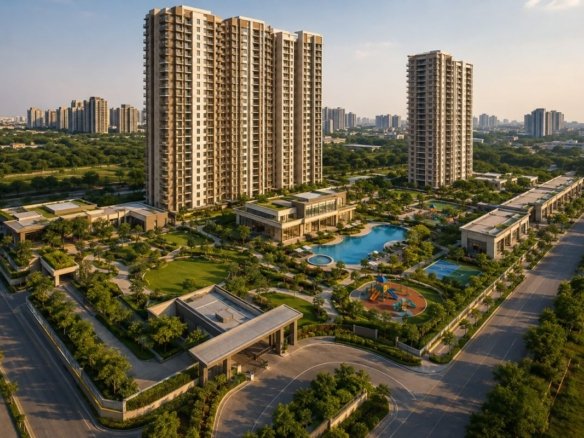
For buyers exploring premium residential developments in Gurgaon, GST becomes especially relevant because many luxury housing projects are still under construction. Fast-growing corridors such as Dwarka Expressway, Golf Course Extension Road, Southern Peripheral Road (SPR), and New Gurgaon continue to attract new launches from reputed developers, making GST an important component of the total acquisition cost.
Beyond GST, buyers should evaluate the complete financial commitment associated with a purchase rather than focusing solely on the quoted base price.
Typical additional costs may include:
- Stamp duty
- Registration charges
- PLC (Preferential Location Charges)
- Maintenance deposits
- Club membership fees
- Power backup charges
- IFMS (Interest-Free Maintenance Security)
Requesting a comprehensive cost sheet allows buyers to compare projects more accurately and avoid unexpected expenses later.
Can Homebuyers Claim GST Refund?
For most residential buyers purchasing a home for personal use, GST paid on an under-construction property is generally not refundable. Businesses purchasing commercial real estate may be eligible for different tax treatment depending on prevailing GST regulations and their eligibility under the law.
Since tax implications vary according to the buyer’s profile and intended use of the property, consulting a qualified Chartered Accountant before making a purchase is always advisable.
Advantages of Buying Under-Construction Property Despite GST
Although GST adds to the overall purchase cost, under-construction projects continue to attract both investors and end users because they often offer better long-term value. Buyers typically benefit from lower launch prices, flexible payment plans, wider unit choices, and the possibility of capital appreciation before possession.
In Gurgaon, infrastructure developments such as improvements along NH-48, Rapid Metro connectivity, IGI Airport access, and the future Noida International Airport (Jewar Airport) continue to strengthen the investment outlook across emerging residential corridors. Buyers evaluating these opportunities should also explore Gurgaon Investment Location Guide to understand the growth potential of different micro-markets before making a decision.
Common Mistakes Buyers Make
Many buyers focus only on the advertised price without evaluating the complete acquisition cost. Comparing only the base sale price can result in an inaccurate assessment of affordability because GST is only one of several charges involved in purchasing a property.
Another common mistake is assuming that every residential property attracts GST. In reality, ready-to-move properties that have already received their Completion Certificate generally do not attract GST. Buyers should also insist on a detailed quotation that clearly breaks down the base price, GST, stamp duty, registration charges, maintenance deposits, club charges, and other statutory payments.

Finally, never overlook the project’s regulatory approvals. Always verify the project’s registration details on the official Haryana RERA (HARERA) portal before making a booking.
Frequently Asked Questions Buyers Ask
Is GST included in the advertised property price?
Not always. Some developers advertise only the base sale price, while GST is charged separately. Buyers should always ask for the all-inclusive cost before making comparisons.
Does GST apply on resale property?
No. GST generally does not apply to resale residential properties, although stamp duty and registration charges remain applicable.
Does GST apply to plotted developments?
The tax treatment depends on the structure of the transaction and whether construction services are bundled with the sale. Buyers should verify the applicable tax position for each project individually.
Is GST different for luxury homes?
Luxury residential properties generally fall under the standard residential GST framework applicable at the time of purchase unless a specific government notification provides otherwise.
Final Thoughts
Understanding gst on under construction property helps buyers assess the true cost of purchasing a home rather than relying only on the advertised price. A well-informed buyer looks beyond GST and evaluates the developer’s credibility, project approvals, financing costs, infrastructure growth, and long-term appreciation potential.
For buyers considering projects across Dwarka Expressway, Golf Course Extension Road, Southern Peripheral Road (SPR), or New Gurgaon, taking a holistic view of the purchase is far more valuable than comparing base prices alone.
Before making a booking decision, request a detailed cost sheet, verify the project’s HARERA registration, and compare the total acquisition cost across multiple developments. If you’re exploring premium residential opportunities in Gurgaon, browse the relevant location guides and project pages on AssuredGains or connect with the advisory team for data-driven, unbiased guidance tailored to your requirements.

Join The Discussion