

Sohna is no longer viewed as Gurgaon’s distant extension. In 2026, it is being evaluated as one of NCR’s most structured plotted investment corridors — driven by master-plan zoning, DDJAY policy support, and expanding infrastructure connectivity.
For investors asking, “Is Sohna good for plot investment in 2026?” the answer depends less on hype and more on sector selection, approval structure, and holding strategy.
This guide breaks down:
- DDJAY vs licensed plotted colonies in Sohna
- Best sectors for gated plot investment
- Risk and approval filters
- Realistic appreciation timelines
- Exit strategy logic
Why Sohna Is Attracting Serious Plot Investors in 2026 (Is Sohna Good for Plot Investment Long Term?)
Sohna’s growth is policy-backed — not marketing-driven.
Under the Gurugram–Sohna Master Plan, development is structured around:
- Low-density residential zoning
- Wide sector roads
- Green buffers
- Planned plotted housing
This low-density framework makes Sohna fundamentally different from high-rise-dominated Gurgaon corridors.
Connectivity upgrades — including SPR linkage, Sohna Elevated Road access, and Delhi–Mumbai Expressway proximity — are steadily improving accessibility. As a result, land here is transitioning from speculative to end-user viable.
For investors evaluating Sohna plot investment long term, the corridor offers controlled supply, regulatory clarity, and improving livability — three pillars of sustainable appreciation.
What Makes a Gated Plotted Township Worth Investing in Sohna? (DDJAY vs Licensed Colony Explained)
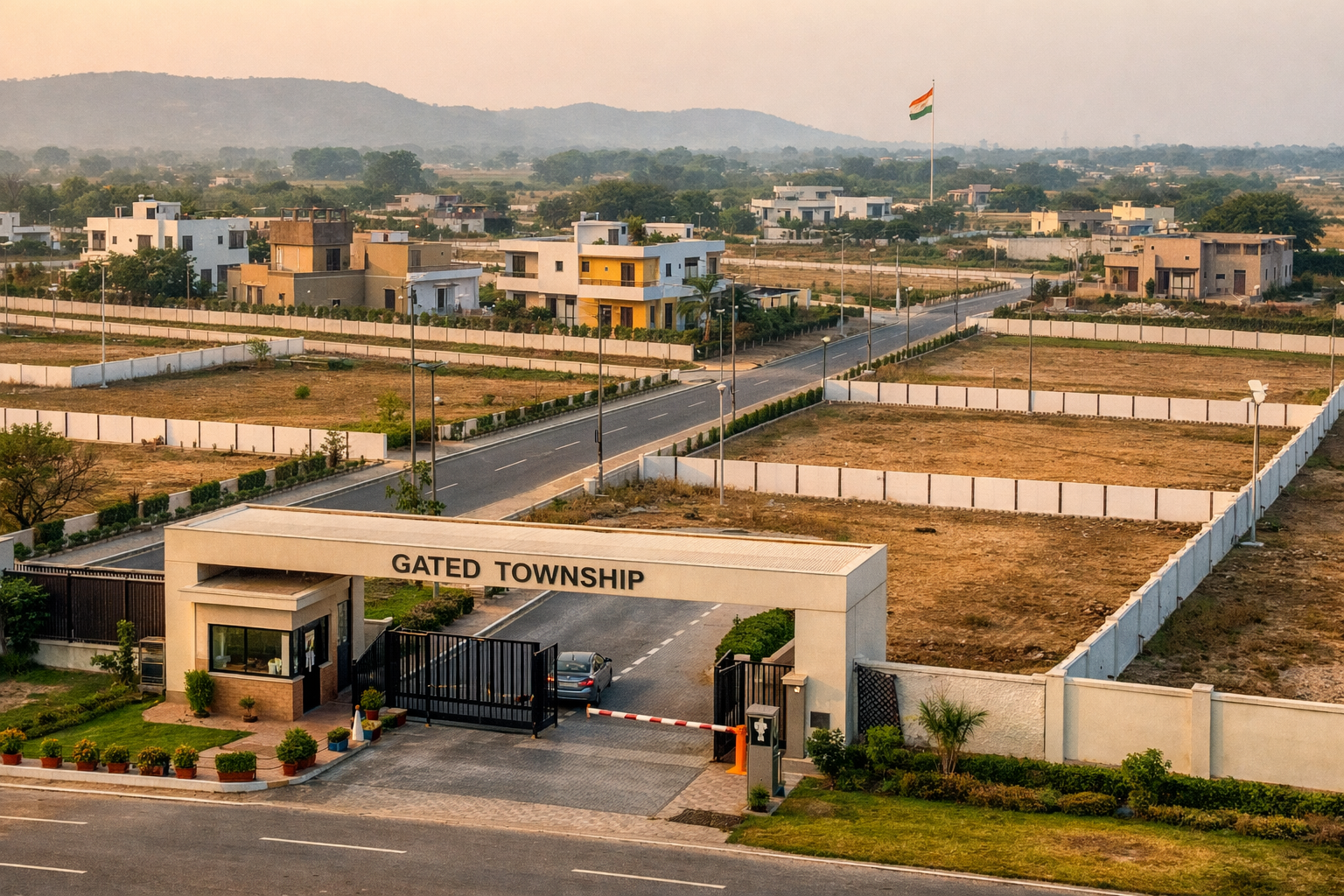
Not all plots are equal. Approval structure defines risk
DDJAY vs Licensed Colony in Sohna
Buyers exploring DDJAY plots in Sohna must understand the policy framework.
Under the Deen Dayal Jan Awas Yojna (DDJAY):
- Plot sizes typically range between ~100–180 sq yd
- Density norms are lower than group housing sectors
- FAR (Floor Area Ratio) structures differ from high-rise projects
- Pricing is often positioned within the Haryana affordable plotted scheme framework
In contrast, licensed plotted colonies may offer:
- Larger plot sizes
- Different FAR allowances
- Higher entry pricing depending on location
Understanding DDJAY vs licensed colony Sohna is critical because construction norms, resale liquidity, and buyer profile differ.
For any structure — DDJAY or licensed — DTCP approval is non-negotiable.
Master-Plan Sector Alignment
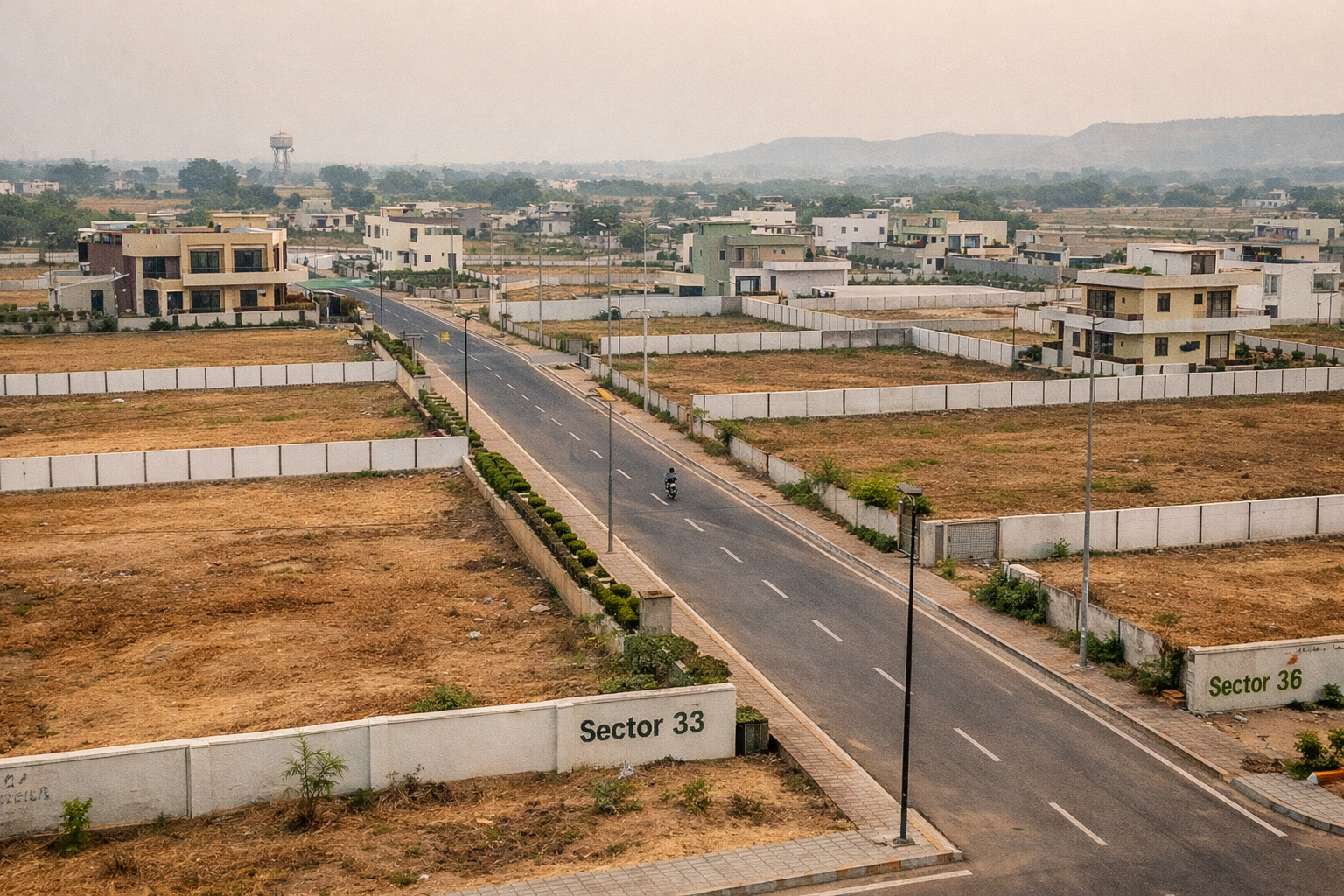
Sector selection matters more than headline pricing.
Investor activity is concentrated in:
- Plots in Sohna sector 33
- Sohna sector 35 plotted development pockets
- Plots in Sohna sector 36
- Gated plots in Sohna sector 37
- Sohna sector 38 plots price corridors
These sectors align with notified road grids and infrastructure expansion zones.
Entry prices in key sectors like 33, 35, and 36 remain directionally lower than comparable plotted supply in New Gurgaon — offering stronger percentage appreciation runway for patient investors.
Future growth areas in Sohna are typically those integrated into official master-plan corridors, not isolated peripheral parcels.
Developer Credibility & Infrastructure Delivery
Gated townships outperform standalone plots because they offer:
- Internal roads
- Drainage systems
- Gated access
- Standardized documentation
- Planned community spaces
For buyers seeking a safe plot investment in Gurgaon’s extended corridor, these factors significantly reduce execution risk and improve resale confidence.
Investment Returns: What Can Investors Realistically Expect?
Sohna is not a flip market — and that’s a strength.
Approved plotted developments have historically shown:
- Gradual capital appreciation over 5–8 years
- Better downside protection during slowdowns
- Liquidity improvement post-infrastructure activation
For investors evaluating DDJAY plot price Sohna dynamics, appreciation is typically driven by:
- Road operationalization
- Sector habitation milestones
- Infrastructure notification completion
Sohna rewards patience more than speculation.
Sohna vs New Gurgaon Plots, Dwarka Expressway & Apartments
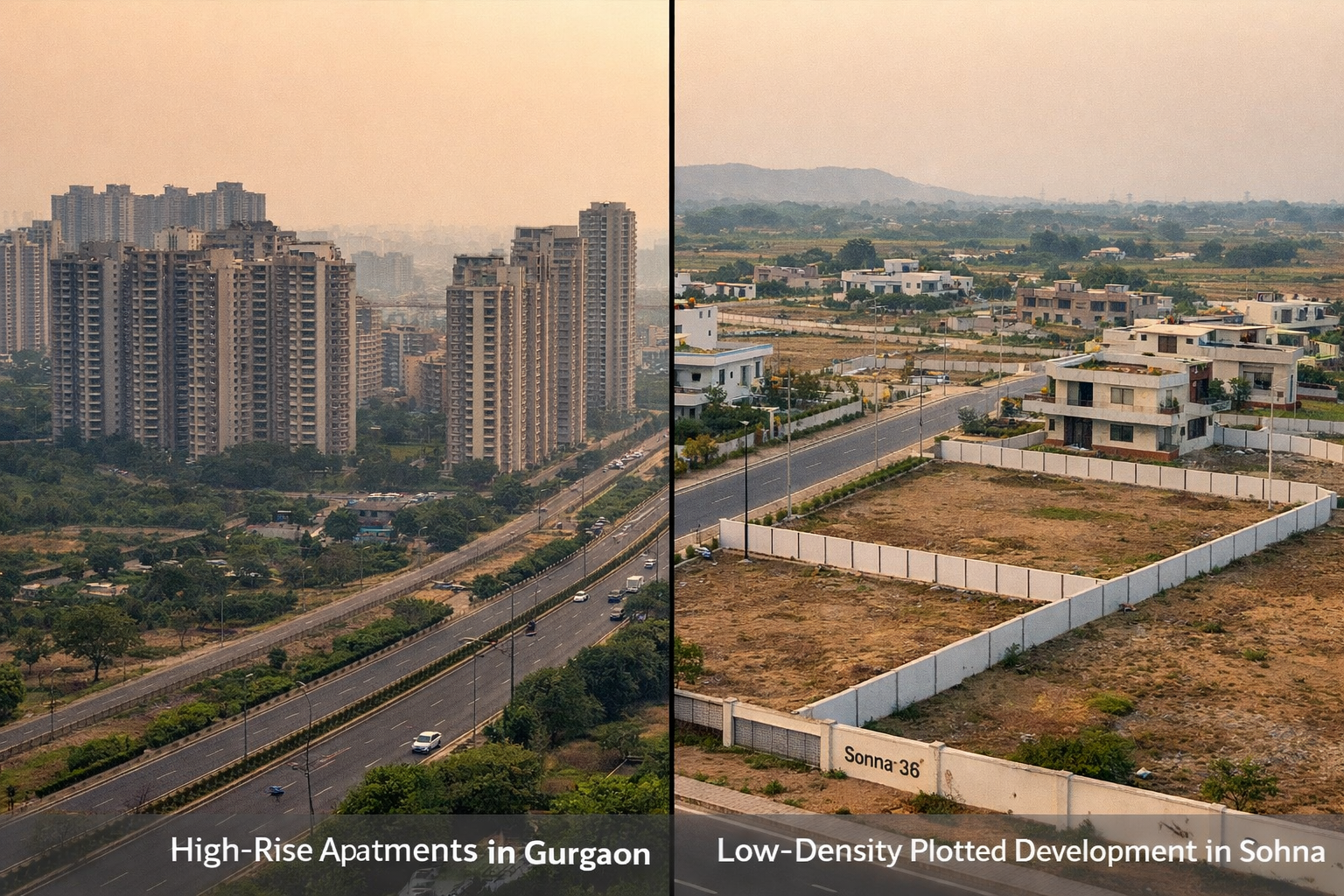
Sohna vs New Gurgaon Plots
Sohna offers earlier-stage pricing and lower density zoning. New Gurgaon offers faster current habitation but tighter appreciation margins.
Investors comparing Sohna vs New Gurgaon plots must decide between growth runway and maturity stability.
Sohna vs Dwarka Expressway Investment
Dwarka Expressway has seen sharper appreciation cycles but also higher entry costs and supply density.
In Sohna vs Dwarka Expressway investment decisions, Sohna offers:
- Lower entry thresholds
- Master-plan-driven expansion
- Reduced oversupply risk
Gurgaon Apartment vs Sohna Plot
When evaluating Gurgaon apartment vs Sohna plot, consider:
- Rental yield (apartments)
- Long-term land appreciation (plots)
- Maintenance load
- Customization flexibility
Plots typically offer stronger capital appreciation potential over longer holding periods.
Plots vs Builder Floors in Sohna
For emerging sectors, plots vs builder floors in Sohna is a frequent debate.
Builder floors provide quicker usability.
Plots provide stronger land-value compounding.
The right choice depends on liquidity needs and holding strategy.
Exit Strategy: When Should You Sell Sohna Plots?
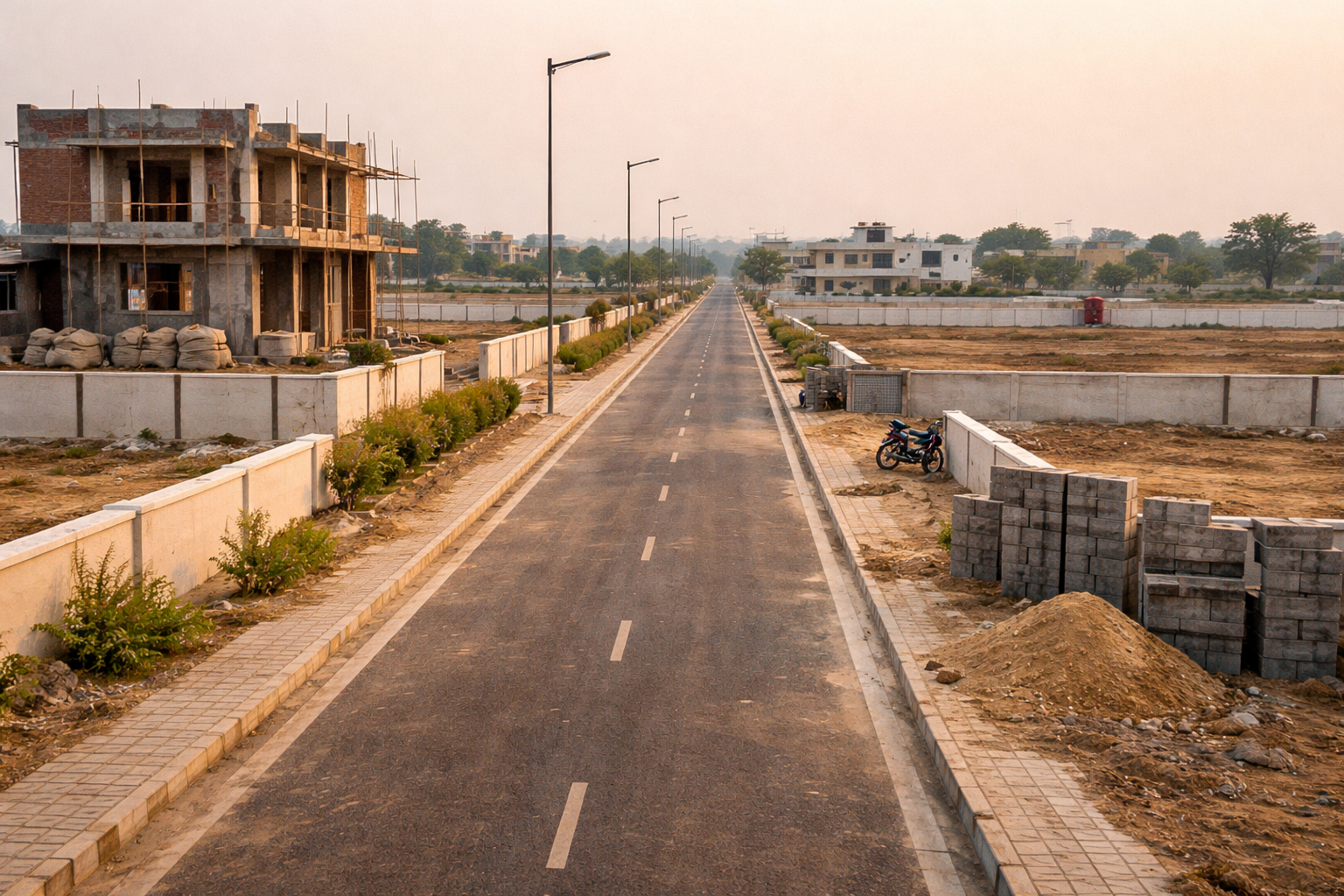
Serious investors think about entry and exit.
Common strategic exit windows include:
- Post-major road notification
- After infrastructure becomes operational
- When sector habitation crosses visible threshold
- Before peak speculative cycle compression
Selling too early reduces upside.
Holding without tracking sector maturity delays optimal exit.
Sohna rewards investors who track policy files and ground execution — not just price movement.
Key Risks Investors Must Still Watch
Even in gated townships:
- Buying in “proposed” layouts without final approval
- Ignoring actual road access
- Overpaying based on metro speculation
- Assuming all sectors will mature simultaneously
Approval clarity, sector validation, and ground verification remain essential.
Who Should Invest in Sohna Plots in 2026?
Ideal for:
- Long-term capital appreciation investors
- Buyers asking “is Sohna good for plot investment long term?”
- End-users planning custom homes
- Families priced out of central Gurgaon
Less suitable for:
- Immediate rental yield seekers
- Short-term flipping strategies
Final Verdict: Are Gated Plotted Townships in Sohna Worth It in 2026?
Yes — if selected correctly.
Sohna offers:
- Policy-backed plotted development
- DDJAY and licensed colony structures
- Expanding infrastructure network
- Lower entry price bands vs mature Gurgaon zones
- Growing end-user alignment
For disciplined investors seeking structured land exposure rather than speculative spikes, Sohna remains one of NCR’s most balanced plotted investment corridors in 2026.
Frequently Asked Questions (FAQ)
Is Sohna good for plot investment in 2026 or is it still too early?
Sohna is considered a strong long-term plot investment corridor in 2026, particularly for investors who understand holding cycles. The region is still in a structured growth phase, supported by master-plan zoning, low-density planning, and infrastructure upgrades like the Sohna Elevated Road and Delhi–Mumbai Expressway connectivity. It is not a short-term flipping market, but for buyers targeting capital appreciation over five to eight years, Sohna offers a healthier risk-reward balance than saturated Gurgaon sectors.
What is the difference between DDJAY plots and licensed plotted colonies in Sohna?
DDJAY plots in Sohna fall under the Deen Dayal Jan Awas Yojna framework, which promotes low-density plotted housing with defined size brackets and FAR norms. Plot sizes generally range around 100–180 sq yd and follow specific policy guidelines. Licensed plotted colonies may offer larger sizes and slightly different construction flexibility depending on approval terms. The core difference lies in density norms, construction parameters, and pricing positioning. Regardless of type, DTCP approval and final layout sanction remain essential for legal safety.
Which sectors are currently considered strong for gated plot investment in Sohna?
In 2026, investor interest is typically focused on sectors aligned with master-plan road networks and visible infrastructure progress. Sectors such as 33, 35, 36, 37, and 38 are frequently evaluated because they integrate better with notified connectivity corridors. The strongest sectors usually show a combination of approved layouts, developing access roads, and gradual end-user construction activity. Sector selection often influences long-term liquidity more than headline entry price.
What kind of returns can investors realistically expect from Sohna plots?
Sohna plots are best suited for medium-to-long-term appreciation rather than rental income. Approved gated plotted developments have historically delivered gradual and stable price growth, particularly once infrastructure becomes operational and habitation improves. Investors should align expectations with infrastructure timelines and sector maturity rather than short-term market momentum.
When is the right time to exit a Sohna plot investment?
Exit timing is typically linked to infrastructure milestones and sector-level habitation growth. Many strategic investors evaluate exit after major road connectivity becomes fully functional or when visible residential construction increases within the township. Selling before infrastructure completion may limit upside, while holding beyond peak absorption phases may reduce liquidity advantages. Monitoring sector progress is usually more effective than reacting to short-term price movements.


Join The Discussion