

In 2026, Manesar is no longer viewed as Gurgaon’s peripheral extension. It is increasingly evaluated as an independent industrial-growth corridor within the NCR real estate cycle.
As Gurugram’s premium sectors mature and pricing consolidates, capital rotation has begun. Investors are reassessing where the next 5–10 year appreciation window may emerge.
The question is no longer speculative.
Is Manesar structurally aligned for sustained growth — or simply riding spillover sentiment?
This analysis examines infrastructure alignment, industrial anchors, price trend acceleration, supply density, and capital risk positioning.
Gurgaon Has Entered a Capital Consolidation Phase
Between 2020–2025:
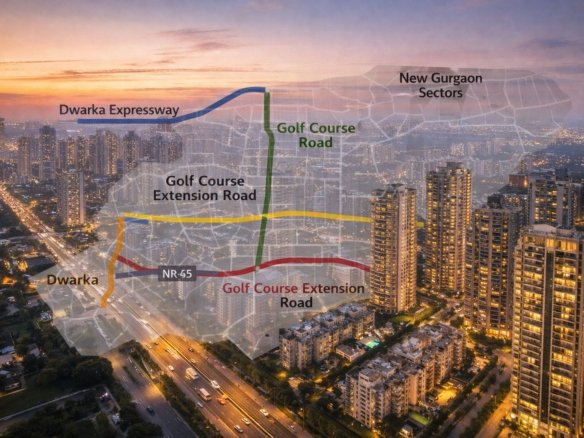
- Dwarka Expressway experienced rapid primary launch escalation
- New Gurgaon (Sectors 82–95) absorbed high-density vertical supply
- SPR corridor saw clustered inventory expansion
Pricing has hardened. Entry barriers have risen. Yield compression is visible.
Historically, once a core market matures, adjacent employment-backed zones begin absorbing the next capital wave.
Manesar fits that structural transition pattern.
Strategic Location: Infrastructure-Aligned, Not Peripheral
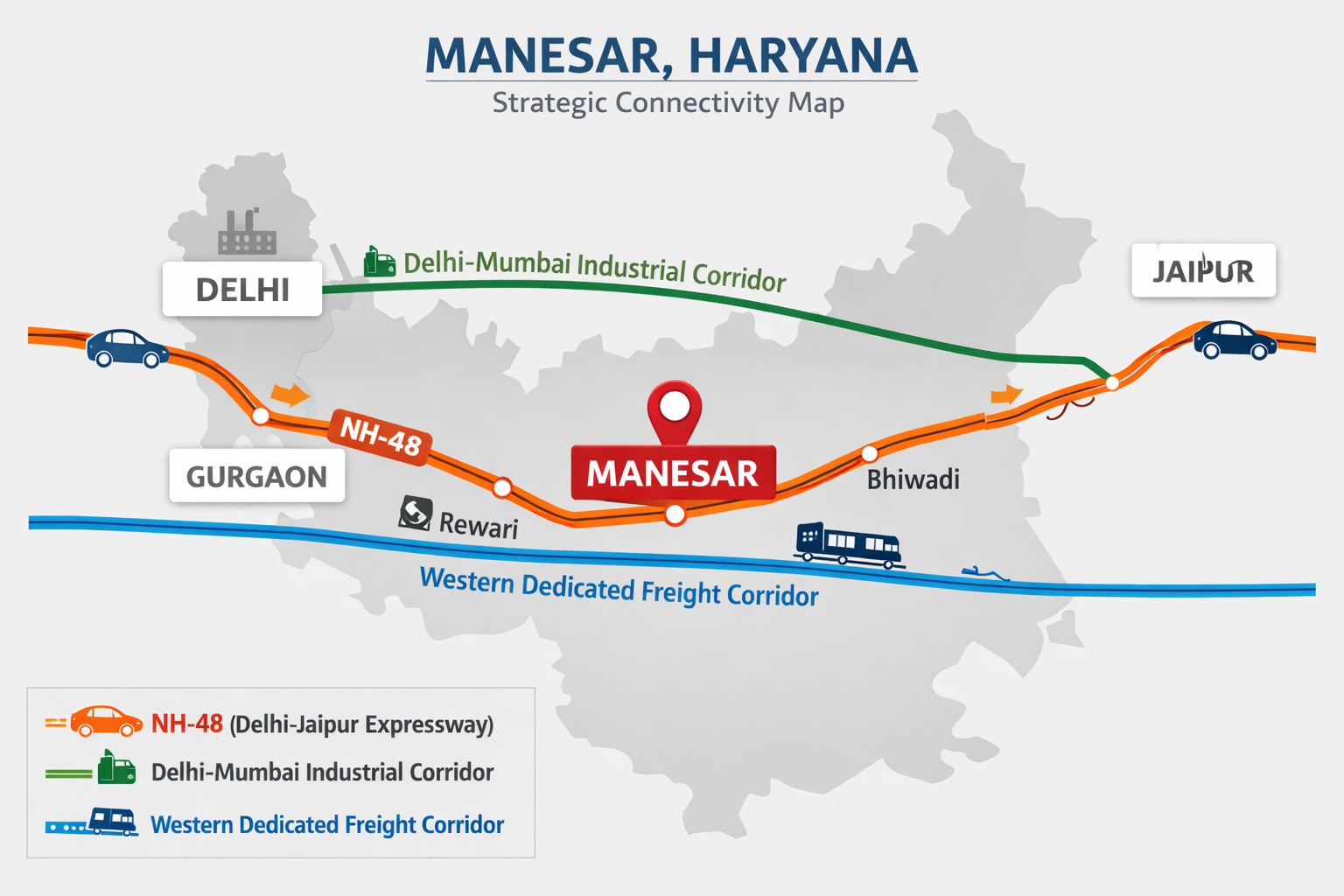
Manesar sits directly along NH-48 (Delhi–Jaipur Highway), offering:
- 15–20 minute access to New Gurgaon sectors
- Seamless integration with Haryana’s industrial belt
- Multi-directional connectivity to Rewari, Bhiwadi, and Jaipur
More importantly, its macro-alignment is reinforced by two nationally significant infrastructure corridors:
- Delhi–Mumbai Industrial Corridor
- Western Dedicated Freight Corridor
At the center of this ecosystem lies IMT Manesar — one of North India’s most established industrial townships.
This is corridor logic. Not speculative overflow.
IMT Manesar: The Employment Engine Behind Price Stability
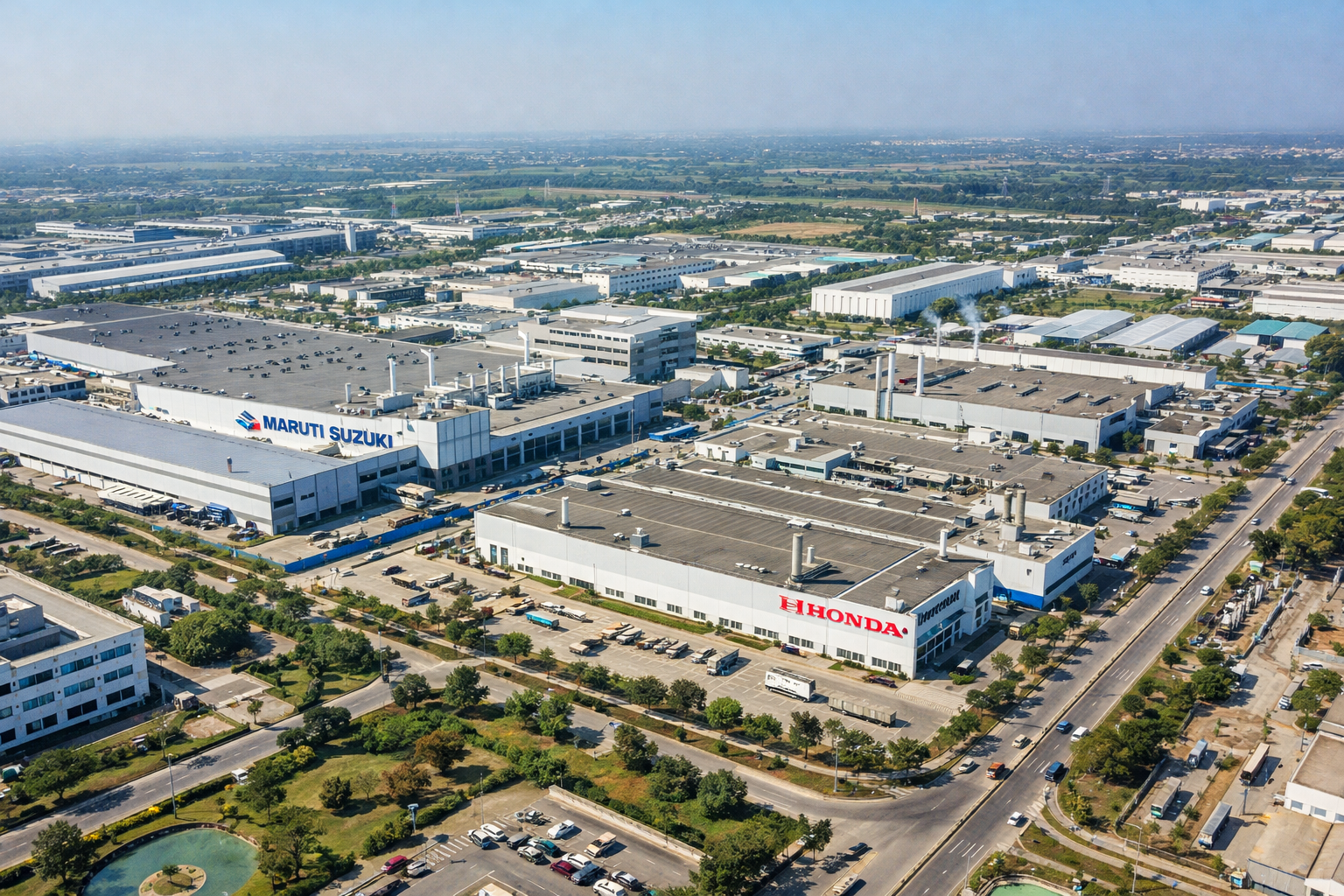
The strength of IMT Manesar is its industrial concentration.
Major anchors include:
- Maruti Suzuki
- Honda Motorcycle & Scooter India
- Bosch
- Denso
This cluster supports:
- Automotive production
- EV supply chains
- Auto component manufacturing
- Industrial logistics
Residential demand in Manesar is therefore employment-driven.
That distinction matters.
Markets anchored in job creation tend to show:
- Higher absorption resilience
- Lower volatility
- Sustainable rental stability
This is fundamentally different from purely residential micro-markets.
Manesar Property Price Trend (2021–2026)
Indicative Residential Price Movement
| Year | Avg Price Range (₹/sq ft) | Market Phase Signal |
|---|---|---|
| 2021 | ₹3,200 – ₹3,800 | Early accumulation phase |
| 2022 | ₹3,800 – ₹4,400 | Industrial demand recovery |
| 2023 | ₹4,200 – ₹4,900 | Gradual re-rating begins |
| 2024 | ₹4,800 – ₹5,600 | Infrastructure confidence improves |
| 2025 | ₹5,200 – ₹6,200 | Capital rotation visible |
| 2026 | ₹5,800 – ₹6,800 | Early-cycle expansion phase |
Estimated 5-year appreciation range: 65–85%
Indicative CAGR: 10–14%
Price acceleration between 2023–2026 indicates early-cycle re-rating rather than late-cycle overheating.
Absorption has remained steady, particularly in plotted formats, while high-rise expansion remains limited compared to New Gurgaon clusters.
This suggests structural demand, not speculative froth.
Supply-Side Dynamics: Density Matters
Residential launch density in Manesar remains significantly lower than the 82–95 sector cluster, where vertical supply concentration peaked between 2022–2025.
Current characteristics include:
- Higher proportion of plotted and low-rise formats
- Limited high-density vertical inventory
- Gradual release cycles rather than aggressive clustering
Lower density reduces systemic risk.
In contrast, New Gurgaon’s rapid vertical supply expansion increases medium-term inventory sensitivity.
Supply discipline is one of Manesar’s quiet strengths.
Manesar Rental Yield 2026: Industrial Stability
| Configuration | Avg Price | Avg Monthly Rent | Gross Yield |
|---|---|---|---|
| 2BHK | ₹45–60L | ₹15k–20k | 3.5%–4.5% |
| 3BHK | ₹65–85L | ₹22k–28k | 3.5%–4.8% |
Rental demand stems from:
- Mid-level managers
- Industrial supervisors
- SME operators
- Vendor network professionals
Unlike lifestyle-led corridors, tenancy here is tied to employment continuity.
Yield is stable — not speculative.
Why Plots in Manesar May Outperform High-Rise Supply
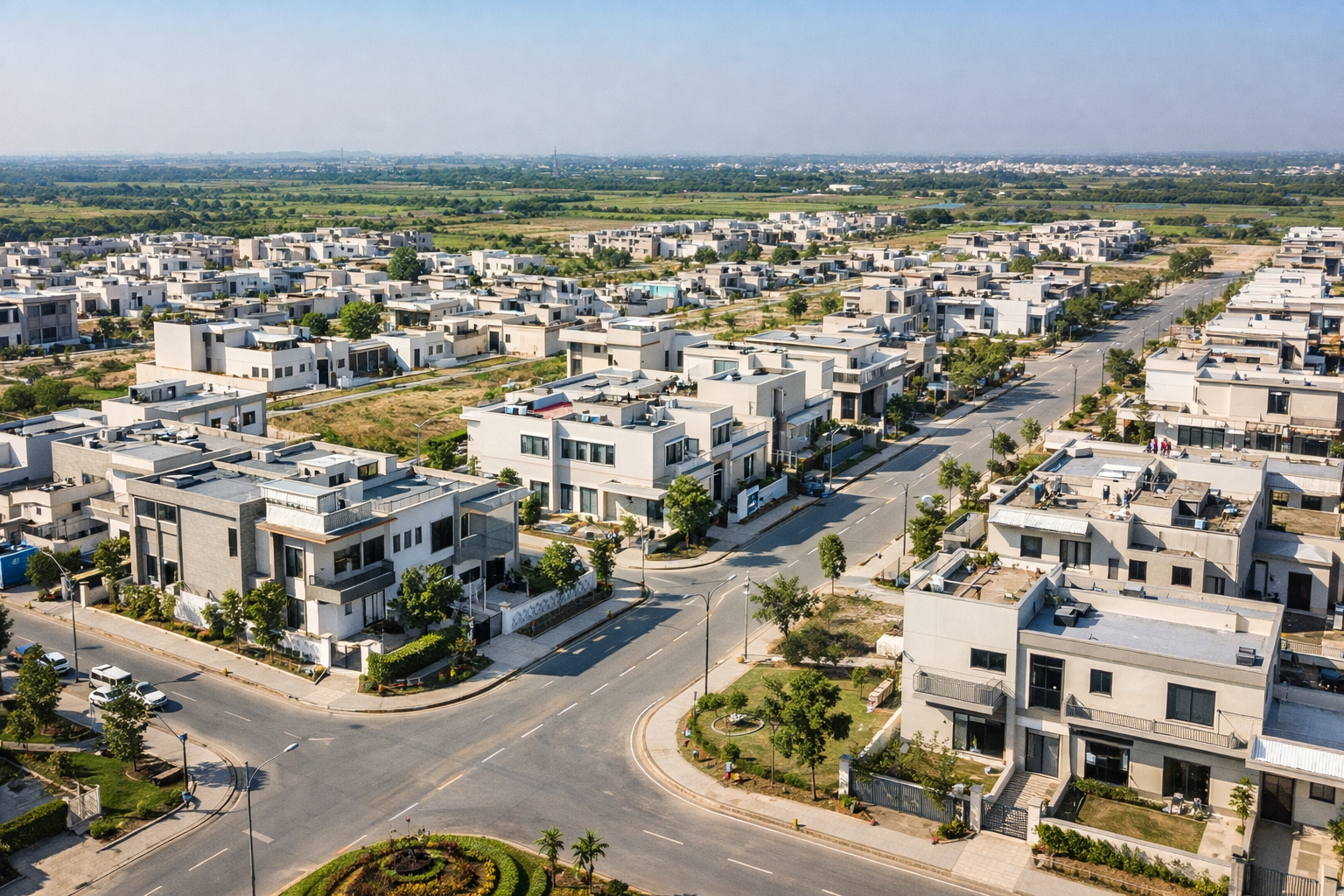
A defining 2026 opportunity lies in plotted development.
Advantages include:
- Land scarcity compounding
- Lower supply density
- Stronger appreciation asymmetry over long cycles
As industrial employment expands, land-adjacent housing demand strengthens.
For 7–10 year investors, plotted assets may offer superior capital growth compared to high-rise clusters exposed to supply waves.
Manesar vs New Gurgaon (2026 Investment Snapshot)
| Factor | Manesar | New Gurgaon (82–95) |
|---|---|---|
| Avg Entry Price | Lower | Higher |
| Supply Density | Low–Moderate | High |
| Industrial Anchor | Strong | Limited |
| Rental Yield Stability | Employment-backed | Corporate cycle driven |
| Infrastructure Maturity | Developing | Mature |
| Speculative Premium | Low | Medium–High |
| 5-Year Appreciation Potential | High | Moderate |
| Short-Term Liquidity | Moderate | High |
New Gurgaon is liquidity-friendly.
Manesar is compounding-oriented.
Capital rotation typically favors lower speculative premium zones entering early re-rating phases.
Commercial & Logistics Multiplier
With proximity to:
- Delhi–Mumbai Industrial Corridor
- Western Dedicated Freight Corridor
- NH-48 freight movement
Manesar is positioned as a logistics and warehousing expansion node.
Industrial real estate growth acts as a residential absorption stabilizer.
This multiplier effect differentiates Manesar from purely lifestyle-led corridors.
Risks & Structural Constraints
- Lifestyle infrastructure remains developing
- Liquidity is lower than core Gurgaon
- Policy timelines influence pace
This is not a rapid-flip corridor.
It is a measured capital allocation zone.
Final Verdict: Industrial Extension, Not Speculative Spillover
Manesar is not early-stage Gurgaon 2008.
It is not a speculative gamble in 2026.
It is a mid-cycle industrial corridor with measured upside and lower systemic risk compared to high-density residential clusters.
It will not replace Gurgaon.
It will complement it — as its industrial-growth extension.
Frequently Asked Questions (FAQs)
Is Manesar a good property investment in 2026 compared to Gurgaon?
Manesar in 2026 is positioned as an industrial-growth extension rather than a lifestyle-driven residential hub. While Gurgaon offers stronger short-term liquidity and mature infrastructure, Manesar provides lower entry prices and employment-backed appreciation potential. For investors with a 5–10 year horizon, the risk–reward balance in Manesar can be more favorable, especially in plotted and IMT-adjacent pockets.
How have property prices in Manesar moved between 2021 and 2026?
Residential prices in Manesar have shown steady upward movement from the ₹3,200–₹3,800 per sq ft range in 2021 to approximately ₹5,800–₹6,800 per sq ft in 2026 across key zones. The sharper momentum observed between 2023 and 2026 reflects early-cycle re-rating supported by industrial expansion and corridor confidence, rather than speculative overheating.
What is driving real housing demand in Manesar?
Housing demand in Manesar is largely employment-driven due to industrial concentration within IMT Manesar. Large manufacturers and auto-component ecosystems generate consistent demand from mid-level managers, engineers, and supplier networks. This creates stable occupancy patterns and reduces volatility compared to purely investor-led residential markets.
What rental yield can investors expect in Manesar in 2026?
Gross rental yields in Manesar typically range between 3.5% and 4.8%, depending on property configuration and proximity to industrial clusters. While not aggressively high, these yields are relatively stable because tenancy is linked to ongoing industrial employment rather than short-term corporate relocation cycles.
Are plots in Manesar better than apartments for long-term investment?
For investors focused on long-term capital appreciation, plotted developments may offer stronger upside due to land scarcity and lower supply density. Apartments can provide easier rental management, but plots in Manesar benefit from industrial corridor expansion and controlled residential supply, which can enhance appreciation over a longer holding period.


Join The Discussion