
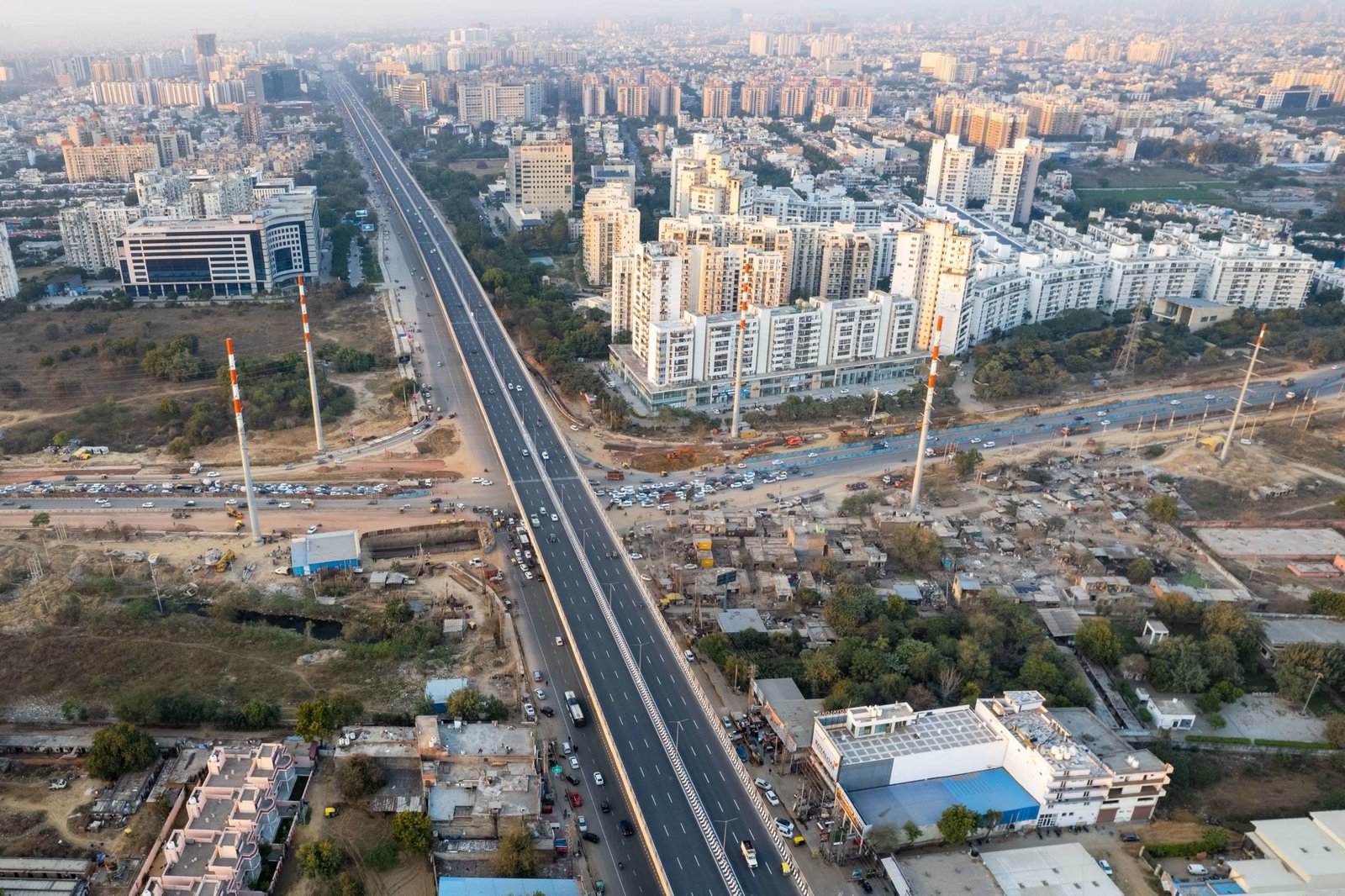
The Gurgaon residential market hasn’t slowed — it has matured.
What used to be a sentiment-driven market has now become far more selective. The gap between strong, average, and weak projects has widened significantly. Good projects move quickly, average ones take time, and weaker developments gradually disappear from serious consideration.
This kind of differentiation didn’t exist a decade ago.
If you want a broader macro understanding before going deeper, this real estate market outlook Gurgaon gives a clearer picture of where the market is heading.
Gurgaon Has Changed — But Pricing Hasn’t Fully Adjusted Everywhere
In corridors like Golf Course Extension Road and the Southern Peripheral Road, most transactions today are driven by end-users rather than investors. This has made the market more stable, but it has also exposed a subtle mismatch—pricing in some areas has moved faster than actual livability.
This is particularly visible along the Dwarka Expressway. While infrastructure is progressing and long-term demand is evident, some projects are already priced as if the ecosystem is fully mature. For a buyer, this doesn’t necessarily mean the market is overheated—it simply means the investment horizon needs to be longer and expectations need to be realistic.
If you want to understand how macro factors influence this pricing behavior, it helps to look at the impact of global economy on Gurgaon real estate and how long-term planning initiatives are shaping value through the smart cities impact on Gurgaon property market.
To understand how pricing has evolved over time and why certain patterns are repeating, it helps to study property price trends Gurgaon last 10 years.
Who Is Actually Buying Right Now

The buyer profile hasn’t dramatically changed—corporate professionals, business owners, and NRIs still dominate—but the way decisions are being made has evolved significantly.
Today’s buyer rarely commits on first exposure. They compare multiple projects, revisit sites, track construction progress, and often delay decisions until they feel confident about execution. This more deliberate behavior explains why even well-marketed projects sometimes see strong interest but slower conversions.
What we’re seeing is not weaker demand, but more informed demand.
Demand Trends in 2026: What the Data Actually Suggests
The headline numbers still indicate a healthy market. End-user participation in key corridors is now estimated at around 60–70 percent, which is a strong sign of stability. In premium micro-markets, inventory overhang has reduced to roughly 12–18 months, suggesting supply is not excessive in these segments.
However, these numbers don’t tell the full story.
In parts of New Gurgaon, particularly sectors like 79 to 86, there is a visible gap between quoted prices and actual transaction momentum. Prices have moved up, but absorption hasn’t always kept pace. This disconnect becomes clear only when you track real deals rather than listing trends.
For a clearer understanding of where demand is actually concentrated, it’s worth exploring the best sectors in Gurgaon and aligning that with a broader Gurgaon investment location guide.

What Is Actually Selling (And What Isn’t)
One of the most important shifts in Gurgaon is this:
Demand is no longer location-led. It is project-led.
Projects that offer near-possession clarity, credible developers, practical layouts, and lower density continue to perform well.
On the other hand, developments based heavily on future promises — whether infrastructure or delivery timelines — face resistance, even if pricing appears attractive.
This explains why two projects in the same sector can deliver completely different outcomes.
If you’re trying to align your investment with real demand, exploring the best sectors in Gurgaon for investment helps filter where actual absorption is happening.
Is Gurgaon Facing a Supply Crunch?
The answer depends entirely on the micro-market.
In Golf Course Extension Road, supply is relatively tight and demand remains steady, which is supporting pricing strength. The Dwarka Expressway presents a different picture—it has strong demand, but also a large pipeline of upcoming supply that could balance price growth over time. The Southern Peripheral Road sits somewhere in between, still evolving and highly dependent on how quickly infrastructure translates into livability.
If you’re trying to align demand–supply with timing decisions, the right time to buy property in Gurgaon becomes an important lens.
Segment-Level Reality
The market behaves very differently depending on the price segment.
Affordable housing continues to see strong demand, but new supply is limited because developer margins are constrained. The mid-segment remains the most competitive space, where pricing sensitivity is high and transactions often require negotiation. In the premium and luxury category, demand appears strong on the surface, but performance is uneven—only well-positioned projects are absorbing quickly, while others struggle despite premium pricing.
This unevenness is one of the most important realities of the current cycle.

Rental Market: Stable but Not Uniform
Rental yields in Gurgaon typically fall between 2.5% and 4%, but averages can be misleading. Golf Course Extension Road performs relatively better due to established occupancy, while emerging corridors like Dwarka Expressway and SPR start lower but offer future upside.
Even within a single project, rental performance can vary significantly. Factors like tower positioning, furnishing quality, and proximity to commercial hubs can influence returns more than the sector itself.
Price Trends: What Growth Really Means
Between 2020 and 2026, the premium segment has seen relatively consistent appreciation, largely supported by limited supply and strong end-user demand. The mid-segment, however, has experienced uneven growth, with certain pockets seeing price increases without a corresponding depth in demand.
This creates a layer of risk that many buyers overlook. Price movement alone does not always indicate a strong market—it can sometimes reflect constrained inventory or aggressive positioning rather than genuine absorption.
Where Demand–Supply Mismatch Actually Exists
Some corridors show strong alignment between demand and supply, particularly Golf Course Extension Road and select sectors along the Dwarka Expressway. The SPR corridor is gradually gaining traction, although its long-term performance still depends on infrastructure execution.
In contrast, parts of New Gurgaon and certain peripheral sectors continue to show inconsistent absorption. Even within these areas, performance varies sharply at the project level, reinforcing a key takeaway—broad location assumptions are no longer enough.
For a deeper breakdown, refer to the Gurgaon residential demand supply detailed guide .

Developer Credibility: The Real Deciding Factor
One of the most underestimated shifts in Gurgaon is the importance of developer reputation. Buyers today are increasingly prioritizing execution track record over location advantages.
Projects by established developers tend to command stronger pricing and faster absorption, while lesser-known developers often rely on discounts and extended sales cycles. This change reflects a more mature and risk-aware buyer base.
Investor Thinking: If I Had ₹1 Cr Today
If you step into the market with a practical lens, allocation decisions naturally align with risk and time horizon.
At the lower end of the spectrum, early-stage opportunities on the Southern Peripheral Road can offer upside, but only if infrastructure development progresses as expected. In the mid-range, selective projects on the Dwarka Expressway make sense when backed by credible developers. At higher budgets, Golf Course Extension Road continues to attract demand, although entry pricing is already elevated.
For those evaluating real opportunities rather than just theory, exploring new residential projects in Gurgaon can give a clearer picture of what’s actually available in the market today.

Entry Timing Strategy
Timing in Gurgaon is not universal—it is segment-dependent.
Premium projects often reward early entry when backed by strong developers, while mid-segment buyers tend to find better value closer to possession, when pricing aligns more closely with reality. In emerging corridors, timing is closely tied to infrastructure progress rather than market cycles alone.
Buy Now or Wait: A Practical Framework
The decision to enter the market should be based on alignment rather than urgency.
If a project has credible execution, pricing that reflects current livability, and clear long-term usability, entering early can make sense—especially in supply-constrained segments. On the other hand, if pricing is based on future assumptions, inventory is high, or the project lacks differentiation, waiting often leads to better opportunities.
This is less about predicting the market and more about reading the situation correctly.
Exit Strategy: Where Most Investors Struggle
Liquidity in Gurgaon varies more than most people expect.
Established corridors such as Golf Course Extension Road generally offer smoother resale due to consistent demand. Prime stretches of the Dwarka Expressway are improving, but still evolving. In contrast, oversupplied mid-segment areas or poorly connected sectors often face slower resale cycles, where even price appreciation does not translate into easy exits.
Strategic Perspective
If your goal is not just buying property but building returns, it’s important to evaluate alternatives as well. In certain scenarios—especially where rental yield becomes a priority—exploring Commercial Property in Gurgaon can offer a different risk-return balance compared to residential assets.
Final Take
Gurgaon is no longer a uniform market — and that’s exactly what makes it complex.
Some projects will continue to outperform because they align with real demand, while others may struggle despite being in the same location.
The difference now comes down to execution, pricing discipline, and long-term usability.
If you want to move from theory to actual decision-making, exploring the best investment opportunities Gurgaon will give you a clearer view of where the market currently offers real potential.
Understanding this difference is what separates average decisions from strong investments.
Frequently Asked Questions
Q1. Is Gurgaon property demand actually strong right now?
Yes, but it is highly selective. Demand is concentrated in specific projects and micro-markets rather than being evenly distributed.
Q2. Which area is best to invest in Gurgaon in 2026?
Golf Course Extension Road, Dwarka Expressway, and SPR are key areas, but project selection is more important than location alone.
Q3. What is the average property price in Gurgaon?
Mid-segment properties typically range between ₹7,000 and ₹11,000 per sq.ft, while premium properties range from ₹12,000 to ₹20,000+ per sq.ft depending on location.
Q4. Is Dwarka Expressway overhyped?
Partially. While demand is strong, some projects are priced ahead of current infrastructure readiness.
Q5. What rental return can I expect in Gurgaon?
Rental yields generally fall between 2.5% and 4%, depending on property type and location.
Q6. Which sectors should investors approach cautiously?
Sectors with weak connectivity, large unsold inventory, or inconsistent project performance require careful evaluation.
Q7. When is the right time to invest in Gurgaon property?
It depends on the segment. Premium projects may benefit from early entry, while mid-segment opportunities often improve closer to completion.




Join The Discussion