
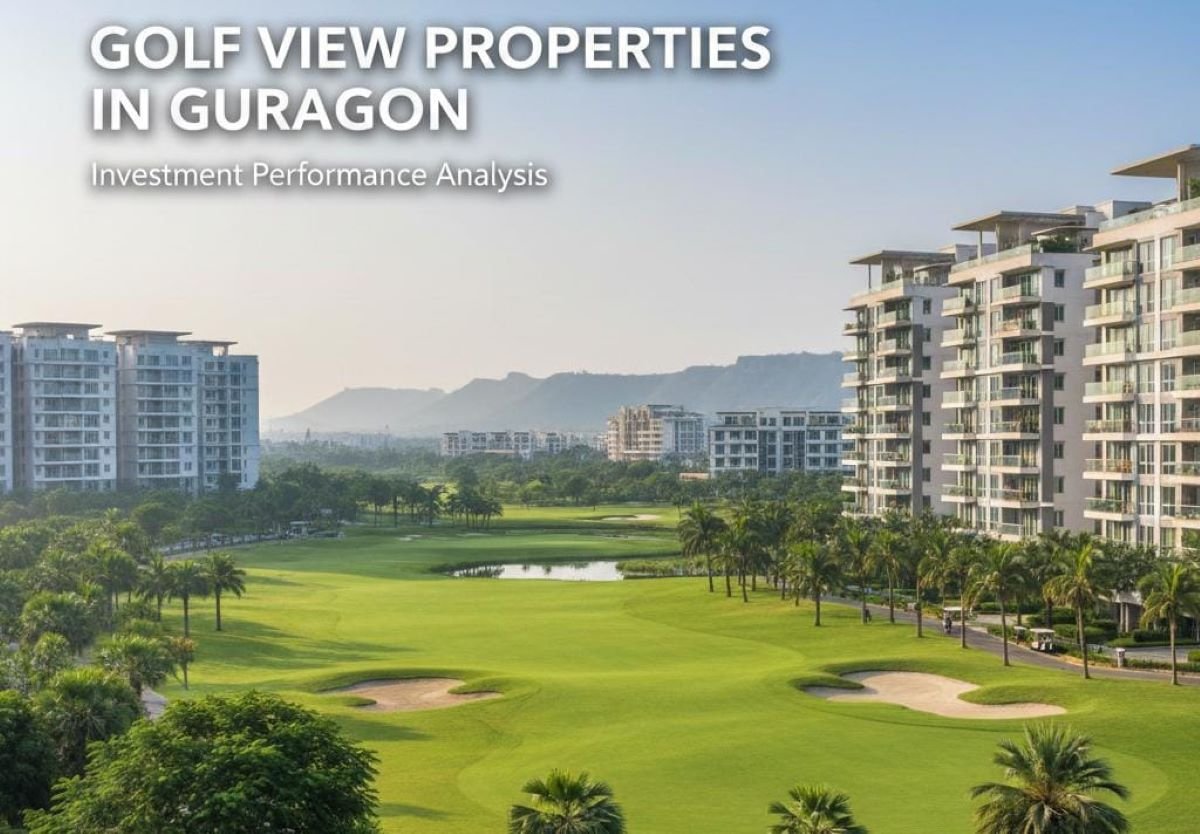
Golf-facing homes have carried a premium for years.
What’s different now is how they behave when the market isn’t moving in a straight line.
Track a few deals around Golf Course Road or DLF Phase 5 and the pattern becomes clearer over time. Regular luxury units see wider negotiation bands when sentiment softens. Golf-facing ones don’t move in the same way. Sellers hold longer. Buyers don’t push as hard on price in many cases.
The difference isn’t dramatic in every deal, but it shows up consistently enough.
Why Buyers Still Stretch for Golf Views
It’s easy to reduce it to “better view, higher price.”
That explanation doesn’t really hold once you look closer.
In most parts of Gurgaon, what you see from your window can change. New tower, new construction, shifting density. A golf course doesn’t behave like that.
The open stretch stays. The distance in front stays.

For someone putting significant capital into a property, that stability carries weight. The view is part of it. The predictability matters more than people admit.
Not Every “Golf-Facing” Unit Behaves the Same
This is where things start getting misread.
Some units sit right against the course with uninterrupted frontage. Others are angled — you see the greens, but not fully. Then there are units where the “view” exists more in the brochure than in reality.
All three get grouped together in listings.
Pricing doesn’t always separate them clearly.
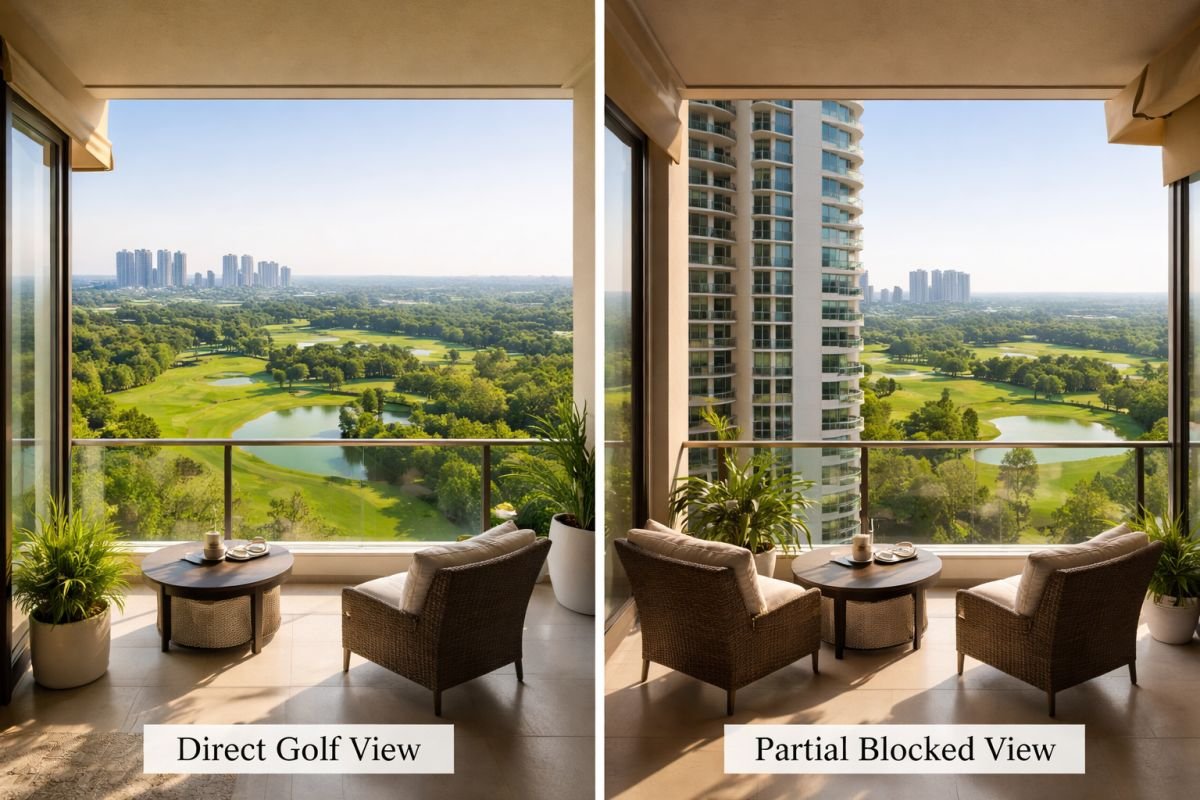
Over time, the difference shows up. Front-facing units tend to hold firmer. The rest depend more on overall project demand and timing.
What Actually Happens When the Market Slows
On paper, golf-facing properties look stronger.
In real transactions, the gap shows up during softer phases.
Standard luxury inventory starts seeing more flexibility in pricing. Sellers become more open. Buyers wait it out.
Golf-facing units don’t completely avoid this, but the adjustment is usually narrower. Deals still happen, just with less pressure.
You notice it more when comparing similar-sized units in the same project.
Rental Side: Strong, But Not Everywhere
There is a rental premium.
But it’s tied closely to location.
In core zones like Golf Course Road and parts of DLF Phase 5, demand from senior professionals and expats supports higher rents for golf-facing units.
Step slightly outside these pockets, and the advantage starts thinning out.
Tenants do value the view. They also look at commute, access, and day-to-day convenience.
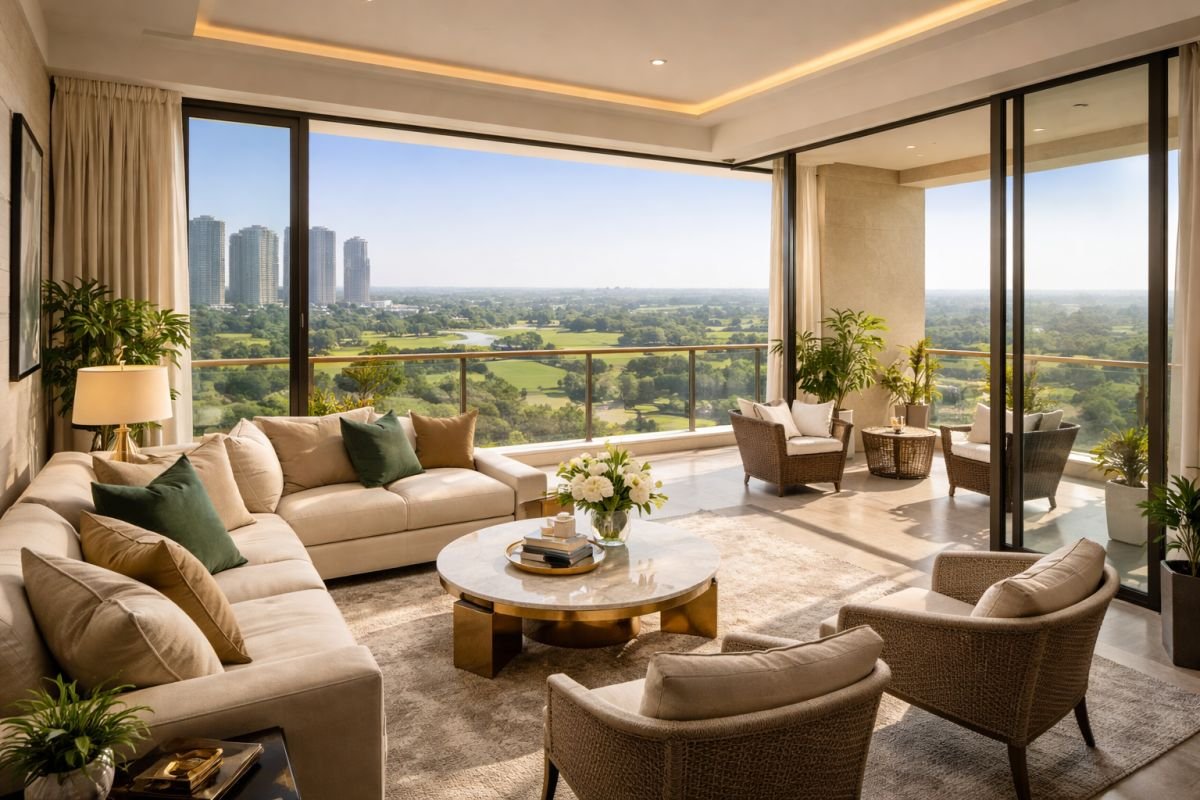
The view helps. It doesn’t carry the entire equation.
Who Actually Buys These Homes
The buyer profile stays fairly tight.
Business owners, senior professionals, NRIs, families planning to stay long-term.
You don’t see much short-term flipping here.
That has an effect on pricing behaviour. Less urgency to sell. Fewer situations where someone needs to exit quickly.
Deals happen, but not in a rush.
Golf Course Road Still Sets the Tone
Most comparisons eventually lead back here.
It’s not only the golf course. It’s the ecosystem around it — offices, connectivity, existing demand, familiarity in the market.
Properties in this stretch tend to move with less friction compared to newer golf-adjacent areas that are still developing.
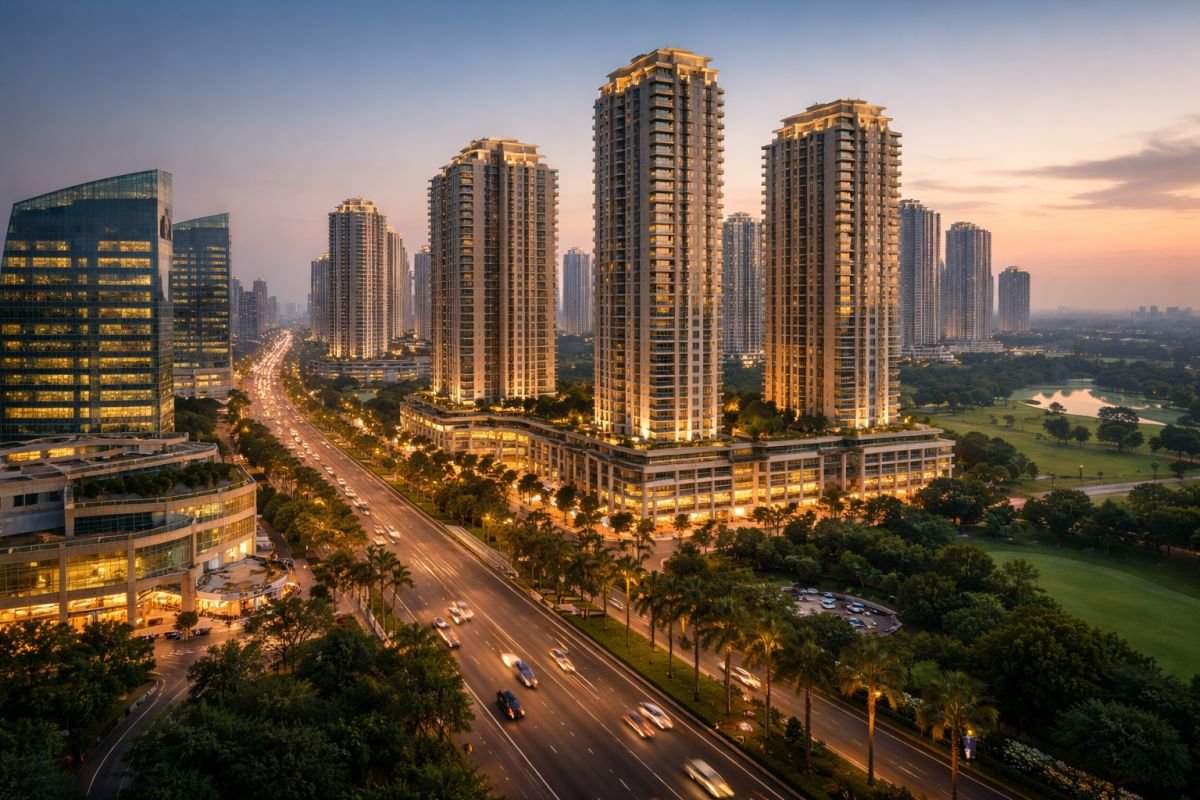
The gap isn’t permanent, but it’s there right now.
Are Buyers Sometimes Paying Too Much?
It does happen.
In strong cycles, the “golf view” tag gets stretched.
You’ll come across units where:
- The angle is weak, but pricing assumes prime frontage
- The project isn’t particularly strong, yet the golf narrative carries the pitch
That’s where decisions need to slow down.
A strong unit in a strong project usually justifies the premium.
Beyond that, the margin for error increases.
Risks That Don’t Always Get Highlighted
The assumption is that golf view equals safety.
There are still variables.
How secure is the view line over time?
Where exactly does the unit sit within the project?
Is pricing already ahead of comparable options nearby?
Liquidity is better than average, but it still depends on expectations.
Even premium assets take time if pricing drifts too far from the market.
Where This Segment Is Moving
As Gurgaon keeps building upward, uninterrupted views will become harder to find.
That naturally keeps interest intact for golf-facing properties.
At the same time, buyers are getting sharper.
Not every unit marketed as “golf-facing” will command the same response going forward.

The gap between true frontage and everything else is likely to become more visible.
FAQs (How Buyers Actually Ask This)
Do golf-facing homes really perform better?
In many cases, yes — especially over longer holding periods. But it depends on the exact unit and location.
Is the extra price actually justified?
For front-line units in strong projects, it usually holds up. For partial or distant views, the premium can feel stretched.
Do they rent faster?
In core locations, generally yes. Outside those areas, the difference is there but less pronounced.
Are they safer if the market slows down?
They tend to see less aggressive correction, but they’re not completely insulated. Entry price still matters.
What’s the biggest mistake people make here?
Treating all golf-facing units as equal. Small differences in position end up making a big difference later.




Join The Discussion