Introduction
Commercial property investment in Gurugram is driven by more than location and capital appreciation. Tenant demand, achievable rentals, building occupancy, maintenance expenses and resale liquidity determine whether an asset can generate sustainable income. These factors are particularly important when evaluating office-led developments that also contain retail and food-service facilities.
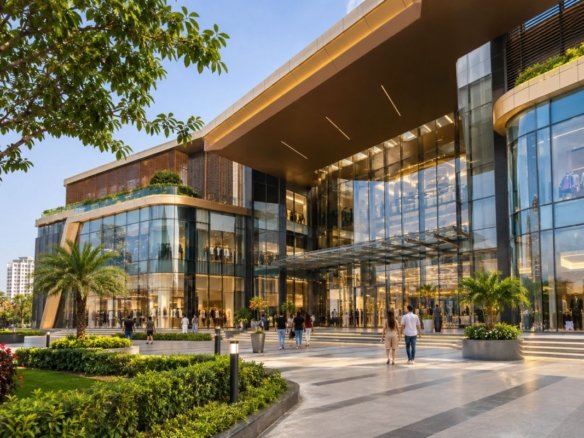
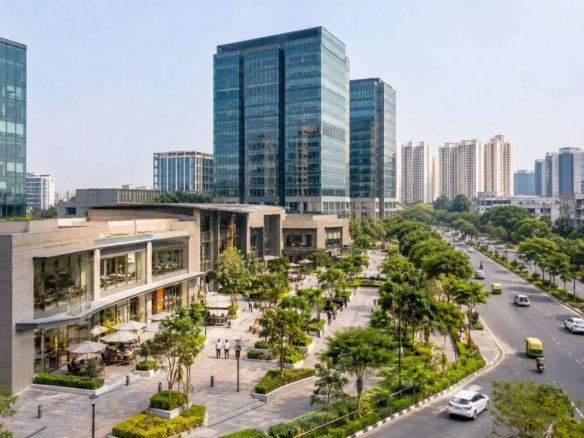
AIPL Business Club, Sector 62 Gurgaon, is an established commercial development along Golf Course Extension Road. Developed by Advance India Projects Limited (AIPL) and designed by Morphogenesis, the project combines Grade-A office accommodation with ground-floor retail, restaurants and food-court facilities. Its commercial appeal comes from the combination of corporate occupancy, surrounding residential communities and access to the wider business corridor.
For investors, the important question is not simply whether the building has a recognised commercial address. It is whether the selected unit can attract suitable tenants at a rental level that justifies its acquisition cost. This review examines the project’s commercial configuration, surrounding catchment, floor-wise leasing potential, indicative 2026 prices, rental calculations and ownership risks.
AIPL Business Club, Sector 62 Gurgaon Commercial Overview: Format, Builder & Sector Positioning
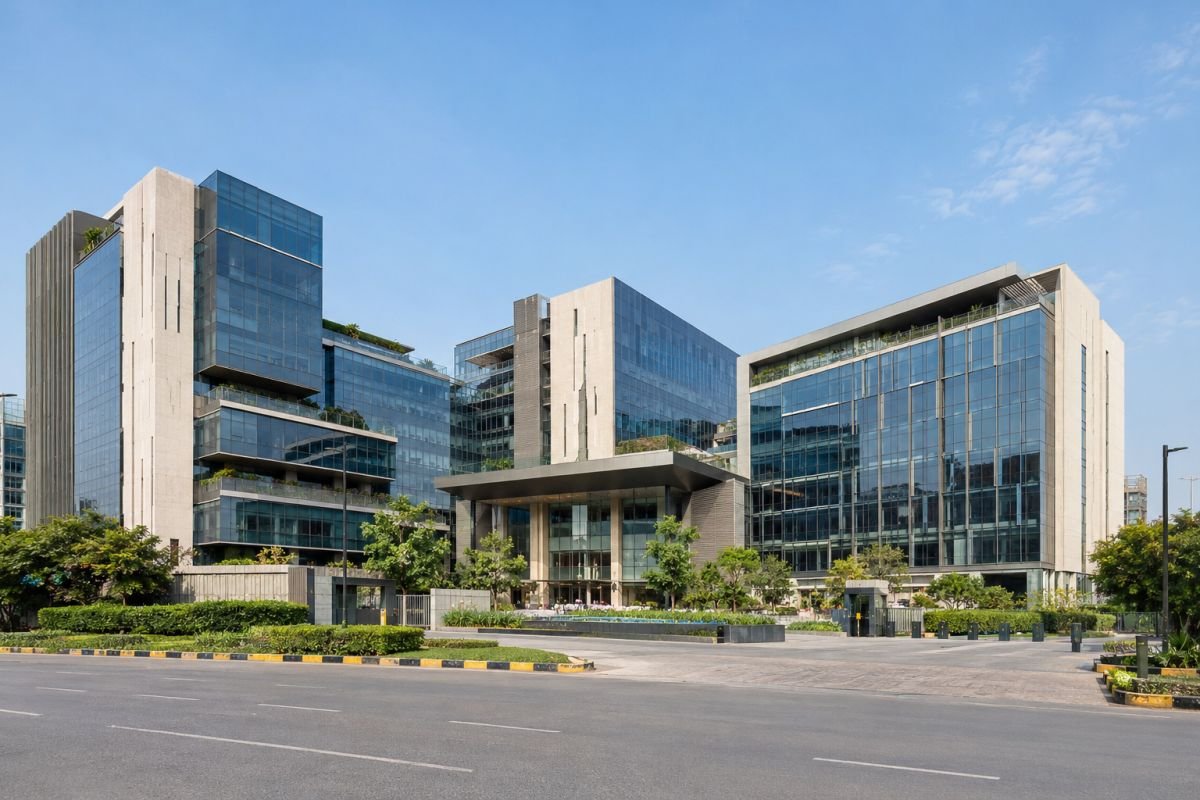
AIPL Business Club is an office-oriented commercial development in Sector 62, positioned within the Golf Course Extension Road business corridor. The development has three office towers supported by retail and food-service facilities, creating a commercial environment that serves both corporate occupiers and visitors.
The project has an advertised office campus area of approximately 6,67,445 sq. ft., with flexible floor plates ranging from around 8,000 to 52,000 sq. ft. Its food court covers approximately 16,680 sq. ft., while the parking arrangement includes two basement levels and four multi-level car-parking floors. Separate access for office and retail areas supports the different requirements of corporate employees and retail customers.
| Project Detail | Information |
|---|---|
| Project | AIPL Business Club |
| Developer | Advance India Projects Limited |
| Location | Sector 62, Gurugram |
| Property type | Commercial |
| Primary use | Grade-A office space |
| Additional facilities | Retail, restaurants and food court |
| Architect | Morphogenesis |
| Advertised office campus area | Approximately 6,67,445 sq. ft. |
| Advertised floor plates | 8,000–52,000 sq. ft. |
| Food court | Approximately 16,680 sq. ft. |
| Parking | Two basements and four MLCP levels |
| HRERA registration | 166 of 2017 |
Sector 62 benefits from its position between the established Golf Course Road business ecosystem and the expanding Golf Course Extension Road corridor. The development has frontage along 84-metre and 24-metre roads, supporting access for office employees, visitors and commercial customers. Sector 55–56 Rapid Metro station is approximately 1.6 km away, although the building should not be described as directly metro-connected.
The strongest investment proposition is its established office-led environment rather than an assumption of high retail footfall. Corporate leasing demand, tenant quality and the cost of maintaining individual units should therefore carry greater weight in the investment decision.
3-Km Residential Catchment & Daily Footfall Drivers in Sector 62
The commercial catchment around AIPL Business Club consists of two primary demand groups: people working in the office development and residents living in surrounding residential communities. Both contribute to commercial activity, but their consumption patterns are different.
Nearby residential developments across Sectors 61, 62, 63, 63A, 65 and 66 form part of the wider locality’s housing ecosystem. Communities such as The Peaceful Homes, Emaar Digi Homes, M3M Golf Estate and Emerald Hills are relevant when examining the broader residential market. However, not every development in these sectors falls within a strict three-kilometre radius, so individual distances should be checked before including them in a measured catchment study.
An important distinction is the difference between delivered apartments and occupied apartments. A completed residential tower may contain hundreds of homes, but vacant investment properties do not generate the same regular demand as occupied households. Nearing-possession developments can contribute to future demand, although they should not be counted as existing customers.
A verified residential population within three kilometres is not currently established. The correct assessment requires a mapped inventory of residential societies, their delivered units, occupancy levels and possession timelines. Assigning a population figure without this exercise would create a misleading impression of retail demand.
Office employees and visitors are likely to be an important source of weekday consumption. Restaurants, cafés and quick-service outlets can benefit from lunch breaks, meetings and working-day visits, while pharmacies, convenience stores and personal-care businesses may attract a combination of employees and nearby residents. The food court also creates opportunities for food-service operators, although its performance depends on tenant quality, pricing, accessibility and actual office occupancy.
For retail investors, residential density should be treated as supporting demand rather than proof of guaranteed footfall. The number of people passing a building, the number entering its retail areas and the number converting into paying customers are three different measurements. Actual pedestrian movement and tenant sales information are needed to establish the commercial potential of an individual unit.
For a closer locality assessment, investors can explore the commercial and residential catchment in Sector 62.
Floor-Wise Layout Analysis: Ground-Floor Frontage vs Upper-Floor Zoning
Ground-floor retail and upper-floor offices serve different commercial purposes, so their investment potential should not be compared using price per square foot alone.
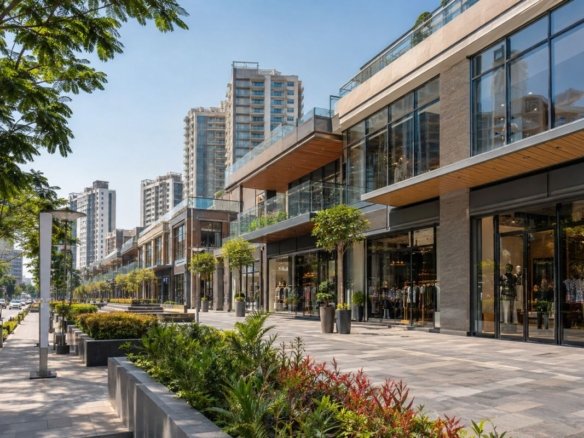
Ground-floor units benefit from potentially stronger visibility and easier customer access. Restaurants, cafés, convenience stores and service businesses generally prefer locations where customers can identify the premises without navigating through office floors. However, a ground-floor position does not automatically guarantee strong leasing demand. Actual frontage, pedestrian circulation, signage permissions and proximity to the building entrance influence the value of an individual unit.
A retail unit facing an active circulation area may attract more attention than a similarly sized unit located away from the main customer movement. Investors should also examine parking access, loading arrangements and the separation between office and retail entrances.
Upper-floor offices follow a different leasing model. Corporate occupiers generally prioritise efficient layouts, natural light, lift access, building services and total occupancy costs rather than street-level visibility. AIPL’s advertised flexible floor plates provide scope for different corporate requirements, although the actual contiguous area available depends on the particular tower, floor and ownership configuration.
For investors seeking rental income, a sensibly priced pre-leased office with a financially credible tenant may be easier to evaluate than a vacant retail unit carrying a substantial acquisition premium. Retail can still be attractive where the frontage and customer access are strong, but its performance depends more directly on the business activity around the unit.
There is no established transaction evidence proving that ground-floor or upper-floor units consistently deliver better capital appreciation. The purchase decision should therefore be based on unit configuration, actual rent, tenant demand and comparable resale values.
2026 Capital Values, Lease Rental Benchmarks & Net Yield Math
The AIPL Business Club, Sector 62 Gurgaon price list should be evaluated against the rental income that an individual unit can realistically generate. Indicative office sale quotations in the 2026 market are around ₹20,000–₹22,000 per sq. ft., while advertised office rents vary according to floor, furnishing, unit size and leasing conditions.
| Parameter | Indicative 2026 Range |
|---|---|
| Office sale quotation | ₹20,000–₹22,000/sq. ft. |
| Office rental quotation | ₹70–₹90/sq. ft./month |
| Higher advertised rental scenario | Up to ₹120/sq. ft./month |
| Advertised CAM reference | Approximately ₹20/sq. ft./month |
These are indicative asking figures, not confirmed transaction averages or an official project price list. The quoted area basis must also be checked because carpet, built-up and super area calculations can produce significantly different comparisons.
Gross vs Net Rental Yield (Factoring CAM, Property Tax & Fit-Out Periods)
Consider a hypothetical 1,000 sq. ft. office purchased at ₹21,000 per sq. ft. The purchase consideration would be ₹2.10 crore. At an assumed monthly rent of ₹80 per sq. ft., the property would generate ₹80,000 per month or ₹9.60 lakh annually.
The gross rental yield would be approximately 4.57%. However, this figure does not account for maintenance, property tax, vacancy, brokerage or fit-out expenditure.
If the owner bears the entire indicative CAM expense of ₹20 per sq. ft. per month, the annual maintenance cost would be ₹2.40 lakh. Rental income after this expense would fall to ₹7.20 lakh, reducing the illustrative yield to approximately 3.43%.
The actual result depends on the lease agreement. If CAM is fully recovered from the tenant, it should not be deducted again as an unrecovered owner expense. Property tax, insurance, repairs and other non-recoverable costs must also be considered before calculating the final net yield.
A two-month vacancy at the assumed rent would reduce annual rental collection from ₹9.60 lakh to ₹8 lakh. Fit-out periods can create an additional income gap when a new tenant requires time to prepare the premises before rent commencement.
For this reason, investors should compare the total acquisition cost, including applicable stamp duty, registration, brokerage and fit-out expenses, with the realistic annual rental income. A headline yield calculated only on the seller’s quoted price can overstate the actual return.
Self-Use Business vs Pure Leasing ROI
A company purchasing its own office should compare ownership costs with the expense of leasing an equivalent workplace. The calculation should include acquisition expenditure, financing costs, CAM, property tax, fit-out and expected holding period. Ownership may make sense for a business expecting long-term occupation, particularly when operational stability is more important than generating rental income.
A pure leasing investor has a different objective. Tenant quality, remaining lease tenure, rental escalation, security deposit and vacancy risk determine the income profile. A pre-leased office can be attractive, but the buyer should verify the executed agreement and actual rent-payment history rather than relying on projected returns.
Investors evaluating the office segment can also refer to the Grade A office spaces in Gurgaon rental yield guide.
HRERA Compliance, Completion Timeline & Vacancy Risk Assessment
AIPL Business Club is registered under HRERA registration number 166 of 2017, dated 29 August 2017. The project is marketed as a completed commercial development, with 2019 completion references. An Occupation Certificate dated 28 November 2019 has also been reported, but investors must obtain the original document and confirm the specific buildings and uses covered by it.
Registration and completion information should not replace unit-level legal verification. Before purchasing, the investor should examine the HRERA certificate, approved building plan, Occupation Certificate, applicable fire approvals, title documents, conveyance deed, property-tax receipts and current CAM statements. For resale units, the previous sale deed, ownership chain, lender NOC where applicable and outstanding maintenance dues also require attention.
Vacancy is another important consideration. Office units depend on corporate leasing demand, floor-plate efficiency and total occupancy expenses. Larger spaces may attract established companies but can take longer to lease if the available tenant pool is limited. Retail units depend more directly on visibility, access and customer spending. A recognised commercial address cannot compensate for a poorly positioned retail unit.
Lease terms also require careful review. Lock-in periods, escalation clauses, notice periods, security deposits, fit-out responsibilities and CAM obligations are negotiated individually. There is no universal lock-in period applicable to every unit in Sector 62. The executed lease, tenant credit quality and payment history are more useful indicators than an advertised ROI.
Final Verdict: Who Should Invest in AIPL Business Club, Sector 62 Gurgaon?
AIPL Business Club is worth evaluating for investors seeking an established office-led commercial asset along Golf Course Extension Road. Its corporate environment, flexible office configurations and integrated retail facilities provide a foundation for leasing activity, but the financial attractiveness depends on the specific unit and purchase price.
For income-focused investors, a properly priced office with a credible existing tenant may offer a more assessable investment proposition than an expensive vacant unit. Corporate end-users can evaluate ownership against long-term leasing expenses, while retail operators should prioritise frontage, accessibility and actual customer movement.
The main risks are overpaying for the property, accepting advertised rents as achievable income, underestimating maintenance expenses and assuming that surrounding residential development guarantees retail footfall. Resale liquidity and tenant replacement costs also deserve attention.
The investment case is strongest when the acquisition price is supported by realistic rental evidence, the unit has a commercially efficient configuration and the legal documentation is complete. Neither rental income nor capital appreciation should be treated as assured.
Investors can review the AIPL Business Club, Sector 62 Gurgaon commercial price list and layout to evaluate available inventory and obtain unit-specific information.
Frequently Asked Questions
1. What is the realistic rental yield and lease potential of AIPL Business Club, Sector 62 Gurgaon in 2026?
Indicative office rental quotations range from approximately ₹70–₹90 per sq. ft. per month, with some higher advertisements reaching ₹120. At an illustrative purchase price of ₹21,000 per sq. ft. and monthly rent of ₹80, the gross yield is approximately 4.57%. The net yield depends on CAM recovery, property tax, vacancy and other ownership expenses.
2. How large is the residential catchment surrounding AIPL Business Club, Sector 62 Gurgaon?
The development benefits from surrounding residential communities across Sector 62 and neighbouring sectors. However, a verified occupied population within a strict three-kilometre radius is not established. Delivered apartments, actual occupancy and nearing-possession projects must be assessed separately.
3. Which floor offers the best capital appreciation and leasing liquidity?
Ground-floor retail can benefit from customer visibility and direct access, while upper-floor offices appeal to corporate occupiers. A pre-leased office with a credible tenant may offer a more assessable income profile. The best choice depends on unit pricing, tenant demand, layout and resale comparables.
4. What are the CAM charges, property tax and lock-in norms?
An indicative CAM reference is approximately ₹20 per sq. ft. per month, but the latest maintenance invoice should be obtained. Property tax depends on the applicable assessment. Lock-in, escalation, security deposit and notice periods are determined by individual lease agreements.
5. What HRERA and OC documents should investors check?
Investors should verify HRERA registration 166 of 2017, the approved building plan, original Occupation Certificate, applicable fire approvals, title documents, conveyance deed and unit-specific ownership records. Resale buyers should also check outstanding maintenance dues, the seller’s title chain and any existing lease agreement.
Investment Enquiry: AIPL Business Club, Sector 62 Gurgaon
Before purchasing, compare the available office and retail units on acquisition cost, rental potential, floor position and ownership expenses. AssuredGains’ commercial leasing desk can help evaluate available inventory and unit-level investment considerations.