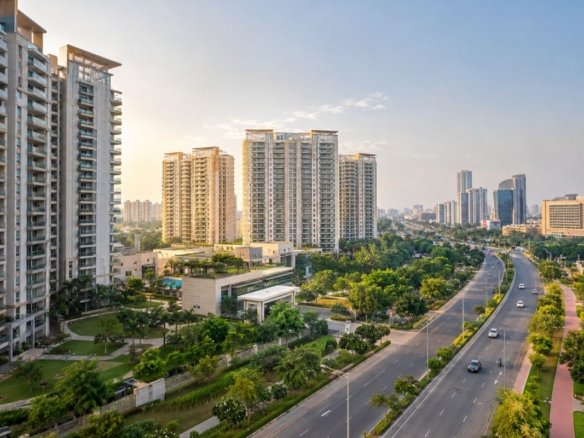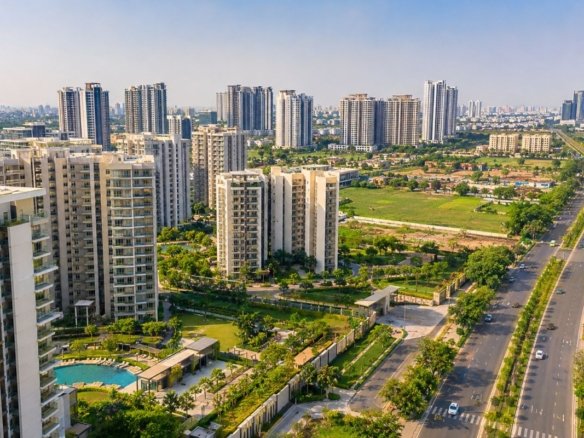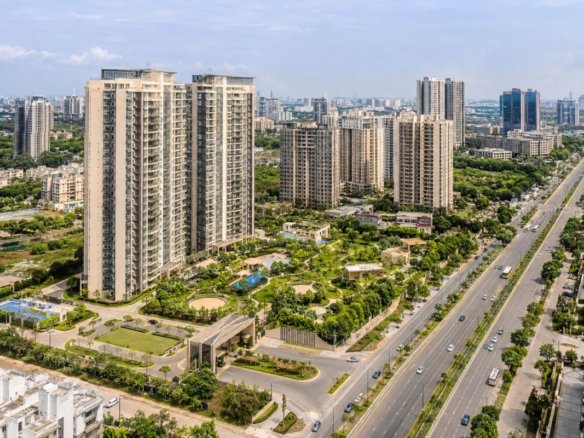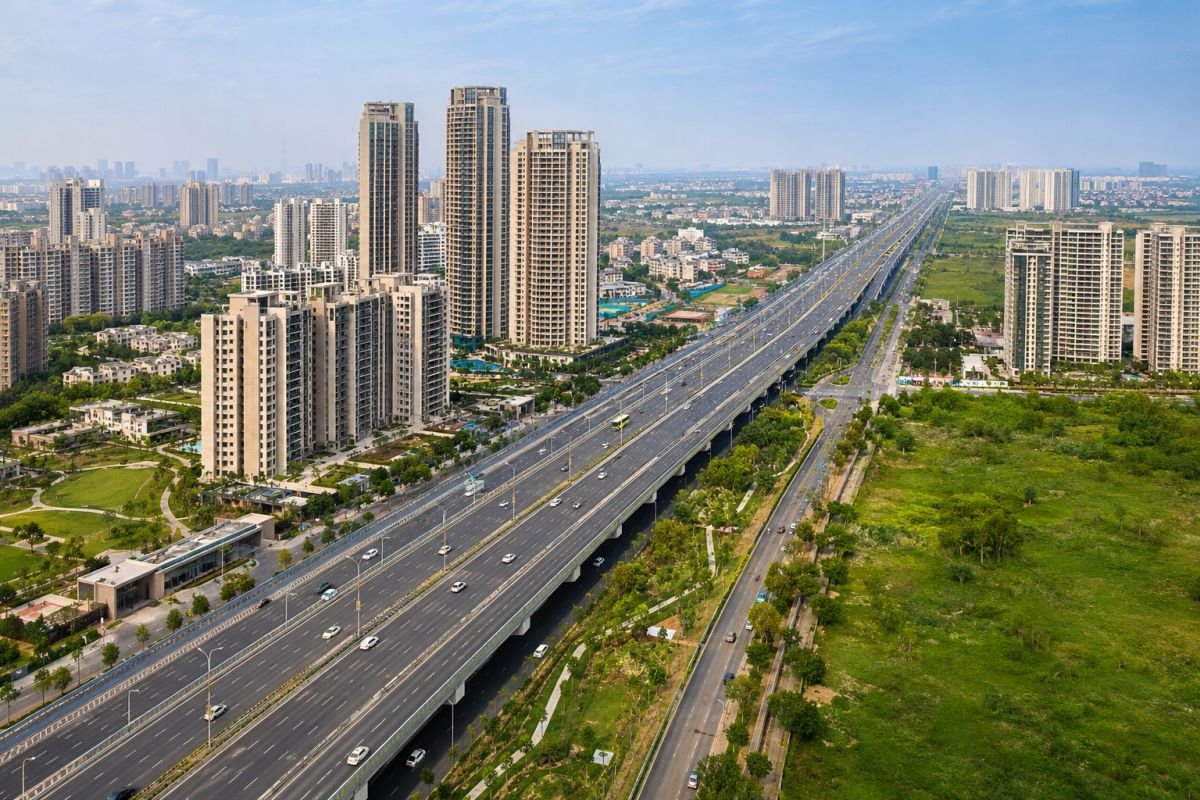
Dwarka Expressway metro connectivity is becoming an important consideration for homebuyers and property investors evaluating Gurugram’s western residential corridor. The proposed 1.85 km Basai–Dwarka Expressway metro spur, with a planned station in Sector 101, could improve public transport access for nearby residential sectors. At the same time, Yashobhoomi Dwarka Sector 25 already provides access to Delhi’s Airport Express Metro Line.
These are two separate infrastructure developments, and understanding the difference is important before paying a premium for metro proximity. For buyers considering Sectors 99–113, the real investment question is whether improved connectivity will translate into practical commuting convenience, stronger residential demand and better long-term livability.
Infrastructure information in this article reflects the project framework reviewed for 2026. Construction progress, statutory approvals and live project records should be independently checked before making a purchase decision.
Executive Overview: Why Dwarka Expressway Metro Spur & Yashobhoomi Link Guide Matters for Gurugram Buyers
The proposed Dwarka Expressway metro spur could improve access to public transport in New Gurugram, particularly around Sector 101 and neighbouring residential areas. Its importance lies in connecting the Dwarka Expressway catchment with the wider Gurugram Metro network, while Yashobhoomi provides a separate operational connection to Delhi’s Airport Express Line.
The sanctioned Gurugram Metro corridor connects Millennium City Centre with Cyber City. Its planned configuration includes a 26.65 km main corridor and a 1.85 km elevated spur between Basai Village and Dwarka Expressway, taking the total length to approximately 28.5 km. The proposed network includes 27 stations, with Sector 101 identified as the Dwarka Expressway station location.
For residents, the proposed station could offer an alternative to daily road-based commuting. For investors, the potential benefit is improved accessibility, which may support residential demand once the service becomes operational. However, a sanctioned project should not be confused with a completed or operational metro service. Buyers must consider the actual construction status, station access and expected interchange arrangements before including future connectivity in their property valuation.
Yashobhoomi Dwarka Sector 25 is a separate part of this transport picture. Its Airport Express Line extension from Dwarka Sector 21 became operational in September 2023, providing metro access to the convention and exhibition destination. It does not mean that the proposed Sector 101 station will have a direct metro service to Yashobhoomi. Residents will need to consider connecting roads and feeder transport between the two networks.
What does this mean for property buyers? The potential advantage is better access to two important transport networks, not a single uninterrupted metro connection. Sector 101 has the clearest direct relevance to the proposed Gurugram Metro spur, while Yashobhoomi offers an existing Delhi-facing transport option.
Official Regulatory / Infrastructure Framework (GMDA / DTCP / HRERA / GMRL)
Metro connectivity is only one part of Gurugram’s development framework. Property buyers must also understand the responsibilities of infrastructure authorities, town-planning departments and real estate regulators because transport announcements do not establish whether an individual property is legally approved or ready for occupation.
Gurugram Metro Rail Limited (GMRL) is responsible for the Gurugram Metro project. The proposed Sector 101 spur is an important component of the wider corridor, but its individual construction and commissioning progress must be assessed separately from the main alignment. A sanctioned project does not establish that passenger services have started or that a particular station will open by a specific date.
The Gurugram Metropolitan Development Authority (GMDA) is equally relevant to buyers because daily livability depends on more than metro access. Water supply, sewerage, stormwater drainage, road connectivity and other civic services determine whether a residential sector can support its growing population. A project marketed as well-connected should therefore be assessed against the actual condition of its surrounding infrastructure.
Land-use compliance falls under the Department of Town and Country Planning Haryana (DTCP). The applicable Gurgaon-Manesar Development Plan and sector-level zoning plans determine whether land is designated for residential, commercial, industrial, transport or other uses. A plot located near Dwarka Expressway or a proposed metro station does not automatically qualify as residential land. Buyers should verify the relevant land-use classification, development permissions, licensed-colony status and approved layout before purchasing.
HRERA Gurugram provides another essential layer of protection for buyers purchasing registered real estate projects. Under the Real Estate (Regulation and Development) Act, 2016, promoters have statutory obligations relating to project registration, disclosures, sanctioned plans and applicable completion or occupation certificates. Section 11(4)(b) addresses the promoter’s obligation to obtain and provide the applicable completion or occupation certificate. Section 13 restricts collection of more than 10% of the property cost as an advance without first entering into and registering an agreement for sale.
For buyers, checking only the HRERA registration number is insufficient. The registered project details, sanctioned plans, declared completion timeline, quarterly disclosures and applicable authority orders should also match the property being purchased.
Which government authority should buyers check first? HRERA is the starting point for registered project information, DTCP for land-use and development permissions, Jamabandi for revenue ownership records, and GMDA for civic infrastructure. Each authority addresses a different part of the transaction, so no single approval should be treated as complete property verification.
Sector-Wise & Corridor-Wise Impact Across Gurugram
The potential impact of Dwarka Expressway metro connectivity will vary across Sectors 99–113 because not every residential neighbourhood has the same access to the proposed Sector 101 station. The strongest direct alignment relevance belongs to Sector 101, while other sectors may benefit through connecting roads and feeder services.
Sectors 99 and 100 form part of the wider Dwarka Expressway residential catchment. Their connectivity advantage currently depends substantially on expressway access and surrounding road infrastructure. The proposed metro station could provide an additional commuting option, but its practical usefulness will depend on how easily residents can reach Sector 101 from their individual residential projects.
Sectors 101, 102 and 103 have a closer geographical relationship with the proposed spur. Sector 101 is particularly important because it is the identified station location. Sector 102 and Sector 103 may benefit from improved access if connecting roads and feeder transport are developed effectively. For buyers comparing properties in this area, actual door-to-station travel time matters more than the distance shown in a promotional location map.
Sectors 104, 105 and 106 should be evaluated as secondary residential catchments. Their future connectivity advantage will depend on the availability of practical feeder routes, road conditions and access to the wider Gurugram transport network. Healthcare, schools, retail facilities and drainage infrastructure will remain important factors when assessing their residential appeal.
Further along the corridor, Sectors 107, 108 and 109 have a stronger Delhi-facing orientation. Residents may find Yashobhoomi and the Airport Express network useful for travel towards Dwarka and the airport, but this advantage should be assessed through actual road journeys and available feeder transport rather than assuming a direct Gurugram Metro interchange.
Sectors 110–113 require individual property-level assessment. Their position towards the Delhi side of the expressway may support regional accessibility, but proximity to the proposed Sector 101 station alone does not establish metro connectivity. Buyers, particularly plotted-land investors, should also examine the applicable development-plan classification, access rights and land-use permissions.
| Sector Group | Connectivity Relevance | Main Consideration |
|---|---|---|
| 99–100 | Wider expressway catchment | Road access and station connectivity |
| 101 | Proposed metro station | Direct alignment relevance |
| 102–103 | Nearby residential catchment | Feeder transport and access roads |
| 104–106 | Secondary catchment | Last-mile connectivity and civic services |
| 107–109 | Delhi-facing corridor | Dwarka and Airport Express access |
| 110–113 | Northern corridor | Property-specific connectivity and zoning |
The sector assessment is geographical, not an officially notified metro catchment classification.
Which sectors have the strongest metro-related investment relevance? Sector 101 has the clearest direct alignment advantage because it contains the proposed station location. Nearby sectors may receive secondary benefits, but the extent will depend on actual accessibility and transport integration. Buyers should not apply the same metro-related premium to every property between Sectors 99 and 113.
Step-by-Step Verification Checklist for Homebuyers & Investors
Before purchasing an apartment, residential plot or investment property along Dwarka Expressway, buyers should verify ownership, development permissions, project registration and infrastructure claims. This is particularly important for NRIs and investors purchasing remotely, where promotional material can sometimes replace proper document inspection.
Official Government Portals & Documents to Inspect
Begin by establishing the exact legal identity of the property, including its sector, plot or unit number, registered project name and revenue-estate details. For independent land purchases, check the Jamabandi record, mutation history and previous ownership documents. These records should be compared with the seller’s identity and the actual property description. An independent legal title search is also necessary to identify encumbrances, acquisition issues or pending litigation.
Next, examine the applicable DTCP permissions, development plan, sector zoning plan and approved colony layout. For plotted developments, verify the licence conditions, permitted land use, access rights and relevant change-of-land-use permissions. A location near a highway or proposed metro station does not automatically make an agricultural or restricted parcel suitable for residential construction.
For apartments and registered real estate projects, verify the HRERA registration, promoter details, sanctioned building plans and latest project disclosures. Completed properties should have the applicable occupation or completion certificate, independently verified with the competent authority. A possession letter alone is not sufficient evidence of statutory completion.
Metro-related claims should be checked separately. Confirm the proposed Sector 101 station location, the actual approach road and the status of the relevant spur package. Do not rely exclusively on a broker’s distance calculation or an estimated opening date. Similarly, check GMDA records and physical site conditions for water, sewerage, drainage and road infrastructure. Electricity arrangements should be verified with the relevant distribution authority, including DHBVN where applicable.
Before registration, request the title deed and previous conveyance chain, Jamabandi and mutation records where relevant, DTCP licence and approved layout, HRERA registration and disclosures where applicable, sanctioned building plans, agreement for sale, applicable OC or completion certificate, and relevant utility and permission documents. A property lawyer should reconcile these records before the transaction proceeds.
Common Red Flags & Financial/Legal Risks to Avoid
One of the most common risks is treating a sanctioned metro project as an operational service. Paying a premium based on an assumed opening date can create an investment mismatch if construction or commissioning takes longer than expected. Similarly, a property that appears close to Sector 101 on a map may have poor practical access because of road layouts, dividers or missing pedestrian connections.
Plotted-land buyers should be especially careful about agricultural land marketed as residential property. The legal classification and applicable permissions must be checked independently. For apartments, incomplete approvals, inconsistent sanctioned plans or missing occupation documentation can create difficulties with possession, financing and resale.
Ownership disputes, unclear mutation history and undisclosed encumbrances are further risks. Buyers should also be cautious about guaranteed appreciation claims linked to proposed infrastructure. Metro development can influence market expectations, but it does not guarantee price growth or rental income.
Under Section 13 of the RERA Act, promoters cannot collect more than 10% of the property cost as an advance or application fee without first entering into and registering the agreement for sale. Buyers should ensure that payment terms, development particulars and possession obligations are properly documented.
What happens if a buyer skips property verification? The consequences may include purchasing land with restricted use, acquiring property with defective title, facing possession delays or discovering that a project lacks required permissions. Buyers may also pay an infrastructure premium that becomes difficult to recover if the anticipated connectivity is delayed or does not provide the expected convenience.
2026–2031 Market & Livability Outlook
Between 2026 and 2031, Dwarka Expressway could benefit from improving transport integration, continued residential development and better access to Delhi’s institutional and commercial destinations. However, the extent of these benefits will depend on actual infrastructure delivery and the quality of local civic services.
The proposed Sector 101 station could offer an additional commuting option for residents who currently depend on private vehicles and road-based transport. If operational, its wider network connections may improve access to employment centres across Gurugram. Yashobhoomi, meanwhile, already provides access to Delhi’s Airport Express network and may be particularly useful for business travellers and households with regular airport journeys.
Commercial activity could also develop around accessible residential catchments as population density increases. Retail, healthcare, food and neighbourhood services may benefit from better transport access, but commercial property performance will still depend on tenant demand, frontage, parking, competing supply and actual pedestrian movement. Metro proximity alone is not enough to establish a viable rental investment.
Residential appreciation will similarly depend on execution rather than announcements. A property purchased at a premium during the planning stage may offer limited upside if the expected infrastructure benefit has already been reflected in its price. Buyers should compare current acquisition costs, actual rental demand, comparable transactions and the property’s legal and physical condition. Any projected appreciation or rental return is an illustration, not a guaranteed outcome.
For end-users, functional roads, water supply, drainage, healthcare, schools and possession compliance should remain central to the purchase decision. Long-term investors should assess the price against current market evidence and treat future metro access as an additional advantage. Plotted-land investors should prioritise title, zoning, DTCP permissions and legal access before considering infrastructure-led potential.
The wider corridor can be explored through the Flats on Dwarka Expressway corridor hub and the Dwarka Expressway infrastructure growth guide. Buyers comparing individual properties around Sector 102 can also review properties in Sector 102 near Basai-Dwarka Expressway.
Is buying near the proposed Dwarka Expressway metro spur a sensible long-term decision? It can be worth considering when the purchase price is justified by the property’s existing location, legal status and residential quality rather than an assumed future metro benefit. The investment should remain financially reasonable even if infrastructure delivery takes longer than anticipated.
Frequently Asked Questions
Q1. How does Dwarka Expressway metro connectivity impact property buyers and investors in Gurugram in 2026?
The proposed Sector 101 metro spur could improve public transport access for nearby residential sectors and support long-term residential demand. However, the benefit depends on actual commissioning, station access and feeder services. Buyers should not treat the proposed spur as an operational metro service.
Q2. Which official Haryana portal should buyers use to verify property records?
HRERA is used for registered project disclosures, TCP Haryana for development permissions and land-use records, and Jamabandi for revenue ownership and mutation records. GMDA provides information about civic infrastructure, while HSVP records are relevant to properties under its estate administration.
Q3. Which Gurugram sectors are most affected by the proposed metro spur?
Sector 101 has the strongest direct alignment relevance because it is the proposed station location. Sectors 99–103 may have stronger geographical relevance, while Sectors 104–113 require individual assessment based on road access, feeder transport and distance from the station.
Q4. What legal or financial risks arise if a buyer ignores property verification?
Ignoring verification can expose buyers to defective title, restricted land use, unauthorised development, missing occupation certificates and possession disputes. Investors may also overpay for future infrastructure benefits that are delayed or fail to deliver the expected accessibility.
Q5. What documents should be requested from the developer or seller before registration?
Buyers should request ownership documents, previous conveyance records, applicable Jamabandi and mutation records, DTCP licence, approved layout, HRERA registration and disclosures where applicable, sanctioned building plans, agreement for sale and the applicable OC or completion certificate. Independent legal verification should be completed before registration.
Q6. Is Yashobhoomi directly connected to the proposed Sector 101 metro station?
No direct operational metro connection between the proposed Sector 101 spur station and Yashobhoomi has been established in the project information reviewed. Yashobhoomi Dwarka Sector 25 is served by Delhi’s Airport Express Line, and access from Gurugram should be assessed through available road and feeder connections.
Conclusion
The proposed Basai–Sector 101 metro spur and the operational Yashobhoomi Airport Express station are two separate but relevant parts of the wider Delhi–Gurugram transport network. For buyers considering Sectors 99–113, their potential value lies in improving regional accessibility, not in guaranteeing property appreciation.
The purchase decision should ultimately rest on verified ownership, approved land use, HRERA compliance, occupation documentation, civic infrastructure and actual connectivity from the property. Future metro access can strengthen an otherwise sound investment, but it should never replace proper legal and financial due diligence.
Need help verifying RERA approvals, OC status or infrastructure alignment before buying in Gurugram? Book a complimentary due-diligence call with AssuredGains.