
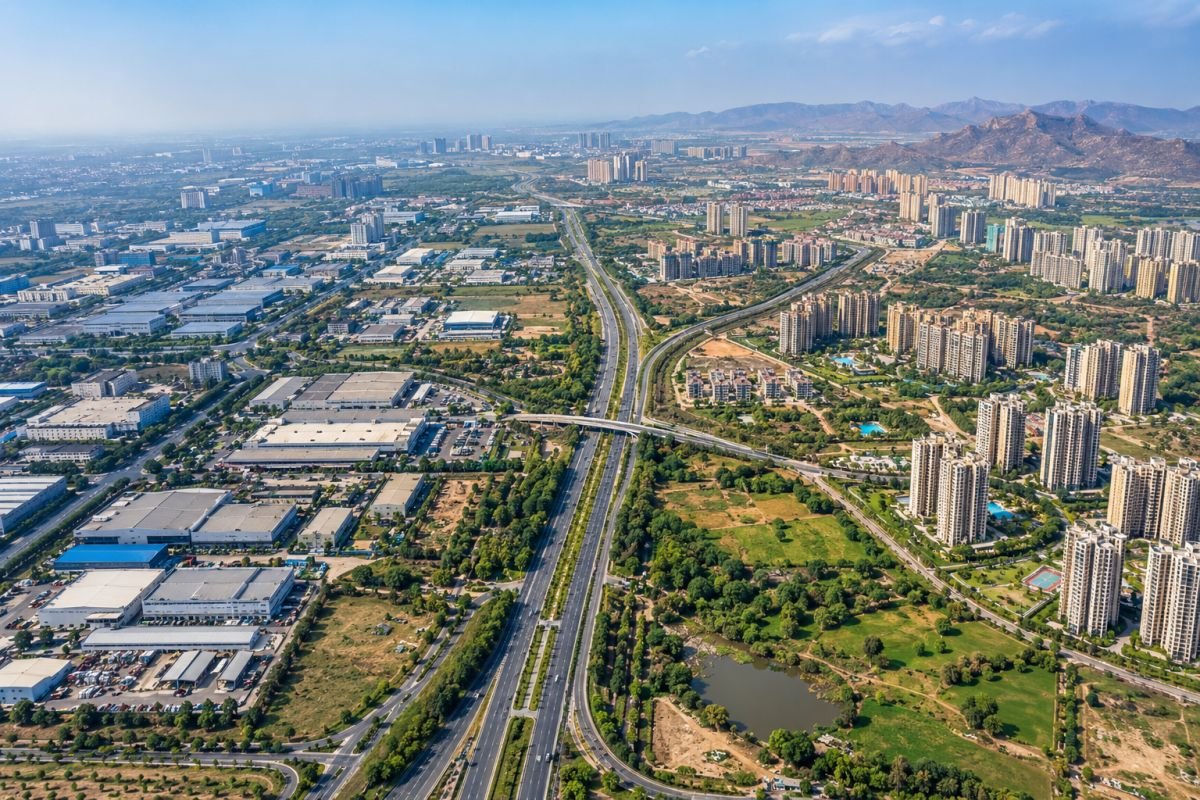
Manesar vs Sohna investment is not simply a choice between two lower-priced Gurgaon markets. The two corridors are being shaped by different economic forces: Manesar has an established industrial and employment base, while Sohna is developing through residential expansion, road infrastructure and a growing South Gurgaon catchment.
For a long-term investor in 2026, Manesar has the stronger demand foundation and potentially better risk-adjusted ROI, while Sohna offers greater early-cycle upside for investors willing to accept more development and absorption risk. The right choice therefore depends on whether the priority is employment-backed demand and liquidity or lower entry pricing and infrastructure-led appreciation.
Data currency disclaimer: Prices quoted below are indicative 2026 asking/listing rates compiled from current market data, not guaranteed transaction values, valuations or returns. They are not attributed to any single listing platform. ROI and appreciation figures are illustrative scenarios, not promises.
Key Takeaways
- Manesar: Current 2026 residential listing data places the broader market around ₹9,151–₹9,730 per sq. ft., depending on the property pool and format.
- Sohna: Current 2026 listing data places the broader market around ₹9,491 per sq. ft., with sector-level pricing varying substantially between locations such as Sectors 33, 35 and 36.
- Demand driver: Manesar benefits from the employment ecosystem around IMT Manesar and NH-48, whereas Sohna is more dependent on residential absorption and infrastructure execution.
- Connectivity: Manesar’s case is strengthened by NH-48, KMP access and the proposed 35.25-km Sector 56–Panchgaon Metro corridor, whose revised DPR was being finalised in September 2026.
- Verdict: For a 5–10 year investment horizon, Manesar is the more balanced choice; Sohna becomes more attractive when the investor prioritises early-stage appreciation and can tolerate slower rental and commercial absorption.
Manesar vs Sohna Investment: Which Corridor Has the Better 2026 Entry Point?
Manesar currently offers a more balanced entry proposition, while Sohna provides wider pricing dispersion and more opportunities to enter at the lower end of the market. The headline averages are close, but the underlying market structures are very different.
Current 2026 listing data puts Manesar’s broad residential asking range at approximately ₹6,821–₹19,444 per sq. ft., with the broader locality average around ₹9,730 per sq. ft. Sector 1 is around ₹10,309 per sq. ft., Sector 2 around ₹12,323 per sq. ft., and Sector 9 around ₹14,168 per sq. ft.
Sohna has a similarly broad range of approximately ₹4,421–₹17,613 per sq. ft., with an overall indicative average around ₹9,491 per sq. ft. Current sector data shows approximately ₹10,915 per sq. ft. in Sector 33, ₹10,159 in Sector 36 and ₹8,037 in Sector 35.
The important distinction is that averages alone can mislead. Manesar’s pricing is supported by a mature employment ecosystem, whereas Sohna contains a wider mixture of affordable, mid-segment, premium and emerging inventory.
Which is cheaper to enter in 2026, Manesar or Sohna?
Sohna generally offers more low-entry options, particularly in affordable housing and emerging sectors, but Manesar can provide better value when the investor considers employment proximity, existing occupancy and resale demand rather than only the purchase price. Sector, project stage and configuration can materially change the comparison.
For a wider location-selection framework, investors can also review the Gurgaon investment location guide.
Why Manesar Has a Stronger Demand Foundation
Manesar’s biggest advantage is that real economic activity already exists around the residential market. IMT Manesar, NH-48 and the surrounding industrial ecosystem create employment-linked housing demand, making the corridor less dependent on future residential development alone.

This matters for long-term ROI because property appreciation is easier to sustain when there is a recurring pool of employees, executives, businesses and families generating housing demand. Manesar is therefore closer to an employment-backed real estate model than a purely infrastructure-led investment story.
AssuredGains’ 2026 Manesar research places traditional residential inventory broadly around the ₹6,000–₹9,000 per sq. ft. range near IMT Manesar, while more premium developments can command materially higher pricing. That spread demonstrates why investors should compare like-for-like properties instead of applying one Manesar-wide number.
The corridor also has an industrial-led land-investment story. Current 2026 analysis places approved residential plots in core Manesar locations at roughly ₹55,000–₹75,000 per sq. yd., depending on location and approval status.
Is Manesar a safer long-term investment than Sohna?
For investors who value existing employment demand, Manesar generally has the stronger fundamental base. Its downside risk is not eliminated, but residential demand does not have to wait entirely for future infrastructure or population creation because IMT Manesar already functions as a major employment cluster.
The main risk is supply. New launches, township development and premium positioning can push asking prices ahead of actual absorption. Investors should therefore distinguish between a project benefiting from Manesar’s employment base and one merely carrying the Manesar label.
Why Sohna Could Deliver Higher Percentage Upside
Sohna presents a different proposition. The corridor remains earlier in its urbanisation cycle, particularly in several sectors south of the established Gurgaon core, so investors are paying for both current property and future corridor development.
The strongest residential activity is concentrated around areas such as Sectors 33, 35 and 36, while Sectors 2–5 also contain affordable housing inventory. Current 2026 data shows substantial price differences across these sectors, reflecting differences in project quality, maturity, location and property format.

Sohna’s infrastructure story has also become more concrete. In March 2026, the Haryana government announced approval for a revised-cost greenfield connection linking the Delhi–Faridabad–Ballabhgarh–Sohna spur of the Delhi–Mumbai Expressway toward Jewar International Airport. The approved corridor is approximately 31.42 km long.
The corridor is also moving through a substantial residential development cycle. HRERA records show new registrations in Sohna during 2026, including projects in Sector 36 and Sector 35, alongside multiple projects already registered in Sectors 32–36.
This creates an opportunity but also a qualification: infrastructure announcements do not automatically translate into immediate property appreciation.
Can Sohna outperform Manesar over 10 years?
Yes, it can on a percentage basis if residential absorption, commercial activity and infrastructure execution develop as expected. That is an investment scenario rather than a guaranteed outcome; Sohna carries more execution and timing risk because several parts of its ecosystem are still maturing.
Investors interested specifically in lower-ticket residential opportunities can compare the corridor with AssuredGains’ guide to affordable housing projects in Sohna.
Connectivity: Manesar Has the Present Advantage, Sohna Has the Infrastructure Upside
Connectivity is one of the clearest differences between the two corridors. Manesar already sits on the NH-48 employment and logistics spine and has access to the KMP Expressway, while Sohna’s investment case is increasingly linked to the Gurgaon–Sohna Road, Sohna Elevated Road and wider Delhi–Mumbai Expressway network.
For Manesar, the proposed Sector 56–Panchgaon Metro corridor is worth monitoring rather than pricing in as a completed benefit. In September 2026, the Haryana government described the proposal as a 35.25-km corridor with 28 stations, designed to connect Gurugram’s residential, commercial and industrial growth areas and integrate with other planned transport systems. At that stage, the revised DPR was still being finalised.
Sohna has a separate infrastructure advantage. The approved greenfield connectivity toward Jewar International Airport creates a broader NCR transport thesis, although the effect on individual Sohna sectors will depend on actual execution and access from each project.
There is also a commercial-development angle. Current AssuredGains analysis identifies Sectors 33 and 36 as important Sohna commercial locations because frontage, visibility and surrounding residential catchments can support faster commercial absorption than interior pockets.
Which corridor has better connectivity for an investor today?
Manesar has the stronger existing connectivity and employment-access advantage because NH-48 and KMP already support movement and economic activity. Sohna has meaningful infrastructure upside, but investors should assign value to completed or clearly progressing infrastructure rather than fully capitalising future proposals into today’s purchase price.
Manesar vs Sohna Investment: ROI, Rental Demand and Holding Period
The most useful way to compare Manesar vs Sohna is through the type of return each corridor can realistically support. Neither should be evaluated solely on a projected CAGR.
AssuredGains’ 2026 market forecast uses an illustrative base-case range of approximately 8–12% annual appreciation for Manesar and 12–16% for Sohna between 2026 and 2031. These are scenario ranges, not guaranteed returns, and actual performance can vary sharply by sector, project, entry price and market cycle.

Manesar’s investment thesis is therefore more defensive. Employment creates a stronger underlying tenant and end-user pool, which can help resale liquidity. Sohna’s thesis is more growth-oriented: an investor accepts greater uncertainty in exchange for potentially stronger percentage appreciation if the corridor matures successfully.
Residential rental yields remain relatively modest across Gurgaon. AssuredGains’ 2026 market analysis places typical residential yields broadly around 2.5–4%, meaning investors should generally view rent as a secondary component of total return rather than the main reason to buy either corridor.
For investors targeting commercial assets, Sohna has a different opportunity profile. Current 2026 analysis indicates that commercial absorption is likely to follow residential occupancy, meaning investors should be prepared for a stabilisation period rather than assuming immediate leasing.
2026 Corridor Comparison
| Factor | Manesar | Sohna |
|---|---|---|
| Indicative broad residential price | ₹6,821–₹19,444/sq. ft. | ₹4,421–₹17,613/sq. ft. |
| Broad 2026 average | ~₹9,730/sq. ft. | ~₹9,491/sq. ft. |
| Primary demand driver | IMT Manesar, industrial and employment ecosystem | Residential expansion and infrastructure |
| Key established sectors | Sectors 1, 2, 7, 8, 9 and surrounding Manesar belt | Sectors 33, 35, 36, 2–5 |
| Rental demand | Relatively stronger near employment clusters | Developing, varies significantly by project |
| Infrastructure profile | NH-48, KMP and proposed Sector 56–Panchgaon Metro | Gurgaon–Sohna corridor, Delhi–Mumbai Expressway network and planned airport connectivity |
| Illustrative 2026–31 appreciation scenario | ~8–12% CAGR | ~12–16% CAGR |
| Main investment strength | Demand depth and relative liquidity | Early-cycle appreciation potential |
| Main risk | Supply and premium pricing | Absorption and infrastructure execution |
| Suitable horizon | 5–10 years | 7–10+ years |
Price figures are indicative 2026 asking/listing benchmarks, not transaction values. Appreciation figures are illustrative scenarios and not guaranteed returns.
Which Corridor Should You Choose for a 5–10 Year Investment?
For most investors, Manesar is the better risk-adjusted choice; Sohna is the more aggressive growth choice. This distinction becomes clearer when the investment objective is matched with the corridor’s economic structure.
Choose Manesar if the investment thesis depends on employment, rental demand, established roads and comparatively stronger exit liquidity. Sector selection should focus on locations with genuine access to IMT Manesar, NH-48 and established residential occupancy rather than buying simply because a property is marketed as “Manesar.”

Sohna makes more sense when the investor can tolerate a longer holding period and wants exposure to a developing South Gurgaon corridor. Sectors with stronger road visibility, established residential communities and proximity to existing infrastructure deserve greater attention than isolated projects promising future connectivity.
A useful way to frame the decision is:
- 5-year horizon: Manesar generally has the stronger case.
- 7–10+ year horizon: Sohna becomes more competitive.
- Rental priority: Manesar has the advantage.
- Maximum percentage-upside objective: Sohna has the higher-risk/higher-upside profile.
- Lower execution risk: Manesar.
- Early-cycle positioning: Sohna.
For a broader sector-selection framework across Gurgaon, the best sectors in Gurgaon guide provides useful context.
What Investors Should Check Before Buying
Price should be the starting point, not the final decision. In both corridors, the gap between a good investment and an expensive mistake often comes down to project-level due diligence.
For an apartment, verify the project’s HRERA registration, approved plans, construction stage, possession commitment, developer delivery record, maintenance structure, density and actual occupancy. HRERA’s current database shows active and newly registered projects in both Manesar and Sohna, reinforcing why registration and project-specific status should be checked rather than inferred from marketing material.
For plotted property, title, licensing, land-use permissions, development status, road width, infrastructure commitments and registry eligibility deserve particular scrutiny. A cheaper plot without clear approval can carry substantially greater risk than a more expensive compliant development.
Investors should also stress-test the purchase against three scenarios: slower appreciation, delayed infrastructure and a two-year exit delay. If the investment still works under those conditions, the entry price is more likely to be disciplined.
What is the biggest mistake in a Manesar or Sohna investment?
The most common mistake is buying the corridor instead of buying the right asset within the corridor. Two projects five kilometres apart can have very different occupancy, access, developer execution, pricing and resale liquidity, so corridor-level appreciation should never replace project-level due diligence.
For investors considering commercial exposure in Sohna Investment, AssuredGains’ analysis of commercial projects in Sohna and early-stage investment opportunities is a useful next step.
Frequently Asked Questions
Q: Is Manesar a good place to invest in 2026?
A: Yes, particularly for investors seeking employment-backed demand and a 5–10 year holding period. IMT Manesar, NH-48 and the surrounding industrial ecosystem give the corridor a stronger existing economic base than many purely emerging markets.
Q: Is Sohna a good investment in 2026?
A: Sohna can suit investors with a longer horizon and higher tolerance for development risk. Its appeal comes from comparatively accessible entry points, residential expansion and infrastructure-led growth, but returns depend heavily on sector selection and actual project absorption.
Q: Which is better for rental income, Manesar or Sohna?
A: Manesar generally has the advantage because employment around IMT Manesar creates an existing tenant base. Sohna’s rental market is developing, but performance varies considerably between mature residential clusters and newer projects.
Q: Which has higher appreciation potential, Manesar or Sohna?
A: Sohna has the higher illustrative appreciation scenario because it is earlier in its development cycle, but that comes with greater execution and absorption risk. Manesar offers a more established demand base and potentially better risk-adjusted returns.
Q: What sectors should investors consider in Manesar?
A: Investors can examine established residential pockets around Sectors 1, 2, 7, 8 and 9, while also assessing newer developments around the broader IMT Manesar and NH-48 influence zone. Project-level approvals, occupancy and access should determine the final choice.
Q: Which Sohna sectors are worth tracking in 2026?
A: Sectors 33, 35 and 36 deserve attention because they combine active residential development with access to the Gurgaon–Sohna growth corridor. Sectors 2–5 are also relevant for lower-entry and affordable housing strategies, but each project needs separate due diligence.
Conclusion
Manesar vs Sohna investment ultimately comes down to a trade-off between demand certainty and future upside.
Manesar has the stronger foundation today: IMT Manesar provides employment, NH-48 provides an established transport spine, and the proposed Sector 56–Panchgaon Metro adds a potential future connectivity layer. Sohna is more of a development-cycle investment, where infrastructure, residential absorption and commercial activity can create stronger percentage upside if execution stays on track.
For a balanced 5–10 year portfolio, Manesar is the more defensible choice. For an investor comfortable with a 7–10+ year horizon and higher corridor-level risk, Sohna deserves serious consideration, particularly in well-connected sectors with established residential catchments.
The key is not to chase the corridor with the highest projected CAGR. Entry valuation, project compliance, demand depth and exit liquidity will determine the actual outcome. That is the difference between buying a location and making an investment decision.
For a wider Gurgaon allocation framework, review the Gurgaon investment location guide before shortlisting individual projects.



Join The Discussion