
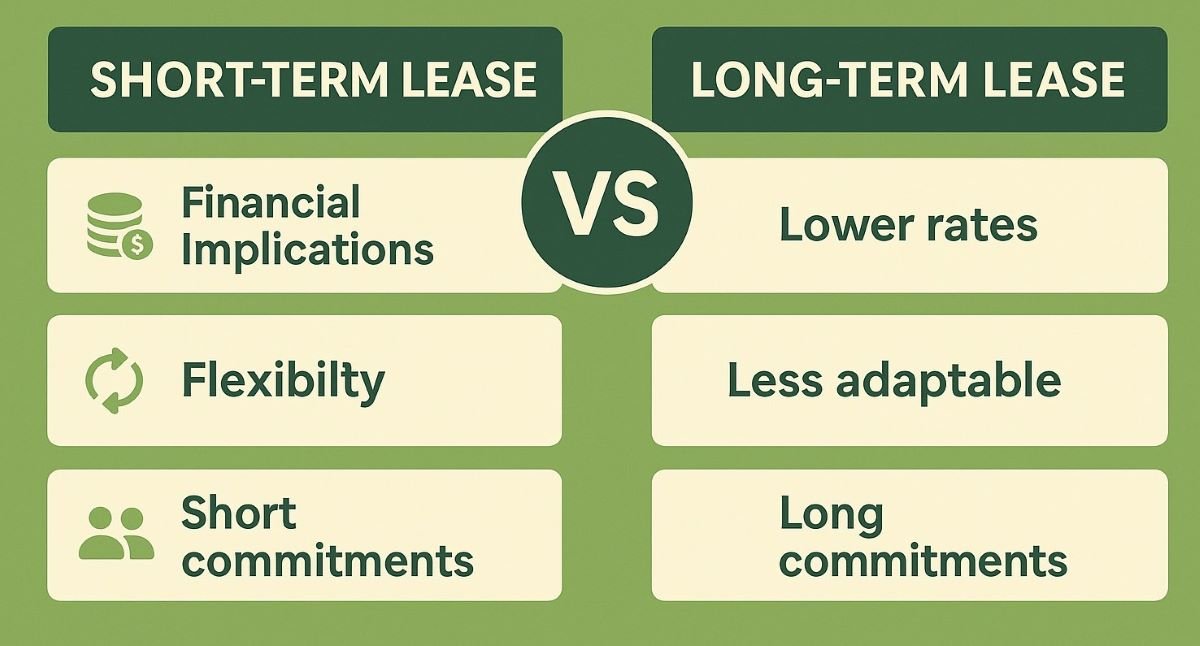
Deciding whether to buy commercial property for self-use or lease a workspace is no longer a straightforward cost calculation. For founders, professionals, SMEs, and established companies alike, this decision affects cash flow, tax planning, operational flexibility, and long-term business resilience.
Many investors start by understanding a broader commercial property investment strategy Gurgaon before deciding between ownership and leasing. This often includes evaluating the best-performing micro-markets in Gurgaon for long-term commercial and residential growth opportunities.
The discussion is often simplified into a familiar idea: buying property creates an asset while leasing keeps capital free. In practice, the situation is more complex. Business maturity, growth predictability, capital priorities, and market timing all influence what actually works.
A decision that strengthens one company’s long-term position could create unnecessary constraints for another. Understanding how ownership and leasing affect business strategy helps leaders make a choice that supports growth rather than limiting it.
Understanding the Core Difference Beyond Ownership
When a company purchases commercial property for its own operations, a portion of its capital becomes tied to a physical asset. Rental payments disappear, but liquidity decreases because the funds are now invested in real estate.
Leasing works differently. The business pays rent as an operating expense while keeping capital available for other priorities such as hiring, expansion, or product development.

Companies that value long-term stability and control over their workspace often lean toward ownership. Businesses operating in dynamic environments frequently prefer leasing because it allows them to adjust space requirements more easily.
When Buying Commercial Property for Self-Use Makes Sense
Long-Term Operational Stability
Ownership becomes more practical when operations are stable and future location requirements are predictable. Businesses that expect to remain in the same geography for seven to ten years or longer often benefit the most.

Professional services firms, diagnostic centers, clinics, and established SMEs frequently fall into this category. Relocating these businesses repeatedly can disrupt staff routines and customer relationships.
For such organizations, owning the workspace can remove a significant layer of operational uncertainty.
Protection Against Rental Escalation
Commercial leases commonly include periodic rental increases. In many Indian markets, escalations of 10–15% every three years are standard in long-term agreements.

Businesses that own their premises are insulated from these increases. Over time, avoiding rental escalation can make long-term financial planning more predictable, especially during inflationary periods.
Balance Sheet Strength and Asset Creation
A self-used commercial property becomes a tangible asset on the company’s balance sheet. For mature businesses, this can strengthen net worth and sometimes improve borrowing capacity.
However, this advantage depends heavily on where and how the property is purchased. Businesses and investors should first review a detailed Gurgaon location analysis to identify areas with strong infrastructure, connectivity, and future appreciation potential. Buying at unrealistic valuations or in weak commercial locations can limit the financial benefits of ownership.
The Hidden Costs of Self-Use Ownership
Commercial property ownership often carries a strong psychological appeal. Many founders view it as a milestone of stability.
The financial reality is more complex. Large upfront payments, stamp duty, registration charges, interior fit-outs, and ongoing maintenance expenses significantly increase the total investment.
Another factor is opportunity cost. Capital invested in real estate cannot simultaneously fund business expansion, technology upgrades, or market acquisition.
Liquidity also deserves attention. Selling commercial property can take time, particularly during slower market cycles.
When Leasing Commercial Property Is the Smarter Choice
Business Agility and Scalability
Leasing tends to work well for businesses operating in growth phases or industries where space requirements change quickly.
Startups, digital-first firms, and companies with fluctuating team sizes benefit from the ability to expand or relocate without carrying a large real estate asset. As hybrid work models become more common, flexibility in workspace planning has become even more valuable.
This is particularly visible in areas like Cyber City, where office space investment near Cyber City Gurgaon continues to attract both tenants and investors.

Capital Preservation
Leasing allows companies to preserve capital for core operations. Marketing, product development, hiring, and expansion often generate stronger returns than property ownership.
For many new-age businesses, reinvesting capital directly into growth initiatives produces greater long-term value than acquiring office space early.
Easier Market Entry and Exit
Leasing also enables businesses to test locations with relatively limited commitment.
If a new market performs well, the company can scale operations there. If demand fails to meet expectations, relocating or exiting becomes far simpler than selling owned property.
This flexibility often proves valuable during uncertain economic periods. Companies planning future expansion may also keep an eye on emerging developments along Dwarka Expressway that are creating new commercial and mixed-use business opportunities.
Financial Comparison: Looking Beyond Monthly Costs
Over very long holding periods, owning property may appear cheaper than paying rent. However, that conclusion assumes stable demand, full space utilization, and no relocation requirements.
In reality, businesses frequently outgrow their offices or discover that the location no longer suits operational needs.
Leasing converts workspace costs into predictable operating expenses while transferring maintenance and building obsolescence risks away from the business.
A more meaningful evaluation focuses on how productively capital can be deployed while still maintaining operational stability.
In premium segments, evaluating grade A office rental yield Gurgaon helps understand long-term cost versus return dynamics.
Tax and Accounting Perspective
Leased offices allow rental payments to be treated as business expenses, which can create immediate tax deductions.
Ownership provides different financial benefits. Businesses may claim depreciation on the property and potentially benefit from long-term capital appreciation.
Tax outcomes vary significantly depending on corporate structure, holding period, and jurisdiction. Because of this, tax considerations usually support a decision rather than determine it.
A Hybrid Strategy Many Businesses Overlook
Some companies combine both approaches instead of treating them as mutually exclusive.
During early growth stages they lease office space to maintain flexibility. Once operations stabilize and long-term space requirements become clearer, they may purchase property for self-use.
In commercial hubs such as Gurgaon, many SMEs follow this pattern—leasing initially while their teams grow and considering ownership later once operational stability improves.

Other companies buy a smaller core office while leasing additional space for expanding teams.
What Actually Makes Sense in Today’s Market
In today’s commercial real estate environment, leasing works well for businesses that prioritize adaptability, speed, and capital efficiency.
Ownership tends to make sense once the business has clear long-term space requirements and sufficient financial stability to allocate capital without limiting future growth. For investors considering a transition from leasing to ownership, understanding the complete process of purchasing property in Gurgaon can help avoid costly mistakes and improve decision-making.
The bigger challenge is not choosing between leasing and ownership. Problems usually arise when businesses commit too early to a structure that no longer fits their operational reality.
For growing companies, options like small office spaces for startups Gurgaon provide a flexible entry point before committing to ownership.
FAQs: Commercial Property for Self-Use vs Leasing
Is buying commercial property always better in the long run?
Not necessarily. Ownership works best when a business plans to remain in the same location for many years and does not need that capital for expansion.
Do startups benefit from owning office space?
In most cases startups benefit more from leasing because it preserves capital and allows flexibility as teams grow.
Is leasing more expensive than owning over time?
Ownership may appear cheaper over decades, but that assumption holds only if the space remains fully utilized and relocation is never required.
Can a business lease first and buy later?
Yes. Many companies lease during early growth stages and consider ownership once operations stabilize.
What matters more than cost in this decision?
Predictability. When future space requirements become clear, the ownership versus leasing decision becomes easier to evaluate.



Join The Discussion