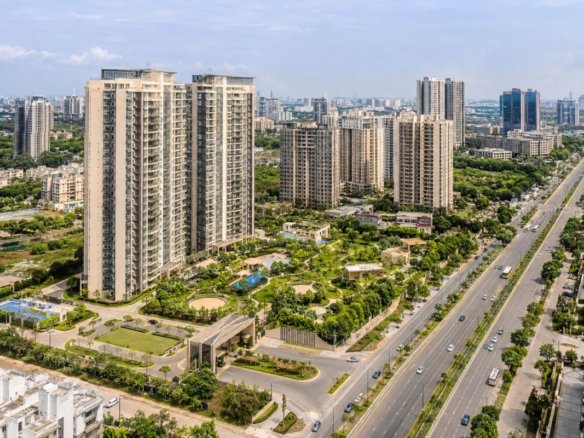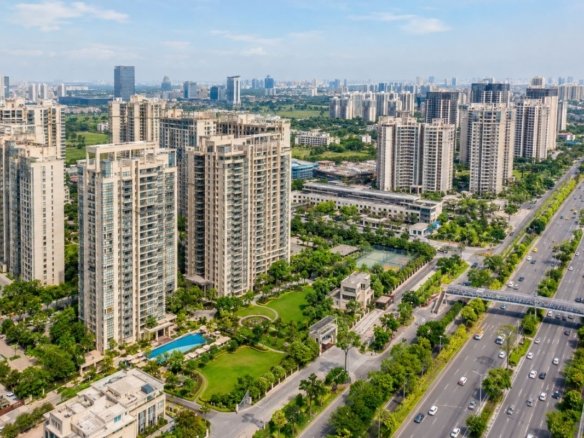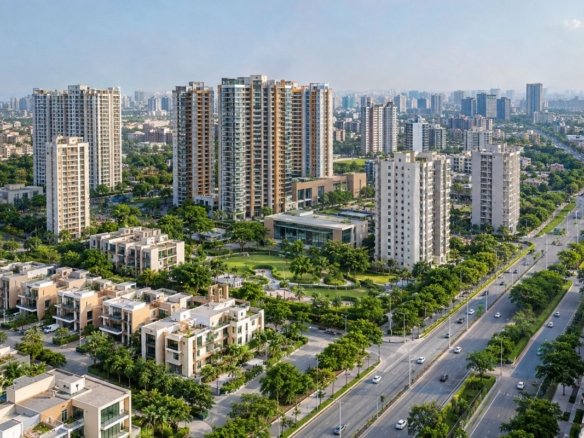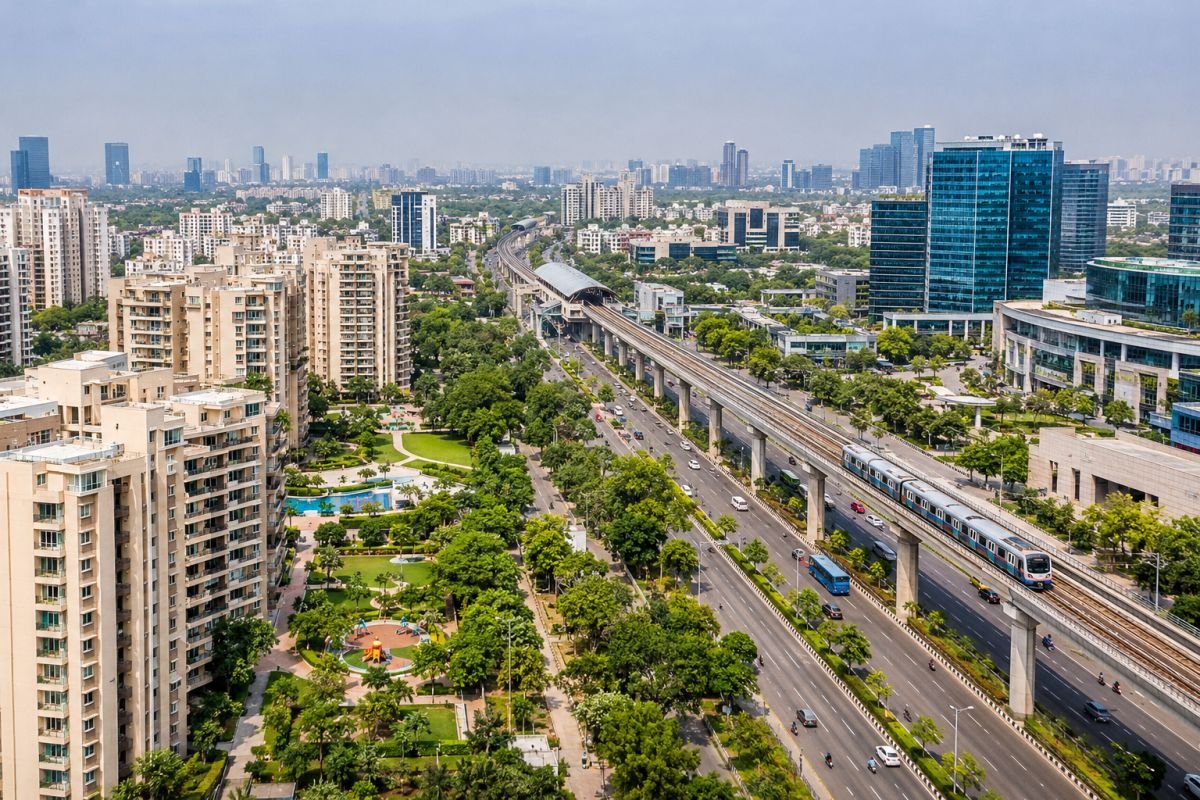
Gurgaon’s proposed metro expansion could improve connectivity between Palam Vihar, Sector 22, Udyog Vihar and Cyber City. For property buyers, however, the real value of this infrastructure will depend on more than the presence of a station on the route. Its location, accessibility, construction progress and connection with existing transport networks will determine how useful it becomes for residents and businesses.
The Palam Vihar to Cyber City metro route is part of the wider Millennium City Centre–Cyber City Metro project. It is particularly relevant to residential buyers in western Gurgaon because it is planned to connect established neighbourhoods with major employment centres. The corridor may support commuting convenience and rental demand over time, but it should not be treated as a guarantee of property appreciation.
Why the Palam Vihar to Cyber City Metro Route Matters
The Millennium City Centre–Cyber City corridor is planned over approximately 28.50 km, with 27 elevated stations and a separate 1.85 km spur towards Dwarka Expressway. The main corridor accounts for approximately 26.65 km. Its proposed alignment connects residential, commercial and employment locations across Gurgaon.
The relevant station sequence from Palam Vihar towards Cyber City is Palam Vihar, Sector 23A, Sector 22, Udyog Vihar Phase IV, Udyog Vihar Phase V and Cyber City. One distinction matters for property research: the published station name is Sector 23A, not simply Sector 23. Rezang La Chowk should not be described as a confirmed station in this corridor.
For residents, the proposed connection could provide another way to reach Udyog Vihar and Cyber City without depending entirely on private vehicles. For businesses, better public transport could make workplaces more accessible to employees. The actual benefit to an individual property will depend on the distance to the station entrance, road conditions, pedestrian access and availability of last-mile transport.

The project must also be assessed according to its actual implementation stage. As of 13 November 2026, the construction package covering the viaduct and elevated stations from Sector 9 to Cyber City is listed in the procurement process, with bid opening scheduled for 18 November 2026. Contractor and award details are not populated in the available tender information. Procurement should not be confused with an awarded contract, completed construction or operational passenger service.
Government Authorities and Property Regulations
Metro infrastructure and property legality are two separate matters. A proposed station does not establish ownership, residential land use, building approval or permission to occupy a property. Buyers should understand which authority is responsible for each part of the verification process.
Gurugram Metro Rail Limited (GMRL) is responsible for the metro project. Its alignment, station information, tender status, construction packages and project updates are relevant when checking claims about connectivity. Buyers should distinguish between an approved alignment, a tender, a construction contract and an operational station. These are different stages, and property decisions should reflect the project’s actual progress.
The Gurugram Metropolitan Development Authority (GMDA) is relevant to civic infrastructure, including water supply, sewerage, stormwater drainage and roads under its jurisdiction. These services directly affect residential livability. A property near a proposed metro station may still have practical problems involving water supply, drainage, road access or maintenance. Buyers should check the arrangements applicable to the specific location rather than assume that nearby infrastructure is adequate.
The Department of Town and Country Planning, Haryana (TCP Haryana) is important when evaluating plots, independent floors and land parcels. The applicable development plan, sectoral land use, development licence, change-of-land-use permission and sanctioned building plan determine what can legally be constructed or operated on a property. Metro proximity does not automatically increase permissible FAR, allow additional floors or convert agricultural or industrial land into residential use.
For applicable real-estate projects, the Haryana Real Estate Regulatory Authority (HRERA) provides project registration details, promoter disclosures and regulatory information. Buyers should examine the registration number, project address, sanctioned plans, possession commitments and relevant orders. Sections 3, 11, 14, 17 and 18 of the Real Estate (Regulation and Development) Act, 2016, address project registration, promoter obligations, compliance with sanctioned plans, conveyance and certain buyer remedies. Registration is not a guarantee of construction quality, title or investment returns.
Other authorities may be relevant depending on the property. HSVP records help buyers examine authority allotment, transfer permissions and dues. Jamabandi records support checks of revenue ownership particulars and mutation, but mutation alone does not establish complete legal title. HSIIDC documentation is important for industrial properties in Udyog Vihar, particularly permitted use and transfer conditions. DHBVN records help establish electricity connection details, sanctioned load and outstanding bills.
Sector-Wise Real Estate Impact
The proposed corridor will not affect every location in the same way. Palam Vihar and Sector 22 are primarily residential markets, while Udyog Vihar has a stronger industrial and employment orientation. Cyber City is an important commercial destination. The investment case therefore depends on the property type and the buyer’s intended use.
Palam Vihar
Palam Vihar is an established residential locality with independent houses, plots, builder floors and local commercial activity. The proposed station could improve access towards Udyog Vihar and Cyber City, making the area relevant to professionals who commute to these employment centres.

However, buyers should assess individual properties rather than rely on the locality’s general reputation. For independent floors, the sanctioned building plan, permitted number of floors, parking arrangements and ownership structure require careful examination. Plot buyers should establish the title history and permitted land use before making a payment. The age and condition of the building, road access and civic services also remain important.
Sector 23 and Sector 23A
Sector 23 and Sector 23A should not be treated as interchangeable when evaluating metro access. The published station name is Sector 23A. A property marketed as being in Sector 23 may not have the same practical access as one located closer to the proposed station.
The potential benefit for this residential catchment is improved commuting towards Udyog Vihar and Cyber City. Buyers should measure the actual route from the property entrance to the proposed station entrance. Straight-line distances can be misleading where road layouts, access restrictions or pedestrian barriers affect the journey.
Sector 22 Gurgaon
Sector 22 has relevance for both end-users and rental-property investors because of its residential catchment and proximity to employment areas. The proposed station could make commuting more convenient for residents travelling towards Udyog Vihar and Cyber City.
A development buyers may encounter while researching this location is Ambience Creacions Sector 22 Gurugram. Its project status, applicable approvals, occupation documentation and actual station accessibility should be checked independently rather than assumed from its location.
Sector 22 may be worth evaluating for rental investment, but the decision should be based on the purchase price, achievable rent, maintenance expenses, property condition and tenant demand. A projected rental yield based on an assumed future rent is not a reliable investment calculation.
Udyog Vihar Phase IV and Phase V
Udyog Vihar Phase IV and Phase V are important employment and industrial locations. Better public transport could improve employee access and make nearby residential areas more convenient for people working in these phases. Commercial and industrial property owners may also benefit from improved employee and visitor movement.

However, industrial premises cannot automatically be used for residential or unrestricted commercial purposes. Buyers must examine the applicable HSIIDC allotment conditions, permitted use, transfer restrictions, building permissions, occupancy documents, electricity load and parking arrangements. Improved connectivity does not change the legal classification of the property.
Cyber City
Cyber City is a major commercial destination and the proposed terminal interchange on this section of the metro corridor. Its importance comes from the potential connection between western Gurgaon neighbourhoods and a significant employment centre.
The proposed interchange arrangements may connect the metro with other transport systems, including Rapid Metro. However, a proposed interchange does not necessarily mean direct platform-to-platform transfers. The final layout, station entrances, walking connections and passenger transfer arrangements will determine how convenient the connection becomes.
| Location | Main Property Profile | Potential Benefit | Key Consideration |
|---|---|---|---|
| Palam Vihar | Houses, plots and independent floors | Residential commuting | Title and construction legality |
| Sector 23A | Residential catchment | Access towards Udyog Vihar | Actual station accessibility |
| Sector 22 | Residential and commercial | Employment connectivity | Land use and building approvals |
| Udyog Vihar Phase IV | Industrial and commercial | Employee mobility | Industrial-use restrictions |
| Udyog Vihar Phase V | Industrial and commercial | Workforce connectivity | Transfer and occupancy compliance |
| Cyber City | Commercial offices | Proposed transport interchange | Final interchange and access design |
Swipe horizontally to view all columns.

These are potential connectivity benefits, not measured appreciation forecasts or guaranteed rental returns.
Property Verification Before Buying
Buyers should investigate the metro project separately from the property. For the transport component, check the approved alignment, station list, location drawings, construction tenders, contract awards and progress updates. Compare the proposed station entrance with the actual property entrance. Do not rely solely on broker-generated maps or promotional claims that describe a proposed station as operational.
For the property itself, begin with the registered title deed and previous sale documents. Where revenue records apply, examine the latest Jamabandi, mutation entries and relevant land particulars. An independent property lawyer should review the ownership chain, mortgages, litigation, inheritance claims and transfer restrictions. Revenue entries are useful records, but they do not replace a complete title investigation.
For plotted land and independent floors, confirm the applicable Master Plan zoning, development licence, change-of-land-use permission where required, approved layout and sanctioned building plan. Check that the actual construction matches the approved plan. A property being close to a metro station does not make unauthorised construction legal.

For an applicable registered real-estate project, verify its HRERA registration, promoter details, registered address, sanctioned plans, progress disclosures and regulatory orders. For ready-to-move properties, obtain the occupation certificate where applicable and confirm that the completed building matches the sanctioned plan. An OC application, possession letter and completion certificate should not be treated as interchangeable with an issued occupation certificate.
Civic and utility checks are equally important. Confirm the relevant water and sewerage arrangements, drainage condition, road access, electricity connection, sanctioned load and outstanding dues. For authority-allotted properties, examine allotment and transfer conditions. For industrial premises, check the applicable industrial-use restrictions and transfer documentation.
The main risks are disputed ownership, unauthorised floors, incorrect land-use classification, missing approvals, unpaid dues and inflated rental projections. Another common mistake is paying a premium for a station that is still under procurement or construction. Evaluate the property’s current condition, legal status and market value first; treat future connectivity as a potential additional benefit.
2026–2031 Market and Livability Outlook
The corridor’s property impact will depend on execution rather than announcements alone. In 2026, procurement activity and construction preparation are important indicators, but a tender does not confirm that civil work has been completed or passenger services have begun. Utility shifting and traffic changes may also affect road access during construction.
During the execution period, the practical value of the stations will depend on station development, system integration and last-mile connectivity. A home may appear close to a station on a map but still require a vehicle journey because of road layouts or pedestrian barriers. Water supply, sewerage, drainage and road maintenance will continue to influence the quality of residential life.
If reliable passenger services become operational, the corridor could make travel between residential neighbourhoods and employment locations more convenient. This may improve the appeal of suitable rental homes and make public transport more accessible to households without private vehicles. Commercial properties could also benefit from easier employee movement. These outcomes remain conditional on project delivery and actual usage; no particular commissioning date or appreciation percentage should be assumed without a confirmed announcement or reliable market evidence.
For investors, four factors deserve priority: practical station access, legal certainty, neighbourhood livability and entry valuation. Compare asking prices with recent registered transactions and calculate rental yield using realistic rent, vacancy, maintenance and recurring costs. A legally compliant property with existing end-user demand is a stronger proposition than one whose investment case depends entirely on future infrastructure.
Frequently Asked Questions
1. How will the Palam Vihar to Cyber City metro route affect property buyers?
The proposed corridor could improve public transport access between Palam Vihar, Sector 23A, Sector 22, Udyog Vihar and Cyber City. It may support residential accessibility and employment-linked rental demand. The actual benefit will depend on station access, construction progress, local infrastructure and purchase valuation.
2. Is the Palam Vihar to Cyber City metro corridor operational in 2026?
The proposed stations should not be described as operational passenger services. As of 13 November 2026, the construction package covering Sector 9 to Cyber City is in the procurement process. Buyers should distinguish project approval and tendering from construction completion and passenger commissioning.
3. Which sectors are covered on this part of the metro route?
The relevant station sequence includes Palam Vihar, Sector 23A, Sector 22, Udyog Vihar Phase IV, Udyog Vihar Phase V and Cyber City. Sector 23A is the published station name; Sector 23 should not be presented as a separate confirmed station on this sequence.
4. Is Sector 22 Gurgaon suitable for property investment?
Sector 22 is worth evaluating because of its residential catchment and proximity to employment areas. The proposed metro station could improve accessibility over time. Buyers should still compare purchase prices, achievable rent, title quality, construction approvals and property condition before investing.
5. Will property prices in Palam Vihar and Sector 23A increase by 2031?
There is no reliable basis for guaranteeing a particular appreciation percentage. Improved connectivity may support demand, but prices will also depend on supply, interest rates, local infrastructure, property condition and the price paid at entry.
6. What documents should buyers check before purchasing?
Buyers should examine the registered title deed, previous ownership documents, relevant revenue records, sanctioned building plan, occupation certificate where applicable, HRERA registration where required, agreement for sale, applicable allotment and transfer documents, and outstanding authority or utility dues. An independent property lawyer should review the complete documentation.
Should Buyers Consider This Metro Corridor?
The Palam Vihar–Cyber City section could become an important public transport link between established residential neighbourhoods and Gurgaon’s employment centres. Sector 22, Sector 23A and Palam Vihar are relevant to residential buyers, while Udyog Vihar Phase IV and V require closer attention to industrial and commercial-use permissions.
The sensible approach is to assess the property on its present fundamentals: ownership, permitted use, building approvals, occupation status, neighbourhood infrastructure and realistic valuation. Future metro connectivity may strengthen an otherwise sound purchase, but it cannot compensate for weak legal documentation or an inflated entry price.
Need help verifying RERA approvals, OC status, or infrastructure alignment before buying in Gurugram? Book a complimentary due-diligence call with AssuredGains.