
In 2026, serious investors in Gurgaon are no longer debating whether real estate is safe.
They are asking a more intelligent question:
Which format is structurally safer for long-term ROI — plots or apartments?
Across New Gurgaon sectors, Dwarka Expressway, Sector 95, Sector 37D, Sohna, and emerging DDJAY corridors, capital allocation patterns have shifted noticeably. Rising apartment supply, increasing maintenance inflation, and structural depreciation are pushing investors toward licensed residential plots in Gurgaon and government-backed plotted schemes.
This is not a lifestyle comparison.
This is a capital protection and compounding analysis.
What “Safer” Means in Gurgaon’s 2026 Market
In today’s Gurgaon real estate cycle, safety means:
- Lower capital erosion risk
- Higher appreciation certainty
- Minimal developer dependency
- Clean registry & zoning clarity
- Low holding cost
- Liquidity during resale
These factors behave very differently in:
- Dwarka Expressway residential sectors
- Sector 95 DDJAY plots
- Sector 37D Gurgaon plots
- Sohna plotted developments
- Golf Course Extension high-rise corridors
Understanding that difference defines investment outcomes.
Why Plots Are Gaining Strong Preference in Gurgaon (2026)
1. Land Scarcity vs Vertical Oversupply
Land in Gurgaon is finite.
High-rise apartments are not.
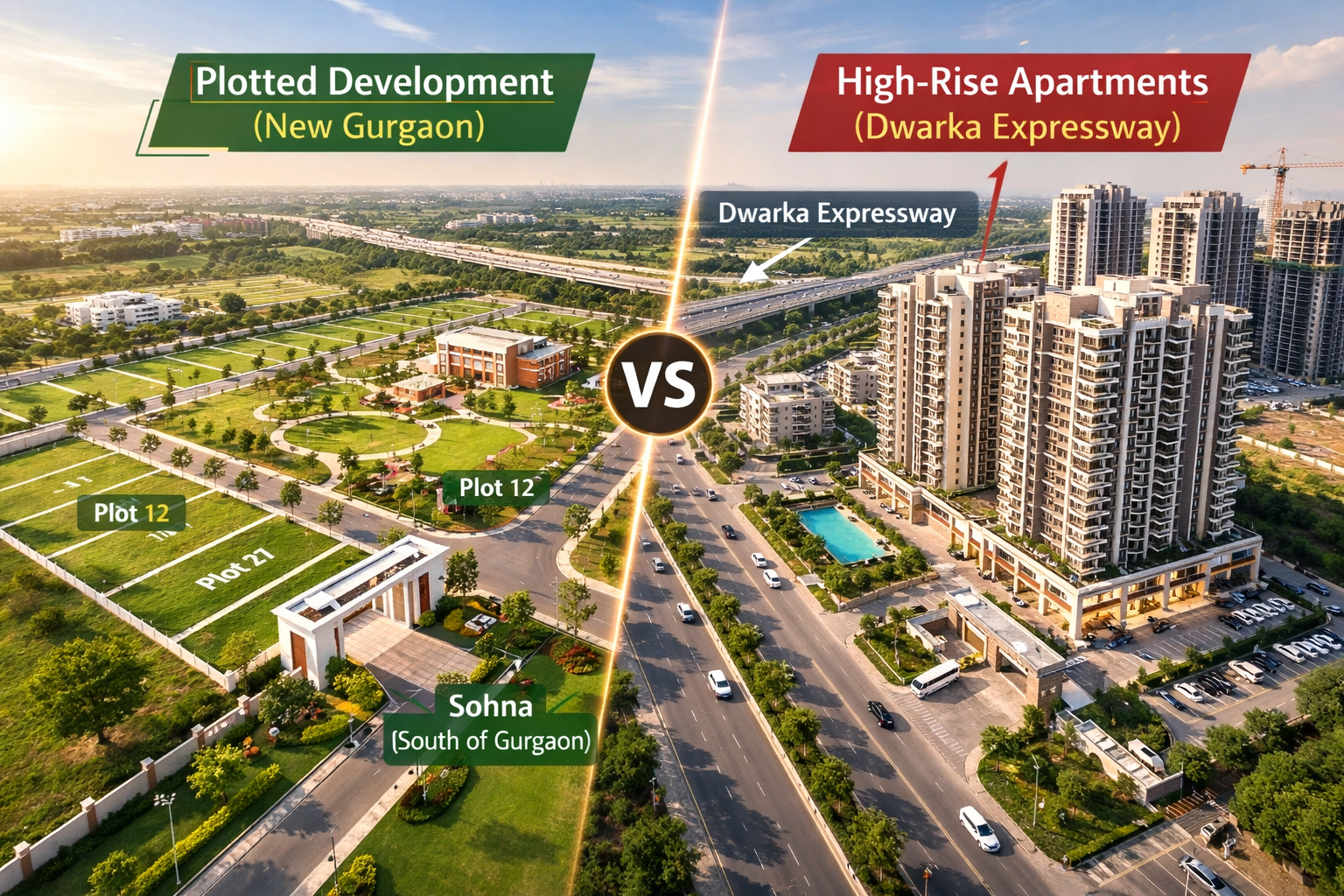
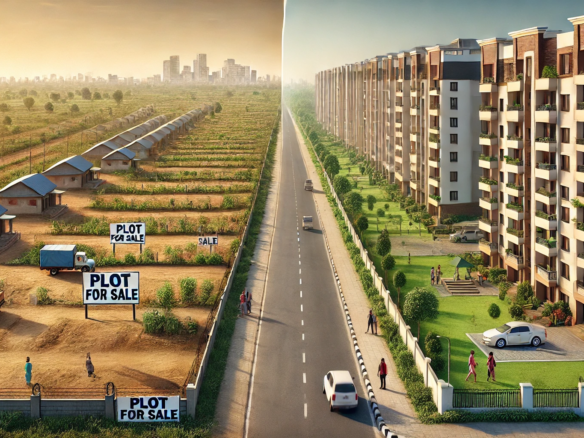
In corridors like Dwarka Expressway and New Gurgaon sectors 84–95, vertical inventory continues expanding. Meanwhile, approved plotted developments in Sector 95, Sector 37D, and DDJAY plots in Sohna remain supply-controlled.
Over the last 3–5 years:
- Plotted developments in Sohna and New Gurgaon have seen appreciation in the 35–60% range in strong pockets.
- Mid-income resale apartments in oversupplied sectors have averaged significantly lower growth.
This is not sentiment-driven.
It is supply economics.
Scarcity compounds.
Oversupply suppresses.
2. DDJAY & Licensed Plotted Developments Reduce Execution Risk
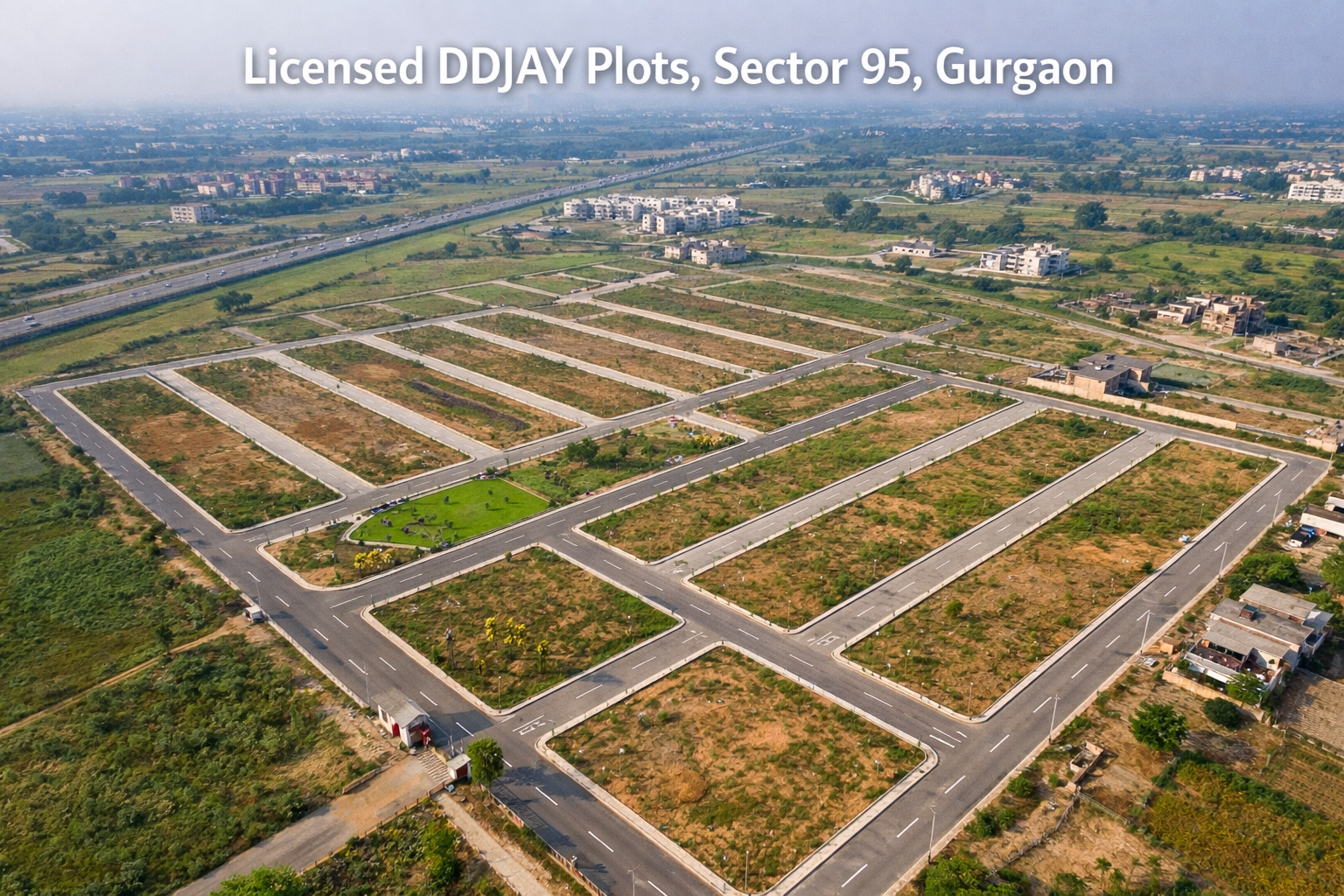
One of the strongest 2026 investment themes is DDJAY plots in Gurgaon and Sohna.
The Deen Dayal Jan Awas Yojana (DDJAY) Haryana framework provides:
- Licensed plotted layouts
- Defined infrastructure norms
- Clear registry pathways
- Lower regulatory ambiguity
Compared to apartment projects where investors remain exposed until:
- Completion certificate
- Possession
- Society handover
In DDJAY Sector 95, DDJAY Sector 37D, and licensed plotted townships near Dwarka Expressway, ownership is immediate upon registration.
There is no dependency on:
- Builder cash flow
- Construction progress
- Escalating construction-linked payment plans
This dramatically lowers execution risk.
3. Structural Depreciation vs Land Appreciation
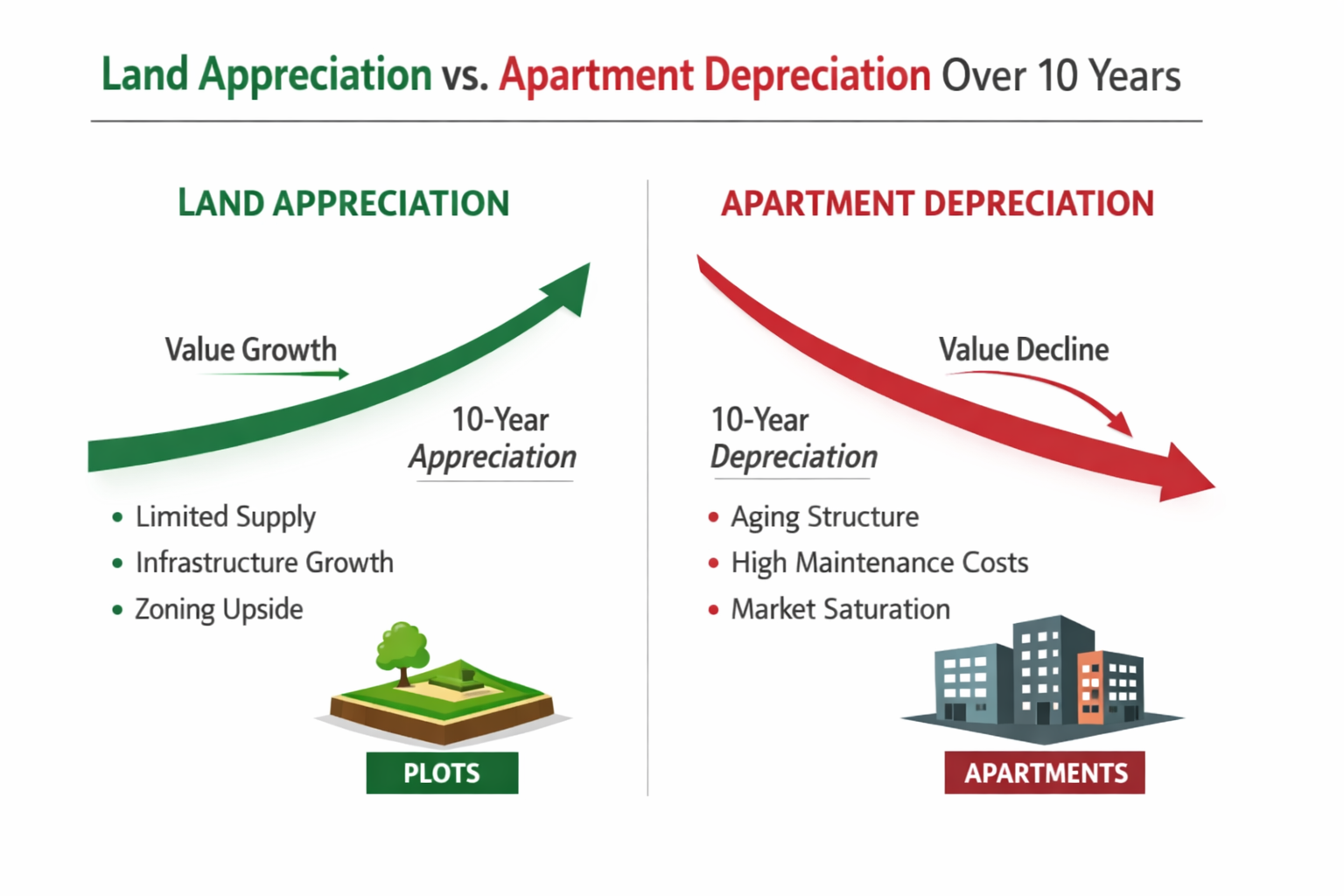
Apartments are buildings.
Buildings depreciate.
After 10–12 years in Gurgaon:
- Elevations age
- Interiors become outdated
- Maintenance increases
- Buyer demand shifts to newer launches
In contrast, residential plots in Gurgaon, especially in infrastructure-backed corridors like Sector 84–95 and Sohna South of Gurgaon, do not face structural decay.
Land appreciation is driven by:
- Metro expansion visibility
- Expressway connectivity
- Commercial zoning spillover
- Industrial corridor employment growth
This is why New Gurgaon plotted development corridors have outperformed aging high-rise stock in long-term holding comparisons.
4. Lower Recurring Financial Drag
Apartment ownership in Gurgaon includes:
- Monthly maintenance charges
- Escalating facility upgrades
- Sinking funds
- Association conflicts
For investors holding multiple rental units, maintenance inflation materially reduces net ROI.
Plots — especially standalone licensed plots — carry negligible holding cost.
This improves compounding efficiency over a 7–10 year horizon.
Where Apartments Still Make Strategic Sense
A balanced analysis is critical.
Apartments are not obsolete. They serve a different objective.
1. Rental Yield Strategy
Rental yields in Gurgaon typically range between 2.5–4% in many sectors.
If your goal is predictable monthly cash flow:
- Ready apartments
- Builder floors in Gurgaon Golf Course Extension Road inventory
can still perform.
Plots generate no income unless:
- Developed
- Flipped post-infrastructure
- Positioned near future commercial nodes
Income-focused investors may still allocate selectively to apartments.
2. Financing Flexibility
Banks are more comfortable financing:
- Ready-to-move apartments
- Established high-rise projects
Compared to standalone plots in underdeveloped sectors.
This influences leveraged buyers comparing builder floors vs plots in Gurgaon.
3. End-Use Buyers
Security, clubhouse lifestyle, and community living continue attracting self-use buyers.
But from a pure long-term real estate investment India perspective, lifestyle preference does not guarantee superior capital appreciation.
Sector-Level Risk Snapshot (2026)
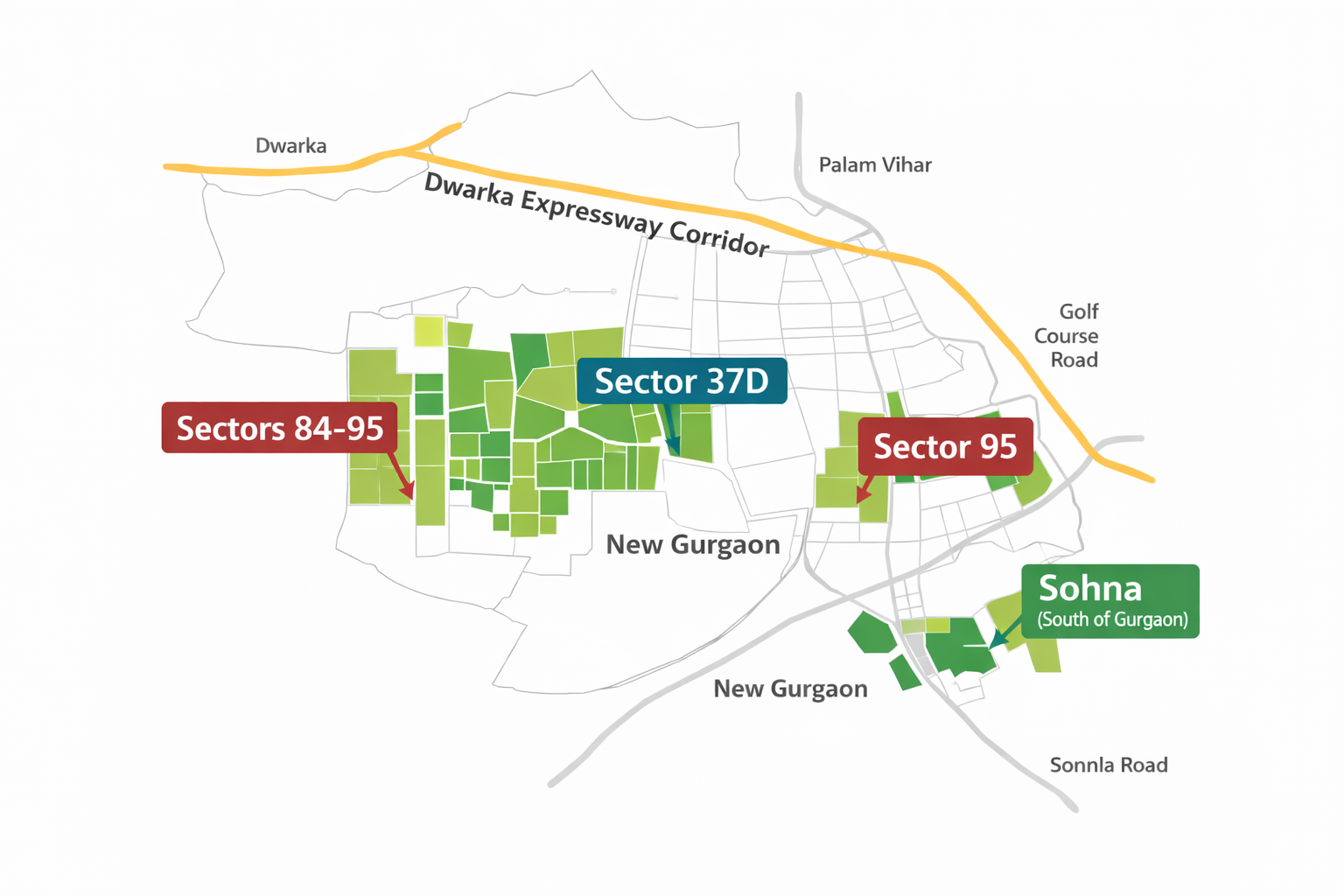
New Gurgaon (Sectors 84–95)
- Strong plotted momentum
- DDJAY adoption increasing
- Expressway-led appreciation potential
- Oversupply risk in high-rise segments
Sector 37D (Near Dwarka Expressway)
- Improved connectivity
- Rising plotted demand
- Mixed-use and SCO commercial spillover potential
Sector 95 Gurgaon
- High DDJAY activity
- Affordable plotted development demand
- Gradual infrastructure normalization
Sohna (South of Gurgaon)
- Residential plots in Sohna gaining traction
- Highway and industrial corridor proximity
- Land banking transitioning to structured development
Micro-market matters more than asset class alone.
Regulatory Safety: Approved Plots vs Complex Builder Agreements
Buying agricultural or unlicensed land remains risky.
However:
- Licensed residential plots in Gurgaon
- DDJAY plots Haryana
- Approved township layouts
often involve less legal complexity than:
- Builder-buyer agreements
- Undivided share disputes
- Delayed possession claims
- Society litigation issues
Due diligence defines safety — not whether it is a plot or apartment.
The Biggest Mistake Investors Make With Plots
Plots are safer only when:
- They are licensed
- Master plan roads are approved
- Infrastructure visibility exists
- Location has employment drivers
Common errors include:
- Buying unapproved farmland
- Ignoring zoning
- Chasing lowest price per square yard
- Investing in isolated land banks without connectivity
A bad plot is worse than a good apartment.
Approval status + infrastructure timeline define risk.
2026 Capital Allocation Strategy (Observed Trend)
Among experienced Gurgaon investors:
- 60–70% allocation toward plotted developments
- 30–40% toward rental-generating apartments
Particularly in sectors where:
- Metro extensions are visible
- Dwarka Expressway connectivity is operational
- SCO plots and commercial zoning are expanding
- Industrial job corridors are strengthening
The strongest portfolios combine appreciation assets (plots) with income assets (apartments).
Final Verdict: Are Plots Safer Than Apartments in Gurgaon (2026)?
For investors with:
- 7–10 year holding horizon
- Capital appreciation priority
- Inflation hedge objective
- Low execution risk preference
Yes — licensed plotted developments in Gurgaon, including DDJAY plots in Sector 95, Sector 37D, Sohna, and New Gurgaon corridors, are structurally safer than oversupplied apartment inventory in 2026.
Apartments still serve rental and lifestyle roles.
But for long-term ROI compounding in Gurgaon’s current cycle, land ownership is regaining structural advantage.
FAQs: Plots vs Apartments in Gurgaon (2026)
Are DDJAY plots in Gurgaon really safer than buying a flat?
Licensed DDJAY plots in Gurgaon, especially in sectors like 95 and 37D, are generally considered safer than under-construction apartments because ownership is immediate after registration. There is no construction delay risk, no builder cash-flow dependency, and no possession uncertainty.
However, safety depends on:
Clear licensing status
Approved layout plans
Infrastructure visibility
Proper due diligence
A legally approved DDJAY plot is structurally lower risk than a delayed apartment project — but an unapproved land parcel is riskier than both.
Which gives better ROI in Gurgaon — plots in Sector 95 or apartments on Dwarka Expressway?
If the goal is capital appreciation over 7–10 years, plotted developments in Sector 95, New Gurgaon, and Sohna have historically shown stronger percentage growth compared to mid-income apartments in oversupplied Dwarka Expressway belts.
If the goal is monthly rental income, ready apartments near operational commercial zones may perform better in the short term.
For long-term compounding, scarcity-driven land tends to outperform aging high-rise inventory.
Is buying a residential plot in Sohna risky in 2026?
Residential plots in Sohna are not inherently risky — but location quality and approval status matter.
Safe scenarios include:
Licensed plotted developments
DDJAY-approved layouts
Plots near upcoming infrastructure corridors
Risk increases when investors:
Buy agricultural land without conversion
Ignore master plan road access
Invest in isolated land banks with no job ecosystem
Sohna is transitioning from land banking to structured development, which reduces long-term uncertainty compared to 5–7 years ago.
Do apartments in Gurgaon really depreciate over time?
After 10–12 years, apartments often face:
Higher maintenance costs
Outdated elevations
Buyer preference shift toward newer projects
While the land underneath appreciates, the structure itself depreciates. This affects resale pricing unless the property is in a highly premium micro-market like Golf Course Road.
Plots, on the other hand, do not face structural decay — which is why long-term appreciation patterns differ.
Should I split investment between plots and apartments in Gurgaon?
Many experienced Gurgaon investors now follow a hybrid strategy:
60–70% in plotted developments for long-term appreciation
30–40% in rental-generating apartments for income stability
This balances:
Scarcity-driven growth
Cash flow needs
Inflation hedging
Liquidity flexibility
Portfolio structuring matters more than choosing one asset class blindly.


Join The Discussion