
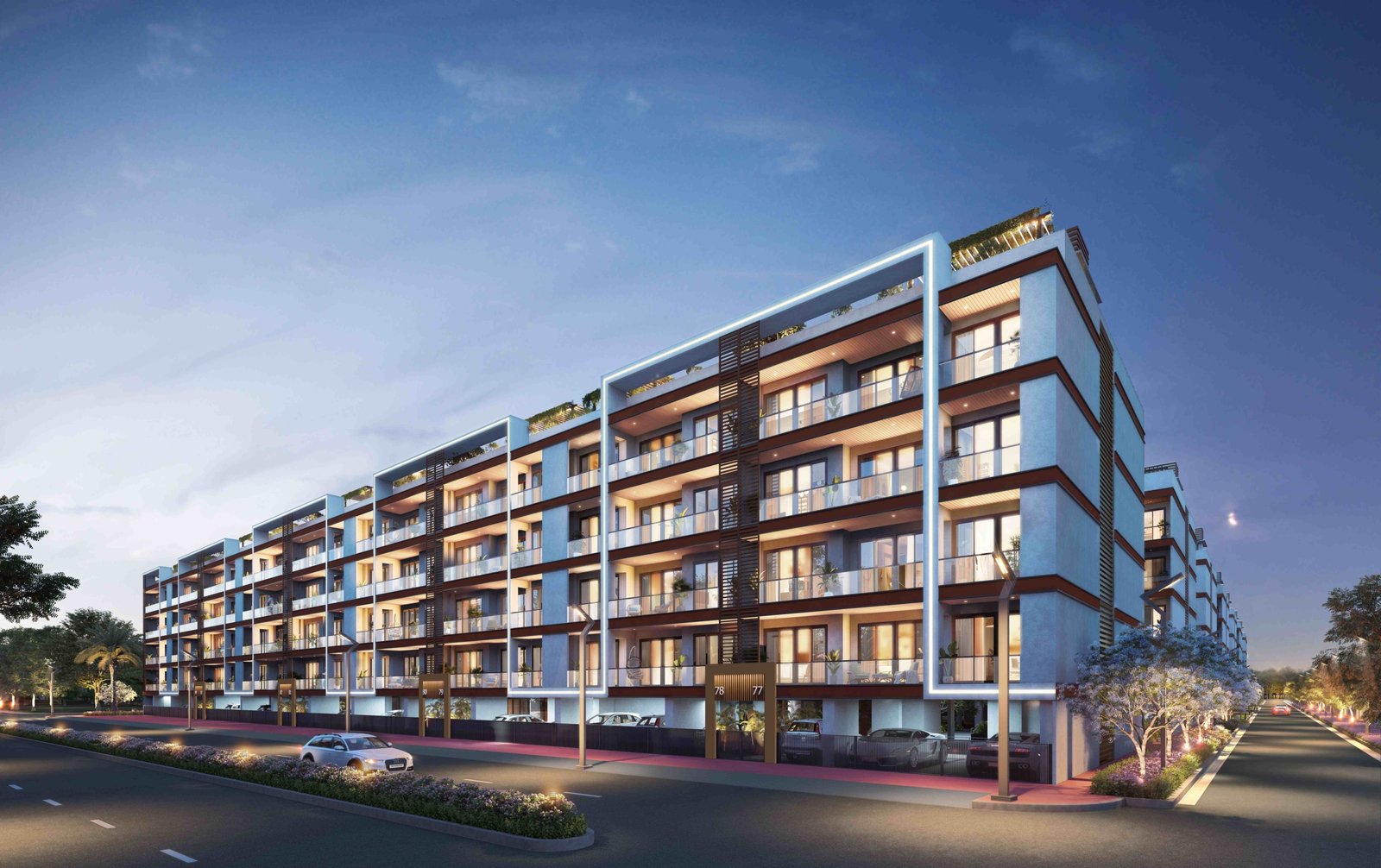
Gurgaon’s real estate market has evolved quickly over the last decade. Earlier, the focus was simple—build taller, fit more units, maximise land use.
That approach is fading.
Buyers today want something else. More space. Less noise. A home that doesn’t feel crowded the moment you step out of your door.
Low-density housing fits right into that shift.
On paper, it sounds simple. Fewer homes, more space.
Visit a few projects, though—and the picture changes.
What Does “Low-Density Housing” Actually Mean?
At a basic level, it’s about how many homes are built per acre.
In Gurgaon:
- Regular high-rise projects usually sit around 80 to 120 units per acre
- Low-density projects tend to fall closer to 20–40

That’s the number most brochures highlight.
Numbers alone don’t tell the full story.
You’ll still find projects marketed as low-density where:
- too many towers are pushed into the same parcel
- sometimes 6–8 apartments share one core
- open areas exist… but don’t really function as usable space
Density matters—but how it actually plays out on site tells you far more.
Why Demand for Low-Density Living Is Growing
The shift didn’t happen suddenly.
COVID made people more aware of space—but the preference didn’t disappear after that.
Once you’ve experienced crowded lifts, packed amenities, and tight layouts, it’s hard to ignore it.
Professionals working around Cyber City or Golf Course Road don’t want congestion twice a day. Families look for open areas where kids can move freely. Even older buyers lean toward quieter, less chaotic environments.
There’s also perception at play.
Low-density living simply feels more premium. More controlled. Less rushed.
That feeling alone drives a lot of decisions.
What Actually Makes a Project Feel Low-Density
This is where the gap shows up.
A genuinely low-density project isn’t defined only by unit count. The layout, spacing, and flow matter just as much.
Look closely and you’ll notice things like:
- fewer apartments per floor
- lift lobbies that actually feel usable, not cramped
- real spacing between towers (not just what the layout suggests)
- balconies that don’t directly face another unit a few meters away
- open areas you can walk through without feeling boxed in

Some projects get this right.
Others look convincing—until you visit.
Across parts of Dwarka Expressway, for example, several newer launches still feel tighter than expected despite low-density positioning. Buyers evaluating newer communities along this corridor should also keep an eye on the latest residential developments shaping the expressway corridor, as project planning and land utilization vary significantly from one launch to another.
Compare that with older Golf Course Road developments. Many of them still feel more open, even today.
Walk the site once—you’ll know.
What Buyers Usually Miss (Quick Reality Check)
Most people don’t catch this during their first visit.
Everything looks polished:
- well-designed sample flats
- layouts that look great on paper
- confident sales pitches
Then comes a second visit. Usually during peak hours.

That’s when things shift.
Lifts take longer. Common areas feel smaller. Tower distances start to feel tighter than they did on paper.
The second visit is usually more honest than the first.
Where You’ll Find Low-Density Projects in Gurgaon
Since location plays a major role in how a low-density project performs over time, it’s worth understanding the most promising investment zones across Gurgaon before narrowing down your shortlist.
Not every part of Gurgaon allows this kind of planning.
You’ll mostly find it in premium micro-markets:
Golf Course Road & Golf Course Extension Road
Established zones. Better layouts, better spacing, more mature communities.
Dwarka Expressway
Plenty of new development. Large land parcels help—but execution varies a lot.
SPR (Southern Peripheral Road)
An emerging stretch balancing connectivity and future growth potential.
These micro-markets consistently feature among the top residential sectors preferred by homebuyers and investors due to their infrastructure, connectivity, and long-term growth potential.
These locations work because they bring together infrastructure, accessibility, and long-term demand.
Without that combination, density alone doesn’t add much value.
How Low-Density Living Feels Day-to-Day
The change isn’t dramatic.

It’s gradual. Noticeable over time.
- lifts are easier to access
- amenities don’t feel overcrowded
- evening walks are quieter
- kids actually have usable open space
Less noise. Better flow. A bit more breathing room.
Some projects deliver this clearly. Others only come close.
Investment Perspective: Why These Projects Hold Value
Supply plays a big role here.
Low-density projects aren’t easy to replicate. Land costs are high, and fewer units mean tighter margins for developers.
That naturally limits availability.
Buyer profile adds another layer:
- more end-users
- stronger holding capacity
- fewer forced resales
Because of this, price drops—when they happen—tend to be less aggressive.

Rental demand also stays steady, especially from corporate tenants and expats looking for quieter living environments.
Location still decides outcomes.
Are They Always Worth the Premium?
Not always.
A lot of buyers assume low-density automatically means better.
It doesn’t.
Some projects are genuinely well-planned. Others just carry the label.
Before paying extra, check:
- actual units per acre
- how many apartments share each core
- real spacing between towers
- how previous projects by the same developer have performed
Because once construction is complete, these things don’t change.
What You Should Check Before Buying
First-time purchasers should also familiarize themselves with the practical aspects of purchasing a home in Gurgaon’s evolving market, including location assessment, developer credibility, and future infrastructure plans.
If you’re considering one of these projects, don’t rely only on brochures.
Visit the site. Spend time there.
Observe small things:
- how many units share a lift
- whether open spaces are usable or just decorative
- distance between facing balconies
- internal traffic movement
These details don’t stand out immediately.
But they shape your daily experience later.
Final Thoughts
Low-density housing in Gurgaon reflects a clear shift in buyer preference.
More space. Less crowding—and a noticeably better day-to-day experience.
For end-users, that’s often reason enough.
From an investment perspective, limited supply adds long-term strength.
Execution, though, is what really defines the outcome.
Because what you experience daily isn’t the brochure.
It’s the space around you.
FAQs
Are low-density projects better than regular apartments in Gurgaon?
Most of the time, yes—especially for end-users. Less crowding, better access to amenities, and a more comfortable environment. Still, design quality makes a big difference.
Do low-density homes have better resale value?
Often, yes. Limited supply helps maintain demand. Location and developer track record still influence actual returns.
Is low-density housing only for luxury buyers?
Largely, yes. These projects require more land per unit, which pushes pricing higher. Many buyers treat it as a lifestyle upgrade rather than just a purchase.
How can I verify if a project is genuinely low-density?
Start with units per acre, then go deeper. Visit the site, check tower spacing, and see how many apartments share each core.
Are low-density projects good for rental income?
In prime areas, they usually are. Corporate tenants and expats often prefer these homes for the added privacy and space.

Join The Discussion