

In Gurgaon’s premium housing market, two apartments in the same tower—same size, same floor, even similar pricing—can behave very differently at resale.
And one factor that quietly influences this is something buyers don’t always state directly: Vastu alignment.
It’s rarely about belief alone. In most cases, it comes down to how easy—or difficult—the property will be to sell later.
Across areas like Golf Course Extension Road, Sector 56, and parts of New Gurgaon, this pattern shows up quite consistently. Homes that don’t trigger doubt tend to move with fewer objections and less back-and-forth.
Why Vastu Still Influences Gurgaon’s Property Market
Gurgaon has a global buyer profile, but resale thinking is still very practical.
Even professionals and investors who don’t actively follow Vastu often factor it in at the last stage. Not because they’re convinced by it—but because they know someone else might be.
What we’ve noticed across multiple resale discussions is simple: anything that narrows your future options creates pushback.
And that pushback usually shows up when you’re trying to exit.
Most buyers won’t say this directly—but it affects decisions more than they admit.
What Vastu Compliance Actually Means in Apartments
A common misconception is expecting perfect Vastu in modern apartments.
That’s not really how decisions are made here.
Most homebuyers are simply checking for basic alignment—nothing extreme. Typically, that includes:
- A main entrance that falls within workable directions
- Kitchen placement that doesn’t create obvious issues
- Bedrooms positioned in a practical way
- No major layout problems like a central toilet
That’s usually enough to keep the property comfortable from a resale standpoint.
In a typical 3BHK on Golf Course Extension, for instance, buyers are far more comfortable with a layout that avoids negatives rather than one that tries to tick every traditional box.
How Vastu Impacts Buyer Psychology
This part doesn’t always get discussed openly.
Even buyers who say they’re flexible tend to pause when something feels slightly off in the layout. It may not lead to an immediate rejection—but it slows momentum.
More questions come up. Decisions stretch. Negotiations tighten.
In many cases, buyers don’t reject immediately—they just stop moving forward.
On the other hand, when a home feels directionally comfortable, things move with less pushback.
We’ve seen similar units in the same project behave differently at closing—one moving ahead with minimal friction, the other getting stuck in extended discussions.

Nothing drastic on paper. Just a difference in how buyers responded to the space.
Vastu and Price Negotiation: Where It Really Matters
This is where the impact becomes more visible.

Sellers of such units usually notice:
- Fewer lowball offers
- Negotiations don’t drag endlessly
- And the buyers who show up are generally more serious
With homes that create doubt in the buyer’s mind, the pattern shifts a bit. People take longer, push harder on pricing, or keep comparing options.
In many cases, sellers end up adjusting expectations—not immediately, but gradually as pushback builds.
Rental Demand: A Hidden Advantage

This isn’t talked about much, but it shows up over time.
In locations like DLF Phase 5, Sohna Road, and Golf Course Road, tenants—especially families—often lean toward homes that feel layout-friendly.
It doesn’t always translate into a big rent difference.
But you do see better continuity. Fewer abrupt exits. Slightly more care in how the property is maintained.
And over a few years, that consistency plays in your favor when the property comes back to the market.
When Vastu Does NOT Add Value
This is where a lot of buyers get misled.
Vastu can influence decisions—but it doesn’t compensate for weak fundamentals.
A strong project in a prime location will almost always outperform a poorly located one, regardless of alignment.
There’s also the issue of over-correction.
In some resale homes, owners make too many Vastu-driven changes—extra partitions, altered layouts—which end up affecting usability. These spaces tend to feel less open and harder to adapt.
Buyers today are quite practical. They prefer a clean, functional layout that works—without unnecessary adjustments.
New Launches vs Older Properties
This gap has become more noticeable in recent years.
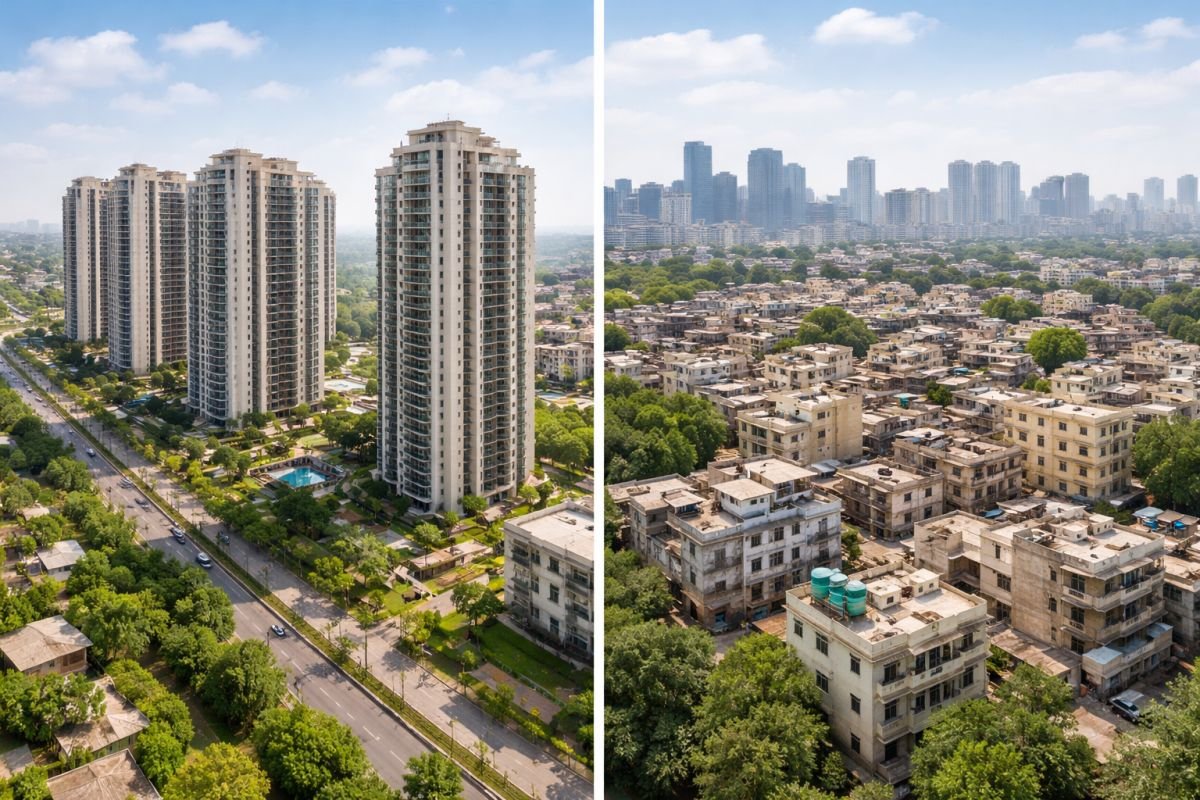
Many newer projects, especially in sectors like 76–79 and parts of New Gurgaon, are designed with basic Vastu considerations built in. It’s easier to find units that don’t create doubt.
Older buildings often weren’t planned with this in mind, and certain layouts feel less aligned with current buyer expectations.
As a result, resale movement tends to differ.
Newer, well-aligned units usually move more smoothly.
Older ones can still sell—but often require sharper pricing or more time.
How Smart Buyers Use Vastu for Resale Advantage
Experienced buyers don’t aim for perfect Vastu.
They focus on avoiding obvious issues.
That usually means:
- Choosing layouts that feel broadly comfortable
- Avoid placements that raise immediate concerns
- And keeping the layout practical overall
It’s a small filter during purchase—but it keeps future options flexible.
Final Verdict: Does Vastu Improve Resale Value?
In Gurgaon’s market, Vastu doesn’t directly push prices up.
What it does is reduce doubt.
Homes that feel easy to accept tend to attract a wider set of buyers, move through negotiations with less pushback, and face fewer delays along the way.
And when resale depends heavily on timing and buyer confidence, that difference becomes hard to ignore.
FAQs
Do Vastu-compliant homes actually sell faster in Gurgaon?
In many situations, yes. When a layout feels easy to accept, buyers tend to move forward with fewer doubts, which naturally speeds things up.
Is perfect Vastu necessary for resale?
Not really. Most buyers aren’t looking for perfection—they just want to avoid obvious issues that could create problems later.
Do buyers reject properties purely because of Vastu?
Some do. Others won’t say it outright, but it shows up in slower decisions or tougher negotiations.
Does Vastu increase the price of a property?
It usually doesn’t increase the base price, but it often makes it easier to maintain your expected value during discussions.
Should investors pay attention to Vastu?
Yes, especially if resale is part of the plan. It helps keep the property easier to move when the time comes.




Join The Discussion