
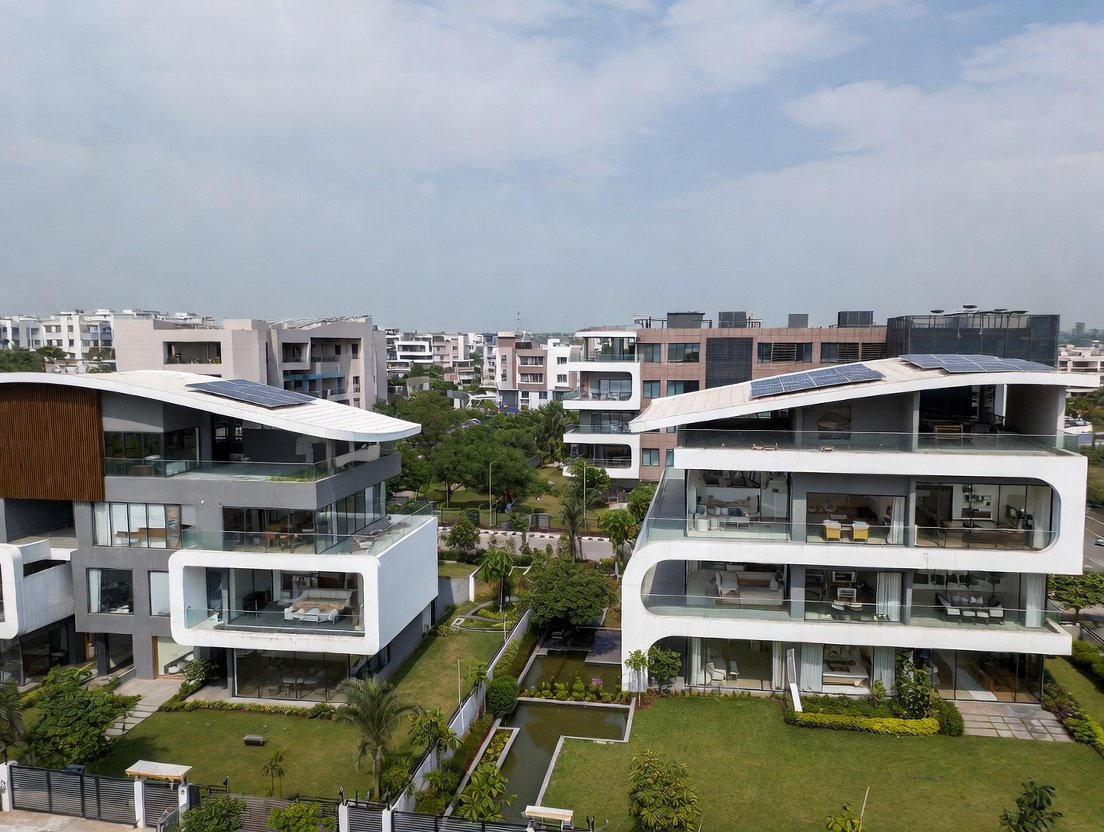
Spend a few minutes at any new project launch in Gurgaon and you’ll hear the usual pitch—smart lighting, app control, voice assistants, automation for everything.
It sounds impressive. It usually does at first.
But once you actually step inside a sample flat and start using things—tapping switches, opening apps, asking basic questions—the excitement doesn’t always hold the same way.
Sometimes it does. Sometimes it drops off quicker than expected.
And that’s where most buyers start thinking a little more seriously:
Is this actually useful… or just something that looks good during a visit?
Why Smart Homes Spread So Fast in Gurgaon

A lot of buyers here are already used to convenience. Work, travel, daily life—everything is a bit fast-paced.
So when automation started showing up in homes, it didn’t feel new or strange. It felt like a natural extension.
Earlier it was simple—video door phones, maybe access control.
Now it’s everything bundled together.
Although, if you visit a few projects in one day, you start noticing something small but important.
The word “smart” gets stretched quite a bit.
What Actually Happens When Buyers Walk Through Projects
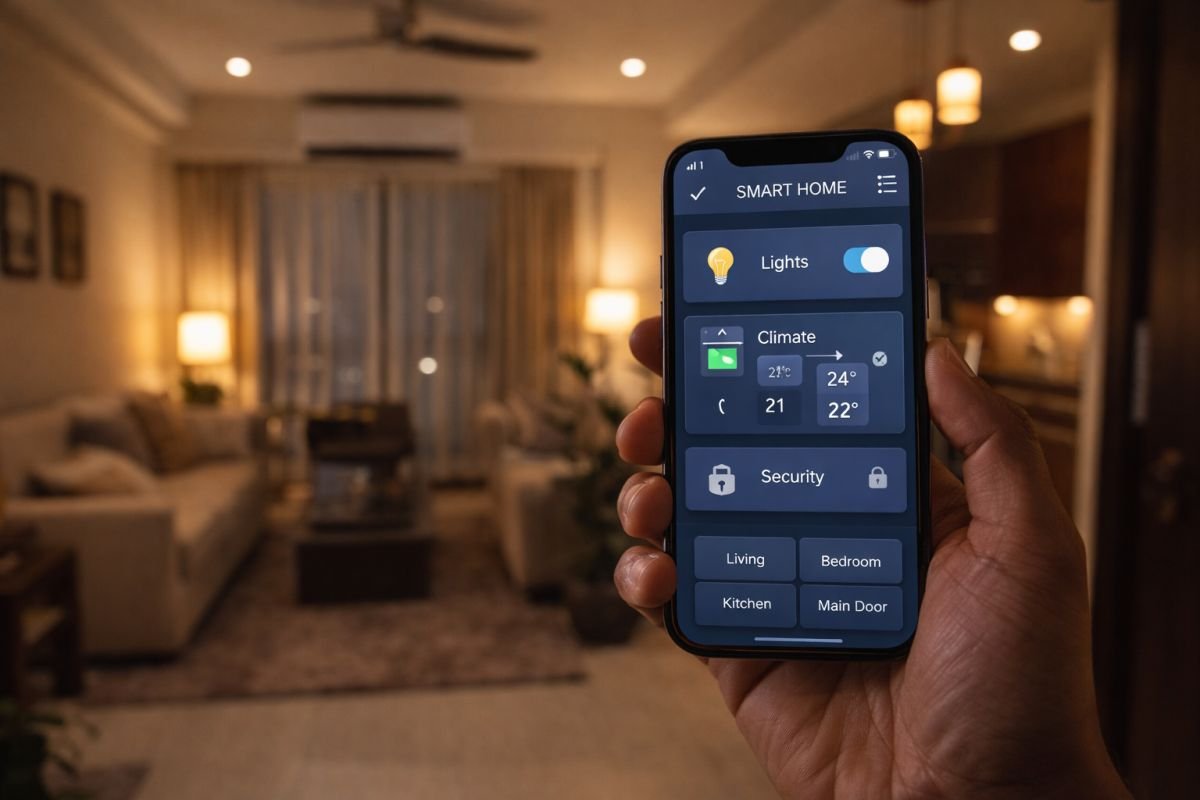
If you stand around long enough during site visits, you’ll see a pattern.
People don’t just listen anymore. They try things out.
Open the app.
Tap a few controls.
Pause for a second…
Then comes a question, usually simple—“Aur kya kar sakta hai?”
And sometimes there isn’t much beyond that.
You can actually see the shift. Not dramatic. Just a slight drop in interest.
Because the difference becomes obvious in that moment.
Some homes feel like the system was planned properly.
Others feel like features were added because they had to be.
Do Buyers End Up Paying More?
Yes. But not blindly.
In premium projects, it’s almost expected now. People don’t even break it down feature by feature—it’s just part of the overall offering.
Move toward mid-segment markets though, and conversations get more practical.
Buyers start calculating.
They ask about cost, then pause.
Sometimes they circle back to it again later.
You’ll even hear things like:
“Isko hata sakte hain kya?”
Not very often, but often enough to notice.
If something doesn’t feel necessary, people don’t push their budget for it.
What Actually Gets a Yes from Buyers
It’s not really about how many things are automated.
Most people won’t use everything anyway.
A few things consistently matter more—
- Security. If the system genuinely makes the home feel safer, people pay attention.
- Everyday convenience… but only the parts that don’t require effort to understand
- Long-term practicality—sometimes this clicks immediately, sometimes only after someone explains it properly
And then there are features that look great during demos but quietly disappear from conversations later.
Where the Pricing Starts Feeling… Off
You notice this more when comparing projects side by side.
In some places, automation feels built-in—like it was always meant to be there.
In others, it feels slightly added on. Hard to explain, but you can sense it after a few visits.
Buyers don’t always say it directly.
But they slow down. Ask more questions. Or just move on.
The “smart” tag doesn’t always help. Sometimes it just makes people more cautious.
Resale — Not Always a Straight Line
There’s this idea that smart homes will automatically have an advantage later.
It does help in some cases. First impressions, especially.
But it doesn’t carry everything.
If the system feels outdated—or worse, complicated—buyers start thinking twice.
Questions come up, small ones at first:
- Can this be updated easily?
- Who handles it if something stops working?
If those answers aren’t clear, the benefit kind of… weakens. Not immediately, but over time.
Rental Side — Small Edge, Nothing Dramatic
In rental-heavy areas, especially near offices, smart features do help.
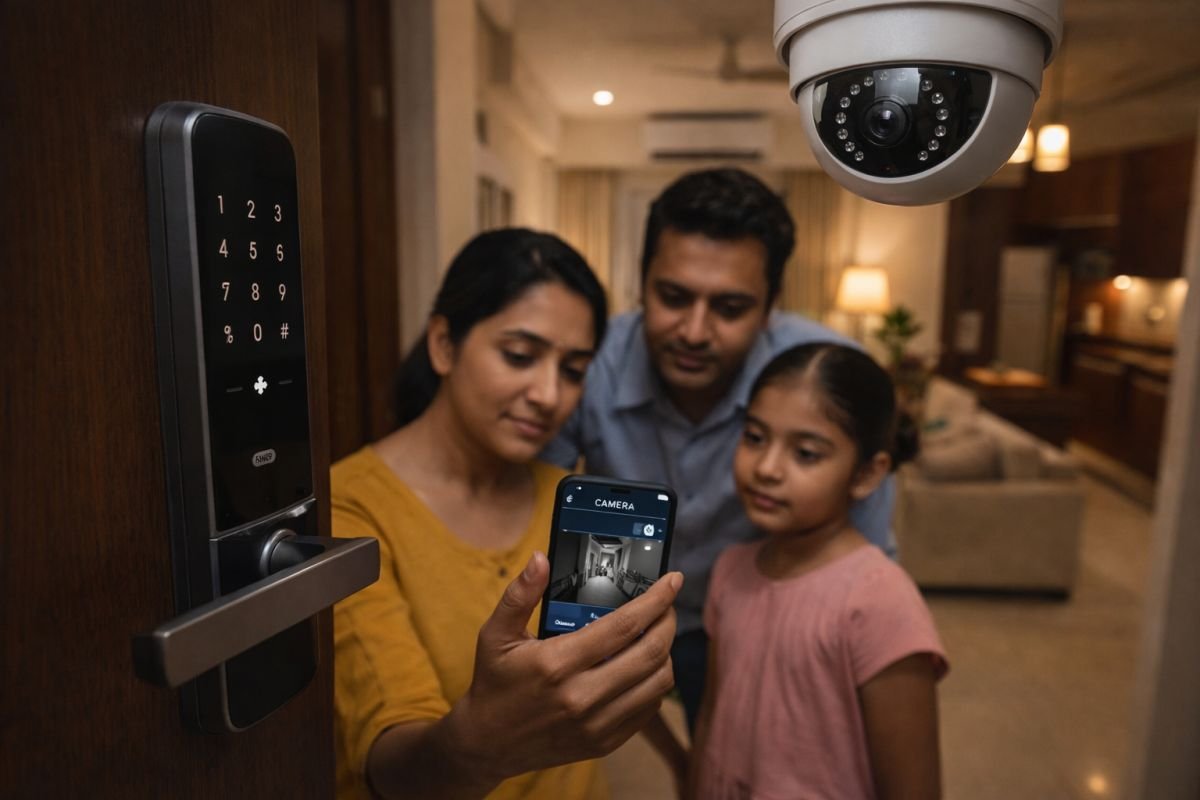
Not in a flashy way.
More in small, practical ways:
- entry feels smoother
- basic monitoring is easier
- fewer tiny daily annoyances (this one matters more than people expect)
It can help get tenants faster. Sometimes rent goes slightly higher.
But honestly—if location isn’t strong, none of this really changes the outcome much.
Things That Only Become Clear After Moving In
This part usually doesn’t come up during booking.

Technology doesn’t stay exciting forever.
After a while, it just becomes part of the house—or sometimes something you stop using completely.
Then there’s dependency.
These systems need:
- internet that doesn’t keep dropping
- power backup that actually works
- support that responds without chasing too much
If any one of these slips, things start feeling different.
Also—privacy. Not everyone thinks about it in the beginning, but later it comes up in conversations.
Not a deal-breaker for most. Just something people become aware of.
How Some Buyers Approach It Differently
Some people go all in.
Others take a step back and think it through a bit more.
The second group usually asks more questions during visits. Not complicated ones—just practical.
They skip features they know they won’t use.
Focus on things that will still matter a few years down the line.
Usually it comes down to:
- safety
- whether it’s easy to live with
- and… whether it will still make sense later on
And sometimes they miss a few things too. That happens.
Where This Is Heading
Smart features aren’t really “extra” anymore in Gurgaon’s top segment.
They’re becoming part of what people expect.
So the conversation is shifting a bit.
It’s less about whether a home is smart…
More about whether it’s been done properly.
Because just having features isn’t enough anymore.
Final Thought

Yes, people do pay more for smart homes here.
But not just because it sounds good.
Only when it fits into everyday life without effort.
Everything else… tends to lose importance after a while.
Or just becomes background.
FAQs (More Like Real Questions People Ask)
Are smart homes always more expensive in Gurgaon?
Not really. Some builders include basic stuff without pushing the price too much. But when the system gets more advanced—or branded heavily—that’s when you start seeing the jump. And even then, not everyone feels it’s justified.
Do they actually help reduce electricity bills?
They can. But honestly, this depends more on how the home is used. If automation is set up properly, sure—you’ll notice a difference. Otherwise… it’s just there.
Maintenance ka scene kaisa hota hai?
This is where things can get annoying sometimes. If support is solid, no issue. If not, even small things can take longer than they should.
Resale mein help karta hai kya?
Thoda, maybe. It helps with first impressions. But if the property itself has issues—location, layout—then smart features don’t really change that.



Join The Discussion