

Among India’s Tier-1 property markets, Gurugram stands out as the most globally integrated corporate-driven housing ecosystem. Its economy is anchored by multinational firms, consulting giants, technology hubs, and expatriate tenants — making it structurally different from most Indian residential markets.
For Non-Resident Indians seeking a strategic property investment in India, Gurugram offers a rare combination of global tenant demand, infrastructure expansion, and premium housing supply. However, successful NRI investing here depends less on choosing a project and more on understanding market cycles, execution risk, and exit liquidity.
Gurugram’s Investment Outlook for NRIs in 2026
Research from firms such as Knight Frank India, JLL India and PropEquity consistently shows Gurugram leading NCR in:
- Premium residential launches
- Corporate leasing absorption
- Luxury housing demand
- Price growth in key corridors
Macro housing indicators tracked by the Reserve Bank of India also suggest sustained mortgage demand across India’s top employment centres — reinforcing Gurugram’s long-term residential investment outlook.
For NRIs, this translates into:
✔ Reliable rental absorption
✔ High resale liquidity in prime sectors
✔ Exposure to India’s corporate economy
✔ Portfolio diversification into INR assets
Why Gurugram Works Specifically for NRI Investors

NRIs evaluate property markets on four pillars: liquidity, rental stability, infrastructure growth, and regulatory clarity. Gurugram performs strongly across all of them.
Corporate-driven rental demand ensures a steady pool of senior executives, consultants, and expatriate tenants.
Airport and Delhi connectivity strengthens both lifestyle value and tenant demand.
Premium residential supply includes integrated townships and branded developments aligned with global living standards.
RERA-regulated launches reduce legal opacity and increase buyer protection.
Micro-Market Strategy: Where NRIs Should Focus
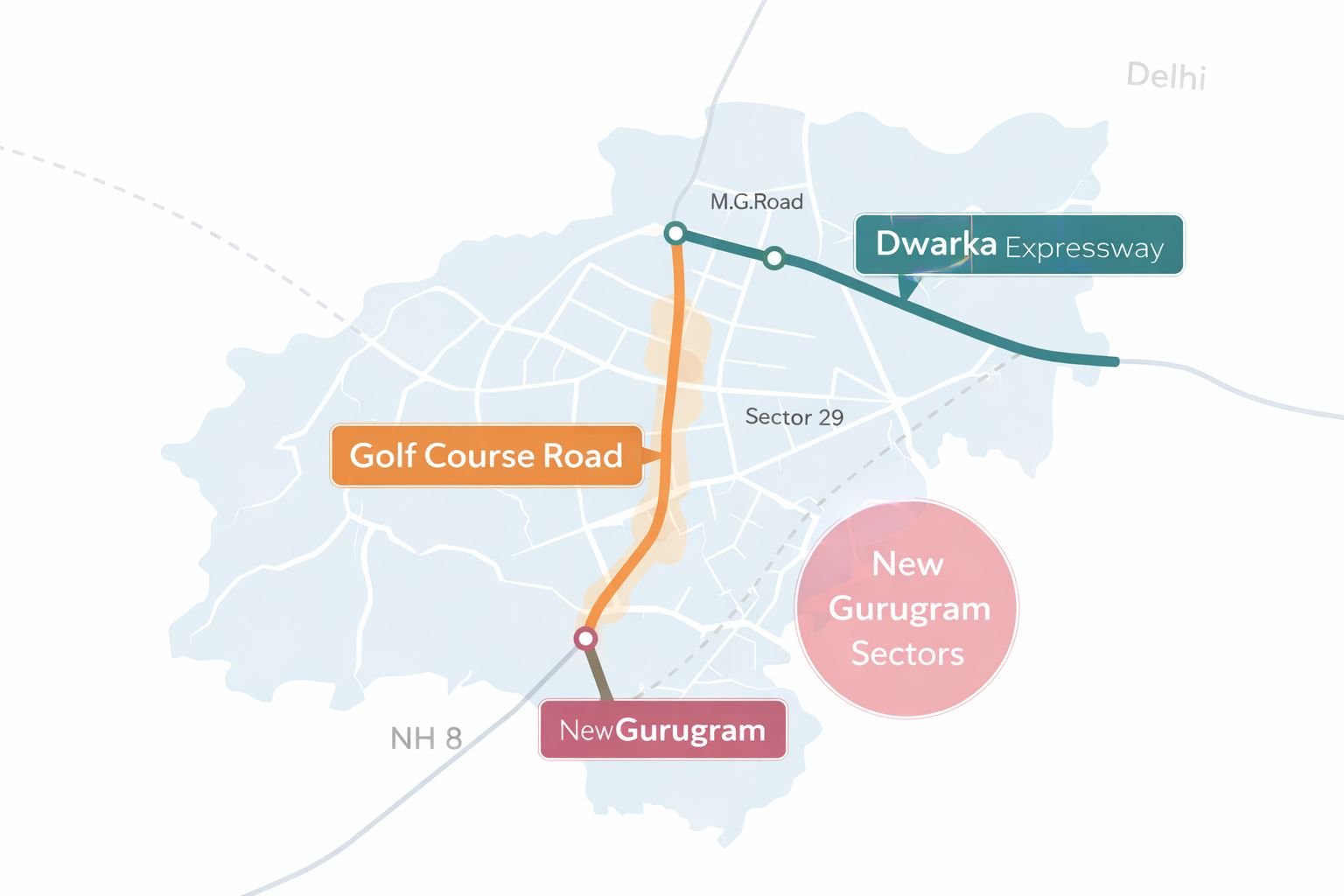
Choosing the right corridor in Gurugram determines rental stability, appreciation potential, and exit ease.
Golf Course Road

Gurugram’s most mature luxury belt, supported by corporate leasing and expatriate tenants.
Best suited for:
Low-risk investors prioritising liquidity and stable long-term growth.
Dwarka Expressway

Dwarka Expressway is The fastest-expanding corridor driven by airport connectivity and infrastructure rollout.
Best suited for:
NRIs targeting capital appreciation over a 5–7 year horizon.
New Gurugram Growth Sectors
Emerging sectors in New Gurugram offer lower entry prices and future infrastructure upside.
Best suited for:
Diversified portfolios and investors seeking higher yield potential.
Gurugram NRI Investment Comparison Table (2026)
| Corridor | Risk Level | Typical Rental Yield | Appreciation Outlook |
|---|---|---|---|
| Golf Course Road | Low | 2.5–3.2% | Stable premium growth driven by corporate demand |
| Dwarka Expressway | Medium | 3–3.8% | High upside over 5–7 years from infrastructure expansion |
| New Gurugram Sectors | Medium–High | 3.5–4.2% | Emerging zones with long-term metro and commercial spillover potential |
Rental Returns, Escalation & ROI Expectations

NRIs should treat property as a financial asset rather than a sentimental purchase.
Typical rental yields (2026)
- Luxury corridors: ~2.5–3.2%
- Mid-premium zones: ~3–3.8%
- Emerging sectors: ~3.5–4.2%
Rental growth trends
- Prime micro-markets typically see 5–7% annual rent escalation
- Furnished units can command 10–15% higher rent, especially from expatriates and corporate tenants
Tenant profiles
- Corporate expatriates
- Senior executives relocating to NCR
- Start-up founders and consultants
- International school families
Holding horizon guidance
- Luxury assets: 5–10 years
- Growth corridors: 6–8 years
- Entry sectors: 4–6 years
Prime corridors consistently outperform peripheral zones in resale liquidity — critical for NRIs planning future repatriation.
Supply Cycle Insight NRIs Should Understand
While luxury launches remain strong across Gurugram, investors should prioritise corridors with proven end-user absorption rather than speculative supply clusters. Markets driven by real occupiers tend to sustain rental demand and resale stability even during slower cycles.
Developer Risk Filter (Critical for Overseas Buyers)
Execution risk often matters more than location risk for NRIs buying remotely.
Prefer developers with strong delivery history, financial stability, and ready-to-move or near-completion inventory where possible. This reduces construction delays, improves rental timelines, and lowers regulatory risk.
Legal & Compliance Rules Every NRI Must Know
FEMA regulations allow NRIs to purchase residential or commercial property in India without prior approval if transactions occur through regulated banking channels.
Permitted payment routes
- NRE accounts
- NRO accounts
- Direct inward remittance
All payments must be in Indian rupees.
Tax on sale
- Higher TDS applies for NRIs
- Capital gains depend on holding period
- Indexation benefits apply to long-term holdings
Repatriation
Sale proceeds can generally be repatriated within permitted limits subject to tax compliance and documentation.
Inheritance planning
NRIs should structure joint ownership, nominees, and wills carefully to avoid future transfer complications.
Common Investment Mistakes NRIs Should Avoid
- Buying purely based on brand marketing without verifying execution track record
- Ignoring maintenance costs, vacancy periods, and property-management fees
- Making emotional purchases instead of evaluating tenant demand
- Selecting peripheral sectors with weak resale markets
- Neglecting tax and repatriation planning at the time of purchase
Final Advisory Perspective
For NRIs in 2026, Gurugram represents one of India’s most structured residential investment ecosystems. Supported by corporate employment, infrastructure expansion, and premium housing demand, the city offers a combination of rental stability and long-term appreciation rarely matched in other Indian markets.
A successful NRI investment here depends on three decisions:
✔ Selecting the right micro-market
✔ Choosing financially stable developers
✔ Planning the investment horizon and exit strategy in advance
Approached strategically, Gurugram property can function not just as a home in India, but as a globally aligned, income-generating asset.
Frequently Asked Questions About NRI Property Investment in Gurugram
Is Gurugram a good city for NRIs to invest in property in 2026?
Yes, Gurugram remains one of India’s strongest NRI investment destinations because it combines multinational employment demand, modern infrastructure, and strong rental absorption from expatriates and corporate tenants. Unlike purely speculative markets, Gurugram’s property performance is closely tied to office growth and global hiring trends, which provides NRIs both rental stability and resale liquidity over a medium- to long-term holding period.
Which areas in Gurugram are safest for NRI property investment right now?
Prime corridors such as Golf Course Road, Golf Course Extension Road, and selected Dwarka Expressway sectors are generally considered safer for NRI buyers because they already have corporate leasing demand, completed infrastructure, and stronger resale depth. Investors should prioritise projects with proven occupancy and delivery history rather than newly launched speculative zones where supply risk can impact price growth.
What rental returns can NRIs realistically expect from Gurugram property?
Most residential investments in Gurugram generate rental yields between roughly 3% and 4.5% annually, depending on location, configuration, and furnishing quality. Premium corporate-favoured micro-markets tend to show steadier tenant demand and can also benefit from annual rent escalations of about 5–7%, with furnished apartments often commanding a noticeable premium from expatriate tenants.
Can NRIs freely sell property in India and take the money back abroad?
NRIs are allowed to sell property in India, but repatriating funds overseas depends on compliance with FEMA rules, tax deductions, and documentation of the original purchase source. In most cases, sale proceeds can be repatriated up to permitted limits after taxes and paperwork are cleared, which is why NRIs are advised to structure their purchase funding and bank channels correctly from the beginning.
What is the biggest mistake NRIs make when buying property in Gurugram?
The most common mistake is choosing projects based purely on launch hype or price appreciation promises rather than execution track record and real demand drivers. NRIs should focus on completed or near-completion projects by financially stable developers, because construction delays, legal disputes, and poor absorption rates create far greater financial risk than short-term price fluctuations.




Join The Discussion