
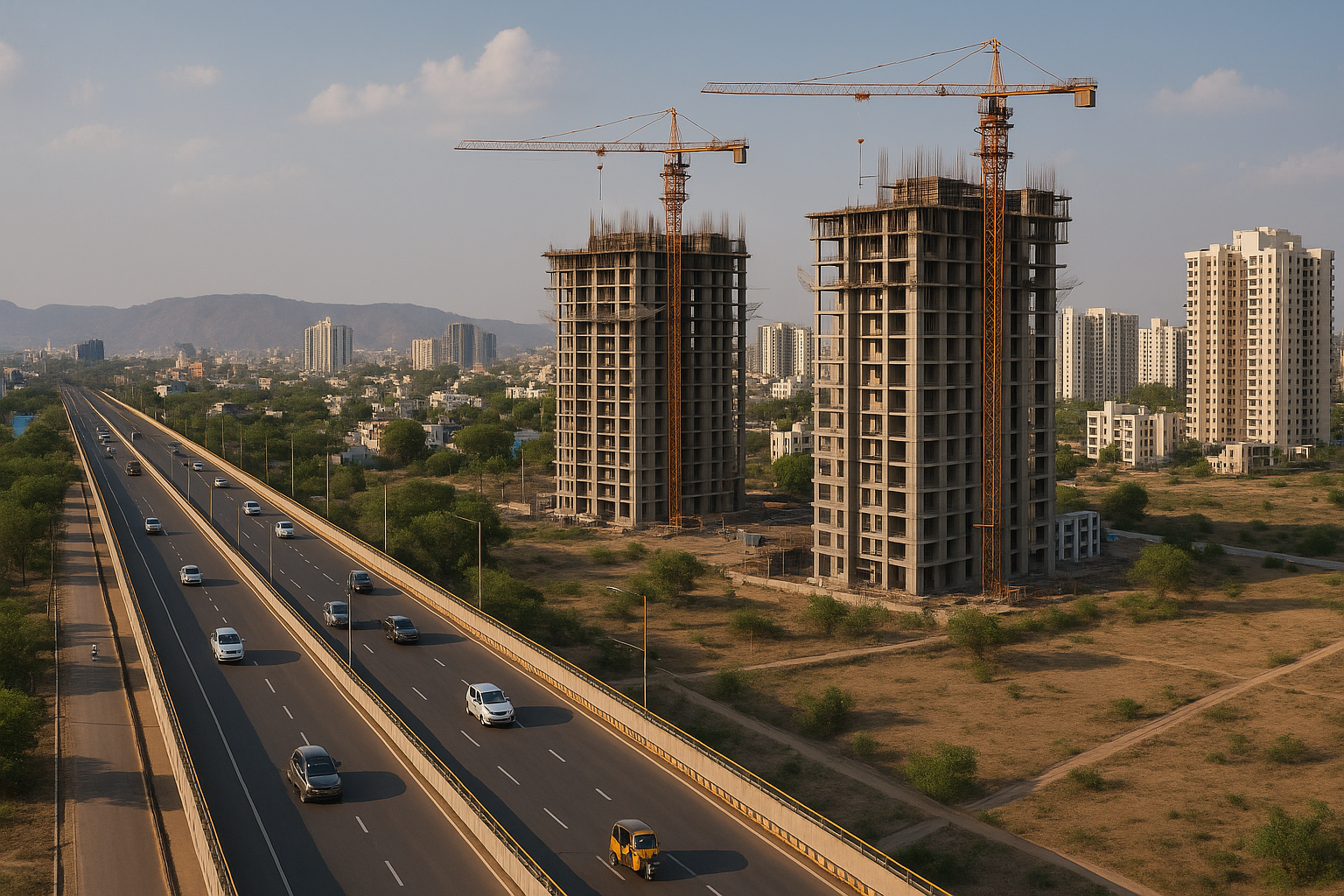
Finding an undervalued property location before prices rise is the single biggest edge a real estate investor can have. Most buyers enter the market after price momentum is already visible — driven by headlines, social media narratives, or late-stage broker enthusiasm. By then, upside narrows and risk expands.
The real opportunity lies in identifying value early — when rental demand is forming, infrastructure execution is visible, absorption is steady, and pricing has not yet revised.
In 2026, investors searching for the best sectors in Gurgaon for long-term investment are no longer chasing hype corridors. They are studying early-stage demand signals before retail-driven price acceleration begins.
This guide explains how to identify undervalued property locations in Gurgaon using corridor intelligence, rental data, supply analysis, and structured investment logic.
What “Undervalued” Really Means in Gurgaon Real Estate
Undervalued does not mean cheap.
In Gurgaon, a location is undervalued when capital values lag behind improving fundamentals such as:
- Infrastructure execution
- Employment growth
- Rental strengthening
- Developer entry
- Absorption stability
Some locations remain inexpensive for years because demand never materializes. True undervaluation exists only when pricing trails real economic drivers.
In fast-evolving corridors of Gurgaon, that window can close quickly.
Why Most Investors Miss Emerging Sectors in Gurgaon 2026
Most buyers rely on:
- Portal price trends
- Social media discussions
- Broker-led narratives
- Historical appreciation charts
By the time a corridor becomes widely discussed as “the next big opportunity,” early appreciation has already occurred.
Smart capital typically enters emerging sectors in Gurgaon 12–36 months before retail momentum.
Step 1: Follow Job Creation, Not Just Infrastructure Announcements
Employment concentration is the strongest driver of real estate demand.
In Gurgaon, undervaluation typically forms near:
- Expanding office clusters
- Commercial spillover zones
- Connectivity corridors linking business districts
Emerging pockets along Dwarka Expressway and Southern Peripheral Road (SPR) demonstrated this pattern — rental movement began strengthening before capital prices revised upward.
Infrastructure without job absorption often creates stagnation.
Jobs without sufficient housing supply create appreciation pressure.
Step 2: Track Rental Demand Before Capital Values Move
Rental movement is often the earliest measurable signal of undervaluation.
In multiple Gurgaon micro-markets, rental strengthening preceded visible price acceleration. When vacancy compresses and rents rise while sale prices remain stable, early-stage demand is forming.
For example, rental demand in sectors like 37D and 102 strengthened as connectivity improved, well before major retail price revision cycles.
A practical analytical benchmark:In mature corridors such as Golf Course Extension Road, rental yields often compress below 2.5% due to premium pricing stability.
When emerging sectors begin showing yield strengthening toward 3–3.5% while capital values remain muted, it signals early demand formation.
Rental growth precedes capital growth in healthy investment cycles.
Step 3: Identify Infrastructure That Is Actually Under Execution
One of the biggest investor mistakes is buying based on announced projects.
Undervaluation windows typically open when infrastructure shifts from announcement to visible execution.
In Gurgaon, this includes:
- Expressway operationalization stages
- Metro expansion progress
- Commercial towers nearing completion
- Road connectivity integration
When infrastructure becomes physically evident, perception changes. Prices adjust afterward.
Step 4: Compare Price Gaps Between Adjacent Micro-Markets
Undervaluation is always relative.
If two Gurgaon sectors offer:
- Comparable connectivity
- Similar developer participation
- Overlapping tenant demand
…but one trades significantly lower, price disparity may indicate early-stage undervaluation.
This has historically been observed between stabilized corridors and adjacent developing sectors.
Undervaluation Is Relative: Mature vs Emerging Corridor Comparison
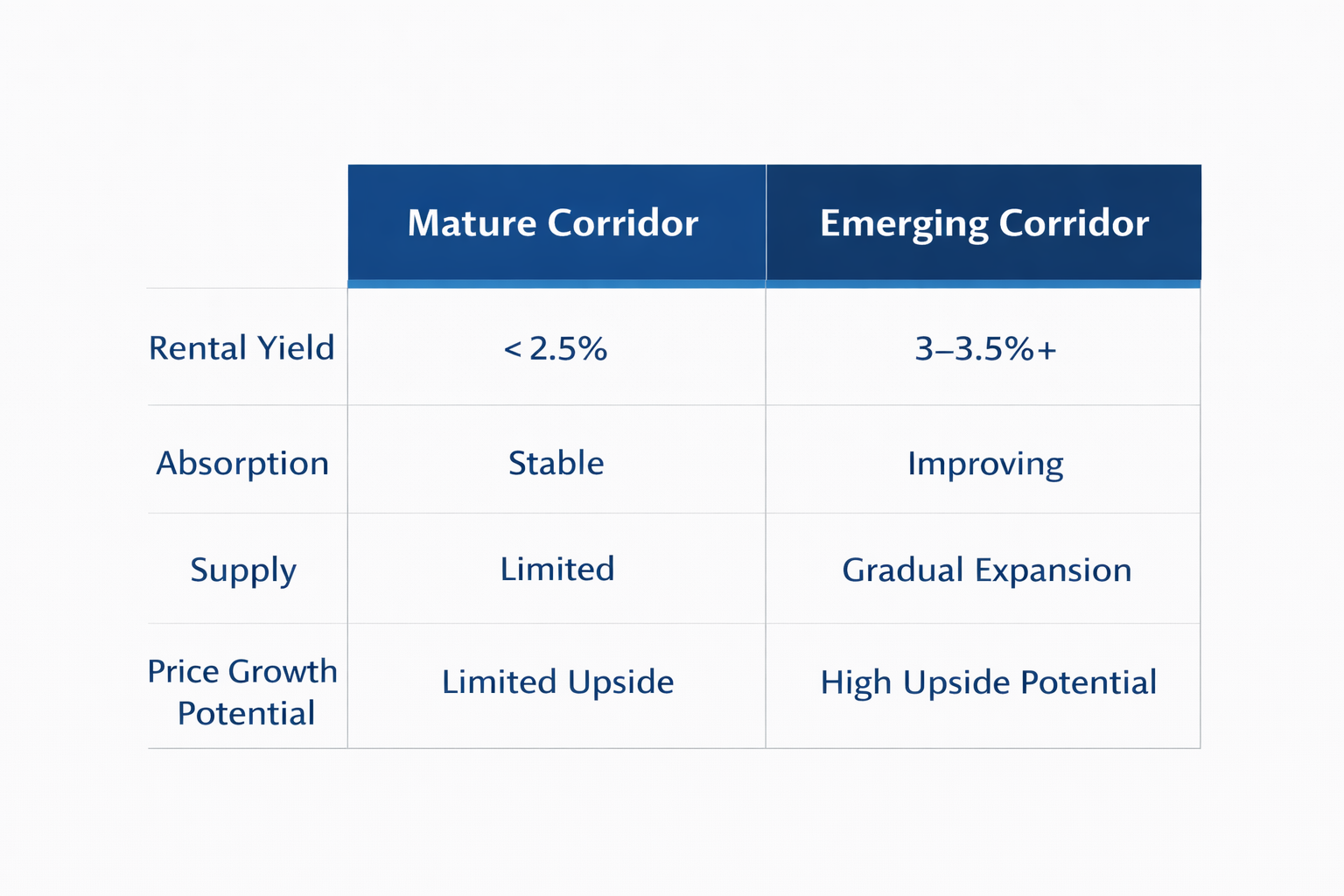
Established corridors such as Golf Course Extension Road typically reflect:
- Stabilized rental demand
- Yield compression (often sub-2.5%)
- Limited inventory
- Premium capital pricing
Emerging sectors along SPR or Dwarka Expressway may show:
- Strengthening rental absorption
- Yield expansion toward 3–3.5%
- Early developer entry
- Gradual infrastructure completion
Undervaluation is not about low price.
It is about relative growth runway versus mature benchmarks.
Step 5: Watch Developer Behavior, Not Advertising
Institutional capital precedes retail marketing.
When reputed developers begin phased launches in sectors such as 33 or 63A before mass retail participation, it often signals internal confidence in future absorption strength.
Key signals include:
- Controlled inventory release
- Land aggregation activity
- Phased development planning
- Gradual price escalation rather than discounting
Advertising follows momentum.
Developer capital anticipates it.
Step 6: Study Absorption Rates, Not Just Launch Prices
Quoted launch prices reveal little without absorption context.
If units in an emerging Gurgaon sector sell steadily without aggressive incentives, organic demand is forming.
Absorption is often the bridge between rental strengthening and capital appreciation.
Early investors typically enter during steady absorption — not during aggressive price hikes.
Step 7: Evaluate Supply Discipline and HRERA Clustering

Supply dynamics determine whether undervaluation converts into appreciation.
In certain pockets of Dwarka Expressway, large contiguous land parcels have allowed bulk project launches. When multiple projects receive clustered HRERA approvals simultaneously, temporary oversupply risk increases.
In contrast, sectors where developers adopt phased release strategies maintain stronger pricing discipline and absorption balance.
Undervalued investing requires supply awareness — not just growth optimism.
Step 8: Observe Lifestyle Migration Patterns
Modern Gurgaon buyers prioritize:
- Commute efficiency
- Gated ecosystems
- Open spaces
- Integrated amenities
- Proximity to commercial clusters
When professionals and families begin relocating from congested zones toward improving corridors, sustainable demand builds.
Lifestyle migration supports long-term appreciation more reliably than speculative interest.
Step 9: Avoid the “Too Early” Trap
Being early is powerful. Being premature is risky.
If a sector shows:
- No rental traction
- No visible infrastructure progress
- No developer confidence
- No absorption momentum
…it may remain stagnant for years.
Undervalued investing requires entering at the right stage of the cycle — not simply at a low price.
Understanding the Gurgaon Appreciation Cycle
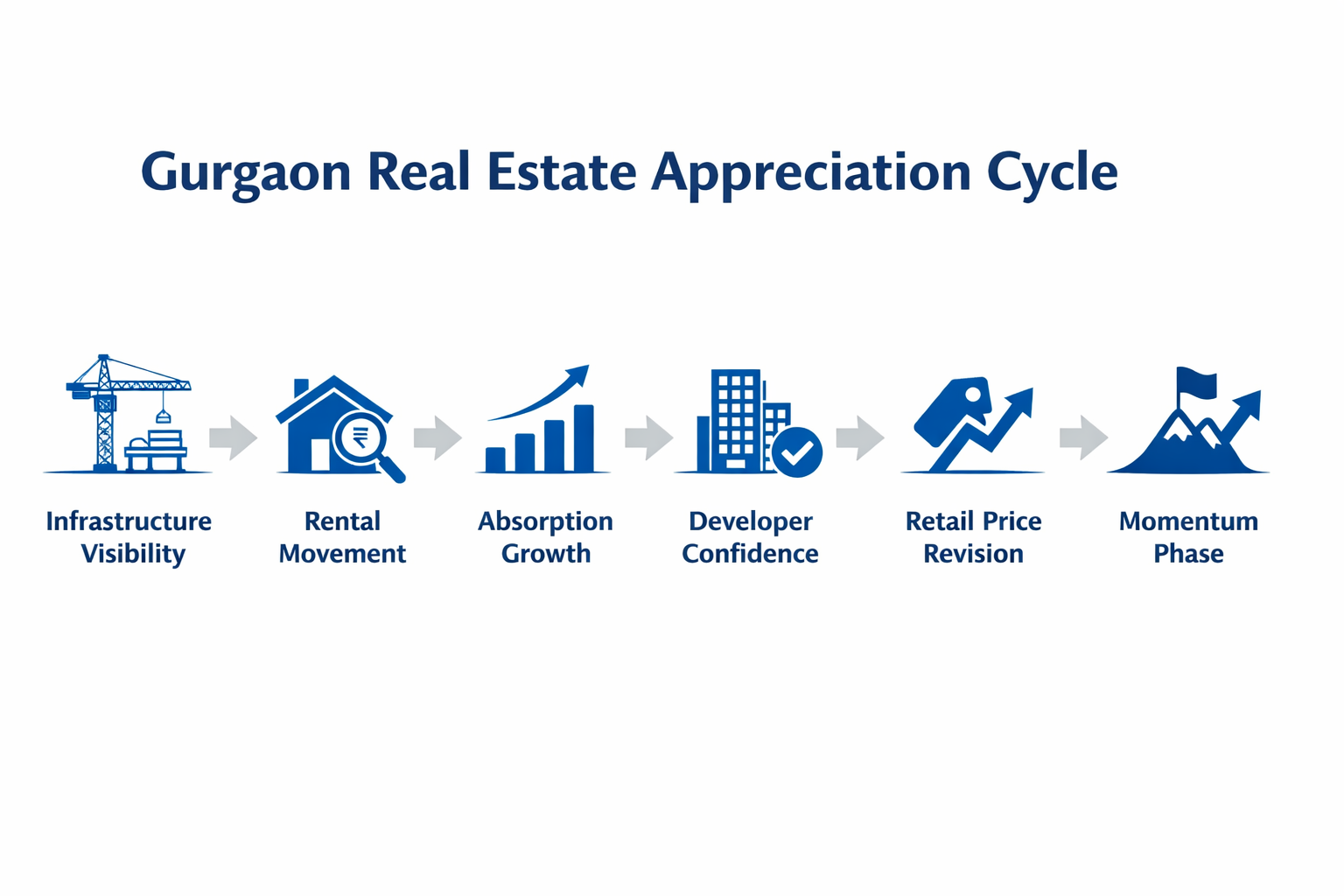
Successful Gurgaon corridors typically follow a sequential cycle:
- Infrastructure visibility
- Initial rental movement
- Steady absorption growth
- Branded developer confidence
- Retail-driven price revision
- Momentum phase
Strategic investors enter between stages 2 and 3 — before retail frenzy begins.
This is where high ROI property opportunities in Gurgaon historically emerged.
Real-World Example: Early Entry Along Dwarka Expressway
Between 2019 and 2022, early investors entered sectors such as 37D and 102 along Dwarka Expressway when:
- Infrastructure was visible but not fully operational
- Rental movement had begun
- Absorption remained steady
- Branded developers launched phased projects
They entered before:
- Full commercial stabilization
- Retail-driven price revision cycles
- Momentum-phase speculation
Appreciation followed as infrastructure execution, absorption, and perception aligned.
This pattern reflects structured cycle investing — not speculation.
Undervalued Investing Requires Patience and Liquidity Discipline
Emerging sectors may take 3–5 years to unlock full potential.
A disciplined Gurgaon investment strategy in 2026 requires:
- Longer holding horizons
- Controlled leverage
- Rental sustainability during infrastructure completion
- Liquidity buffers
Undervalued investing rewards patience — not impulsive entry.
The AssuredGains Undervaluation Framework
At AssuredGains, undervaluation is evaluated using a four-factor framework:
- Rental Momentum
- Infrastructure Execution
- Absorption Strength
- Supply Discipline
When all four align, emerging sectors in Gurgaon 2026 present structured long-term investment opportunities.
Final Thoughts: Value Is Found, Not Announced
Undervalued property locations in Gurgaon rarely announce themselves.
They exist quietly in the gap between infrastructure execution and retail recognition.
Investors who track rental trends, developer entry, supply discipline, and cycle positioning consistently identify the next growth corridor before price acceleration becomes obvious.
That is where durable wealth is created.




Join The Discussion