

Gurgaon has evolved into North India’s most structured rental market. However, rental returns vary sharply by sector, ticket size, and tenant profile. Investors who rely on city-wide averages often miss stronger yield pockets hidden within micro-markets.
This 2026 guide breaks down sector-wise rental yield, 2 BHK rent trends, ROI expectations, and emerging rental corridors — with data clarity and investor positioning.
Quick Answer (2026)
The highest rental yield sectors in Gurgaon currently include Sector 82, Sector 89, Sector 67, and Sector 37D, offering approximately 3.5–4.5% gross rental returns, depending on entry price and unit configuration.
Premium zones like Golf Course Road offer stability but typically lower percentage yields (~2.5–3%).
What Is the Average Rental Yield in Gurgaon in 2026?
In 2026, Gurgaon’s rental yield landscape looks like this:
- City-wide average gross rental yield: 3–4%
- Premium corridors (Golf Course Road): 2.5–3%
- Mid-segment sectors (65, 67, 63A): 3–3.8%
- High-yield sectors (82, 89): 3.8–4.5%
- Select builder floors: Can reach 4–5% in strong demand pockets
Investors searching for “rental yield in Gurgaon 2026” or “Gurgaon rental return percentage” should evaluate micro-market pricing rather than city averages.
Gross vs Net Rental Yield: What Investors Must Understand
Gross yield reflects annual rent divided by property cost.
Net yield accounts for:
- Maintenance charges (can reduce yield by 0.5–1%)
- Property tax
- Brokerage rotation during tenant change
- Vacancy buffer (typically 1 month every 12–18 months)
For example, a 4% gross yield may translate into 3.2–3.5% net yield after operational adjustments.
Sophisticated investors evaluating actual rental ROI in Gurgaon should always calculate net return.
Gurgaon Rental Market Map (2026 Overview)
Premium Stability Corridor
Golf Course Road: High Rent, Lower Yield %
2026 Snapshot:
- 2 BHK rent: ₹70,000–₹1.1 lakh
- 3 BHK rent: ₹1.1–1.8 lakh
- Entry price: ₹3–5 Cr
- Gross yield: ~2.5–3%
Demand drivers:
- Senior executives
- Expat tenants
- Rapid Metro access
- Corporate HQ proximity
1 BHK supply is limited; 3 BHK units dominate premium rental demand.
Best suited for: Capital preservation investors prioritizing tenant stability.
Golf Course Extension Road (GCER) Micro-Market

Rental Yield in Sector 67 Gurgaon (2026 Outlook)
GCER — especially Sectors 63A, 65, 66, and 67 — is heavily searched for:
- rental yield in Sector 67 Gurgaon
- 2 BHK rent in Sector 65 Gurgaon
- Sector 63A Gurgaon rental market
2026 Snapshot:
- 2 BHK rent: ₹45,000–₹70,000
- 3 BHK rent: ₹65,000–₹1 lakh
- Entry price: ₹1.8–2.8 Cr
- Gross yield: 3–3.8%
Balanced tenant mix:
- Mid-to-senior professionals
- Corporate families
- Long lease lock-ins
Best suited for: Long-term investors seeking yield + appreciation.
Employment-Led Rental Hub
DLF Cyber City & Udyog Vihar Belt
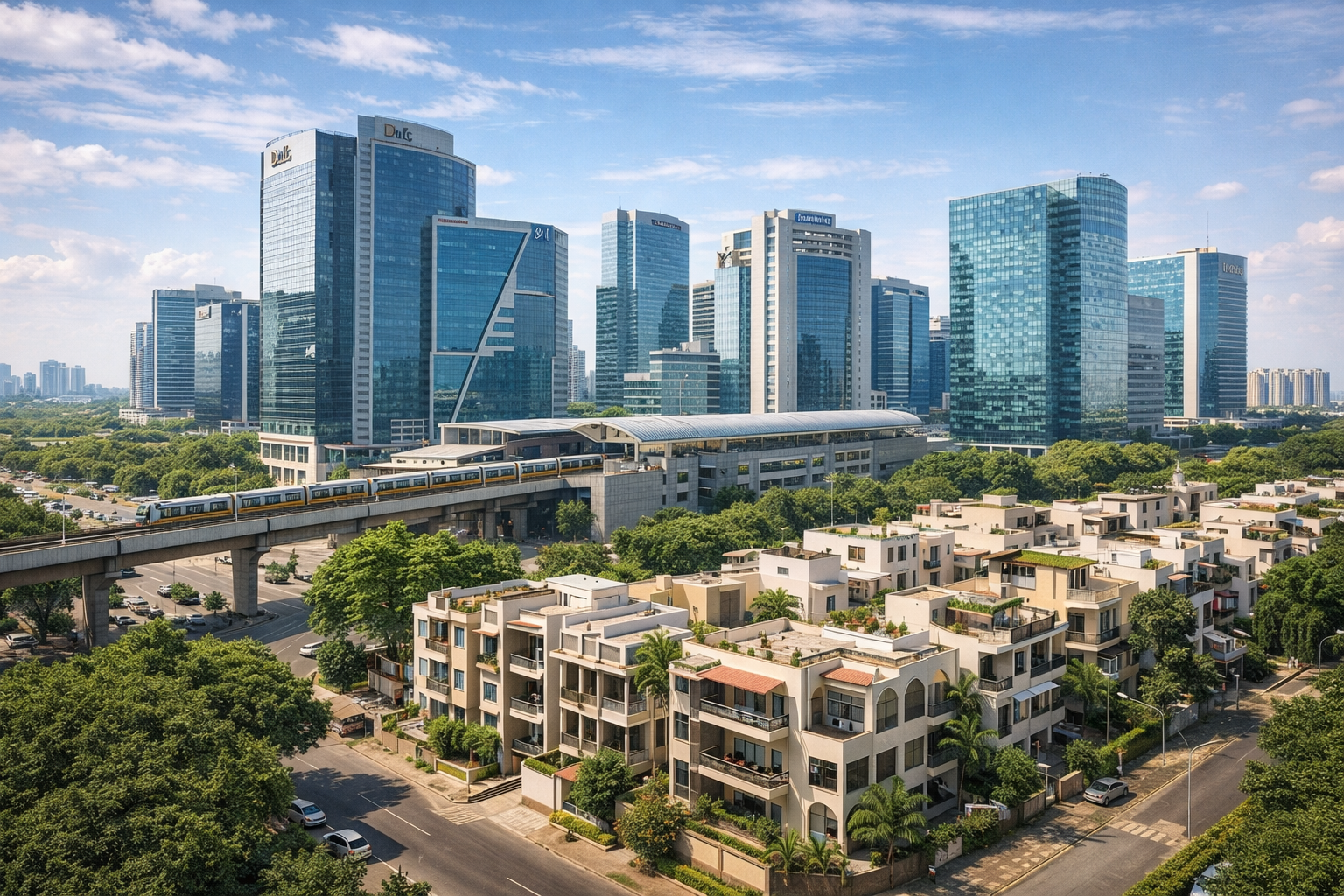
1 BHK demand is strongest here due to working professionals.
Typical:
- 1 BHK rent: ₹28,000–₹40,000
- 2 BHK rent: ₹40,000–₹65,000
- Builder floors perform strongly
- Near-zero vacancy near metro stations
Best suited for: Cash-flow-focused investors.
High-Yield Segment
Rental Income in Sector 82 & 89 Gurgaon

Search growth is visible for:
- rental income in Sector 82 Gurgaon
- rental return in Sector 89 Gurgaon
- 2 BHK rent in Sector 82 Gurgaon
2026 Snapshot:
- 2 BHK rent: ₹28,000–₹40,000
- 3 BHK rent: ₹40,000–₹55,000
- Entry price: ₹80L–1.2 Cr
- Rental yield: 3.8–4.5%
This belt currently offers one of the strongest yield ratios in Gurgaon.
Best suited for: Yield-focused conservative investors.
Emerging Rental Growth Belt
Sector 37D vs Sector 102: Rental Growth Comparison

Search queries rising:
- Sector 102 Gurgaon rent demand
- property rent in Sector 37D Gurgaon
2026 Snapshot:
- 2 BHK rent: ₹32,000–₹40,000
- Entry price: ₹1.1–1.5 Cr
- Yield: ~3–3.5%
Early-stage but improving occupancy.
Best suited for: Patient investors targeting yield expansion.
Best Gurgaon Sectors for NRI Rental Investment (2026)
NRIs typically prioritize:
- Low management hassle
- Quality tenant profile
- Predictable rental cycle
- Strong lease enforcement
Top NRI-friendly sectors:
- Sector 65 & 67 (stable corporate demand)
- Sector 82 & 89 (high yield, easy resale)
- Select Golf Course Road pockets (premium tenants)
Builder floors in Cyber City belt also work well for NRI investors targeting 1 BHK rental demand.
Sector-Wise Rental Yield Snapshot (2026)
| Sector | Avg 2 BHK Rent | Entry Price | Approx Yield |
|---|---|---|---|
| 65 | ₹50–65K | ₹2.2–2.8 Cr | ~3% |
| 67 | ₹45–60K | ₹1.8–2.4 Cr | ~3.5% |
| 82 | ₹30–38K | ₹90L–1.2 Cr | ~4% |
| 89 | ₹28–35K | ₹80L–1.1 Cr | ~4.2% |
| 37D | ₹32–40K | ₹1.1–1.5 Cr | ~3.5% |
Builder Floors vs High-Rise Apartments
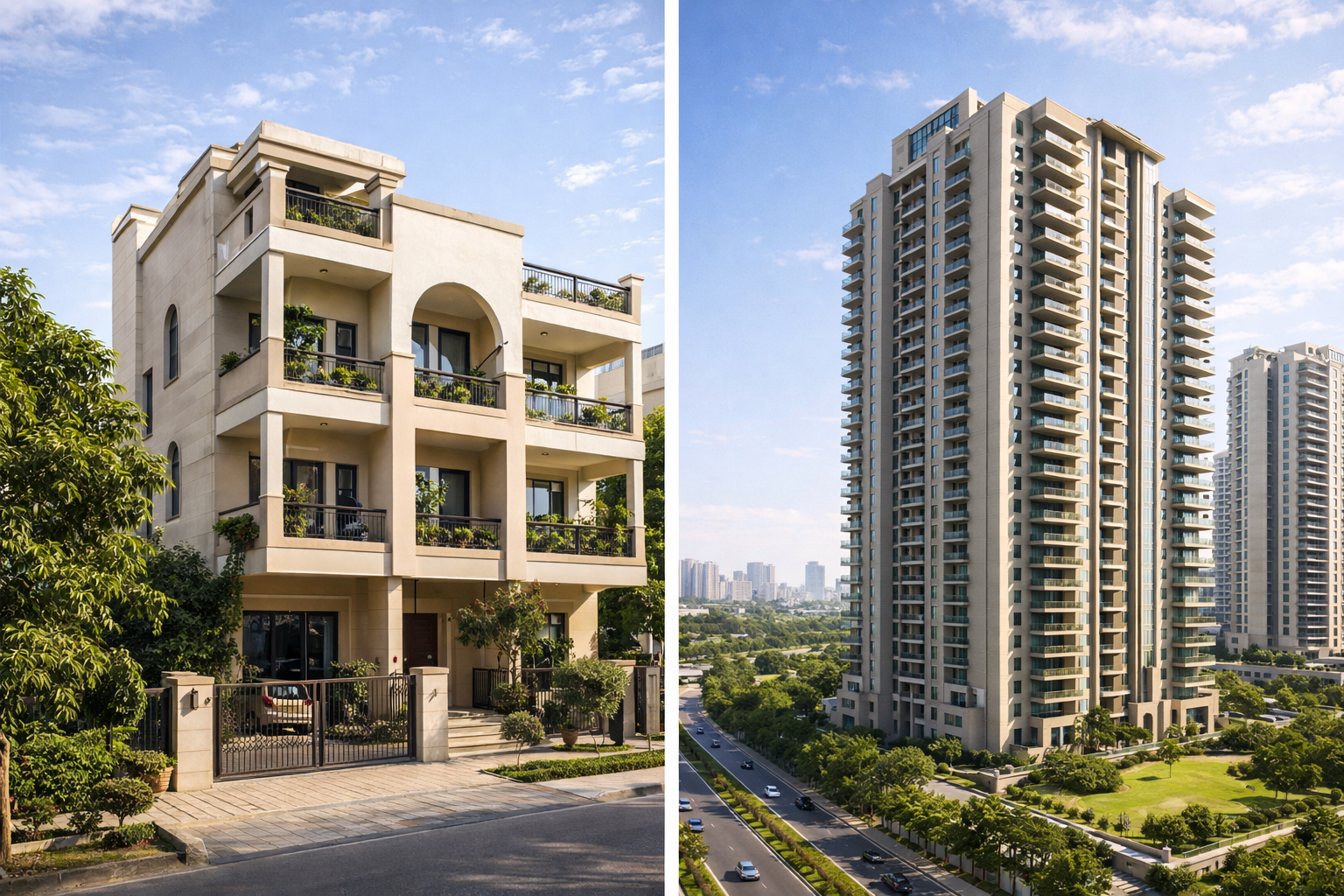
Builder floors:
- Higher yield %
- Lower capital cost
- Strong 1 BHK demand
High-rise apartments:
- Better amenities
- Strong 3 BHK corporate family demand
- Sometimes face oversupply pressure
Performance depends entirely on sector and tenant profile.
Final Verdict: Where Rental Income Is Strongest in Gurgaon (2026)
Premium corridors like Golf Course Road provide stability.
GCER (Sectors 65, 67, 63A) offers balanced returns.
High-yield sectors like 82 and 89 currently deliver stronger percentage returns relative to entry cost.
Emerging belts like 37D and 102 may see yield expansion as infrastructure matures.
Investors evaluating rental yield in Sector 67 Gurgaon or rental return in Sector 82 Gurgaon should compare entry price discipline with projected tenant demand before committing capital.
Frequently Asked Questions (FAQs) – Gurgaon Rental Income & Yield 2026
Which sector in Gurgaon gives the highest rental yield in 2026?
In 2026, sectors like 82 and 89 in New Gurgaon are currently delivering some of the strongest rental yield percentages, typically ranging between 3.8% and 4.5% depending on entry price and unit size. While premium areas such as Golf Course Road offer higher absolute monthly rent, mid-segment sectors often generate better percentage returns due to lower capital investment and steady tenant demand.
Is Sector 67 Gurgaon good for rental income?
Sector 67 Gurgaon is considered one of the more balanced rental markets in the city. With 2 BHK rents typically ranging between ₹45,000 and ₹60,000 per month and entry prices lower than Golf Course Road, gross rental yields can reach around 3–3.8%. The area benefits from proximity to Golf Course Extension Road offices and improving metro connectivity, making it attractive for corporate tenants.
What is the average rental yield in Gurgaon right now?
The average gross rental yield in Gurgaon in 2026 typically falls between 3% and 4% city-wide. Premium corridors may generate around 2.5–3%, while select mid-segment sectors such as 82, 89, and parts of 65–67 can deliver closer to 4% or slightly higher. Net yield may be lower after maintenance costs and vacancy adjustments are considered.
Does Dwarka Expressway offer good rental returns in Gurgaon?
Dwarka Expressway is still in the maturing phase as a rental market, but sectors such as 37D and 102 are witnessing increasing tenant movement as infrastructure improves. Current gross yields generally range between 3% and 3.5%. Investors entering at disciplined prices may benefit from rental growth as occupancy stabilizes over the next few years.
Is it better to buy in premium areas or high-yield sectors for rental income?
Premium areas like Golf Course Road offer higher monthly rent and stronger tenant profiles but usually lower yield percentages due to high entry prices. High-yield sectors such as 82 and 89 may provide stronger percentage returns but with moderate ticket sizes. The better choice depends on whether the investor prioritizes stable long-term capital preservation or higher rental ROI relative to investment cost.




Join The Discussion