
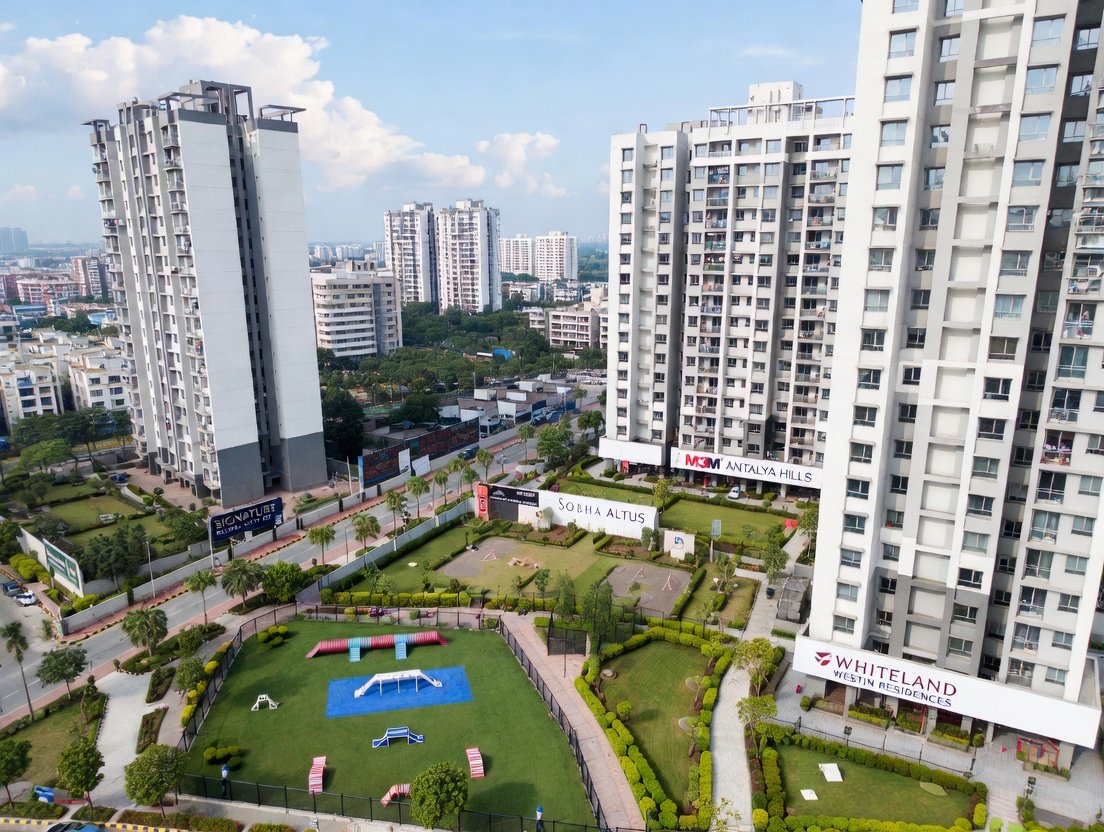
Gurgaon’s property market still runs on familiar filters — location, connectivity, and builder reputation. That part hasn’t changed.
What has changed is what comes after that. The second layer of questions buyers are now asking quietly, often mid-conversation, once the basics are done.
“Will this work if I have a pet?”
“Is the society actually comfortable with dogs?”
A few years ago, this was rarely part of the decision process. Today, it’s becoming a real filter — not just for end-users, but even for tenants and long-term investors evaluating livability.
If you’re still structuring your decision from scratch, start with a broader framework before narrowing down requirements. This home buying guide Gurgaon will help you think beyond surface-level comparisons.
Because pet-friendly living is not a feature you “add later.” It directly impacts how a home functions on a daily basis.
Why “Pet-Friendly” Is Often Misunderstood in Gurgaon
Most societies in Gurgaon technically allow pets. On paper, that sounds reassuring.

In reality, there’s a clear difference between permission and usability.
Many projects position themselves as pet-friendly simply because there are no formal restrictions. But once people move in, the day-to-day experience often depends on design gaps, informal rules, and how the resident community behaves over time.
You don’t notice this immediately. It shows up gradually — in small frictions that repeat.
Walking routes feel undefined. Open spaces are limited. Certain areas become unofficially restricted. Over time, what looked acceptable during the site visit starts to feel inconvenient in daily life.
This is why a growing number of buyers are now specifically looking for child-friendly housing projects in Gurgaon, because these developments tend to be better planned in terms of open spaces, safety, and usability — which indirectly supports pet-friendly living as well.
The overlap is not obvious during purchase, but becomes clear after occupancy.
Where Most Projects Fail: Design vs Daily Living
The biggest gap is not policy — it is design.

High-rise developments in Gurgaon are built for density efficiency, not always for everyday flexibility. Open spaces are often treated as residual areas rather than core planning elements.
As a result, pet movement becomes constrained. Walking routes are mostly paved, shaded areas are limited, and during extreme weather, even short outdoor time becomes uncomfortable.
Some societies try to fix this after possession by designating small zones or patches. While that helps to an extent, it rarely solves the underlying issue — the space was not designed for this use case to begin with.
In contrast, projects that are part of larger ecosystems — particularly those with better land planning — tend to perform more smoothly in daily usability. That’s where understanding integrated township lifestyle benefits becomes relevant, because these developments typically include more thoughtful open space planning and movement flow.
It’s not about being “pet-focused.” It’s about being lifestyle-ready.
The Real Factor: Society Behaviour and RWA Culture
Even more than design, the long-term experience is shaped by how the society functions after possession.

Once RWAs take over, informal systems begin to emerge. These are not always written rules, but they influence daily living significantly.
Instructions like using service lifts, avoiding certain areas, or adjusting timings may seem minor individually. But over time, they define whether living with a pet feels normal — or restrictive.
Most buyers don’t account for this phase at all. They assume what is communicated during the sales process will continue post-possession.
It rarely does.
This is where on-ground observation becomes more valuable than brochures. Spending time inside a society, watching how residents actually use common spaces, often reveals more than any sales pitch.
Location Starts to Matter Differently
Once pets become part of your lifestyle, your relationship with location changes.
It’s no longer just about commute distance or future appreciation. Smaller, practical factors begin to matter — proximity to vets, ease of walking access, availability of usable open spaces, and how congested the immediate surroundings feel.

Certain micro-markets in Gurgaon naturally handle this better than others. Golf Course Extension Road, parts of Sohna Road, and selected sectors in New Gurgaon offer relatively smoother day-to-day experience, not because they are designed specifically for pets, but because infrastructure and layout make movement easier.
Choosing the right sector becomes more important than choosing the right project.
If you are still evaluating micro-markets, this breakdown of the best areas to live in Gurgaon will help align your decision with both lifestyle and long-term growth.
Investment Perspective: An Underestimated Demand Signal
From an investment standpoint, pet-friendly usability is still an under-recognised factor — but it is already influencing tenant behaviour.
Tenants with pets typically face limited options. When they find a society that works reasonably well, they tend to stay longer. This leads to lower vacancy, more stable rental cycles, and fewer transition gaps.
It’s not always about charging a premium. The bigger advantage is consistency of occupancy.
On the resale side, the shift is gradual but visible. Buyers are beginning to notice usability factors that were previously ignored, especially in mid to premium segments.
Final Perspective: Real Living vs Sales Narrative
Pet-friendly housing is not a separate category anymore. It is part of a broader shift in how people evaluate homes.

Buyers are no longer choosing based only on specifications or brochure highlights. They are trying to understand whether a home will support their actual lifestyle over the next 5–10 years.
And that clarity doesn’t come from marketing language like “pets allowed.”
It comes from asking better questions:
How does daily movement work here?
Where do routines happen without friction?
Does the space feel naturally usable — or adjusted after compromise?
In Gurgaon’s evolving market, the projects that answer these questions well are the ones that hold value — both for living and for long-term investment.
FAQs
Are pets legally allowed in Gurgaon housing societies?
Yes. Societies can’t impose a complete ban.
They can set rules though—mostly around hygiene and shared spaces. How those rules are applied tends to vary quite a bit.
What should I check before buying in a “pet-friendly” project?
Start with what’s actually happening on the ground.
Are there already pets in the society? Do people seem comfortable around them? Are there any visible restrictions in how movement is handled?
If possible, speak to someone living there. That one interaction usually tells you more than anything else.
Do these societies cost more to maintain?
Not in any major way.
If systems exist, they’re part of regular maintenance anyway. The difference shows more in how manageable daily life feels.
Which areas in Gurgaon are easier for pet owners?
Depends on the project, but areas like Golf Course Extension Road, parts of Sohna Road, and some New Gurgaon sectors are generally easier to live in.
Less congestion helps. So does slightly better planning in newer developments.
Does this affect rental demand?
It does.
Tenants with pets don’t move around easily because options are limited. When they find a place that works, they stay.
That consistency matters more than anything else.


Join The Discussion