
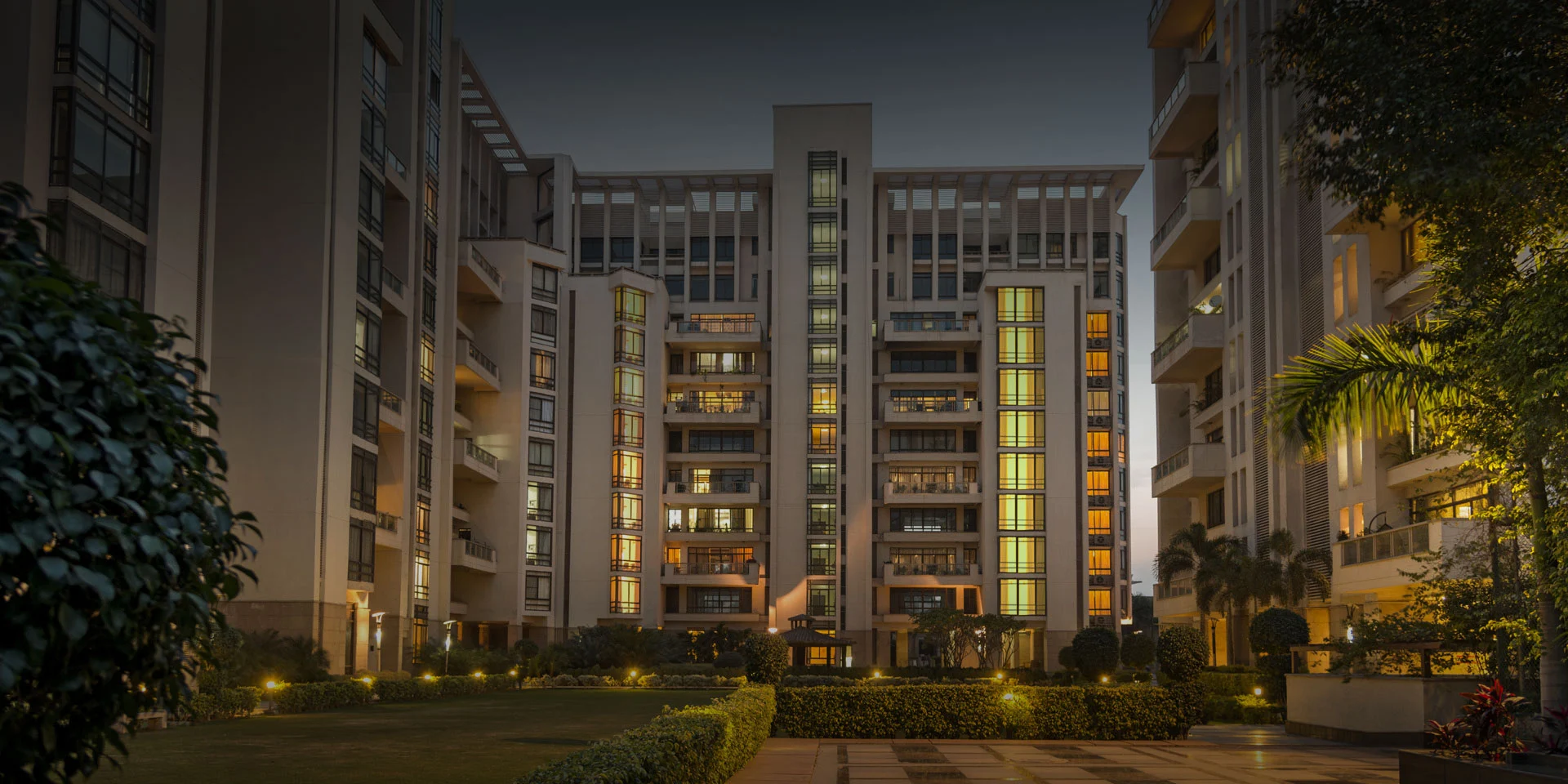
Gurgaon today is not a single residential market — it operates as two parallel ecosystems shaped by very different development models.
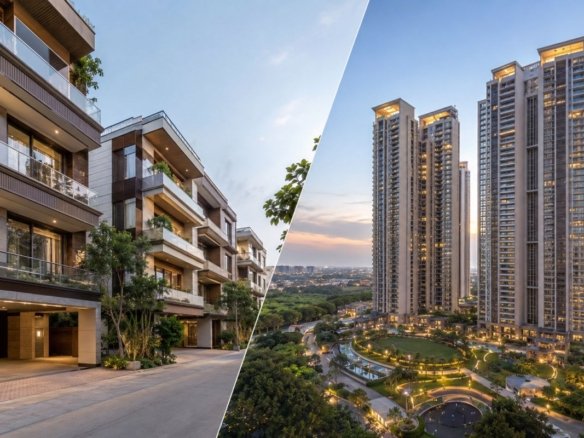
On one side, vertical high-rise clusters dominate corridors like Golf Course Extension Road and Dwarka Expressway, driven by institutional developers, corporate demand, and infrastructure-led growth. On the other, low-rise builder floors and DDJAY plots continue to expand across South and New Gurgaon, offering a more land-linked ownership structure with lower density living.
For buyers in 2026, this is no longer a lifestyle debate. It is a strategic decision that directly impacts long-term appreciation, rental performance, and exit flexibility.
If you are still at the evaluation stage, it is worth grounding your decision in a broader framework before comparing formats. This complete home buying guide Gurgaon will help you structure that thinking.
Most buyers comparing builder floor vs apartment Gurgaon options are essentially trying to answer one core question — should you prioritise predictable income and liquidity, or land exposure and long-term control?
Gurgaon’s Residential Structure in 2026: Density vs Land Exposure

The way Gurgaon has evolved is not random. Development patterns are closely tied to FAR regulations, infrastructure rollout, and the presence of large-scale developers.
High-rise density is concentrated in sectors along Golf Course Road, Golf Course Extension Road, and Dwarka Expressway, where large land parcels have been consolidated and developed into integrated residential ecosystems. In contrast, builder floors dominate pockets of South Gurgaon and New Gurgaon, particularly in sectors like 57, 67, 83, and DDJAY zones, where plotted development allows for horizontal expansion.
This creates a fundamental distinction. High-rise markets are driven by density, standardisation, and institutional participation, while low-rise markets are driven by land ownership, micro-location strength, and localised demand cycles.
Understanding this difference is critical, because appreciation behaviour, rental demand, and resale liquidity follow completely different patterns in these two ecosystems.
What High-Rise Living Really Offers in Gurgaon

High-rise societies in Gurgaon function as managed residential environments rather than standalone homes. They are designed to deliver consistency — in maintenance, security, amenities, and tenant experience — which is why they remain the preferred choice in corporate-driven corridors.
In sectors along Golf Course Extension Road and Dwarka Expressway, high-rise apartments continue to show stronger rental absorption, faster tenant replacement, and more predictable resale benchmarks. Gross rental yields typically fall in the 3–4% range, supported by steady demand from working professionals and expatriate tenants.
However, what often gets overlooked in buyer decisions is internal unit positioning within these towers. Floor level, view, and tower placement can significantly influence both pricing and resale performance. If you are evaluating a high-rise, understanding floor height premium in high-rise projects becomes critical before locking a unit.
At the same time, ownership costs in high-rise developments are structurally higher. Monthly maintenance charges typically range between ₹3–6 per sq.ft, and over a 10-year holding period, this becomes a meaningful component of total investment cost.
The Real Appeal of Low-Rise / Builder Floor Living

Low-rise formats — typically G+2 or G+4 structures — cater to a very different buyer mindset. Here, the focus shifts from managed living to space control, privacy, and land-linked value.
In sectors such as 67 and 83, demand for builder floors has strengthened in recent years, largely due to improving connectivity and relatively lower entry pricing compared to high-rise developments in prime corridors. Buyers in this segment are often end-users or long-term investors who are less dependent on rental income and more focused on capital appreciation over time.
One of the biggest advantages of low-rise living is lower recurring cost. Maintenance is either minimal or self-managed, usually in the range of ₹1–2 per sq.ft. Additionally, interiors can be customised more freely, which adds to long-term usability.
That said, resale performance in builder floors is far more sensitive to unit-specific factors. Layout, light, ventilation, and especially positioning within the building can influence exit value significantly. Many buyers underestimate this, which is why understanding corner vs mid unit resale value becomes important even in low-rise formats.
Price vs Ownership Reality: Where the Real Difference Lies

At a surface level, the price gap between high-rise and low-rise properties in Gurgaon is not extreme. High-rise apartments typically range between ₹12,000–22,000 per sq.ft depending on location and developer, while builder floors in New and South Gurgaon fall between ₹9,000–15,000 per sq.ft.
However, the real divergence is not in entry price — it is in ownership structure over time.
High-rise buyers pay a premium for standardisation, managed services, and rental stability. Low-rise buyers accept variability in exchange for lower maintenance and stronger linkage to land appreciation.
Over a 10-year horizon, these differences compound. High-rise assets tend to deliver better cash flow and easier resale due to uniform pricing benchmarks. Builder floors, on the other hand, may outperform in specific micro-markets but remain more dependent on local demand cycles and inventory conditions.
Builder Floor vs Apartment: What Actually Drives Long-Term Value
The common comparison between builder floor and apartment often ignores execution quality, which is far more important than format alone.
High-rise developments are typically built by institutional developers with defined construction standards, governance structures, and long-term maintenance systems. Builder floors, in contrast, can vary significantly depending on the developer or promoter, which introduces variability in construction quality and long-term upkeep.
Another emerging layer in this decision is lifestyle positioning. Buyers are no longer just choosing between formats — they are choosing between different definitions of luxury and living experience. This is where the debate around luxury floors vs apartments preference becomes relevant, especially in premium segments.
Ultimately, format does not determine performance. Execution, governance, and location do.
Rental Demand vs Capital Appreciation: A Clear Divide
In Gurgaon’s current market, rental demand remains heavily concentrated in high-rise corridors, particularly those with strong corporate connectivity. These areas continue to attract tenants looking for managed living environments, which supports both rental yield and liquidity.
Low-rise floors, while stable in certain pockets, are less aligned with corporate rental demand and tend to deliver lower yields. However, they offer a different advantage — stronger participation in land-driven appreciation, especially in sectors where supply remains constrained.
This creates a clear divide. Buyers seeking steady income typically lean toward high-rise assets, while those focused on long-term value creation often prefer low-rise formats.
Why Micro-Location Matters More Than Format
One of the biggest mistakes buyers make is choosing between high-rise and low-rise without first selecting the right sector.
In Gurgaon, sector-level dynamics — including infrastructure, connectivity, and future supply — have a far greater impact on property performance than format alone. For example, builder floors in a strong micro-market can outperform high-rise units in weaker corridors, and vice versa.
If you are still evaluating location options, this breakdown of best sectors in Gurgaon for living will help you align your decision with long-term growth zones.
Final Perspective: Strategy First, Format Second

There is no universal winner in the high-rise vs low-rise debate — and that is exactly why most buyers get this decision wrong.
High-rise properties offer structured living, stronger rental alignment, and better liquidity. Low-rise floors provide privacy, lower ongoing costs, and direct exposure to land appreciation. Both formats can perform well — or underperform — depending on where and how you invest.
The most successful buyers in Gurgaon are not choosing based on format alone. They are aligning three variables:
sector strength, unit selection, and financial objective.
Once those are clear, the format decision becomes far simpler — and far more profitable.
Frequently Asked Questions (High-Rise vs Low-Rise Living in Gurgaon – 2026)
Is it better to buy a high-rise apartment or a builder floor in Gurgaon?
It depends on your objective. Buyers comparing builder floor vs apartment Gurgaon options are usually balancing rental potential against lifestyle comfort. High-rise apartments in corporate corridors like Golf Course Extension Road and Dwarka Expressway generally offer stronger rental liquidity and structured maintenance systems.
Builder floors in sectors such as 67 or 83 often provide greater privacy, larger usable space, and lower long-term maintenance burden. The better choice depends on whether your priority is predictable rental income or independent living comfort.
What is the price difference between independent floors and high-rise apartments in Gurgaon?
In 2026, high-rise apartments typically range between ₹12,000–22,000 per sq.ft depending on sector and brand positioning. Independent floor in Gurgaon price usually falls between ₹9,000–15,000 per sq.ft in New Gurgaon and South Gurgaon sectors.
While the entry price gap is moderate, the long-term ownership cost differs more significantly due to maintenance and liquidity differences.
Which offers better rental yield in Gurgaon — high-rise or low-rise?
High-rise apartments generally provide stronger rental yield in Gurgaon apartments, particularly in metro-connected and corporate-driven sectors. Gross yield typically ranges from 3–4%.
Low-rise builder floors usually generate around 2–3% yield, but they may offer stronger capital appreciation in land-driven micro-markets. Investors focused on cash flow often lean toward high-rise formats.
Are low-rise builder floors in New Gurgaon a good investment in 2026?
Low rise floors in New Gurgaon — especially in sectors 83–95 and select DDJAY floors Gurgaon belts — have gained traction due to improving connectivity and relatively lower entry price.
They can be attractive for long-term appreciation if sector infrastructure continues strengthening. However, rental performance may vary more than high-rise societies in established corporate corridors.
What is the maintenance cost difference between high-rise and builder floors in Gurgaon?
High-rise societies usually charge ₹3–6 per sq.ft monthly due to amenities, lifts, security staff, and facility management systems.
Builder floors typically range between ₹1–2 per sq.ft or are self-managed, which is why many buyers searching for low maintenance homes in Gurgaon consider low-rise formats.
Over a 10-year period, this difference can significantly affect total ownership cost.


Join The Discussion