
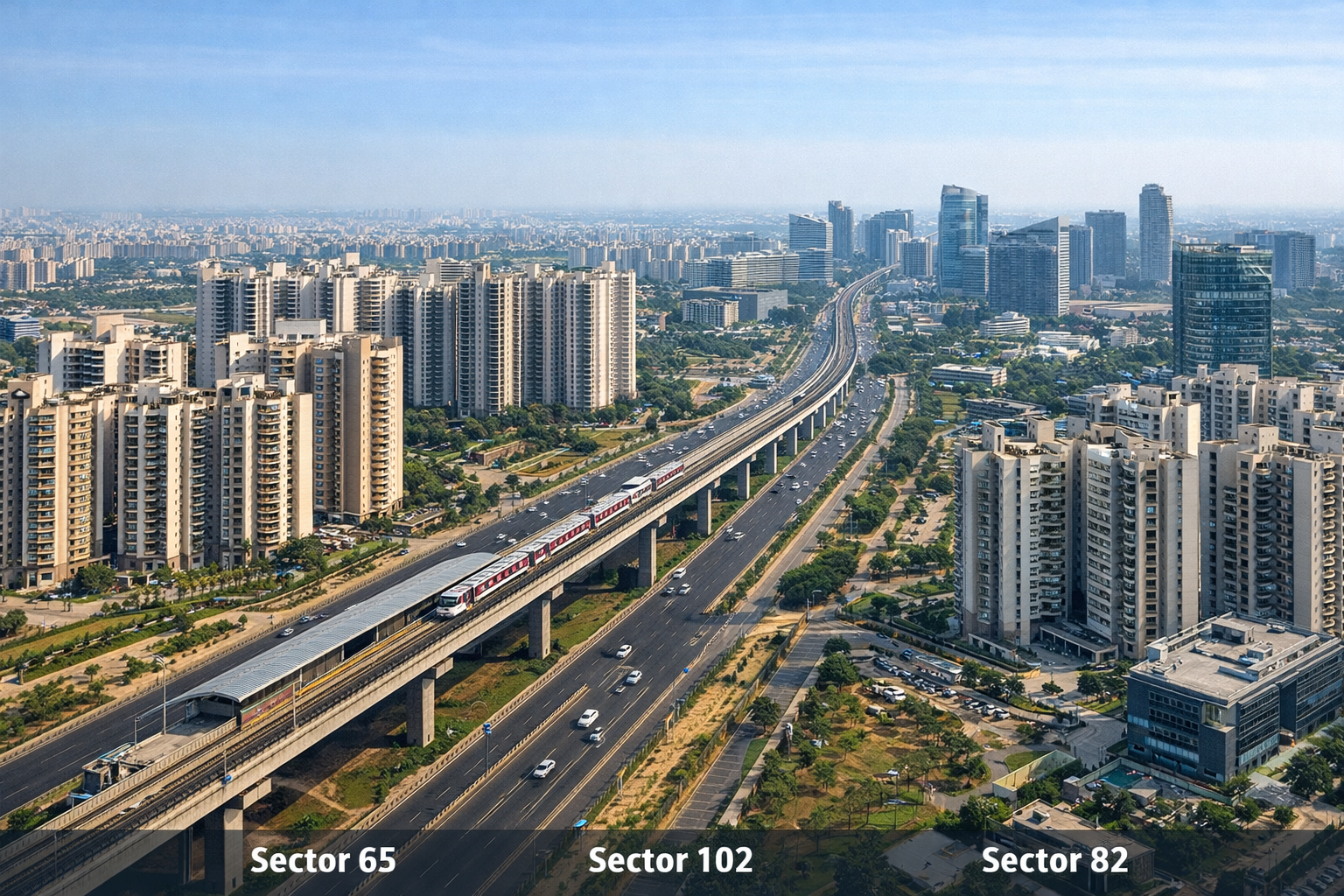
Metro connectivity has evolved into one of the most decisive pricing catalysts in Gurgaon’s real estate cycle.
While expressways trigger visibility and initial investor entry, metro infrastructure reshapes daily commute certainty — and that is what ultimately drives sustainable demand.
In a corporate-heavy city like Gurgaon, predictable travel time influences where people live, rent, and invest. As we move deeper into 2026, metro expansion is no longer a secondary factor — it is embedded into pricing psychology across key sectors.
Metro does not create growth — it accelerates existing demand corridors.
This article breaks down how metro expansion is influencing capital values, rental yield behavior, absorption depth, and sector-level price positioning across Gurgaon’s micro-markets.
Why Metro Connectivity Directly Influences Property Prices
Property values rise when accessibility, employment reach, and livability improve simultaneously. Metro infrastructure delivers all three.
In Gurgaon’s congestion-prone road ecosystem, metro reduces commute uncertainty. Buyers are willing to pay a premium for time efficiency, and tenants actively prioritize homes within walkable or feeder-access distance of stations.
Unlike speculative infrastructure announcements, metro impact is structural and long-term.
Markets price execution certainty, not announcements.
Gurgaon’s Metro Network: Strategic Context (2026)
Gurgaon’s ecosystem includes:
- Delhi Metro Yellow Line (Samaypur Badli to HUDA City Centre)
- Rapid Metro (Cyber City & Golf Course Road)
- Proposed expansions toward Golf Course Extension Road (GCER), SPR, Dwarka Expressway and Old Gurgaon
What makes Gurgaon unique is that metro expansion is about plugging residential corridors directly into employment clusters — not merely adding stations.
That integration is what shifts pricing ceilings.
HUDA City Centre to Cyber City: The First Appreciation Cycle
The stretch from HUDA City Centre through MG Road to Cyber City marked Gurgaon’s first metro-led resilience corridor.
How Prices Reacted
Once operational:
- Rental yields stabilized in the 3–3.5% band
- Capital values held firm even during broader slowdowns
- Liquidity cycles shortened significantly
This corridor demonstrated a crucial lesson:
First cycle = Connectivity anticipation
Second cycle = Rental-backed price consolidation
That same pattern is now repeating elsewhere.
Rapid Metro & Golf Course Road: Premium Ceiling Expansion
Rapid Metro repositioned Golf Course Road from a luxury address to a high-efficiency luxury corridor.
Luxury buyers prioritize:
- Walk-to-work convenience
- Predictable commute
- Rental desirability for expatriates
As a result, pricing in this belt moved into the ₹20,000+ per sq ft bracket, significantly outperforming comparable non-metro luxury zones.
Metro didn’t just lift prices — it raised the pricing ceiling.
Metro Expansion & Golf Course Extension Road: From Discount to Parity
Golf Course Extension Road (GCER) is transitioning from perception discount to infrastructure parity corridor.
Sectors such as Sector 65, Sector 63A and Sector 66 sit at the center of this shift.
Buyers researching property in Sector 65 Gurgaon or tracking the Sector 63A Gurgaon price trend are increasingly aligning purchase decisions with metro execution timelines.
Directional price positioning in 2026:
- Sector 65: Mid ₹14,000–₹18,000 per sq ft band
- Premium legacy Sector 42: ₹20,000+ belt
This narrowing gap reflects infrastructure catch-up and metro-backed demand confidence.
Search traction around flats in Sector 66 Gurgaon also signals rising end-user absorption, not just investor speculation.
GCER growth is no longer brochure-driven — it is connectivity-backed.
Metro & Dwarka Expressway: The Second Appreciation Wave
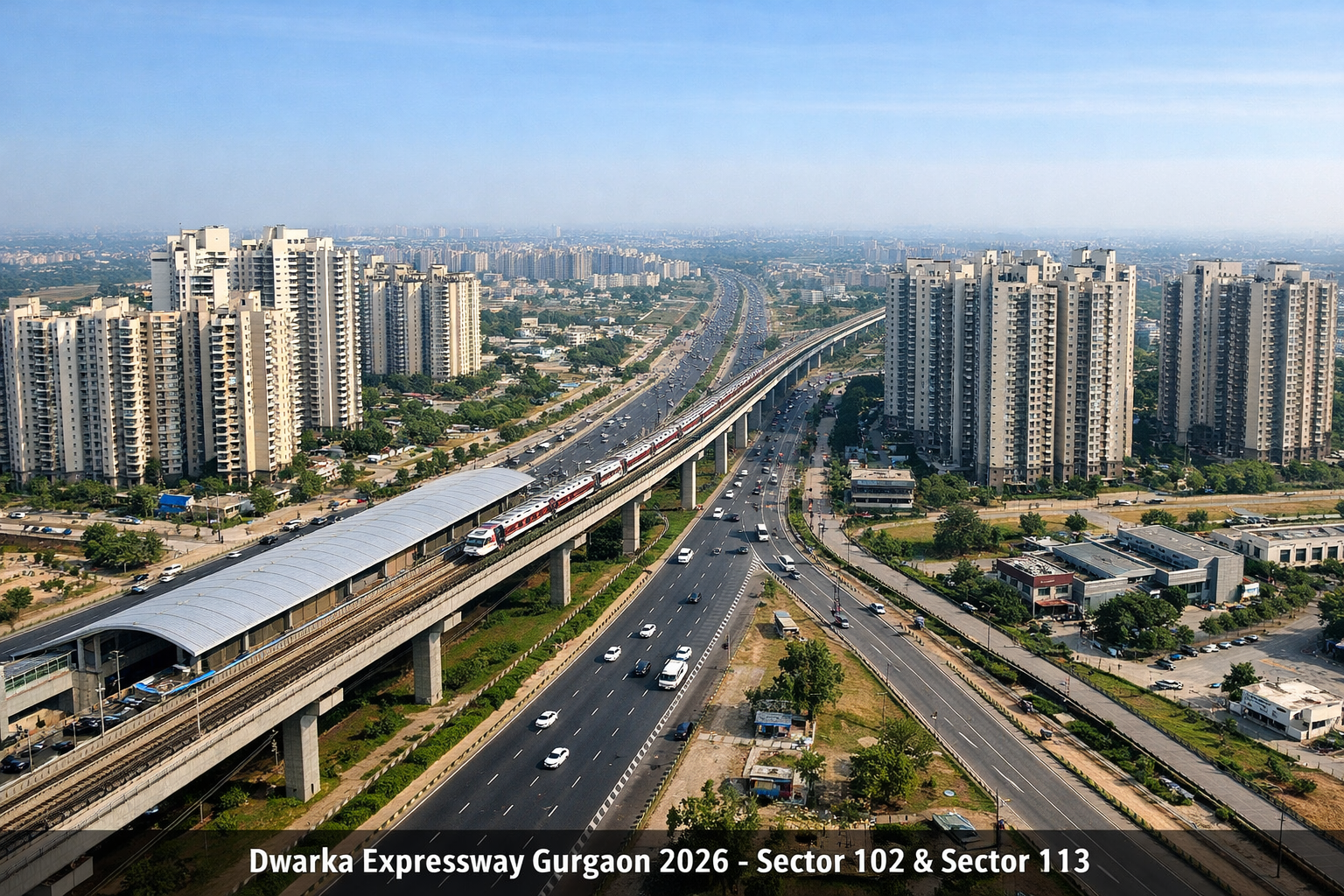
Dwarka Expressway’s first price cycle was infrastructure anticipation.
Now, metro integration is positioning it for occupancy-driven consolidation.
Emerging sectors such as Sector 102, Sector 113 and Sector 37D are particularly sensitive to this transition.
Rising search demand around property price in Sector 102 Gurgaon and Sector 113 Gurgaon property rates reflects end-user migration replacing early-stage investor concentration.
Pricing Context (2026 Directional Bands)
- Sector 102: ₹11,500–₹14,500 per sq ft
- Sector 113: ₹10,500–₹13,500 per sq ft
Rental yields here are gradually strengthening toward the 3% range as possession levels improve.
Metro connectivity may trigger:
- Deeper tenant pool
- Reduced vehicle dependency
- Stronger resale liquidity
This is likely to define Dwarka Expressway’s second growth cycle.
Old Gurgaon & New Gurgaon: Affordability Efficiency Upgrade
In New Gurgaon, sectors such as Sector 82, Sector 83, Sector 89 and Sector 90 are emerging as practical beneficiaries of metro-linked connectivity.
Search traction around Sector 82 Gurgaon flats price and Sector 90 Gurgaon property investment reflects mid-income buyers evaluating commute efficiency.
Directional positioning:
- Sector 82 / 83: ₹9,000–₹12,000 per sq ft band
- SPR corridor pockets: Competing slightly higher due to commercial integration
Here, metro improves affordability efficiency — not luxury premium.
That distinction is important.
Metro reduces commute cost and time burden, enhancing real household value rather than just headline price.
Sector-Wise Metro Impact: 2026 Micro-Market Signals
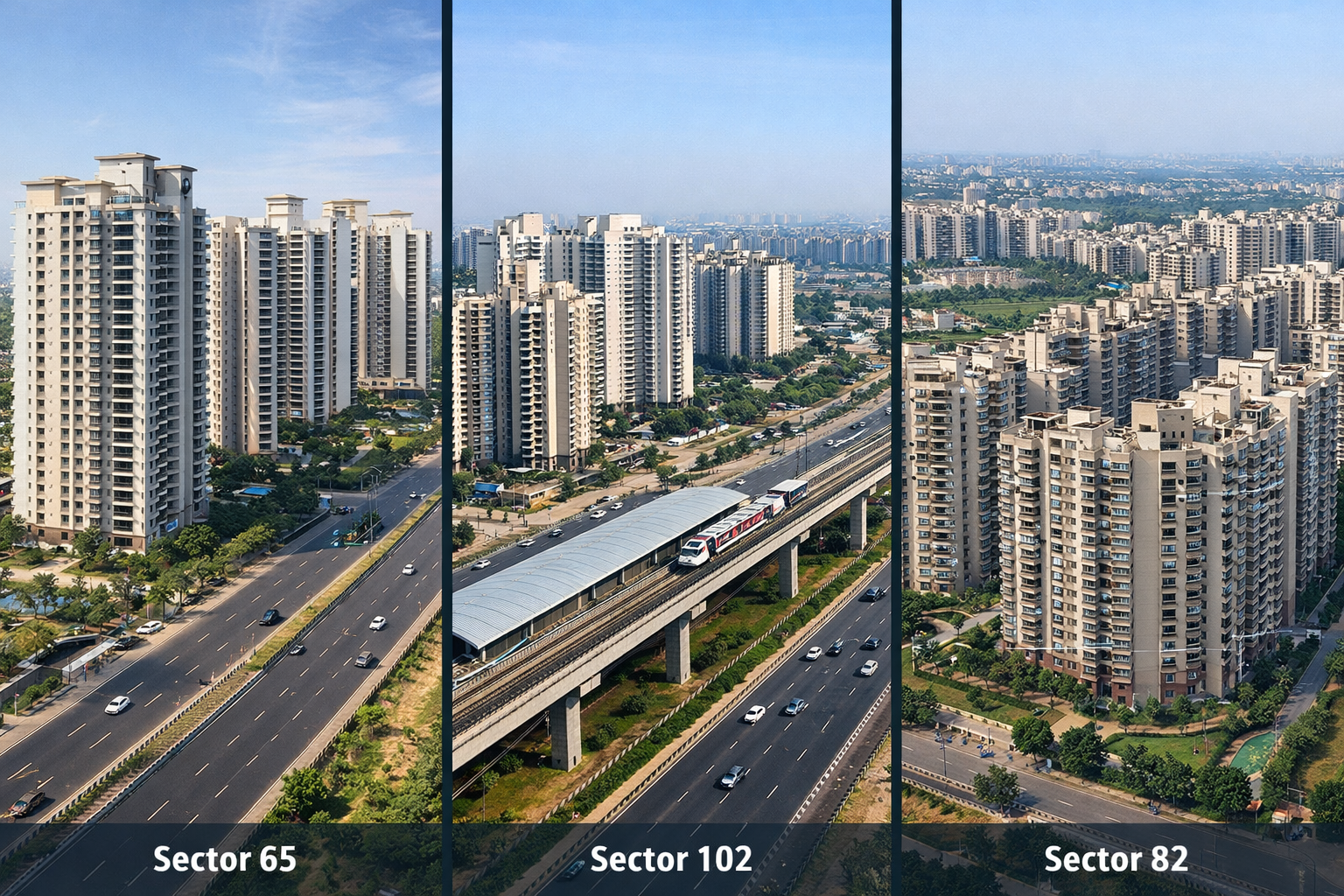
Metro influence varies across Gurgaon.
- Sector 65 vs Sector 42: Stronger percentage upside in Sector 65 due to infrastructure catch-up.
- Sector 102 vs Sector 113: Sector 102 shows stronger rental traction; Sector 113 offers longer-term appreciation flexibility.
- Sector 82 vs SPR corridor: Sector 82 benefits from affordability-led absorption, SPR competes on scale and commercial density.
Micro-market comparison is now more important than city-wide averages.
Metro vs Expressway: Which Drives Stronger Long-Term Appreciation?
Expressways create:
- Immediate investor spike
- Early booking velocity
- Perception-led price movement
Metro creates:
- Sustained absorption
- Rental stability
- Pricing ceiling expansion
When both align — as seen in Dwarka Expressway and GCER — long-term appreciation probability strengthens significantly.
Expressway starts the story.
Metro sustains it.
Rental Yield vs Capital Appreciation: The Dual Effect
Metro-connected assets typically demonstrate:
Immediate rental stabilization post-operational clarity
Gradual capital compounding as livability matures
This dual dynamic makes metro-aligned properties attractive for long-term investors seeking both cash flow and appreciation.
Risks & Limitations Investors Must Factor
Despite strong structural impact:
- Proposed stations may be overpriced before approvals
- Execution delays can slow absorption
- Construction disruptions temporarily impact livability
Certainty drives pricing — not proposals.
Final Verdict: 2026 Outlook
Metro expansion is no longer a supporting variable in Gurgaon — it is a primary pricing engine.
From GCER to Dwarka Expressway to New Gurgaon, connectivity now influences:
- Buyer profile
- Rental demand depth
- Resale liquidity
- Pricing resilience
In a city where time directly affects lifestyle and employment efficiency, metro access has transitioned from convenience to core value.
Frequently Asked Questions (FAQs)
Does metro expansion actually increase property prices in Gurgaon or is it just hype?
Metro expansion does increase property prices in Gurgaon, but the impact is phased rather than immediate. Prices often react first to announcement and execution visibility, attracting early investor movement. The more sustainable appreciation typically begins once operations start, rental demand strengthens, and end-user absorption deepens. Corridors like Golf Course Road have already demonstrated this pattern, while Dwarka Expressway sectors such as 102 and 113 are transitioning from anticipation-led pricing to occupancy-backed consolidation.
Which Gurgaon sectors are expected to benefit the most from metro expansion in 2026?
Sectors that directly plug into employment hubs through metro connectivity are likely to see the strongest structural impact. On Golf Course Extension Road, Sector 65, Sector 63A and Sector 66 are moving toward infrastructure parity with legacy premium zones. Along Dwarka Expressway, Sector 102 and Sector 113 are positioned for rental traction improvement. In New Gurgaon, sectors like 82, 83 and 90 benefit more from commute efficiency and affordability strengthening rather than luxury premium expansion.
Is it safe to invest near a proposed metro station in Gurgaon?
Investing near a proposed metro station can be strategic, but only when execution clarity exists. Approved routes with visible construction progress reduce uncertainty significantly. However, sectors where stations are only at the planning stage may see temporary overpricing. Buyers should evaluate approval status, infrastructure timelines, and surrounding civic readiness rather than relying solely on future connectivity promises.
How does metro connectivity affect rental yield in Gurgaon?
Metro connectivity typically strengthens rental performance before it substantially lifts capital values. Once timelines become credible or operations begin, tenant preference shifts toward metro-accessible properties. This improves occupancy stability and reduces vacancy cycles. Established metro corridors often maintain rental yields in the 3% to 3.5% band, while emerging sectors gradually strengthen as possession levels and social infrastructure mature.
Metro vs expressway in Gurgaon: which drives stronger long-term appreciation?
Expressways usually trigger the first appreciation cycle by improving regional accessibility and attracting investor participation. Metro connectivity, however, supports sustained absorption, rental resilience, and long-term pricing stability. When both align within a corridor, appreciation becomes structurally stronger and less volatile, creating a more balanced demand ecosystem for both investors and end-users.



Join The Discussion