
Finding an undervalued property location before prices rise is the single biggest advantage an investor can have in Gurgaon’s real estate market. Most buyers enter after momentum becomes visible—when prices have already moved and upside has reduced.
In 2026, smart investors are no longer chasing hype. They begin with a structured understanding of the market through a complete Gurgaon investment location guide, and then narrow down opportunities based on infrastructure, location dynamics, and growth corridors.
The goal is simple: identify value before it becomes obvious.
What “Undervalued” Really Means in Gurgaon

In real estate, undervalued does not mean cheap—it means mispriced relative to fundamentals.
A location becomes undervalued when infrastructure is improving, rental demand is forming, and developer activity is increasing—but prices have not yet fully adjusted.
In Gurgaon, this window is short-lived. Once perception catches up with reality, prices move quickly.
Location Comparison: Mature vs Emerging Corridors

To understand undervaluation, investors must compare locations—not just individually, but relative to each other.
Established corridors such as Golf Course Extension Road reflect maturity. Prices are high, rental demand is stable, and growth is predictable but limited.
Emerging corridors, on the other hand, show early-stage signals—improving connectivity, rising rental demand, and increasing developer participation.
This is why investors actively analyze the best sectors in Gurgaon for investment—not to find the most popular areas, but to identify where growth is just beginning.
Undervalued opportunities exist in the gap between these two stages.
Infrastructure: The Trigger Behind Price Movement

Infrastructure is the single most powerful driver of real estate appreciation in Gurgaon.
However, the key is not announcements—it is execution.
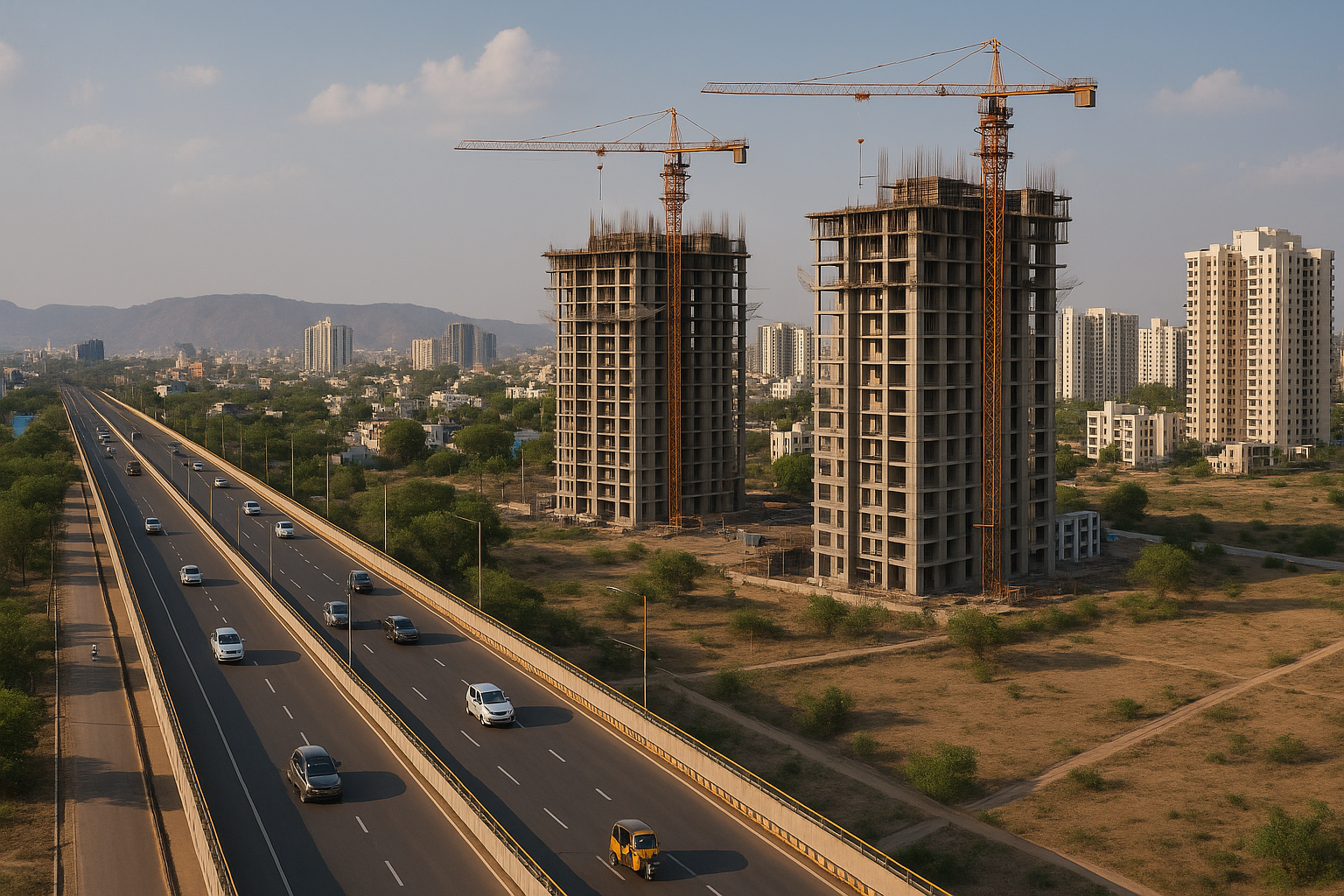
Price acceleration typically begins when infrastructure becomes visible on the ground. Roads nearing completion, metro expansion progress, and operational connectivity create confidence among buyers.
This pattern is clearly visible in emerging growth areas like Sohna Gurgaon, where infrastructure development has started translating into real demand and price movement.
Infrastructure creates the foundation—but timing determines returns.
Growth Corridors: Where Value Is Created

Gurgaon’s real estate growth is corridor-driven. Each cycle creates new zones where capital shifts outward from saturated markets.
These growth corridors typically share common characteristics:
- Improving connectivity to employment hubs
- Early-stage residential development
- Increasing rental demand
- Entry of branded developers
The most successful investments happen when these factors align—but before retail-driven price acceleration begins.
Rental Demand: The Earliest Signal

One of the most reliable indicators of undervaluation is rental movement.
In many Gurgaon micro-markets, rental demand strengthens before capital prices rise. When vacancy reduces and rents increase while property prices remain stable, it signals early demand formation.
This phase often precedes price growth by 12–24 months.
Experienced investors track rental trends closely because they reflect real, end-user-driven demand—not speculation.
Price Gap Analysis: Spotting Relative Value

Undervalued opportunities are often hidden in price gaps between adjacent sectors.
If two locations offer similar connectivity, developer quality, and demand drivers—but one is priced significantly lower—it may indicate early-stage undervaluation.
This is especially common near expanding corridors where development is uneven but improving.
The key is not absolute price—it is relative positioning.
Developer Activity: A Leading Indicator
Institutional developers rarely enter a location without strong long-term confidence.
When reputed developers begin acquiring land, launching phased projects, and controlling inventory release, it often signals future growth potential.
Retail marketing usually follows developer confidence—not the other way around.
Tracking developer behavior provides early insight into which sectors are likely to outperform.
Absorption and Supply Discipline
Price appreciation depends not just on demand, but also on how supply is managed.
Locations where projects sell steadily without heavy discounts indicate organic demand. Controlled supply ensures price stability and gradual appreciation.
On the other hand, oversupply can delay growth even in well-connected areas.
Understanding this balance is essential for identifying true undervaluation.
The Gurgaon Appreciation Cycle
Every successful real estate corridor in Gurgaon follows a predictable cycle:
- Infrastructure visibility
- Rental demand begins
- Absorption improves
- Developer confidence increases
- Prices start rising
- Retail-driven momentum
The best investment window lies between stages 2 and 3—before prices accelerate but after demand signals are visible.
This is where most high-return opportunities are created.
Long-Term Outlook: Where Gurgaon Is Headed
Over the next few years, Gurgaon’s growth will continue to move outward, creating new investment pockets.
Emerging corridors will evolve into established zones, while current premium areas will stabilize further.
Investors looking ahead should evaluate long-term trends through the 5-year price forecast Gurgaon real estate, which highlights how different corridors are expected to perform.
Understanding this macro trend helps in aligning short-term decisions with long-term outcomes.
Final Strategy: Finding the Right Opportunity in 2026

Successful investing in Gurgaon is no longer about chasing popular locations—it is about timing, positioning, and discipline.
The best opportunities lie where:
- Infrastructure is visible but not fully priced in
- Rental demand is strengthening
- Developer activity is increasing
- Supply is controlled
For investors ready to act on these insights, exploring the best investment opportunities Gurgaon 2026 can help translate strategy into actionable decisions.
Final Thoughts
Undervalued locations in Gurgaon are not advertised—they are discovered through analysis.
They exist in the gap between infrastructure execution and market recognition. Investors who understand location comparison, infrastructure cycles, and growth corridors consistently identify opportunities before prices rise.
That is where real estate wealth is created.
Frequently Asked Questions
1. What does “undervalued property” actually mean in Gurgaon?
An undervalued property isn’t just a cheaper option—it’s a location where prices haven’t yet caught up with real improvements like infrastructure, connectivity, and demand. These are the areas where investors usually see the best long-term gains.
2. How can I find property locations before prices start rising?
The key is to look for early signals. If infrastructure work is already happening, rental demand is slowly increasing, and developers are entering the area, it usually means prices may rise in the near future.
3. Why does infrastructure play such a big role in property prices?
Because it directly affects daily life. Better roads, metro access, and connectivity reduce travel time and improve convenience. Once people start moving into an area, property demand increases—and prices follow.
4. Which areas in Gurgaon are currently showing strong growth potential?
Corridors like Dwarka Expressway, SPR (Southern Peripheral Road), and emerging areas like Sohna are currently seeing strong development. These locations are still growing, which means they offer better future upside compared to already saturated areas.
5. Is Sohna really a good place to invest right now?
Sohna is gaining attention because it still offers relatively affordable entry prices along with improving connectivity. For investors who can wait for a few years, it has strong potential as the area continues to develop.
6. What matters more—location or timing?
Both matter, but timing can make a huge difference. Even a great location won’t give strong returns if you enter too late. The best investments usually happen when you enter a location just before it becomes popular.
7. How does rental demand impact property value?
Rental demand is often the first sign of real growth. When more people start renting in an area, it shows that the location is becoming livable and desirable. Property prices usually increase after that.
8. How long should I hold a property for good returns in Gurgaon?
In emerging areas, a holding period of 5 to 10 years usually works best. This allows enough time for infrastructure development and price appreciation to fully play out.
9. Are affordable housing projects worth investing in?
They can be, especially in developing areas where demand is high. Affordable housing often attracts end-users, which helps maintain steady demand and reduces the risk of price stagnation.
10. What are the most common mistakes investors make?
Many investors buy based on hype or trends without checking real demand. Ignoring rental trends, relying only on future promises, or not studying the specific sector can lead to poor investment decisions.



Join The Discussion