
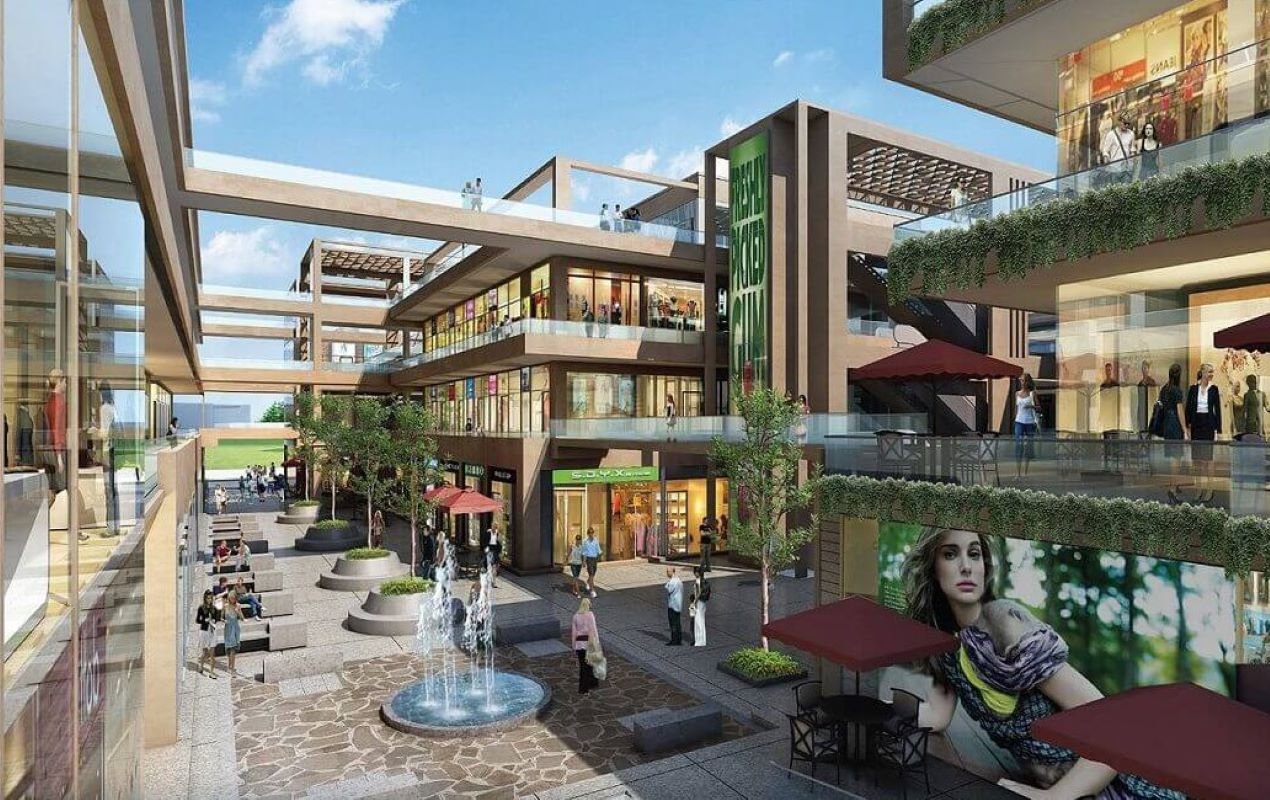
Over the past two decades, Gurgaon has transformed from a satellite city on the outskirts of Delhi into one of India’s most influential corporate and real estate hubs. The skyline now features glass office towers, luxury residential complexes, shopping districts, and entertainment zones spread across rapidly expanding sectors.
Yet the most interesting change in Gurgaon’s urban development isn’t just about taller buildings or premium apartments.
It is about how multiple aspects of city life are being integrated into a single development.
This shift has led to the rise of mixed-use developments, projects where residential, commercial, retail, and lifestyle spaces coexist within one coordinated environment.
For a fast-growing city like Gurgaon—where long commutes and traffic congestion are common—this model offers something increasingly valuable: convenience, accessibility, and a complete urban lifestyle in one place.
If you are exploring this segment in depth, this commercial property investment guide Gurgaon will help you understand shops, offices, and SCO opportunities better.
What Are Mixed-Use Developments?
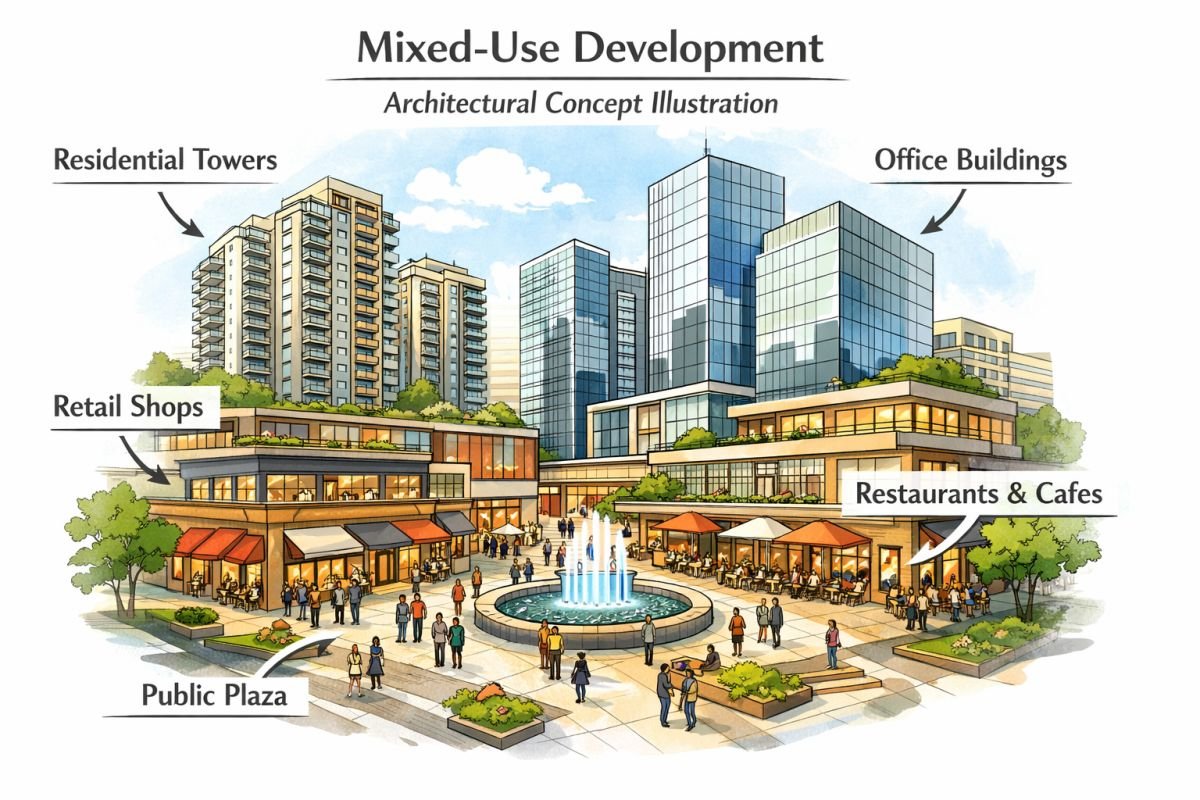
A mixed-use development is a real estate project that combines multiple property types within one integrated master plan.
Most projects typically include:
- Residential apartments or serviced residences
- Office spaces or corporate towers
- Retail outlets and high-street shopping areas
- Restaurants, cafes, and entertainment zones
- Hospitality or hotel components
Instead of separating living, working, and recreation across different parts of a city, mixed-use developments bring them together to create a self-sustained urban ecosystem.
In global cities like Singapore, Dubai, and London, this concept has existed for years. In India, Gurgaon has become one of the leading markets where the model is rapidly gaining traction.
Why Gurgaon Is Ideal for Mixed-Use Projects
Few cities in India are as naturally suited for mixed-use developments as Gurgaon. Several factors support the growth of this model.
1. Large Corporate Workforce
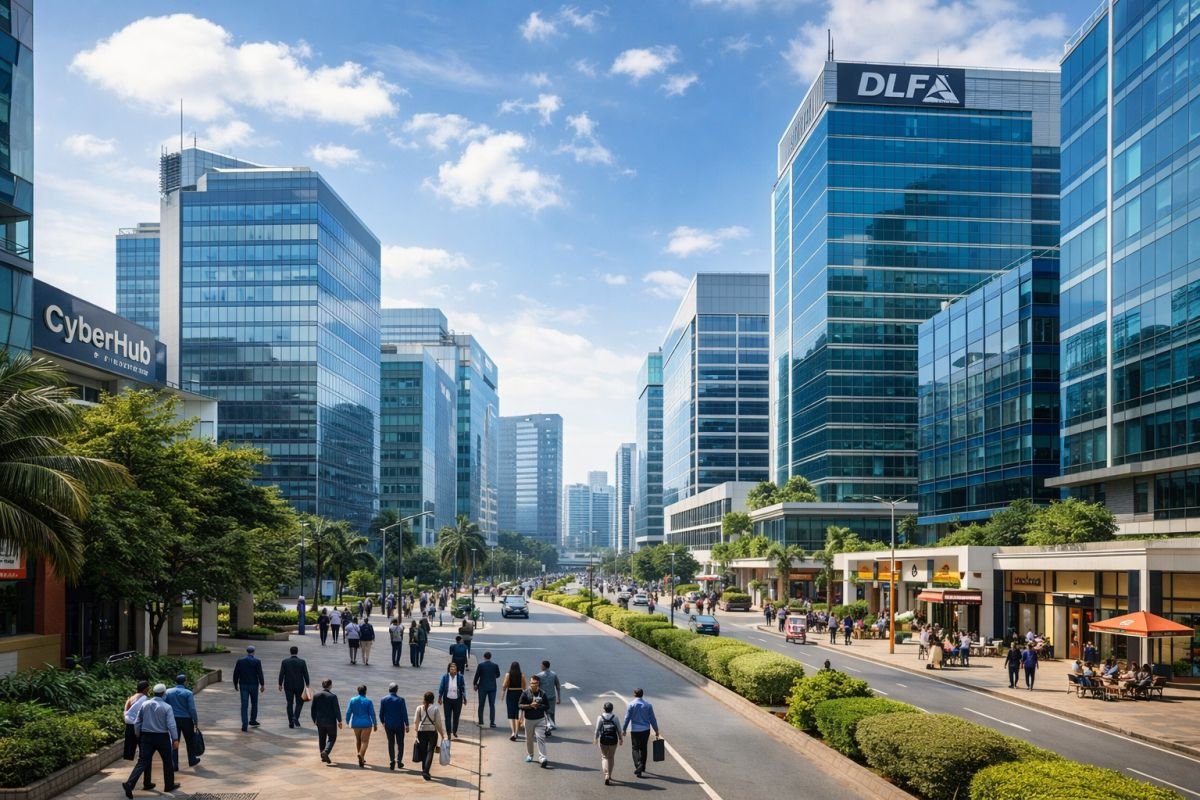
Gurgaon hosts hundreds of global companies and multinational firms operating across the city’s major business districts.
Key corporate hubs include:
- DLF Cyber City
- Udyog Vihar
- Golf Course Road
- Sector 44 business corridor
These districts attract tens of thousands of professionals every day, creating strong demand for retail spaces, restaurants, and lifestyle services located close to offices.
Integrated developments capture this demand by placing retail and entertainment options within walking distance of corporate workplaces.
2. Strong Residential Demand
Residential development in Gurgaon has expanded significantly across major growth corridors such as:
- Golf Course Extension Road
- Sohna Road
- Dwarka Expressway
- New Gurgaon sectors
Luxury and mid-premium housing communities now house a large population of corporate professionals, entrepreneurs, and expatriates.
Today’s homebuyers increasingly value convenience and accessibility, preferring projects where daily needs—grocery stores, cafes, gyms, and pharmacies—are easily accessible.
Mixed-use developments respond directly to these lifestyle expectations.
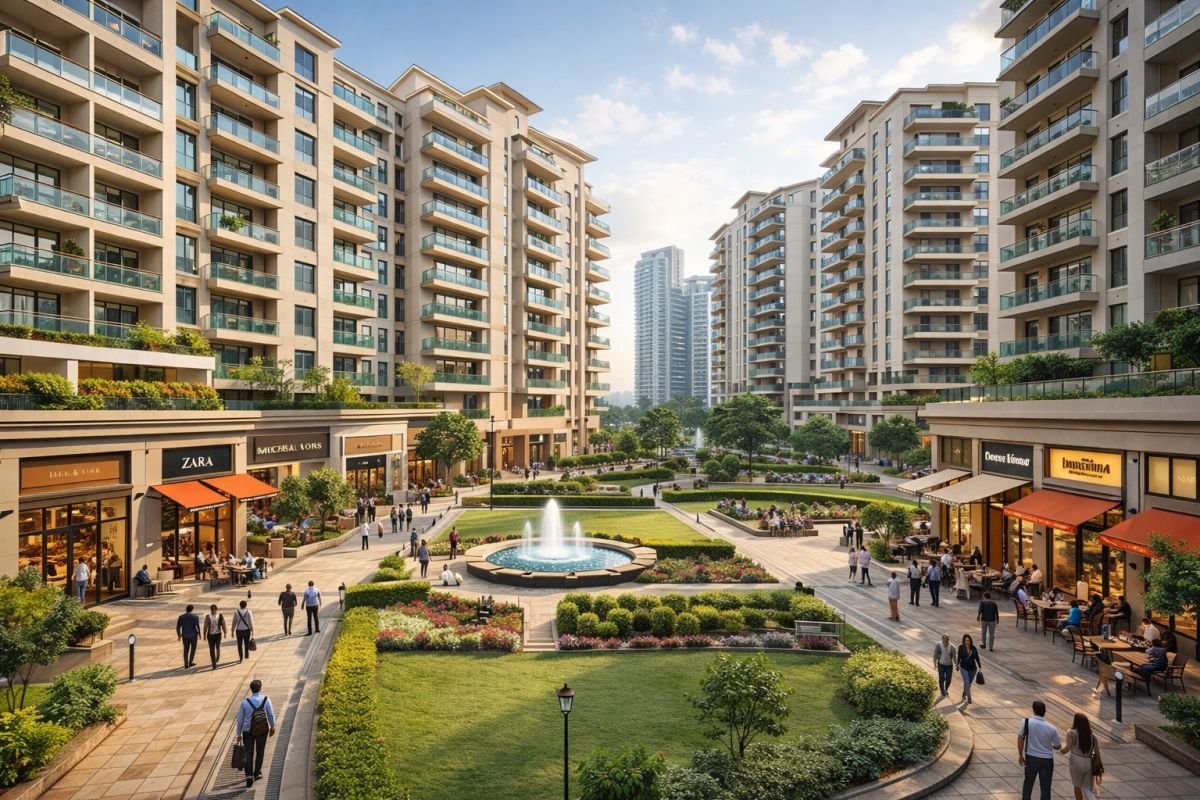
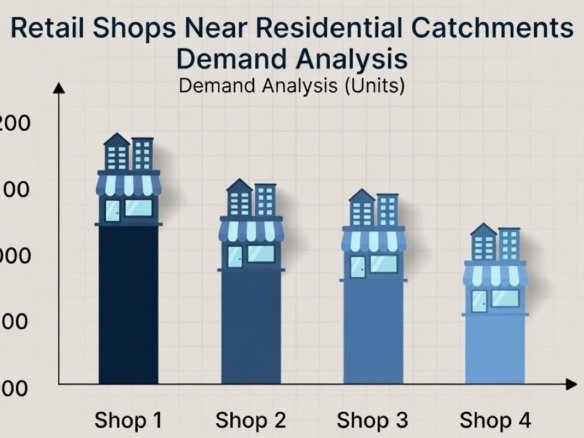
This is exactly why retail shops near residential catchments demand has increased significantly in recent years, especially in high-density sectors.
3. Gurgaon’s Traffic and Commute Challenges
Daily commute times in Gurgaon can be unpredictable. During peak hours, even a short distance can take significant time due to traffic congestion.
By integrating residential towers, offices, and retail areas in one location, mixed-use developments reduce the need for frequent long-distance travel.
For many professionals, this “live-work-play” environment significantly improves overall quality of life.
Residential + Commercial Synergy
The real strength of mixed-use developments lies in the relationship between residential and commercial components.
Residential towers create a consistent customer base for retail outlets and restaurants. In return, retail and lifestyle amenities enhance the overall appeal and property value of residential units.
This interaction creates a stable environment for both segments.
Retail stores in mixed-use developments typically benefit from multiple sources of footfall:
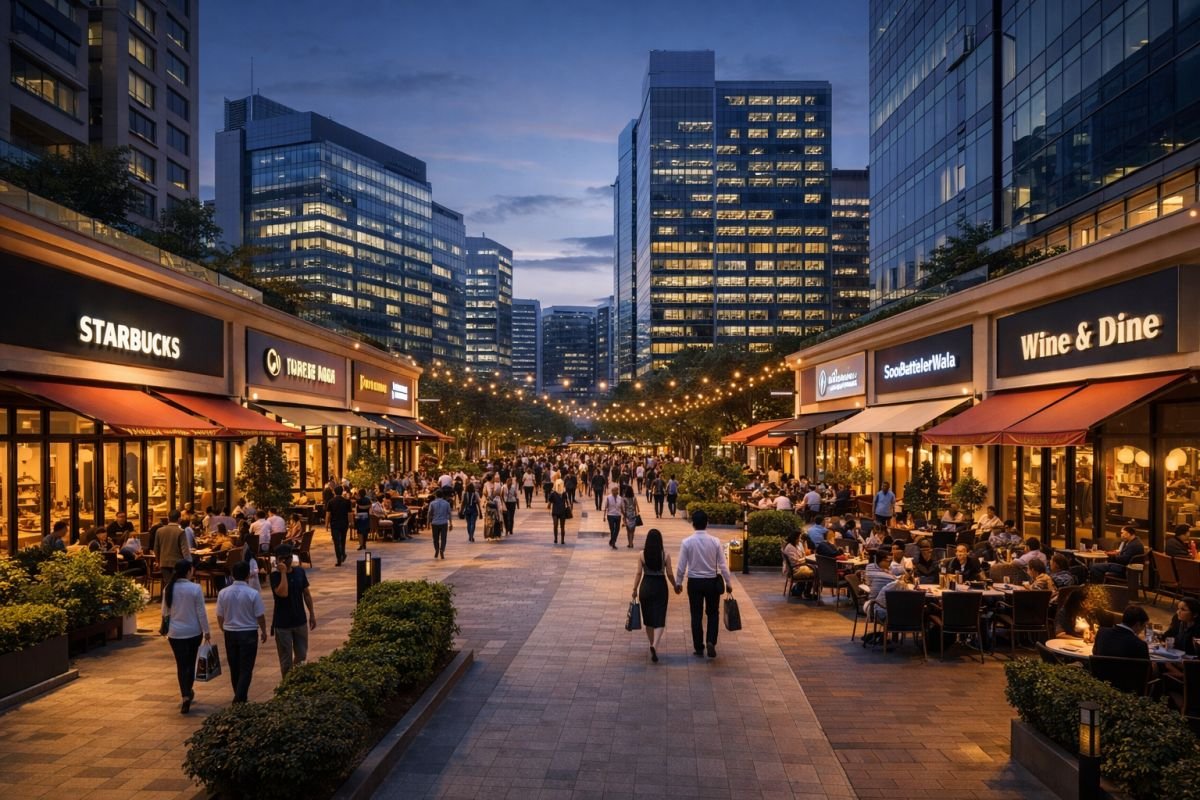
- Office workers during weekday afternoons
- Residents during evenings
- Visitors during weekends
Because demand comes from different groups at different times, retail zones often experience more stable occupancy compared to standalone commercial buildings.
Impact on Property Values
Mixed-use developments in Gurgaon often command premium pricing compared to standalone residential or commercial projects.
This price difference is supported by several practical advantages.
Residential Appreciation
Apartments located within integrated developments often see stronger demand because they offer:
- Access to retail and entertainment spaces
- Proximity to workplaces
- High security and managed infrastructure
- Lifestyle convenience
Buyers increasingly prioritize time efficiency and accessibility, both of which are central to the mixed-use model.
Commercial Rental Stability
Retail spaces inside mixed-use developments benefit from regular footfall generated by residents and office workers.
Unlike isolated high-street shops that rely entirely on passing traffic, these retail zones benefit from built-in demand.
In prime Gurgaon locations, commercial retail rentals within integrated developments can range from ₹250 to ₹800 per square foot depending on brand presence, location, and tenant mix.
To understand how this segment is evolving further, explore the future of commercial real estate Gurgaon NCR and upcoming trends.
Investment Perspective: Opportunities and Risks
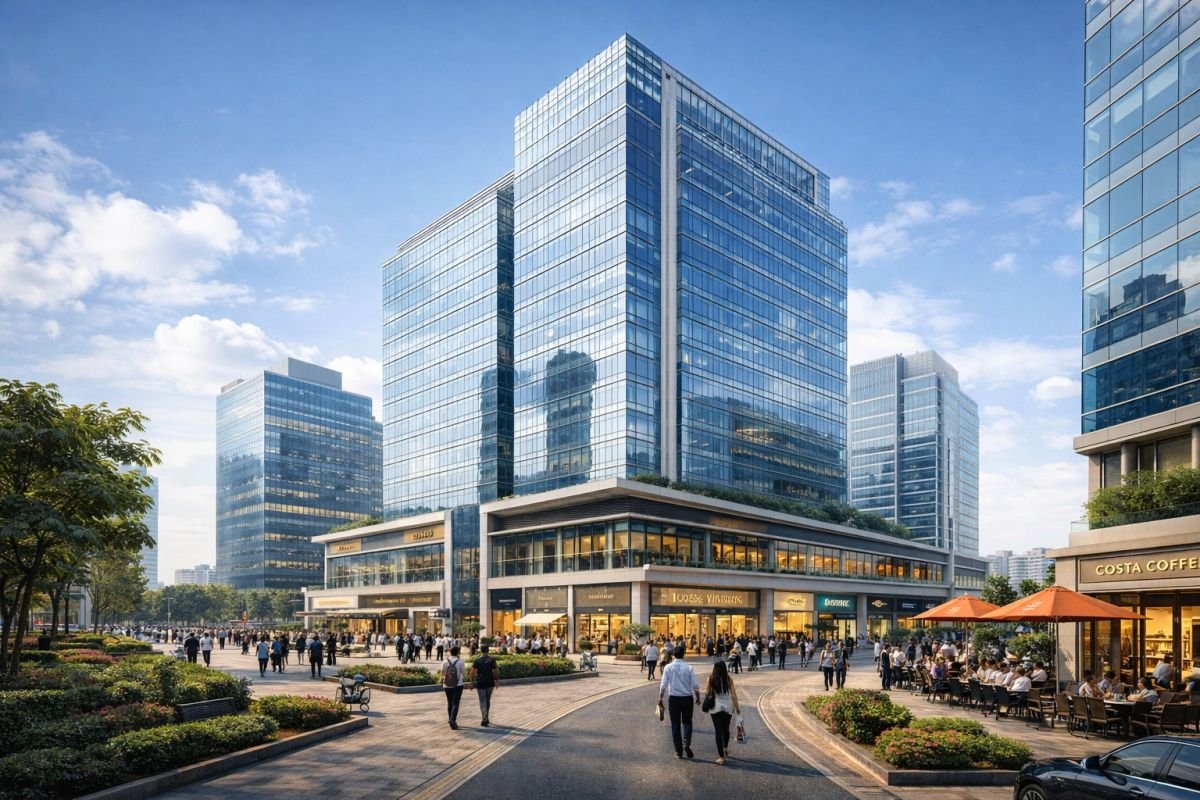
From an investment standpoint, mixed-use developments provide diversification within a single project ecosystem.
However, investors should understand both the advantages and potential risks.
Advantages
Projects developed by reputed developers often experience strong leasing demand and higher visibility.
Several well-known integrated developments in Gurgaon demonstrate this model, including projects by:
- DLF Limited
- M3M India
- Elan Group
Developments such as M3M IFC and AIPL Joy Central illustrate how integrated office and retail ecosystems attract steady tenant demand.
Risks
Not all mixed-use projects succeed.
Common challenges include:
- Oversupply of retail space
- Weak residential density
- Poor tenant mix
- Limited parking or accessibility
If the commercial component is too large compared to the surrounding population, vacancy levels can increase.
For this reason, investors should carefully evaluate the residential-to-commercial ratio within a project.
Modern Design of Mixed-Use Developments
Earlier mixed-use developments in India sometimes struggled because different components were poorly integrated.
Commercial areas were often separated from residential towers, reducing interaction between spaces.
Modern developments focus heavily on design integration.
Key design elements now include:
- pedestrian-friendly walkways
- shared open spaces and plazas
- structured multi-level parking
- separate access zones for residents and visitors
- curated retail and dining environments
Developers increasingly understand that the success of a mixed-use project depends not just on combining different property types, but on how effectively those spaces interact with each other.
Key Gurgaon Micro-Markets for Mixed-Use Growth
Mixed-use developments are expanding across several important corridors in Gurgaon.
Golf Course Road
Golf Course Road remains one of the city’s most established commercial districts. The presence of corporate headquarters and luxury residential projects makes this corridor ideal for premium integrated developments.
Golf Course Extension Road
Rapid residential growth combined with improving infrastructure has turned this corridor into a strong location for neighborhood-scale mixed-use developments.
Sohna Road
Sohna Road already hosts a balanced mix of offices, residential projects, and retail complexes. However, supply levels in some sectors require careful investment analysis.
Dwarka Expressway
The emerging Dwarka Expressway corridor is expected to become one of Gurgaon’s most important real estate growth zones.
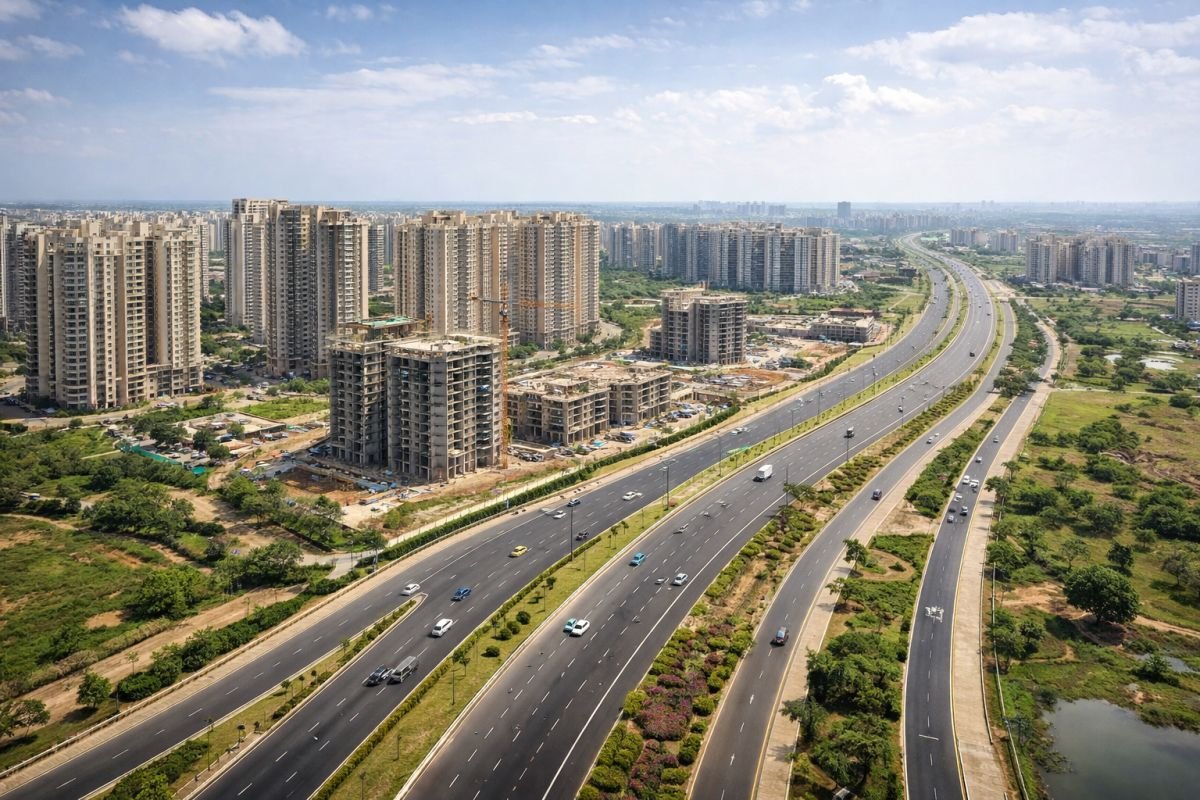
Several township-scale projects are being developed along this corridor with integrated residential, retail, and office components.
You can also explore the best locations in Gurgaon for commercial investment to identify high-growth micro-markets.
Changing Urban Lifestyle Preferences
Urban homebuyers today evaluate real estate differently compared to a decade ago.
Earlier, property decisions were largely based on price, location, and apartment size.
Today, lifestyle convenience plays a far bigger role.
Mixed-use developments support several emerging lifestyle trends:
- walk-to-work environments
- reduced commute stress
- community-driven living spaces
- improved safety through active public zones
The pandemic also accelerated the demand for self-contained communities where essential services are located nearby.
Mixed-Use vs Standalone Developments
Standalone residential projects often provide quieter living environments but may lack retail convenience.
Standalone commercial buildings may offer efficient office spaces but often struggle with limited footfall after office hours.
Mixed-use developments aim to balance both.
When planned correctly, they create vibrant urban neighborhoods where people can live, work, shop, and socialize within the same development.
However, the success of such projects depends heavily on planning quality and execution.
Long-Term Outlook for Mixed-Use Real Estate in Gurgaon
As Gurgaon continues to expand as a corporate and residential hub, integrated developments are expected to play a larger role in shaping the city’s urban landscape.
Infrastructure improvements, metro connectivity expansion, and new expressway corridors will further strengthen the viability of mixed-use real estate.
Developers are increasingly launching township-style projects that combine residential towers, corporate offices, retail districts, and hospitality components within large master-planned communities.
For a rapidly urbanizing city like Gurgaon, mixed-use developments represent a practical solution to growing density and evolving lifestyle expectations.
Things Investors Should Evaluate Before Buying
If you are considering investing in a mixed-use project in Gurgaon, review the following factors carefully:
- residential population density
- size of the commercial component
- presence of anchor tenants
- parking infrastructure
- separation between residential and commercial access areas
- developer reputation and project track record
Investors should avoid relying solely on marketing claims such as “assured rental returns” or “guaranteed footfall.”
Actual demand and occupancy data are far more reliable indicators.
FAQs: Mixed-Use Developments in Gurgaon
Are mixed-use developments good investments in Gurgaon?
They can be attractive investments if located in strong micro-markets with balanced residential density and well-planned commercial components.
Which areas in Gurgaon are best for mixed-use developments?
Golf Course Road, Golf Course Extension Road, and emerging sectors along Dwarka Expressway currently show strong potential for integrated developments.
Are mixed-use developments suitable for end-users?
Yes. Many professionals prefer these projects because they offer easy access to workplaces, shopping areas, and everyday services.
What is the biggest mistake investors make?
Ignoring the balance between residential density and commercial supply. Without sufficient demand from residents or office workers, retail spaces may struggle to maintain occupancy.
Do mixed-use projects increase residential property value?
Yes, when properly designed. Access to retail, dining, and office spaces often improves convenience and increases long-term demand.

Join The Discussion