
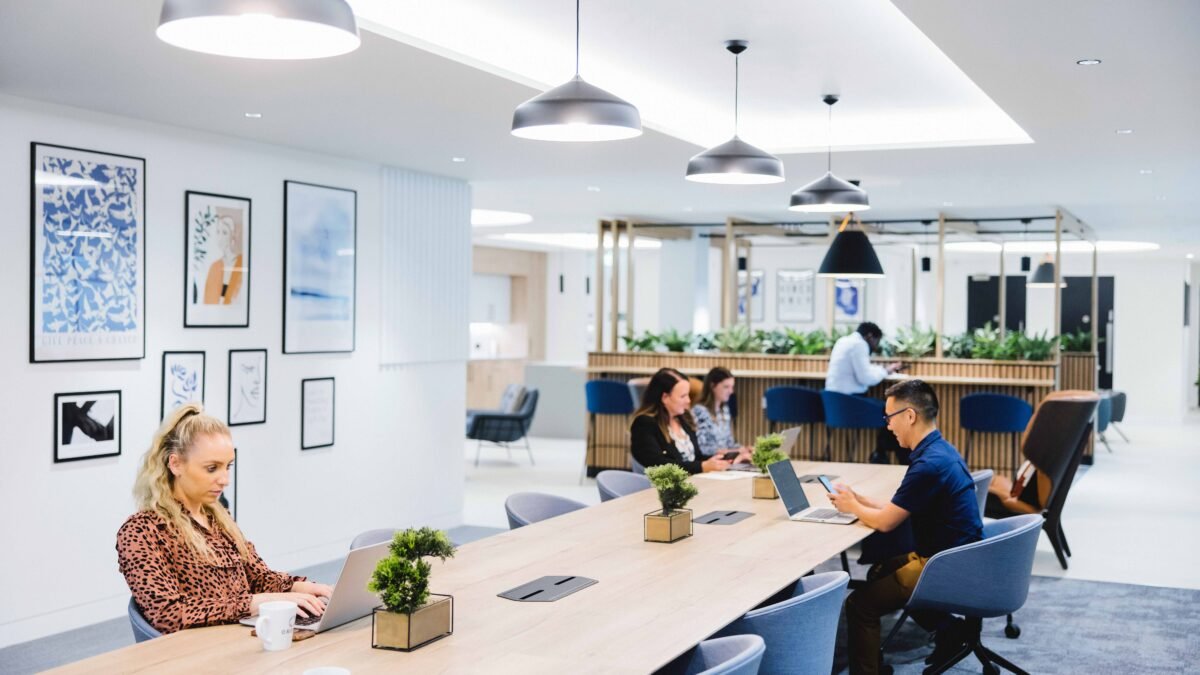
The global shift back to work-from-office (WFO) is quietly but decisively reshaping how companies think about office space. After years of remote and hybrid experimentation, organizations are recalibrating their workplace strategies—not by returning to the old norms, but by redefining what “office demand” really means. This change is influencing everything from leasing decisions and office design to location preferences and long-term real estate investments. Understanding how work-from-office is changing office space demand is now critical for businesses, developers, investors, and urban planners alike.
The Post-Remote Reality: Why Work-from-Office Is Returning
The initial move to remote work was driven by necessity, not strategy. Over time, many organizations discovered that while remote work improved flexibility, it also introduced challenges around collaboration, innovation, team cohesion, and performance management. As a result, companies are bringing employees back to offices—often partially, sometimes fully—to restore these intangible but essential elements of work culture.
This return to office is not about control; it’s about outcomes. Employers increasingly view physical offices as productivity enablers, training hubs, and cultural anchors rather than mere desks and chairs. This mindset shift is fundamentally altering office space demand.
Office Space Demand Is Not Shrinking—It’s Evolving
Contrary to early predictions, work-from-office has not triggered a collapse in office real estate demand. Instead, it has changed what kind of office space companies want. While some organizations are downsizing total square footage, many are simultaneously upgrading to higher-quality spaces.
The demand today is less about volume and more about value. Businesses are prioritizing well-located, efficiently designed offices that support collaboration, flexibility, and employee experience. Older, poorly connected, and low-grade office buildings are seeing reduced interest, while premium and Grade A spaces are witnessing stronger demand.
Quality Over Quantity: The Rise of High-Performance Offices
One of the most visible impacts of work-from-office trends is the growing preference for high-performance office environments. Companies now want offices that justify the commute. This has pushed demand toward buildings that offer natural light, better air quality, energy efficiency, modern layouts, and smart building technologies.
Offices are no longer seen as mandatory workplaces but as destinations. As a result, landlords and developers who invest in wellness-focused, tech-enabled, and sustainable office spaces are gaining a clear competitive edge in the market.
Location Dynamics Are Shifting Office Demand
Work-from-office policies are also influencing where offices are located. Central business districts remain important, but there is rising demand for offices in well-connected peripheral hubs and mixed-use developments. Employees are more willing to commute if the office is accessible, surrounded by amenities, and integrated with retail, food, and leisure options.
In markets like India, this trend is especially evident. Cities such as Bengaluru, Gurugram, Hyderabad, and Pune are seeing sustained demand in micro-markets that combine strong infrastructure with lifestyle convenience. Work-from-office is reinforcing the importance of location quality, not just centrality.
Flexible Office Space Is Gaining Strategic Importance
Another major change in office space demand driven by work-from-office is the growing adoption of flexible leasing models. Uncertainty around attendance patterns has made companies cautious about long-term commitments. As a result, demand for managed offices, coworking spaces, and short-term leases is rising.
These flexible spaces allow companies to scale up or down quickly while still maintaining a physical presence. Even large enterprises are using flexible offices as satellite hubs, project-based spaces, or interim solutions—reshaping traditional demand patterns in the office real estate sector.
Office Design Is Being Rewritten
Work-from-office has transformed how office interiors are planned and utilized. Demand is shifting away from dense desk-based layouts toward collaboration-focused designs. Meeting rooms, brainstorming areas, social spaces, and training zones are now more important than individual workstations.
This design evolution often means that companies need more space per employee, even if fewer employees are present at the same time. Paradoxically, this has stabilized overall office space demand in many markets despite hybrid work models.
The Impact on Developers and Investors
For developers and investors, work-from-office trends are creating a clear divide in the market. Assets that align with new workplace expectations are performing well, while outdated buildings face rising vacancies and pricing pressure. Capital is increasingly flowing toward premium office developments, ESG-compliant projects, and assets in strong employment corridors.
Long-term investors are also recognizing that offices remain a critical part of the urban economy. While demand patterns are changing, the fundamental need for physical workspaces is far from disappearing.
Risks and Challenges in the New Office Demand Landscape
Despite positive demand signals, challenges remain. Companies are still experimenting with attendance policies, and sudden shifts can impact space utilization. Rising construction costs and higher interest rates also pose risks for new developments.
Additionally, employers must strike a balance between flexibility and structure. Overly rigid work-from-office mandates can affect employee retention, indirectly influencing long-term space requirements. These factors make accurate demand forecasting more complex than ever.
What Work-from-Office Means for the Future of Offices
The future of office space demand will be shaped by adaptability. Work-from-office is not a return to the past; it is a transition toward smarter, more intentional use of space. Offices that support collaboration, learning, and community will remain relevant, while generic, functionless spaces will continue to lose ground.
Ultimately, work-from-office is redefining the purpose of offices—and that redefinition is driving a more resilient, quality-driven demand cycle.
Frequently Asked Questions (FAQs)
Is work-from-office increasing or decreasing office space demand?
Work-from-office is not reducing demand overall but changing it. While some companies are optimizing space, demand for high-quality, well-located offices is strong and growing.
Why are companies calling employees back to the office?
Companies see offices as essential for collaboration, innovation, onboarding, and maintaining company culture—areas that are harder to replicate fully in remote setups.
Are hybrid work models reducing the need for offices?
Hybrid models reduce daily occupancy but often require better-designed spaces. Many organizations need the same or more square footage to support collaborative and flexible layouts.
What type of office spaces are most in demand now?
Grade A offices with modern amenities, sustainable features, strong connectivity, and flexible layouts are seeing the highest demand in the current market.
How does work-from-office affect office real estate investment?
It favors premium assets and strategic locations. Investors are increasingly cautious about older, non-upgraded buildings while showing confidence in future-ready office developments.
Will remote work eliminate offices in the future?
Unlikely. Remote work will coexist with offices, but physical workplaces will continue to play a central role in business operations, talent development, and organizational growth.

Join The Discussion