
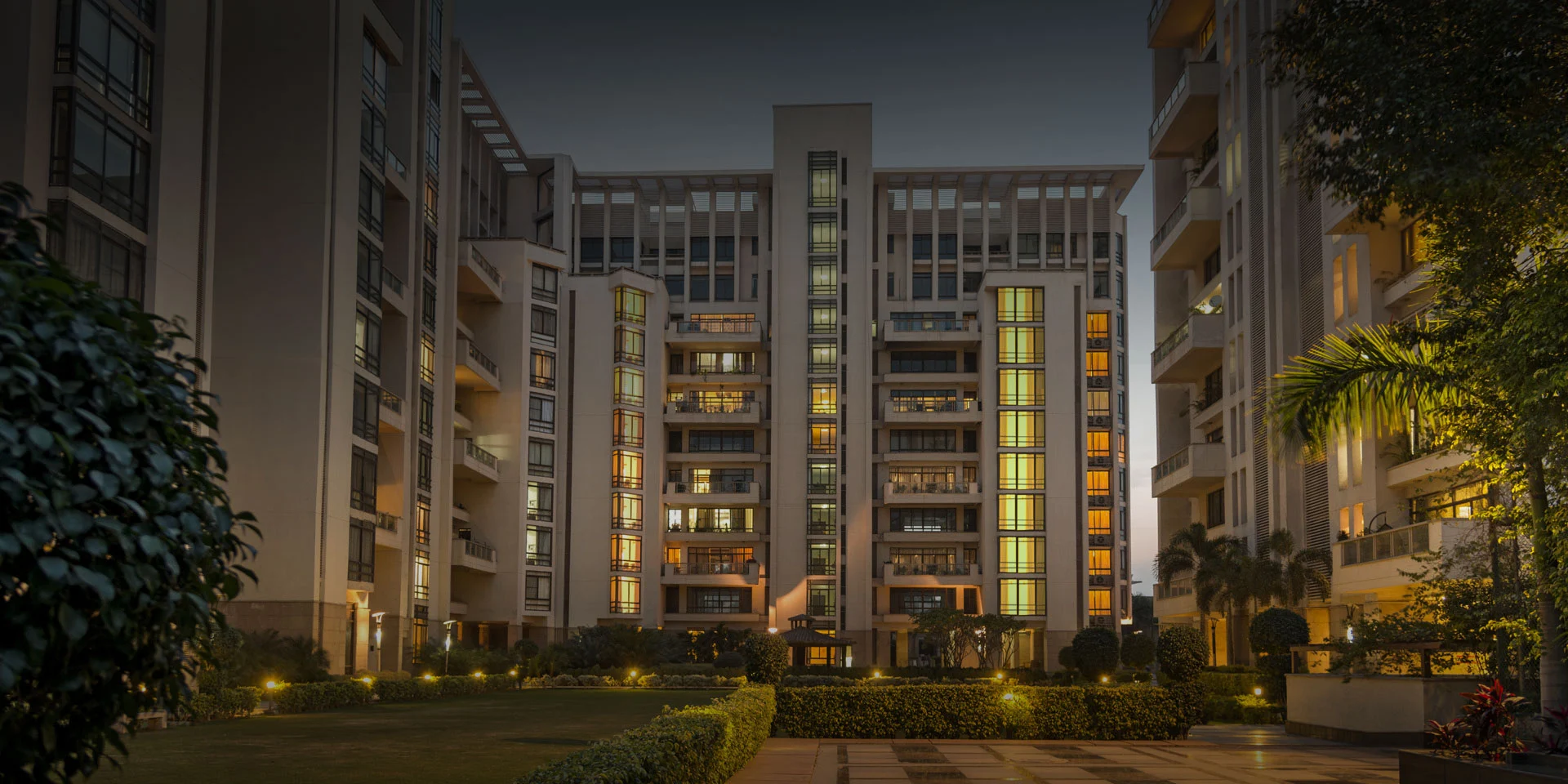
Gurgaon has evolved into two parallel residential worlds.
One rises vertically across Golf Course Extension Road and Dwarka Expressway.
The other spreads horizontally through builder floors and DDJAY sectors in South and New Gurgaon.
In 2026, the real question isn’t simply lifestyle preference. It’s this:
High-rise vs low-rise living in Gurgaon — which format aligns better with your financial strategy, sector selection, and long-term ownership goals?
Many buyers searching for builder floor vs apartment Gurgaon or comparing independent floor in Gurgaon price versus high-rise apartment cost are essentially trying to solve the same problem.
This guide breaks it down using sector-level data, rental trends, supply shifts, and ownership math — not marketing narratives.
Gurgaon’s 2026 Residential Structure: Density vs Land Strategy
Gurgaon is not uniformly developed. Its housing pattern depends heavily on FAR approvals, infrastructure growth, and institutional developer participation.
High-Rise Dominant Corridors
- Sector 54–56 (Golf Course Road premium belt)
- Sector 58–67 (Golf Course Extension Road)
- Sector 113–115 (Dwarka Expressway growth spine)
- Select sectors 83–90 (New Gurgaon)
Low-Rise / Builder Floor Concentration
- Sector 67, 57, 51 (South Gurgaon floors)
- Sector 83–95 (New Gurgaon builder floors)
- DDJAY floors Gurgaon in sectors 82, 93, 95
This is not vertical vs horizontal architecture.
It is density-led appreciation vs land-linked value exposure.
What High-Rise Living Means in Gurgaon (2026 Market Reality)
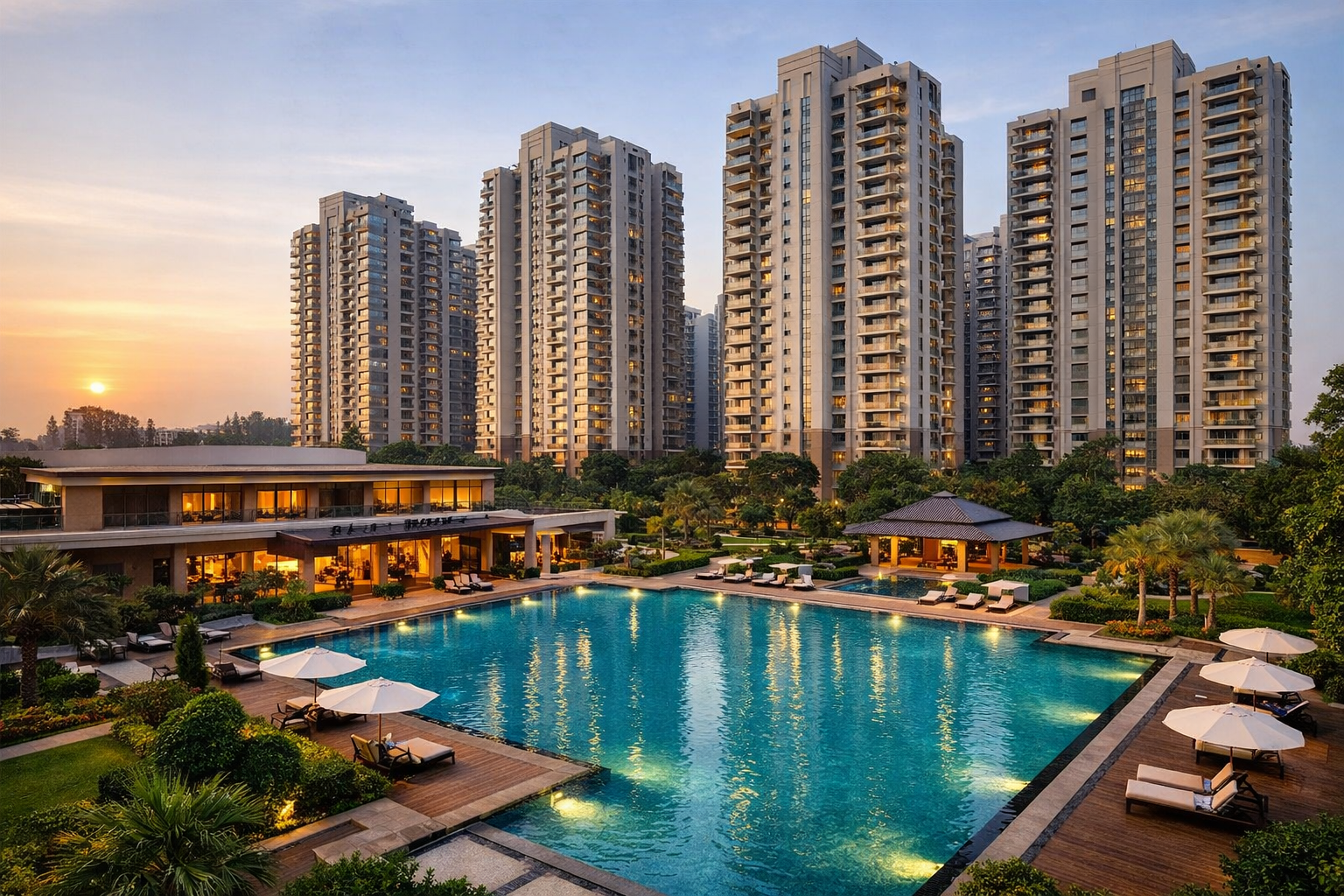
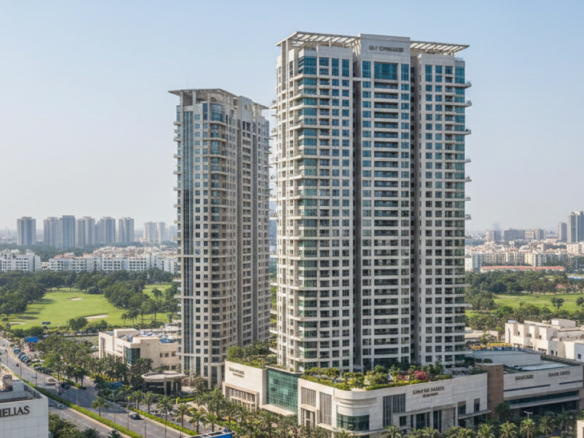
High-rise societies offer structured, managed living environments with centralized systems.
Typical features include:
- 24×7 gated security
- Power backup
- Clubhouse & lifestyle amenities
- Facility management teams
- Structured parking
High-rise apartments near metro corridors typically deliver stronger rental yield in Gurgaon apartments, particularly in corporate-driven sectors.
Rental Performance (2026 Snapshot)
Prime high-rise corridors:
- Gross yield: 3–4%
- Faster tenant replacement
- Higher liquidity in resale
However, maintenance ranges between ₹3–6 per sq.ft monthly. Over 10 years, this becomes a significant ownership variable.
Post-2023 absorption trends indicate quicker stabilization in high-rise corridors due to corporate leasing momentum.
What Low-Rise / Builder Floor Living Offers
Low-rise formats (G+2 / G+4 structures) appeal to buyers prioritizing privacy and low-density living Gurgaon environments.
Search demand in 2026 has increased for:
- low rise floors in New Gurgaon
- ready to move builder floor Gurgaon
- independent floor in Gurgaon price comparisons
- low maintenance homes in Gurgaon
This trend is particularly visible in sectors 67 and 83, where connectivity improvements toward Dwarka Expressway have strengthened buyer confidence.
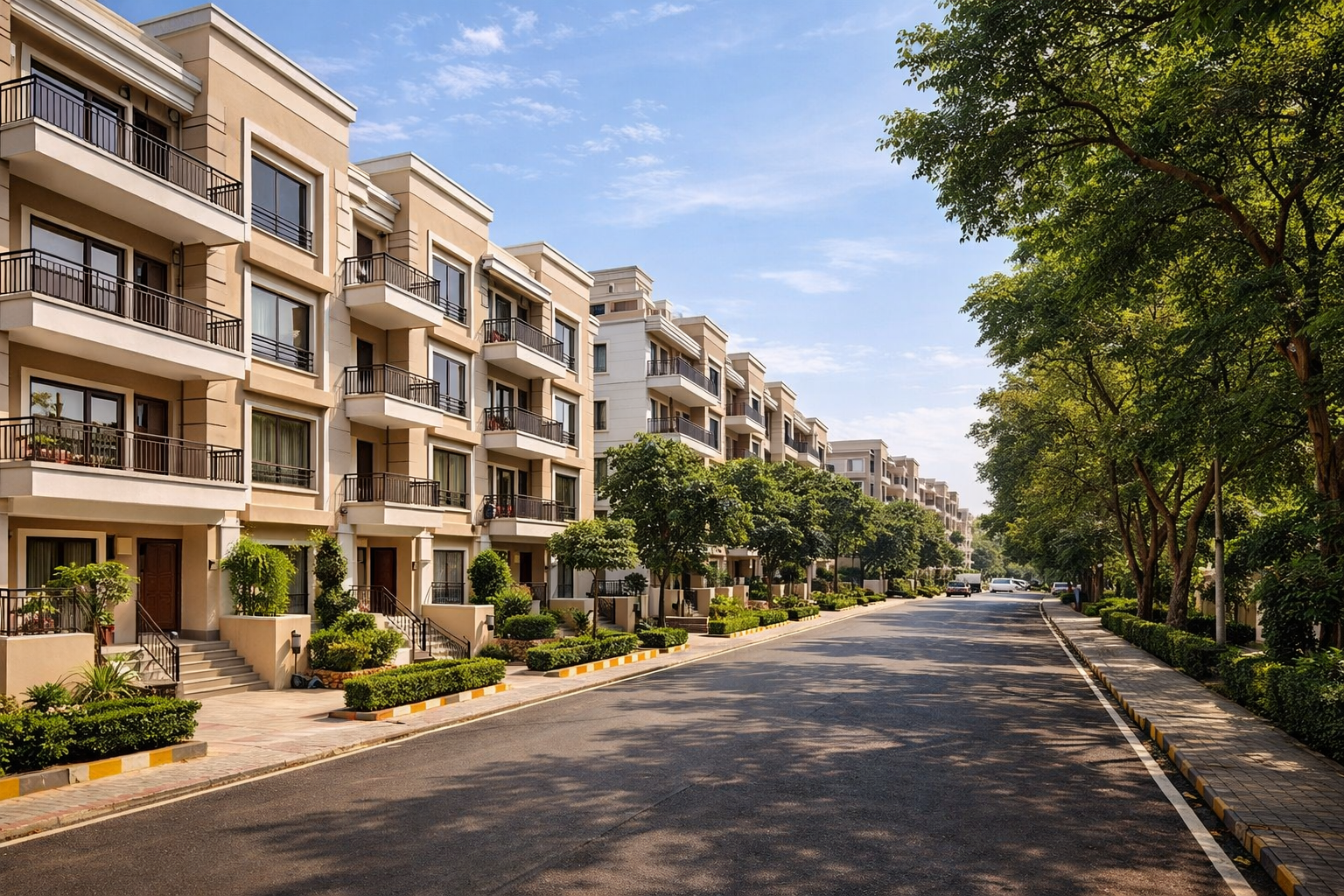
Core Advantages
- Fewer shared amenities
- Greater interior customization
- Lower recurring maintenance (₹1–2 per sq.ft)
- Stronger exposure to land appreciation
However, resale and rental performance are more micro-location sensitive compared to high-rise towers.
2026 Price & Maintenance Snapshot
High-Rise (Golf Course Extension Road): ₹15,000–22,000 per sq.ft
High-Rise (Dwarka Expressway): ₹12,000–18,000 per sq.ft
Low-Rise (Sector 67 floors): ₹11,000–15,000 per sq.ft
Low-Rise (Sector 83–95 floors): ₹9,000–14,000 per sq.ft
The pricing gap is moderate. The ownership structure is where divergence happens.
Independent Floor in Gurgaon Price vs High-Rise Cost: 10-Year Ownership Math
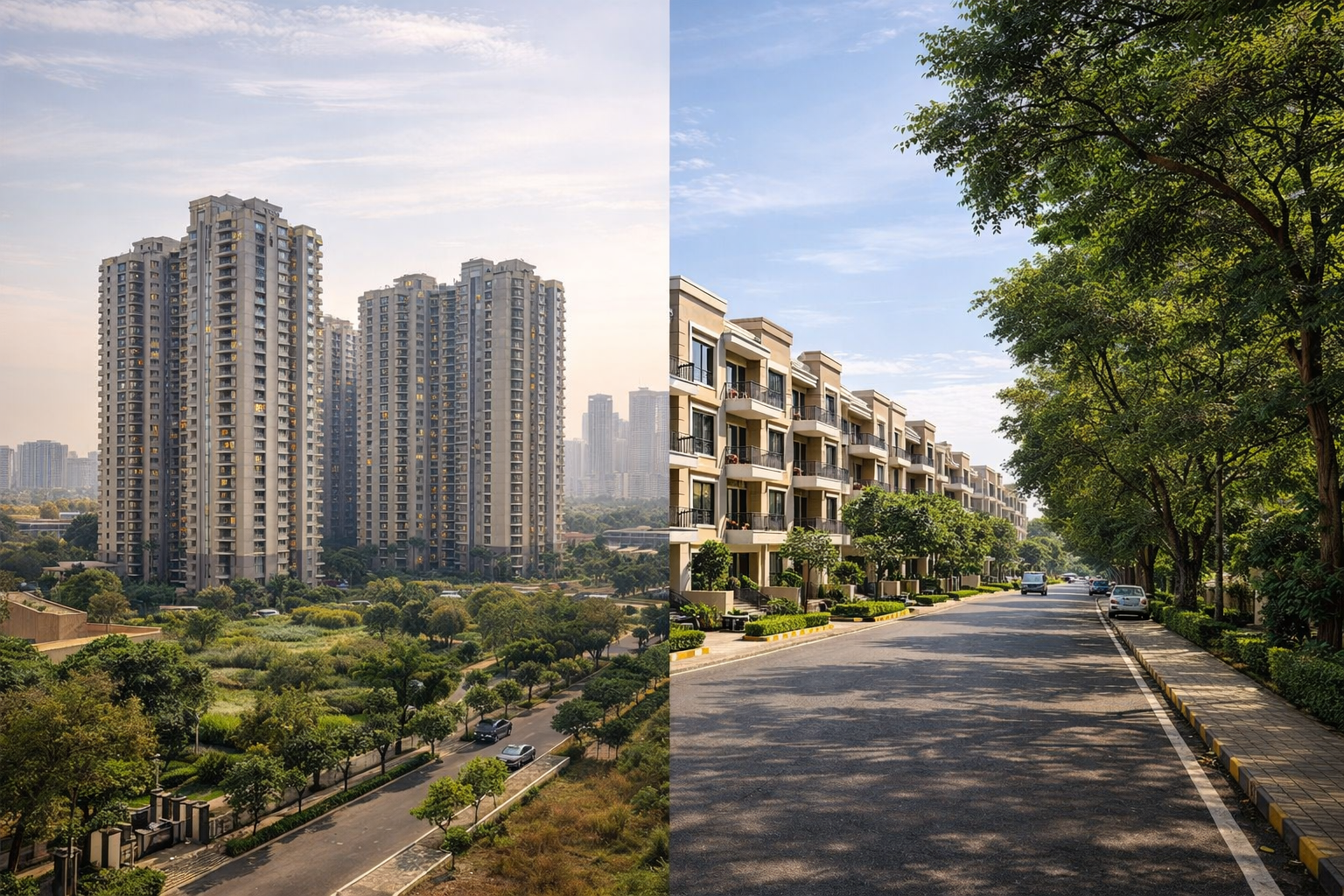
Buyers comparing independent floor in Gurgaon price with high-rise apartment cost often underestimate long-term ownership mathematics.
Initial Cost
High-rise in prime belts may cost 10–20% higher upfront.
Maintenance Over 10 Years
High-rise: Higher cumulative due to lifts, staff, amenities.
Low-rise: Lower recurring expense but self-managed oversight.
A ₹3–4 per sq.ft maintenance difference compounds significantly across a decade.
Rental Yield Gap
High-rise apartments offer stronger rental yield in Gurgaon apartments (3–4%).
Low-rise floors typically average 2–3%, depending on sector demand.
Exit Liquidity
High-rise units benefit from standardized valuation benchmarks and easier resale.
Builder floors are more price-sensitive and dependent on local inventory cycles.
Investors seeking predictable cash flow gravitate toward towers.
Land-focused buyers often lean toward floors.
Builder Floor vs Apartment Gurgaon: What Developers Don’t Tell You
This comparison often stays superficial. Here’s what actually matters:
Construction Quality Variability
High-rise towers are usually developed by institutional players with standardized quality protocols. Builder floors vary significantly based on promoter capability.
Lift Risk in Small Buildings
In G+4 floors, lift maintenance burden is shared among very few units. If participation drops, upkeep suffers.
Corpus & Governance Transparency
High-rise societies operate through corpus and sinking funds. Governance quality directly affects resale perception.
FAR & Redevelopment Potential
Certain low-rise pockets may benefit from future redevelopment if unused FAR exists. However, policy clarity and collective consensus are critical.
Format alone does not define investment quality. Execution and management do.
Rental Yield Comparison (2026 Market Intelligence)
Corporate leasing continues to drive demand in:
- Golf Course Extension Road
- Dwarka Expressway
- Metro-connected belts
These corridors show stronger rental yield in Gurgaon apartments and faster liquidity.
Low-rise floors in select pockets perform steadily but remain inventory-sensitive.
NRIs and corporate tenants show preference toward high-rise for managed living.
End-users upgrading from builder floors often transition into towers in established sectors.
Micro-Location & Supply Intelligence (2026 Structural Bias)
In sectors like 67 and 83, builder floor demand has increased due to limited plotted inventory and infrastructure upgrades.
Meanwhile, Golf Course Extension continues absorbing vertical supply steadily.
With land parcels shrinking in central Gurgaon, future development remains structurally biased toward vertical growth. This may limit fresh low-rise inventory in prime corridors.
Post-2023 supply tightening has strengthened pricing discipline in institutional high-rise corridors, while independent floor markets remain more locally cyclical.
Understanding this supply bias is critical before format selection.
Which Is Better for End-Use vs Investment in Gurgaon?
For Self-Use Families
Low-density living Gurgaon environments often suit families prioritizing:
- Larger carpet area
- Customization flexibility
- Lower maintenance homes
- Long-term personal comfort
Low-rise formats in stable sectors offer strong end-use satisfaction.
For Investors
High-rise apartments typically provide:
- Stronger rental yield in Gurgaon apartments
- Easier tenant acquisition
- Better liquidity
- Corporate corridor advantage
Investors evaluating ready to move builder floor Gurgaon options should compare delivery track record and sector demand carefully before committing capital.
Final Verdict: Strategic Selection Beats Format Bias
There is no universal winner in the high-rise vs low-rise debate.
High-rise advantages:
- Rental yield strength
- Amenity-driven demand
- Liquidity & valuation stability
Low-rise advantages:
- Land-linked appreciation
- Lower maintenance burden
- Greater personalization control
Buyers comparing builder floor vs apartment Gurgaon options benefit from reviewing live sector-level pricing, supply pipeline, and rental absorption data before committing capital.
In Gurgaon’s 2026 real estate market, the right format depends not on marketing labels — but on financial horizon, sector intelligence, and ownership discipline.
Frequently Asked Questions (High-Rise vs Low-Rise Living in Gurgaon – 2026)
Is it better to buy a high-rise apartment or a builder floor in Gurgaon?
It depends on your objective. Buyers comparing builder floor vs apartment Gurgaon options are usually balancing rental potential against lifestyle comfort. High-rise apartments in corporate corridors like Golf Course Extension Road and Dwarka Expressway generally offer stronger rental liquidity and structured maintenance systems.
Builder floors in sectors such as 67 or 83 often provide greater privacy, larger usable space, and lower long-term maintenance burden. The better choice depends on whether your priority is predictable rental income or independent living comfort.
What is the price difference between independent floors and high-rise apartments in Gurgaon?
In 2026, high-rise apartments typically range between ₹12,000–22,000 per sq.ft depending on sector and brand positioning. Independent floor in Gurgaon price usually falls between ₹9,000–15,000 per sq.ft in New Gurgaon and South Gurgaon sectors.
While the entry price gap is moderate, the long-term ownership cost differs more significantly due to maintenance and liquidity differences.
Which offers better rental yield in Gurgaon — high-rise or low-rise?
High-rise apartments generally provide stronger rental yield in Gurgaon apartments, particularly in metro-connected and corporate-driven sectors. Gross yield typically ranges from 3–4%.
Low-rise builder floors usually generate around 2–3% yield, but they may offer stronger capital appreciation in land-driven micro-markets. Investors focused on cash flow often lean toward high-rise formats.
Are low-rise builder floors in New Gurgaon a good investment in 2026?
Low rise floors in New Gurgaon — especially in sectors 83–95 and select DDJAY floors Gurgaon belts — have gained traction due to improving connectivity and relatively lower entry price.
They can be attractive for long-term appreciation if sector infrastructure continues strengthening. However, rental performance may vary more than high-rise societies in established corporate corridors.
What is the maintenance cost difference between high-rise and builder floors in Gurgaon?
High-rise societies usually charge ₹3–6 per sq.ft monthly due to amenities, lifts, security staff, and facility management systems.
Builder floors typically range between ₹1–2 per sq.ft or are self-managed, which is why many buyers searching for low maintenance homes in Gurgaon consider low-rise formats.
Over a 10-year period, this difference can significantly affect total ownership cost.



Join The Discussion