
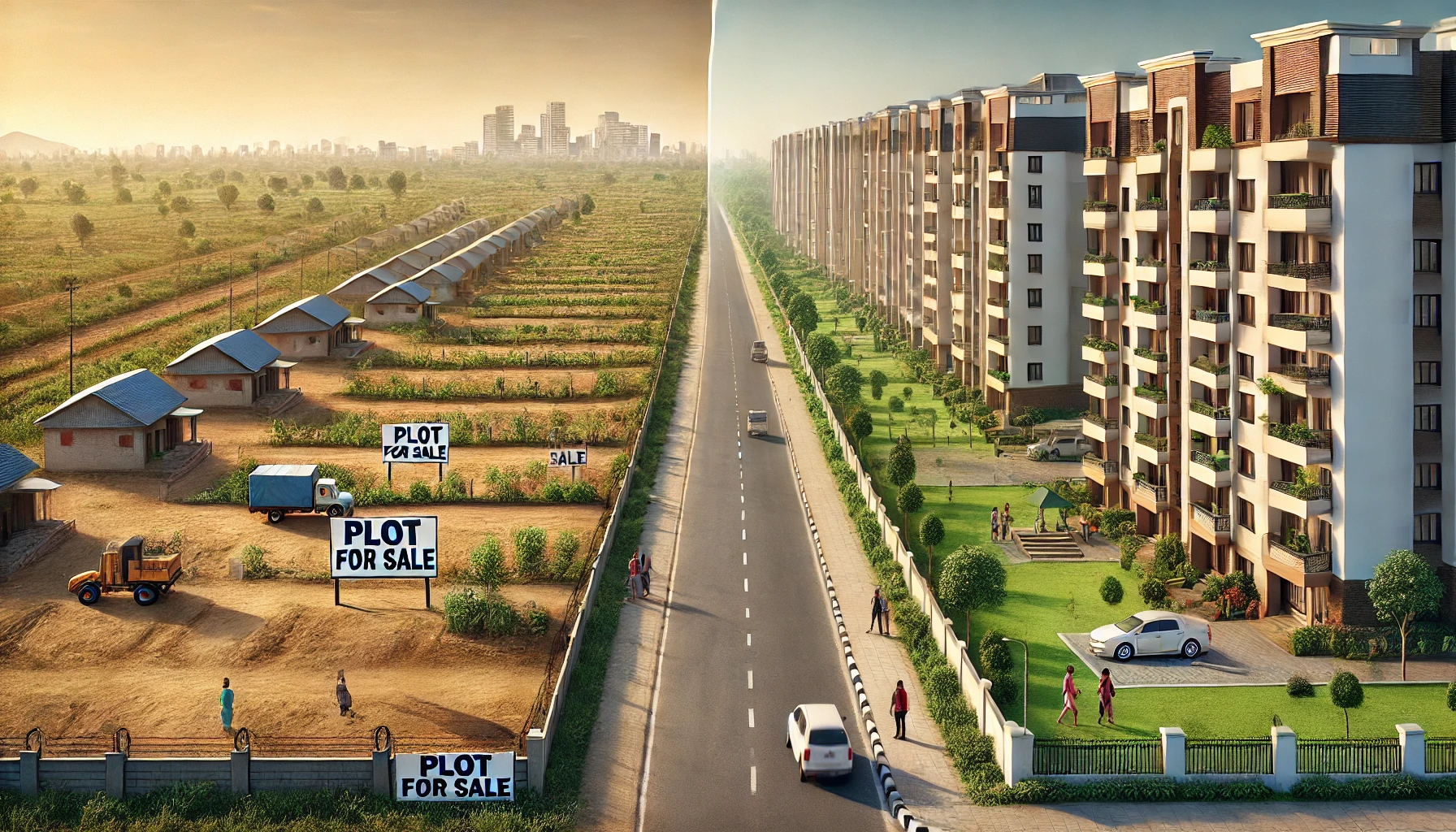
In 2026, plot investment in Gurgaon is no longer driven by speculation. It has evolved into a structured investment strategy shaped by infrastructure execution, regulatory clarity, and sector-level maturity.
For serious investors, the question is not whether land is a good asset class — it is about selecting the right location, entering at the right cycle stage, and choosing the correct approval framework.
If you are beginning your research, understanding how government-approved plotted developments function is critical. This DDJAY plots investment guide Gurgaon provides a complete breakdown of licensing, benefits, and risks.
This guide goes deeper — decoding how Gurgaon’s land market actually works from a strategic investment perspective.
Why Plot Investment in Gurgaon Is Outperforming Apartments

The rising search demand for comparisons like plot vs apartment Gurgaon reflects a clear shift in investor thinking. Apartments, by nature, depreciate over time due to physical wear and maintenance cycles. Land, however, appreciates as infrastructure, connectivity, and surrounding ecosystems develop.
In corridors such as Dwarka Expressway, Southern Peripheral Road (SPR), New Gurgaon, and Sohna, this difference is becoming increasingly visible. Land responds directly to macro development, while apartments remain dependent on project condition and rental demand.
This is why long-term investors increasingly position plots as wealth compounding assets, while apartments serve more as income-generating holdings.
Understanding Gurgaon’s Price Cycle (The Real Game)

Gurgaon’s plotted market follows a structured cycle that experienced investors track closely.
It typically begins with announcement-driven price spikes, followed by a stagnation phase where execution is still underway. The most critical phase emerges when infrastructure reaches visible completion — usually between 60% to 90%. This is when price acceleration begins. Finally, once full ecosystem development takes place, liquidity strengthens and resale activity increases significantly.
Investors who align their entry with the execution phase — rather than the announcement phase — tend to capture the strongest returns.
Best Locations for Plot Investment in Gurgaon (2026)

Location selection today requires micro-market understanding rather than broad assumptions.
Sectors 65 and 67, near Golf Course Extension Road, represent a mature and stable plotted market. With established residential density and strong commercial integration, these sectors offer relatively predictable appreciation and higher resale confidence. They are best suited for investors who prioritize stability and lower risk.
Sectors 102 and 37D along the Dwarka Expressway are transitioning into a high-growth phase as infrastructure nears completion. Connectivity improvements and increasing occupancy are driving stronger resale momentum, making these sectors ideal for mid-cycle entry.
Meanwhile, SPR and Sohna corridors present early-stage opportunities. These areas are still in the execution phase — historically the most rewarding stage for long-term investors. However, this is also where disciplined entry becomes critical. To understand pricing trends and ROI potential in detail, refer to residential plots price trends Sohna.
DDJAY Plots: Why Regulatory Clarity Matters
The rise of DDJAY (Deen Dayal Jan Awas Yojna) has significantly improved the plotted development landscape in Gurgaon.
Unlike unregulated colonies, DDJAY projects operate under DTCP Haryana guidelines, ensuring structured planning, defined density, and proper approvals. This reduces legal uncertainty and directly enhances resale liquidity.
For investors, this translates into greater confidence, better financing options, and stronger long-term viability. In today’s market, regulatory clarity is no longer optional — it is a fundamental investment filter.
Financing Reality: The Hidden Layer of Returns
Financing plays a crucial role in determining actual returns, yet it is often overlooked.
In 2026, banks are selective when it comes to plot loans. Licensed developments, particularly DDJAY projects, are preferred, while standalone plots face stricter scrutiny. Loan-to-value ratios are also lower compared to apartments, requiring higher upfront investment.
This impacts leverage and, ultimately, your real ROI. Investors who ignore financing dynamics often miscalculate returns.
For DDJAY loan eligibility, registry process and legal documentation, read our complete DDJAY guide for loan rules and registry details.
Circle Rate vs Market Rate: A Critical Insight
The relationship between circle rate and market rate has become increasingly relevant for investors.
It affects transaction transparency, taxation, and resale dynamics. Markets where circle rates closely align with actual transaction values tend to have smoother resale cycles and better liquidity.
Understanding this gap is now a key part of investment due diligence.
Infrastructure-Led Strategy: Timing Your Entry

Infrastructure remains the primary driver of land appreciation in Gurgaon, but timing determines the magnitude of returns.
Entering too early during announcement phases can result in long holding periods with minimal movement. Entering after full completion limits upside potential.
The most effective strategy is to invest during visible execution — a stage currently evident in Dwarka Expressway, SPR, and Sohna corridors.
Liquidity Risk: The Reality Few Discuss
While plots offer strong long-term appreciation, short-term liquidity can fluctuate.
During periods of excessive supply, especially when multiple plotted developments launch simultaneously, resale activity may slow down. This is particularly true in markets dominated by speculative buying rather than end-user demand.
Managing this risk requires a focus on sector absorption, entry price discipline, and project quality.
Plot vs Apartment: Investment Structure Comparison
The difference between plots and apartments becomes clearer when viewed across multiple investment factors:
| Factor | Plot | Apartment |
|---|---|---|
| Depreciation | None | Yes (building wear over time) |
| Rental Income | No direct income | Regular rental yield |
| Maintenance Cost | Minimal | Recurring (society + repairs) |
| Appreciation Driver | Infrastructure & land scarcity | Project quality & rental demand |
| Liquidity | Depends on sector demand | Depends on building condition & rent |
| Customization | Full flexibility (build as needed) | Limited |
| Long-Term ROI | Higher (cycle-based growth) | Moderate (income + appreciation) |
If you want a deeper evaluation before deciding, read are plots safer than apartments investment.
Ideal Holding Period for Plot Investment
Plot investment rewards patience. In Gurgaon, the ideal holding period typically ranges from 8 to 15 years, allowing sufficient time for infrastructure completion, population growth, and ecosystem maturity.
Short-term strategies rarely capture the full appreciation potential.
What Changed in Gurgaon After 2023
The Gurgaon market has undergone a structural shift in recent years. There has been a rise in plotted township developments, increased preference for low-rise living, and stronger participation from end-users.
This has reduced speculative volatility and strengthened long-term investment fundamentals.
The 4-L Framework for Smart Plot Investing
A structured approach is essential for consistent returns. The 4-L framework includes:
- Location maturity
- Legal clarity
- Liquidity depth
- Leverage timing
This ensures decisions are based on data, not marketing narratives.
Final Takeaway: Where Smart Investors Are Moving

Plot investment in Gurgaon today is about precision, not probability.
Investors generating consistent returns are those who understand cycles, prioritize regulatory clarity, and enter markets at the right stage of infrastructure development. They focus on long-term positioning rather than short-term speculation.
To explore curated opportunities aligned with real growth, visit best plotted developments near Gurgaon.
Frequently Asked Questions About Plot Investment in Gurgaon (2026)
Is plot investment in Gurgaon really better than buying a flat in 2026?
In Gurgaon’s current cycle, plots generally offer stronger long-term capital appreciation because land does not depreciate like buildings. Flats may provide rental income, but plots typically outperform over 8–15 years in infrastructure-led corridors such as Dwarka Expressway and SPR.
Which sectors are actually good for plot investment in Gurgaon right now?
Investors are focusing on sectors near Dwarka Expressway (102, 37D), the premium belt (65–67), and emerging SPR and Sohna corridors. The right sector depends on infrastructure maturity, liquidity depth, and entry price discipline.
Are DDJAY plots in Gurgaon safe and legally approved?
Licensed DDJAY plots approved by DTCP Haryana follow defined planning norms and offer better regulatory clarity than unapproved colonies. Safety depends on project licensing, developer credibility, and proper documentation verification.
How long should I hold a plot in Gurgaon to see strong returns?
Most successful land investments in Gurgaon follow an 8–15 year holding cycle. This allows infrastructure completion, occupancy growth, and commercial ecosystem alignment to strengthen resale liquidity and appreciation.
Can I get a bank loan easily for plot investment in Gurgaon?
Banks are selective with plot loans. Licensed township formats like DDJAY projects receive better financing support, while standalone freehold plots may have lower loan-to-value ratios and stricter approval conditions.



Join The Discussion