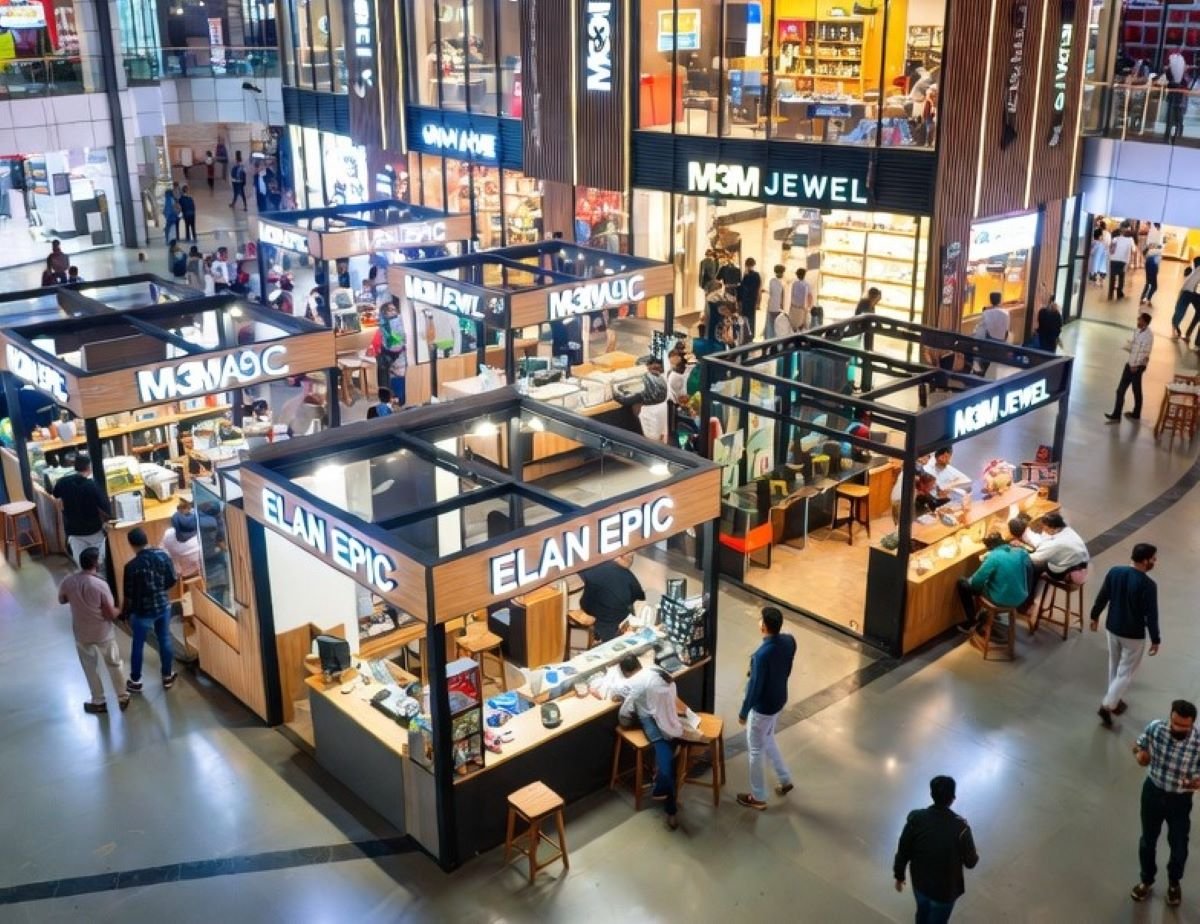
Food courts in Gurgaon have changed quietly over the past decade.
Earlier they were simply an additional feature inside malls — a place where shoppers could grab a quick bite before heading back to retail stores or cinemas. Today, however, they are increasingly being viewed as a distinct commercial real estate investment opportunity.
This shift is part of a broader trend highlighted in retail commercial property in Gurgaon analysis, where malls and high streets are redefining investment strategies.
The shift reflects how Gurgaon itself has evolved. Rapid urbanisation, expanding corporate employment, rising disposable income and an active dining culture have created one of the most vibrant food and beverage markets in India.
Naturally, investors have begun paying attention.
But an important question always follows.
Are food court investments in Gurgaon genuinely profitable assets, or are they risky retail bets that are often packaged as “assured return” opportunities?
The answer depends largely on location, project quality, tenant mix and the overall strength of the surrounding catchment.
Understanding how this segment works is essential before investing, especially as broader Commercial Property Investment in Gurgaon trends increasingly depend on operational demand, tenant sustainability and long-term catchment strength rather than short-term launch-driven speculation.
Why Gurgaon Has Become a Strong Food Court Market

Gurgaon is not a typical retail city. In many ways it functions like a self-contained consumption economy.
Large multinational companies operate across districts such as Cyber City, Udyog Vihar and Golf Course Road. Every day thousands of professionals move through these areas for work, creating consistent demand for dining options.
At the same time, Gurgaon has seen rapid expansion in premium residential communities. Areas such as Golf Course Extension Road, Sohna Road, Dwarka Expressway and New Gurgaon now host high-density housing with significant spending power.
The combination of office traffic and residential demand creates a powerful consumption base.
As residential occupancy continues to increase across the city, many buyers are actively exploring apartment investment opportunities in Gurgaon, further strengthening the customer base that supports retail and food court businesses.
Eating out has become a routine part of urban life in Gurgaon. Young professionals, working couples and corporate employees frequently rely on restaurants and quick-service outlets for daily meals.
Because of this, most new commercial developments in Gurgaon integrate multiple functions within a single project. Retail stores, office spaces, serviced apartments and food courts often operate within the same complex.
For food courts, this integrated ecosystem is critical.
Unlike standalone restaurants that rely on street visibility, food courts depend on concentrated footfall generated by malls or mixed-use developments.
How the Food Court Investment Model Works
At first glance, the concept seems simple.
An investor purchases a relatively small commercial unit inside a mall or commercial complex and leases it to a food brand. The brand operates the outlet while the investor receives rental income.
The structure appears straightforward, but the economics are slightly different from other commercial assets.
Food court units are usually compact spaces ranging between roughly 200 and 600 square feet. Instead of maintaining private dining areas, they rely on shared seating zones managed by the mall operator.
The business depends on quick service and high customer turnover.

From an investor’s perspective, income generally comes through lease agreements signed with food and beverage brands. Many projects offer lock-in periods that can range from three to nine years depending on the development.
Many investors also explore pre leased shops for sale Gurgaon as a way to secure rental income from day one, especially in established retail developments.
Some agreements include a minimum guaranteed rent combined with revenue sharing. In these cases, the tenant pays a base rent along with a percentage of sales.
While the structure can look attractive on paper, the performance of food court units depends heavily on two factors: tenant stability and footfall.
Why Food Courts Perform Well in Gurgaon

Several factors support the growth of food court investments in the city.
Corporate workforce density is one of the most important. Gurgaon hosts thousands of professionals working in technology, finance, consulting and multinational companies. Weekday lunch demand alone can support significant restaurant turnover.
Another reason is changing lifestyle behaviour.
Young urban professionals often prefer convenient dining options. Food courts provide variety, affordability and quick service, which makes them suitable for both office workers and families.
Weekend mall culture strengthens the trend further.
Many Gurgaon residents spend leisure time in shopping centres that combine retail, cinema and dining experiences. In these environments food courts become central gathering spaces.
Projects such as Ambience Mall and MGF Metropolitan demonstrate how entertainment and dining can drive prolonged customer visits.
Residential expansion also contributes to demand. As large housing clusters continue developing along Dwarka Expressway and Golf Course Extension Road, nearby commercial centres attract steady neighbourhood footfall.
Investors tracking retail growth corridors often evaluate nearby residential demand patterns, making it useful to understand the top residential sectors driving Gurgaon’s expansion and their long-term impact on commercial footfall.
Over time these patterns support consistent dining demand.
Expected Returns from Food Court Investments
Food court properties are often marketed aggressively to investors.

Some developers promote assured return schemes during the early stages of a project. These offers may advertise returns between eight and twelve percent during the construction or pre-leasing period.
Investors should carefully understand the commercial property assured returns reality before relying on such schemes.
Investors should understand how these schemes usually work.
In many cases assured returns are temporary payments funded by developers until the property becomes operational. Once the tenant begins paying rent, the actual yield depends entirely on the performance of the outlet and the stability of the lease.
In realistic market conditions, operational food court units in Gurgaon typically generate rental yields in the range of six to nine percent.
Capital appreciation is possible as well, particularly if the commercial project becomes a successful retail destination. However, appreciation tends to occur gradually and depends on the long-term popularity of the development.
The key factor remains tenant sustainability.
A stable food brand paying consistent rent matters far more than short-term promotional return schemes.
Risks Investors Should Understand
Food court investments also carry risks that many promotional brochures rarely highlight.
The food and beverage industry is inherently volatile. Restaurant brands expand quickly but can also close locations if performance declines. Consumer tastes change, and competition between brands is intense.
When a tenant leaves, the unit may remain vacant until a replacement brand is found.
Oversupply presents another challenge. Gurgaon has experienced rapid commercial development, and several micro-markets now contain multiple retail projects competing for the same customers.
If too many food courts operate within a limited catchment area, footfall may be spread thinly across properties.
Mall management quality is equally important.
Successful retail developments require active marketing, balanced tenant mix, efficient parking and convenient accessibility. Weak management can reduce visitor traffic, which directly affects restaurant sales and rental stability.
Lease structures may also fluctuate. Revenue-sharing agreements mean that income can vary during slower business periods.
For investors expecting predictable monthly returns, this variability must be carefully evaluated.
Comparing Food Courts with Other Commercial Investments
Food court investments behave differently from other commercial assets.
Office spaces usually provide longer lease tenures and more stable tenants. Corporate occupiers often remain in the same premises for several years, creating predictable income streams.
Food court tenants, on the other hand, may change more frequently. The potential yield may be slightly higher, but the volatility is also greater.
High-street retail properties offer another comparison.
Standalone retail units benefit from strong street visibility and independent branding. However, they often require higher capital investment and depend heavily on surrounding neighbourhood traffic.
Food court units typically have lower entry costs but rely entirely on the success of the mall or commercial complex in which they operate.
Which Locations in Gurgaon Perform Best
Location plays a critical role in the success of any food court investment.

Golf Course Road remains one of Gurgaon’s most established corporate corridors. Strong office presence and affluent residential neighbourhoods support consistent retail demand.
Sohna Road offers a mix of residential and corporate catchments, though some pockets face oversupply challenges.
Dwarka Expressway represents an emerging growth corridor where large residential developments may support future retail demand. However, some projects still depend on gradual occupancy growth.
With multiple mixed-use developments entering the market, many investors are also monitoring new launches and commercial opportunities along Dwarka Expressway to assess future retail and dining demand.
New Gurgaon, particularly sectors between 82 and 95, relies more on residential community footfall than corporate traffic.
For investors, understanding the micro-market is essential. Catchment density, competing projects, accessibility and anchor tenants all influence long-term performance.
Long-Term Appreciation Potential
Commercial property appreciation in Gurgaon is closely linked to infrastructure and urban expansion.
Evaluating appreciation potential often requires comparing different micro-markets, and a detailed Gurgaon investment location comparison can help identify areas with stronger long-term commercial prospects.
Metro connectivity, improved road networks and large residential developments continue shaping retail demand across the city.
Food court units located inside successful malls can appreciate steadily over time, especially if the surrounding neighbourhood becomes a major residential or corporate hub.
However, appreciation rarely occurs overnight.
It depends on the developer’s brand credibility, tenant stability and the sustained popularity of the commercial destination.
Investors seeking quick resale profits may find this segment unpredictable.
What Experienced Investors Evaluate
Seasoned investors rarely rely solely on marketing promises.

They focus on practical indicators.
Actual footfall patterns reveal far more than projected visitor estimates. The tenant mix should include reputable food brands with strong operational track records.
Lease lock-in periods should be clearly defined.
Mall occupancy levels also provide insight into the health of the development. High vacancy rates often signal deeper issues.
Finally, investors should review competing commercial projects within a two-to-three kilometre radius.
Retail supply can expand rapidly in fast-growing urban markets.
Who Should Consider Food Court Investments
Food court units can suit investors willing to accept moderate retail risk in exchange for potential rental yield.
They are sometimes attractive for buyers looking to diversify beyond residential real estate while maintaining a relatively manageable investment size.
Investors with a holding horizon of five to seven years may benefit if the commercial development gains popularity over time.
However, these investments may not suit individuals seeking guaranteed income.
Short-term speculative buyers may also struggle with the cyclical nature of retail leasing.
The Bottom Line
Food court investments in Gurgaon are neither universally risky nor guaranteed profit machines.
They are performance-dependent assets.
In strong locations with high-density catchments and professionally managed commercial developments, food court units can deliver attractive rental income and steady appreciation.
In poorly positioned projects with weak footfall or oversupply, rental stability may become uncertain.
For investors, the difference lies in careful analysis.
Location quality, tenant strength and mall management ultimately determine whether the investment becomes rewarding or problematic.
For long-term planning, exploring the best commercial investment locations Gurgaon can help identify high-growth retail corridors.
FAQs About Food Court Investments in Gurgaon
Is food court investment in Gurgaon actually profitable?
Food court investments can be profitable when the unit is located inside a high-footfall commercial development with strong tenant brands and effective mall management. In successful projects investors typically earn rental yields between six and nine percent, although performance varies depending on location and tenant stability.
What kind of rental return do investors usually receive from food court units?
Most operational food court properties in Gurgaon generate annual rental yields in the range of six to nine percent. The return depends on the lease agreement, the brand occupying the unit and the overall footfall of the commercial project.
Are assured return schemes offered by developers reliable?
Assured return schemes are usually temporary arrangements offered during the construction or early leasing phase of a project. They are often funded by developers and may not reflect the long-term rental performance of the property. Investors should evaluate the tenant and lease structure rather than relying only on guaranteed return offers.
Which areas in Gurgaon are considered strong for food court investments?
Locations with strong office presence and high residential density tend to perform better. Areas around Golf Course Road, Cyber City and select commercial developments along Dwarka Expressway often show stronger dining demand because they combine corporate footfall with residential consumption.
Is investing in a food court riskier than investing in office space?
Food court investments can carry slightly higher risk because restaurant businesses may change frequently and depend heavily on consumer footfall. Office spaces generally offer longer lease tenures and more stable tenants, which makes income streams more predictable.
What is the biggest risk investors should consider before buying a food court unit?
The biggest risk is declining footfall or tenant turnover. If the mall or commercial project loses visitors, restaurant performance can drop and rental stability may be affected. Careful evaluation of the project’s location, management and tenant mix is essential before investing.